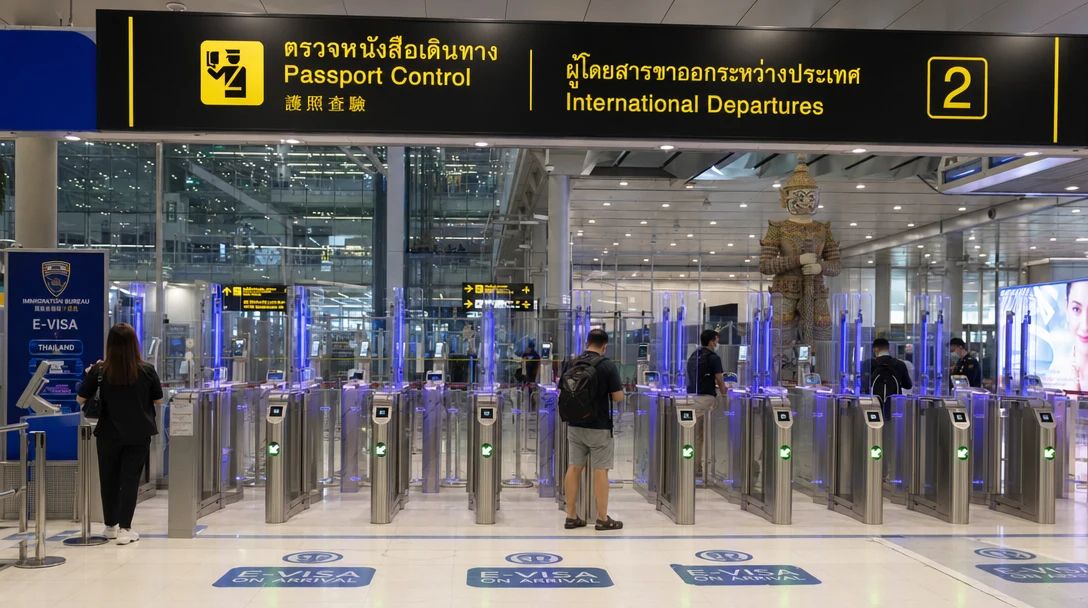
I’ve been living in Bangkok since 2023, and every year someone asks me the same question: “What do I actually need to enter Thailand?” The official government websites are confusing, travel blogs recycle outdated information, and airport forums are full of people guessing. Here’s the real situation in 2026 — what changed, what stayed the same, and what you actually need to do before you land.
The Biggest Change in 2026: Goodbye TM6, Hello TDAC
The paper TM6 arrival card that Thailand has used since forever is gone. As of 2025, Thailand replaced it with the Thailand Digital Arrival Card (TDAC) — an online pre-registration system you complete before you board your flight.
What TDAC is:
- An online arrival declaration at tdac.immigration.go.th
- Required for all foreign arrivals by air, land, or sea
- Submit within 3 days before your arrival in Thailand
- Free of charge (never pay a third-party site)
- Generates a QR code; screenshot it, you may need it at immigration
What TDAC is not: It’s not a visa. It doesn’t grant you entry. It’s a digital version of what the paper card did: tell immigration who you are, where you’re staying, and your travel plans.
Fill this out before you leave. I’ve seen people scramble to do it in the boarding area using airport WiFi. Not ideal.
WARNING
TDAC is free. If you’ve landed on a site asking for $20-$90 to “process” your arrival card, that is not the government. The Thailand Immigration Bureau warned in March 2026 that roughly 10% of foreign arrivals had paid fake TDAC sites. See our TDAC scam warning for the only official URL, the named scam domains, and what to do if you already paid.
IMPORTANT
Since May 2025, TDAC is mandatory for every foreign national entering Thailand by air, land, or sea — that includes tourists, business visitors, long-term visa holders, and returning expats. There is no paper TM6 fallback at the border. If you arrive without a completed TDAC, expect to be sent to a kiosk to fill it out before immigration will process you.
Visa-Free Entry: Who Gets In and For How Long
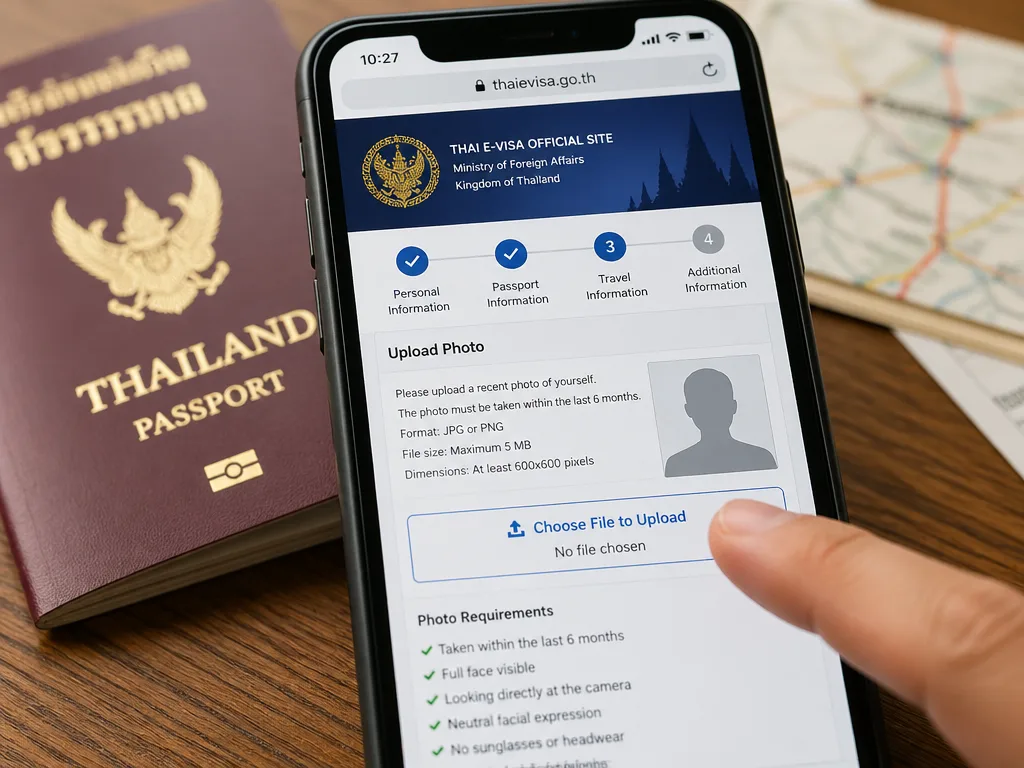
The majority of travelers don’t need a visa for Thailand. Here’s the breakdown for the nationalities that read this site, based on the visa-exemption rules in force as of mid-2026:
| Country | Visa-Free Stay | Notes |
|---|---|---|
| South Korea | 90 days | Bilateral agreement, no conditions |
| USA | 60 days | Visa exemption scheme |
| UK | 60 days | Visa exemption scheme |
| Japan | 60 days | Visa exemption scheme |
| Germany | 60 days | Visa exemption scheme |
| France | 60 days | Visa exemption scheme |
| Australia | 60 days | Visa exemption scheme |
| China | 60 days | Mutual visa-free agreement (2024) |
| India | 60 days | Visa exemption (added 2024) |
For South Korean passport holders, the 90-day bilateral arrangement still applies. Everyone else on this list currently gets the 60-day visa exemption that was introduced in 2024.
For US, UK, EU, Japanese, and Australian travelers: the 60-day exemption is generous and usually enough for a standard trip. If you want longer, you can extend once at an immigration office for 30 more days (1,900 THB fee), giving you 90 days total without a tourist visa.
IMPORTANT
Thailand announced a proposal in April 2026 to roll back the 60-day exemption to 30 days for many of the 93 currently eligible countries, keeping the longer stay only for around 57 nations. The proposal has not yet been implemented as of this writing — but if you’re planning a stay close to the 60-day mark, double-check the current rule on the Thai MFA site or your local embassy 1-2 weeks before flying. Policies have been moving fast since 2024.
Visa Types: What’s Available in 2026
Tourist Visa (TR)
The standard Tourist Visa is for anyone who wants to stay longer than the visa-free period allows, or wants to make multiple entries.
- Single entry: 60 days, one entry
- Double entry: 60 days x 2 entries within 6 months
- Apply at: Thai embassy or consulate in your home country, or via e-Visa
- Fee: 2,000 to 3,000 THB depending on consulate
- Extendable: Once, for 30 additional days at Thai immigration (1,900 THB)
Multiple Entry Tourist Visa (METV)
Designed for people who want to travel in and out of Thailand multiple times.
- Stay: 60 days per entry
- Validity: 6 months from issue date
- Apply at: Thai consulate (not all do METV, so check your local consulate)
- Fee: Around 5,000 THB
- Best for people bouncing between Thailand and neighboring countries
Thailand Elite Visa
The premium long-stay option. Not cheap, but removes all the immigration headaches.
- Stay: 5 to 20 years depending on tier
- Cost: 500,000 to 2,800,000 THB (yes, those are real numbers)
- Benefits: Fast-track immigration, concierge services, multiple entries
- Worth considering if you’re planning to live here long-term
Long-Term Resident Visa (LTR)
Introduced in 2022 for specific categories: wealthy global citizens, work-from-Thailand professionals, retirees, and skilled professionals.
- Stay: 10 years (renewable)
- Requirements: Income, assets, or employer requirements depending on category
- Fee: 50,000 THB application
- If you qualify, this is better value than Thailand Elite for the right use case
How to Apply for an e-Visa
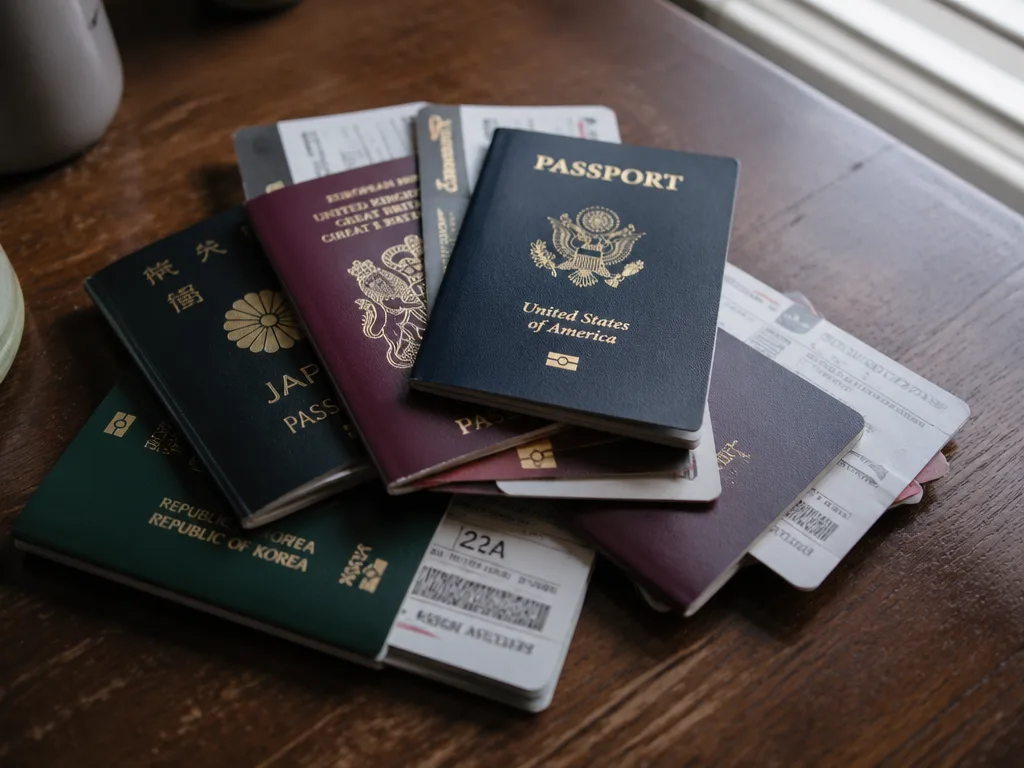
Thailand’s e-Visa system at evisa.tgia.go.th is genuinely functional now — a big improvement from a few years ago when the website crashed regularly.
What you need:
- Valid passport (6+ months validity past entry date)
- Passport-quality photo (digital, JPEG)
- Proof of onward travel (return flight booking)
- Proof of accommodation (hotel booking or rental agreement)
- Bank statement or proof of funds (20,000 THB individual / 40,000 THB family)
- Completed online application
Processing time: 3 to 5 business days for most nationalities. Some take up to 7 days. Apply at least two weeks before travel to give yourself buffer.
Cost: Varies by visa type. Tourist Visa single entry is around 2,000 THB. Payment by credit card.
Common rejection reasons: Passport photo doesn’t meet specs, bank statement is too old (within 3 months required), accommodation booking looks unofficial.
TIP
Apply for the e-Visa through the official government site only. There are third-party “visa agents” charging double the fees. They add no value — the application is straightforward enough to do yourself.
Entry Checklist: What to Have Ready
Before you land at Suvarnabhumi or Don Mueang, make sure you have all of this sorted:
Documents:
- Passport valid for 6+ months beyond your intended departure from Thailand
- Completed TDAC (screenshot the QR code)
- Return or onward flight ticket
- Hotel booking confirmation or invitation letter
- Visa (if required for your nationality or for stays beyond the free period)
Financial:
- Proof of 10,000 THB per person / 20,000 THB per family in cash or accessible funds
- At least 5,000 to 10,000 THB in cash for first few days (see Bangkok money and SIM guide)
Practical:
- Travel insurance (not mandatory, but hospitals here bill in USD for foreigners; see Thailand travel insurance guide)
- Domestic/regional SIM or data plan sorted
Land Border Entry: Malaysia, Cambodia, Laos
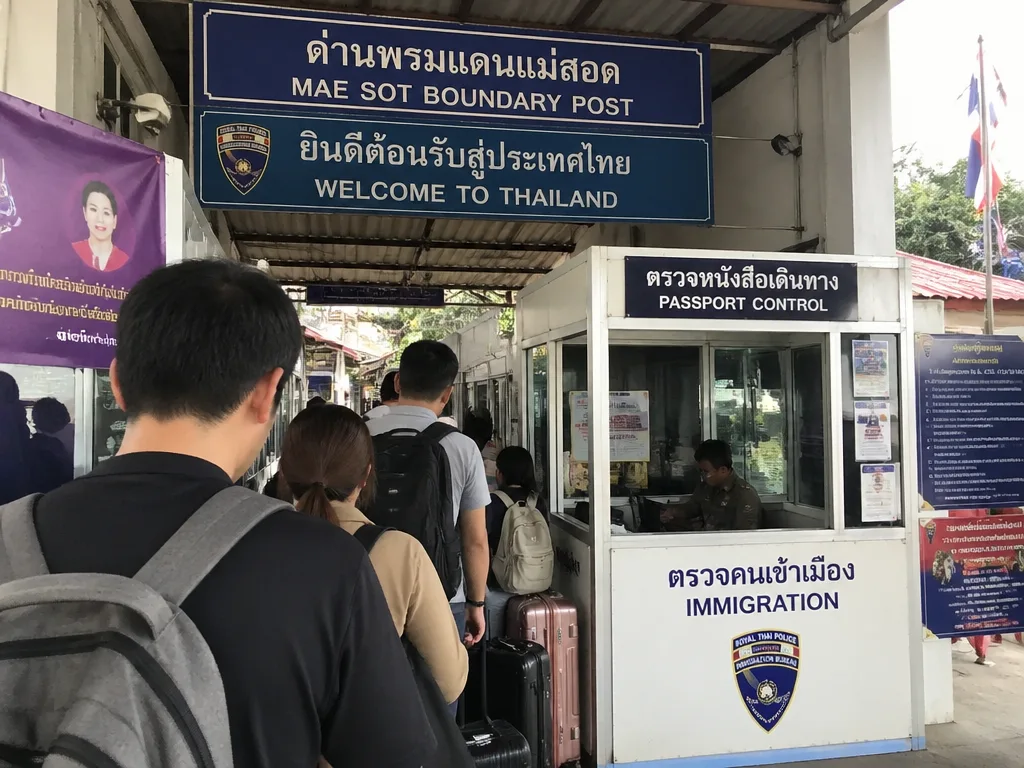
If you’re entering Thailand by land — common for long-term travelers doing regional circuits — the rules are slightly different.
From Malaysia (Hat Yai, Sadao, Betong checkpoints):
- Visa-free rules same as air entry
- TDAC required (complete online before crossing)
- Busiest crossing: Padang Besar / Wang Prachan
- Trains from KL to Hat Yai are genuinely scenic and comfortable
From Cambodia (Aranyaprathet / Poipet):
- Visa-free rules same as air
- TDAC required: fill it out before queueing at the border
- Notorious for scams at the Poipet side; only use the official border booth and ignore anyone in plainclothes
- Buses from Bangkok to Siem Reap cross here
From Laos (Nong Khai / Vientiane, Chiang Rai / Chiang Khong):
- TDAC required: Wi-Fi at the border is unreliable, so complete it the night before
- Nong Khai is the classic crossing: 15-minute train ride across the Friendship Bridge
- Quiet, efficient, straightforward
Border run frequency: There’s no written legal limit on how many times you can do a visa-exempt border run, but immigration officers have discretion. Doing many consecutive runs with no visa raises flags. The practical reality is that one or two per year is fine for most people. If you’re living here, get an appropriate visa.
Visa Runs in 2026: The Real Situation
The “visa run is dead” panic that circulates every few years is overstated. Visa runs still work. What’s tightened is enforcement when you clearly have no intention other than staying indefinitely on tourist exemptions.
What actually flags you:
- Many consecutive land border runs within a short period
- No onward ticket or plans
- No proof of accommodation
- Evasive answers to immigration questions
What doesn’t flag you:
- A genuine trip to Penang, Kuala Lumpur, or Singapore with a night or two stay
- A normal tourist reentry after actual travel in a neighboring country
For the full picture, see our Thailand visa run guide.
Travel Insurance: Is It Required?
Travel insurance is not mandatory for most tourist entries to Thailand. You don’t need to show proof at immigration.
That said, not having it is a genuine financial risk. Private hospitals in Bangkok (the ones that give you good care fast) bill at rates comparable to the US. A serious accident or illness can cost 500,000 THB or more without coverage.
I’ve been using SafetyWing Nomad Insurance for years. Monthly billing, covers most emergency scenarios, and the premium hospitals in Bangkok accept it directly. For a full breakdown of what to look for, read the Thailand travel insurance guide.
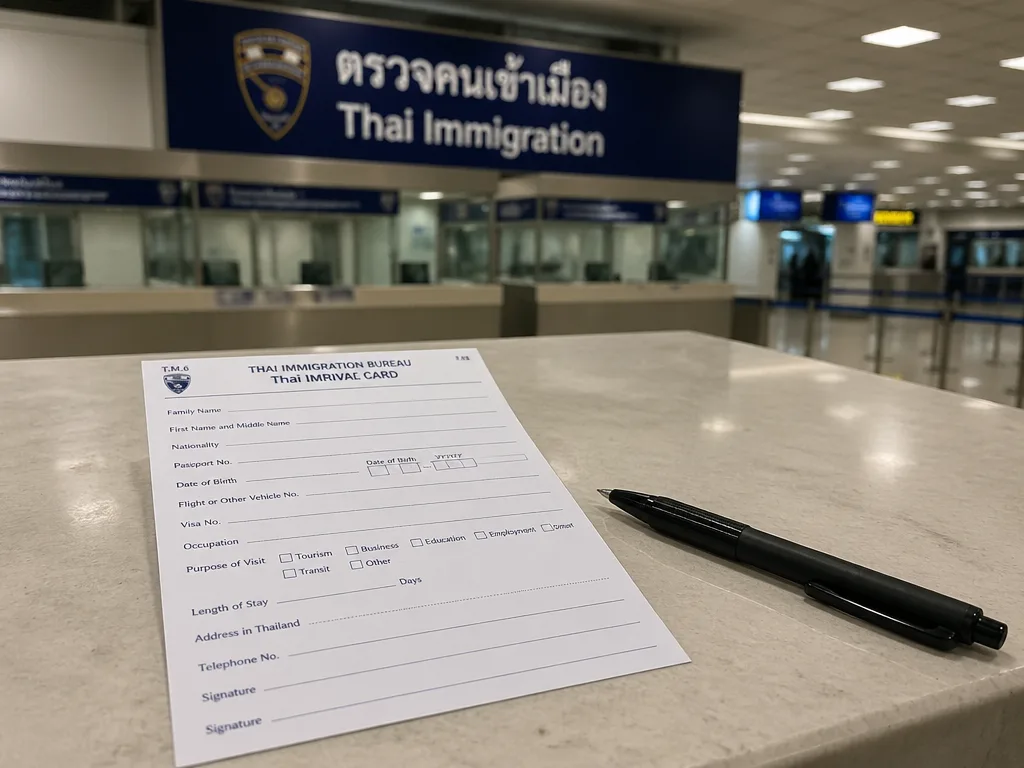
At the Airport: What Immigration Checks
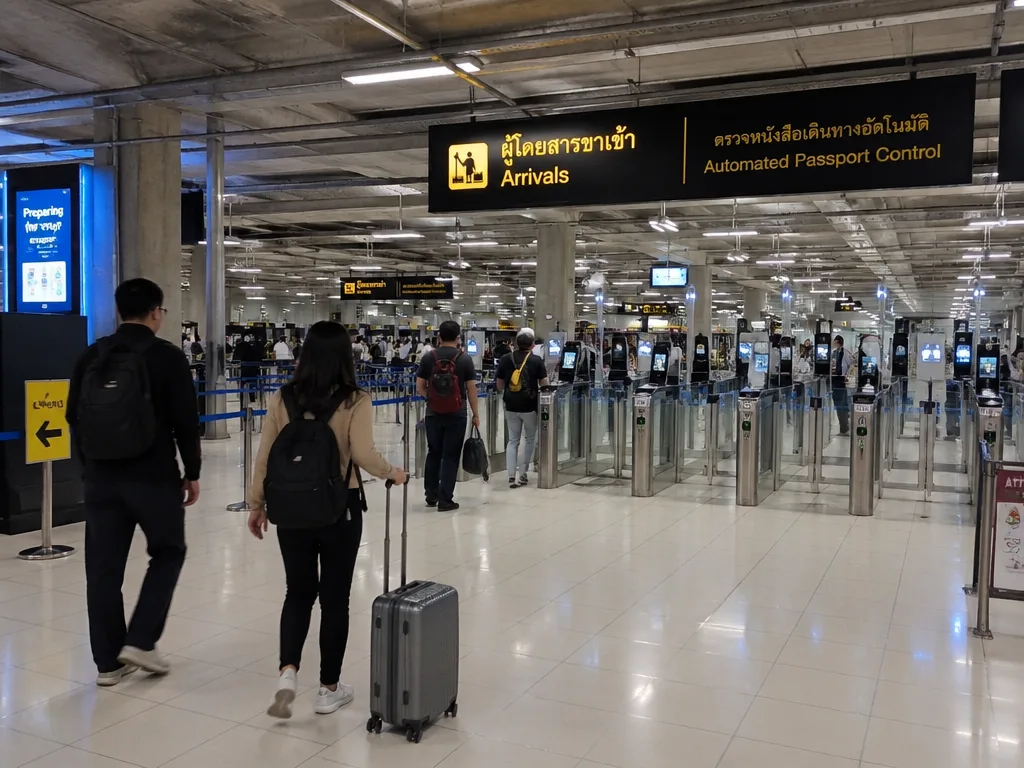
Suvarnabhumi immigration has been using automated e-gates for some passport holders since 2023. If your passport is eligible, you scan it, press fingers, and walk through without talking to a human. Citizens of many countries including South Korea, Japan, Singapore, and several EU states qualify.
For everyone else, you queue for the officer lane. They check:
- Passport validity
- Your visa or visa exemption eligibility
- TDAC QR code (usually scanned or shown on your phone)
- Return ticket (they may ask to see it, so have it accessible, not buried in your email)
- Accommodation details (hotel name and address is sufficient)
Immigration officers at Suvarnabhumi are professional and fast. A typical queue during normal hours clears in 20 to 40 minutes. Avoid arriving on the same flight wave as multiple long-haul flights; early morning can back up.
For detailed airport navigation from arrivals through to the city, the Bangkok airport guide covers transport options, SIM card pickup locations, and money exchange.
Getting Around Once You’re In
Once you’ve cleared immigration, the city is waiting. From Suvarnabhumi, the Airport Rail Link gets you to central Bangkok in 30 minutes for 45 THB. Grab and Bolt are both reliable from the official taxi/ride-hail queues.
For getting around the city itself, see the full Bangkok Grab and Bolt guide — including which app is cheaper for which routes, how to avoid the common airport taxi scams, and when to use the BTS instead.

Bottom Line
Thailand entry in 2026 is straightforward if you prepare:
- Complete TDAC before you fly (72 hours to 15 minutes before departure)
- Know your visa-free period for your passport (most visitors don’t need a visa at all)
- Have your documents accessible: passport, onward ticket, accommodation booking
- Get travel insurance (not required by law, required by common sense)
- Check the e-Visa system if you’re planning a longer stay
The process is genuinely simpler now than it was five years ago. The government has modernized the entry infrastructure, the e-Visa system works, and TDAC is cleaner than the old paper TM6. Just don’t try to figure it all out at the airport — do the preparation at home.
For everything you need for your first days in Bangkok — SIM cards, money exchange, transport — see the Bangkok money and SIM card guide.