A visa run is the ritual of leaving Thailand and immediately re-entering to reset your permitted stay. If you’ve been here longer than a few weeks, you’ve either done one, heard about one, or you’re about to need one. After a decade of living here, I’ve lost count of my own. Some were smooth. Some were fourteen-hour ordeals involving broken-down minivans and Cambodian border officials who decided my passport photo didn’t look enough like me.
Here’s the full picture — mechanics, destinations, costs, and how to stop doing them altogether.
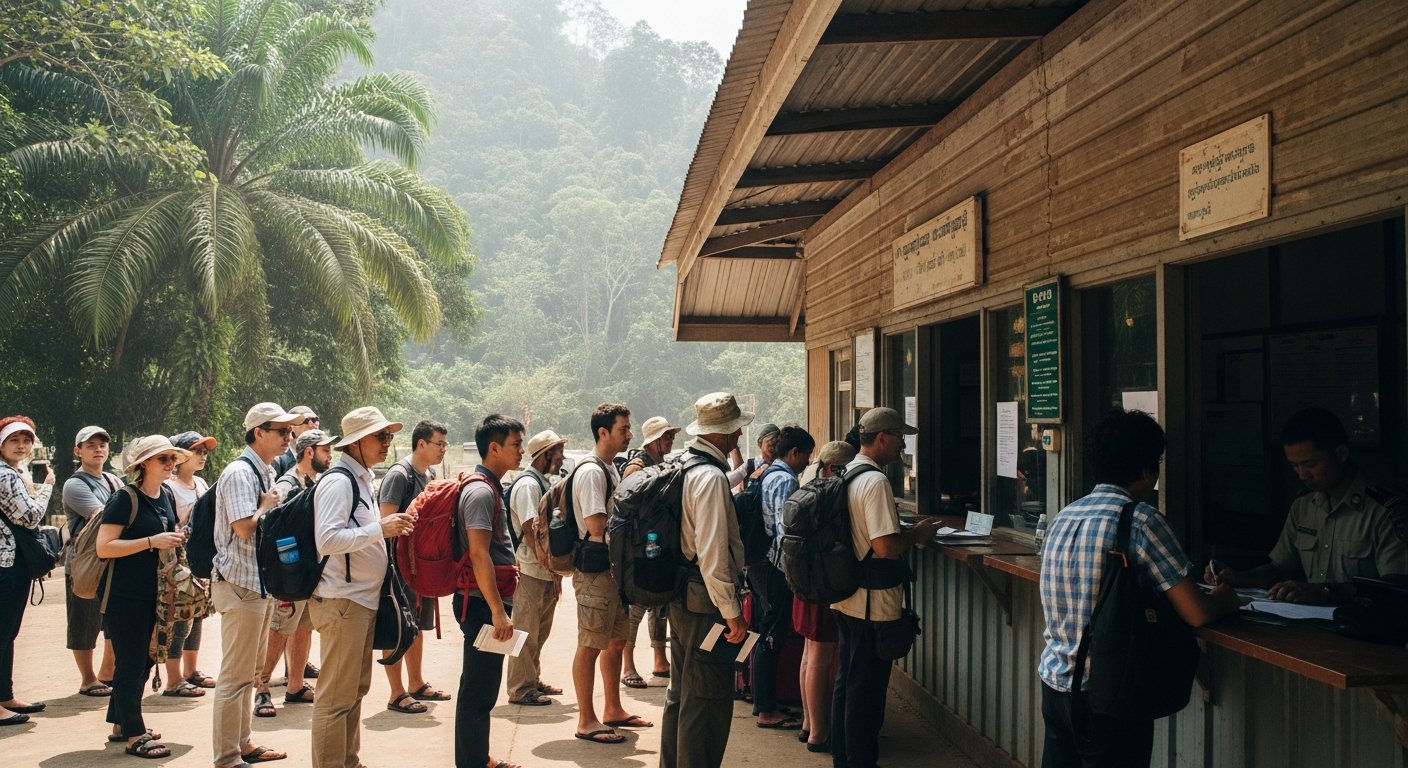
What exactly is a visa run?
It is exactly what it sounds like: you leave Thailand, get stamped out, cross into a neighboring country, turn around, cross back into Thailand, and get a fresh entry stamp. The entire point is that new stamp — it resets the clock on your permitted stay.
Most people doing visa runs are on one of these:
Visa exemption (tourist stamp): Citizens of 93 countries (including the US, UK, Australia, most of the EU) get 60 days on arrival by air. Land crossings also grant 60 days as of the 2024 rule change. When those 60 days run out, you leave and come back for another 60.
Tourist visa (TR): Applied for at a Thai embassy or consulate before arrival. Gives 60 days, extendable once for 30 more days at immigration (฿1,900 fee). After those 90 days, you’re back to running.
Non-Immigrant visas (B, O, ED, etc.): These are the work permits, retirement visas, education visas. They typically last 90 days and are extendable in-country. If your extension lapses or gets denied, you’re running too.
The key thing to understand: a visa run doesn’t get you a new visa. It gets you a new entry stamp based on whatever visa (or exemption) applies to your passport.
How many times can you do this?
Technically, there is no hard legal limit on the number of visa-exempt entries. Practically, immigration officers have wide discretion, and they use it. The unwritten rule that circulates among long-term expats: two back-to-back visa-exempt entries are fine, three gets questions, four or more and you’re gambling.
If an immigration officer suspects you’re living in Thailand on tourist stamps (which you are), they can deny you entry. It happens. I’ve seen it happen to people standing right next to me at Poipet. The officer asked where the person worked, how they supported themselves, and when they planned to leave Thailand. The answers weren’t convincing. Entry denied.
The safest pattern: alternate between visa-exempt entries and actual tourist visas obtained at embassies in neighboring countries. A Vientiane tourist visa followed by a visa-exempt entry after it expires looks much cleaner than four consecutive border bounces.
Where do people go?
Four borders handle the vast majority of visa runs from Bangkok. Each has a different personality.
| Destination | Distance from BKK | Round-trip cost | Total time | Ease |
|---|---|---|---|---|
| Poipet, Cambodia | 250 km | 1,200–2,500 THB | 8–14 hours | Medium |
| Vientiane, Laos | 640 km (fly) | 4,000–8,000 THB | 1–3 days | Easy |
| Nong Khai, Laos | 615 km | 2,000–4,000 THB | 12–20 hours | Easy |
| Penang, Malaysia | 950 km (fly) | 5,000–10,000 THB | 2–3 days | Easiest |
Poipet, Cambodia — The classic
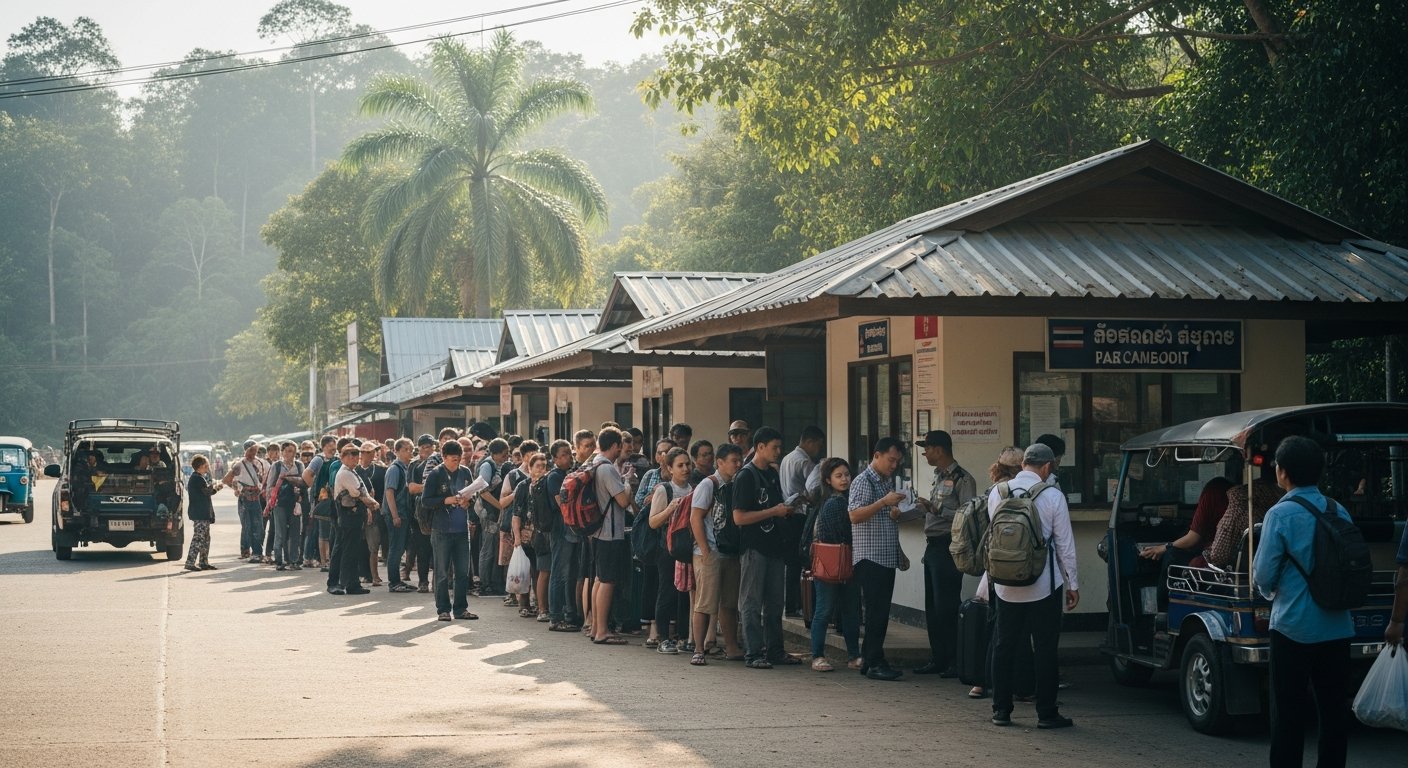
This is the visa run that built the industry. Aranyaprathet on the Thai side, Poipet on the Cambodian side. Hundreds of visa-run minivans leave Bangkok’s Mo Chit and Khao San Road area every single day.
How it works: Board a minivan at 5–6 AM. Arrive at the border around 10 AM. Walk through Thai exit immigration, cross the no-man’s-land, get your Cambodian visa on arrival ($35 USD or ~1,600 THB), walk into Cambodia, immediately turn around, walk back through Cambodian exit, re-enter Thailand with a fresh stamp. Back in Bangkok by evening.
Cost breakdown:
- Minivan round-trip: 700–1,500 THB
- Cambodia visa on arrival: ~1,600 THB ($35)
- Food/water: 100–200 THB
- Total: roughly 2,500 THB (~$54)
The reality: Poipet is chaotic. Touts, scammers, fake “visa offices” that charge double, and border officials who openly ask for “tea money.” If you’ve never done it, go with a visa-run service company the first time. They handle the paperwork and shepherd you through. After that, you’ll know the routine well enough to do it solo.
Warning: The Cambodian side has a notorious scam where an unofficial “processing fee” of 100–200 THB is demanded at the visa window. You can refuse, but it will slow you down. Most people just pay it. Decide in advance how you feel about that.
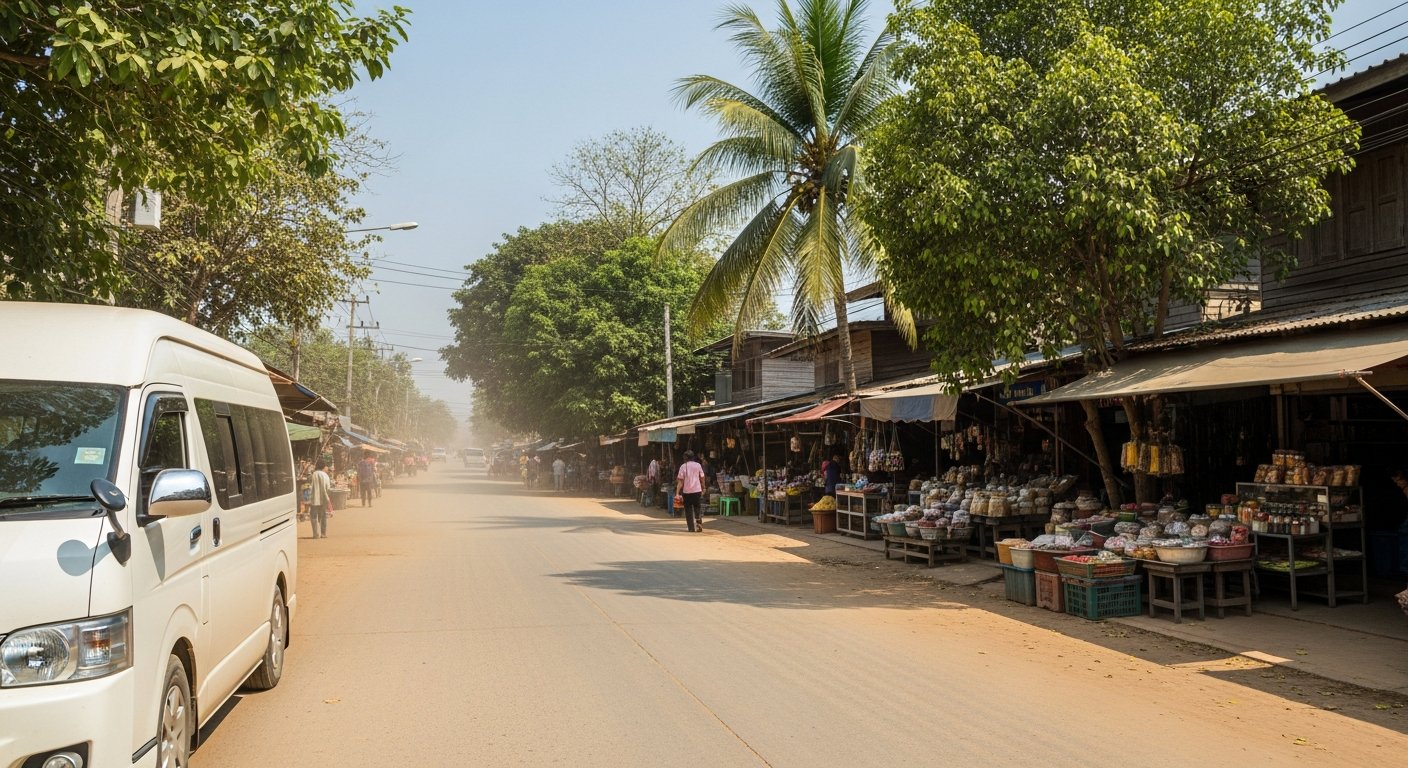
Vientiane, Laos — The smart move
If you need an actual tourist visa (not just a stamp), Vientiane is your destination. The Royal Thai Embassy there is the most foreigner-friendly visa-issuing embassy in the region, processing hundreds of tourist visa applications daily.
How it works: Fly Bangkok to Vientiane (1 hour, 2,000–4,000 THB on AirAsia or Nok Air). Submit your tourist visa application at the Thai Embassy on Day 1. Pick it up on Day 2. Fly back on Day 2 or 3.
Cost breakdown:
- Flights round-trip: 2,000–4,000 THB
- Thai tourist visa fee: 1,000 THB
- Hotel (1–2 nights): 500–1,500 THB
- Food, transport, misc: 500–1,000 THB
- Total: roughly 4,000–7,500 THB (~$87–163)
Why it’s worth more: You get a proper 60-day tourist visa, extendable for 30 more days at any Thai immigration office. That’s 90 days versus 60 from a visa-exempt stamp. More importantly, it looks legitimate to immigration officers when you return.
Vientiane is also genuinely pleasant — French colonial architecture, cheap Beer Lao, and Mekong sunsets. If you’re forced out of Thailand, you could do worse.
Nong Khai / Friendship Bridge — The overland Laos option
For those who prefer trains to planes. The overnight sleeper from Bangkok to Nong Khai is one of Thailand’s great travel experiences.
How it works: Board the 8 PM sleeper train (~600 THB for a second-class berth). Arrive Nong Khai around 6 AM. Cross the Friendship Bridge to Laos, get a Lao visa on arrival ($30–42 USD depending on nationality), turn around, cross back, fresh Thai stamp. Or continue to Vientiane (25 km from the bridge) for the embassy route.
Cost breakdown:
- Train round-trip: 1,200–2,400 THB
- Laos visa on arrival: ~1,400–1,900 THB
- Bridge shuttle + fees: 100–200 THB
- Food: 200–400 THB
- Total: roughly 2,900–5,000 THB (~$63–109)
If you need help navigating to the bus or train stations in Bangkok, the Bangkok transportation guide covers every option in detail.
Penang, Malaysia — The comfortable option
The most civilized visa run, if your budget allows it. Penang asks for no visa on arrival fees. Malaysian immigration is efficient, professional, and fast. And George Town’s food scene is arguably better than Bangkok’s (controversial, but I’ll say it).
How it works: Fly Bangkok to Penang (1.5 hours, 2,500–5,000 THB). Cross into Malaysia, which is free and instant for most passport holders. Walk back to the airport, or better yet, spend a day eating your way through George Town. Fly back.
Cost breakdown:
- Flights round-trip: 2,500–5,000 THB
- No visa fee for Malaysia
- Hotel (optional, 1 night): 800–2,000 THB
- Food/transport: 500–1,500 THB
- Total: roughly 3,800–8,500 THB (~$83–185)
Penang is the best option if you want to combine a visa run with a mini-vacation. George Town’s street food alone justifies the trip.
How much does a visa run cost?
The cheapest option is the Poipet border bounce at roughly 2,500 THB ($54). The most expensive is a Penang overnight at 8,000–10,000 THB ($174–217). Most people settle into a pattern based on their budget and how much they hate buses.
Remember that you should also carry sufficient cash in both THB and USD. Smaller border crossings have limited ATM access, and exchange rates at borders are terrible. Check the money and SIM card guide for tips on managing cash and staying connected while abroad.
What to bring
Pack light. This is a bureaucratic exercise, not a vacation (unless you’re making it one).
Essential documents:
- Passport with at least 6 months validity and 2+ blank pages
- One passport-size photo (4x6 cm) — Cambodia and Laos require these for visa on arrival
- Pen (seriously, bring your own pen)
- Photocopy of your passport data page
- Proof of onward travel or return flight (rarely checked, but carry it)
- USD cash for visa fees ($35 for Cambodia, $30–42 for Laos)
Practical items:
- Cash in THB for food and transport (5,000 THB is more than enough for a day trip)
- Phone with offline maps downloaded
- Portable charger — border waits can be long
- Snacks and water — don’t count on buying anything palatable at Poipet
Do not bring:
- Checked luggage (carry-on only for day trips)
- Anything you’d be sad to lose — borders are crowded and chaotic
- Attitude — border officials have absolute power over your day
What happens at the border?
The process is simpler than it looks, but it helps to know the sequence before your first time.
Step 1: Arrive at the Thai border checkpoint. Fill out a TM.6 departure card (blue card, usually handed out on the minivan). Queue at Thai immigration. Get your exit stamp.
Step 2: Walk across to the neighboring country. If Cambodia or Laos, fill out their visa-on-arrival form, hand over your passport, photo, fee, and wait. Myanmar and Malaysia don’t require visas for most nationalities.
Step 3: You are now officially in another country. Congratulations. Take a breath. Buy a coffee. Or immediately turn around.
Step 4: Exit the neighboring country. Get their exit stamp.
Step 5: Walk back to Thai immigration. Fill out a TM.6 arrival card (white card). Queue up. The officer will check your passport, ask how long you’re staying (say “holiday” or “tourism”), and stamp you in. Fresh 60 days.
If you’re nervous about the language barrier at border checkpoints, the Thai survival phrases guide covers the essentials — though most border officials speak enough English to process you without issue.
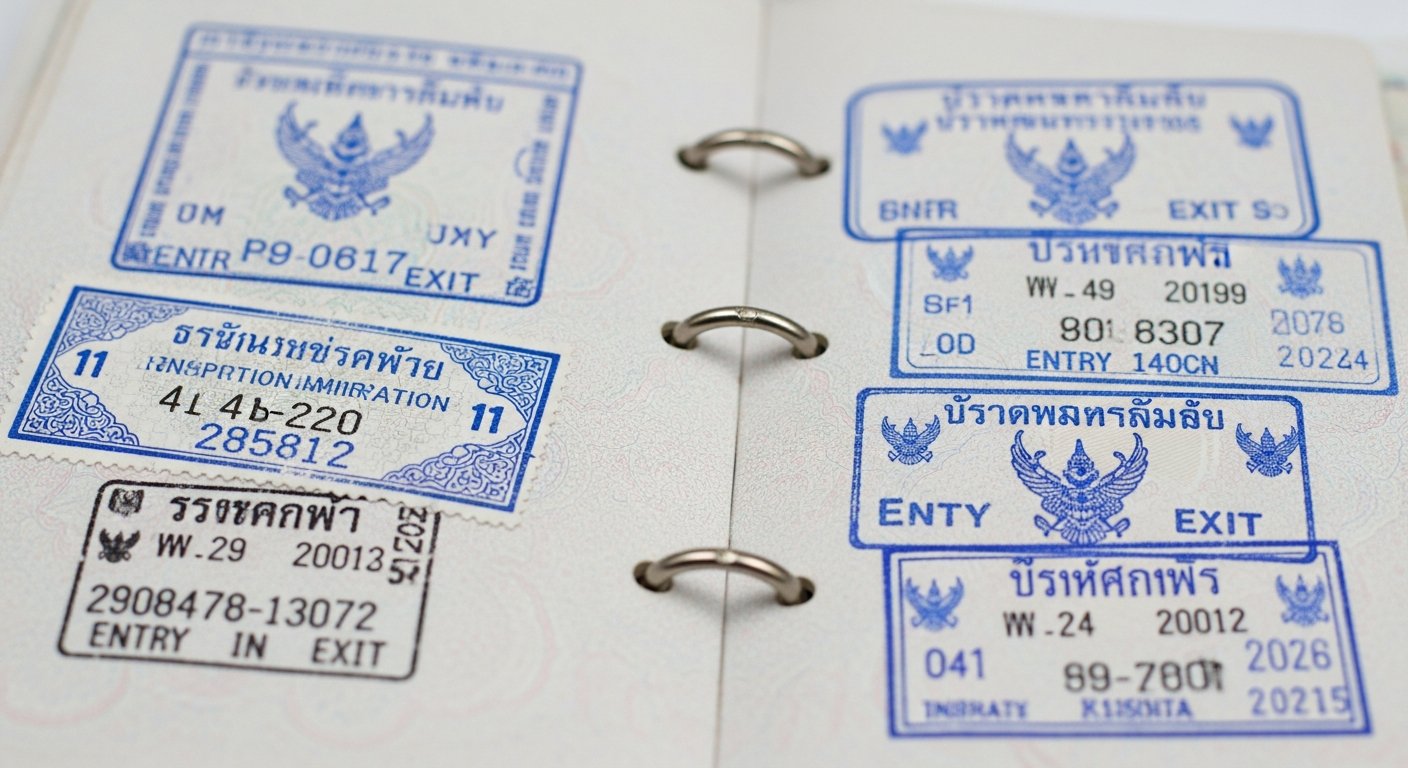
Can I just overstay instead?
You can. You shouldn’t. Thailand’s overstay penalties are clearly published and consistently enforced.
Overstay fines: 500 THB per day, capped at 20,000 THB. This might sound manageable until you realize that overstays are recorded in the immigration system and attached to your passport number permanently.
Overstay bans:
- 90+ days overstay (caught at departure): 1-year ban
- 1+ year overstay (caught at departure): 3-year ban
- Caught by police during overstay: 5-year ban
- Second offense: 10-year ban
The people who tell you “nobody checks” are the same people who later post panicked questions on expat forums. Don’t be that person.
How do you stop doing visa runs?
This is the real question. Visa runs are a symptom of not having the right long-term visa, and Thailand actually offers several paths to legal long-term residency.
Thailand Elite Visa: The easiest option if you have the money. 600,000 THB (~$13,000) for 5 years, 1 million THB for 10 years. No work permit, but unlimited entries and no visa runs. Airport VIP service included. This is what most digital nomads with stable income end up getting.
Non-Immigrant B (Business): Requires a Thai employer to sponsor you. Leads to a work permit. Annual renewals, but no more visa runs.
Non-Immigrant O (Retirement): Available if you’re 50+. Requires 800,000 THB in a Thai bank account or 65,000 THB monthly income. Annual renewals.
Non-Immigrant O (Marriage): Married to a Thai national. Requires 400,000 THB in a Thai bank account or 40,000 THB monthly income.
Non-Immigrant ED (Education): Enroll in a Thai language school or university. Gives you a 1-year visa with 90-day reporting. Many people use this as a stopgap while figuring out a longer-term plan.
Digital Nomad Visa (DTV): Introduced in 2024. 10,000 THB fee, valid for 180 days with a 180-day extension (360 days total). Requires proof of remote work or freelance income of at least $12,800/year. Multiple entries allowed. This is the newest and most interesting option for remote workers.
If you’re earning decent money and plan to stay more than six months, the math almost always favors getting a proper visa over running every 60 days. A year of visa runs costs 15,000–30,000 THB in direct expenses alone, plus the lost time and cumulative stress of wondering if today’s the day an officer says no.
Frequently asked questions
Can I extend my visa-exempt stamp without leaving Thailand?
Yes. Visit any immigration office and pay ฿1,900 for a 30-day extension. This turns your 60-day stamp into 90 days. You can only do this once per entry. The main Bangkok office is at Chaeng Watthana — go early, bring passport photos, and expect to spend 2–4 hours.
What if immigration denies me entry on a visa run?
It happens, though it’s rare if your passport is clean and you can show evidence of financial means (a bank statement or credit card) and onward travel. If denied, you’ll be sent back into the neighboring country. From there, you can fly to a Thai embassy in another city and apply for a proper tourist visa, which almost always gets approved.
Is it legal to work remotely in Thailand on a tourist stamp?
Technically, no. Working in Thailand without a work permit is illegal regardless of your visa type. Practically, thousands of digital nomads do it daily on tourist stamps and visa exemptions. Immigration is aware and largely unbothered as long as you’re not working for a Thai company or taking jobs from Thai nationals. The DTV visa was created specifically to address this gray area.
Do visa-run companies handle everything for me?
Yes, and they’re worth using at least once. Companies like Thai Visa Run and 1Stop Visa offer all-inclusive packages — transport, border guidance, paperwork, and sometimes lunch. Prices range from 1,500–3,500 THB depending on destination. They know the border officers and the current mood of immigration. For a first-timer, the peace of mind is worth the markup.
Has the process changed recently?
Frequently. Thailand adjusts visa rules every year or two, and 2024 brought major changes: visa-exempt periods extended from 30 to 60 days, land border entries equalized with air entries, and the DTV introduced. Always check the Thai Immigration Bureau website or Reddit r/ThailandTourism within a week of your run. Rules printed six months ago may already be outdated.