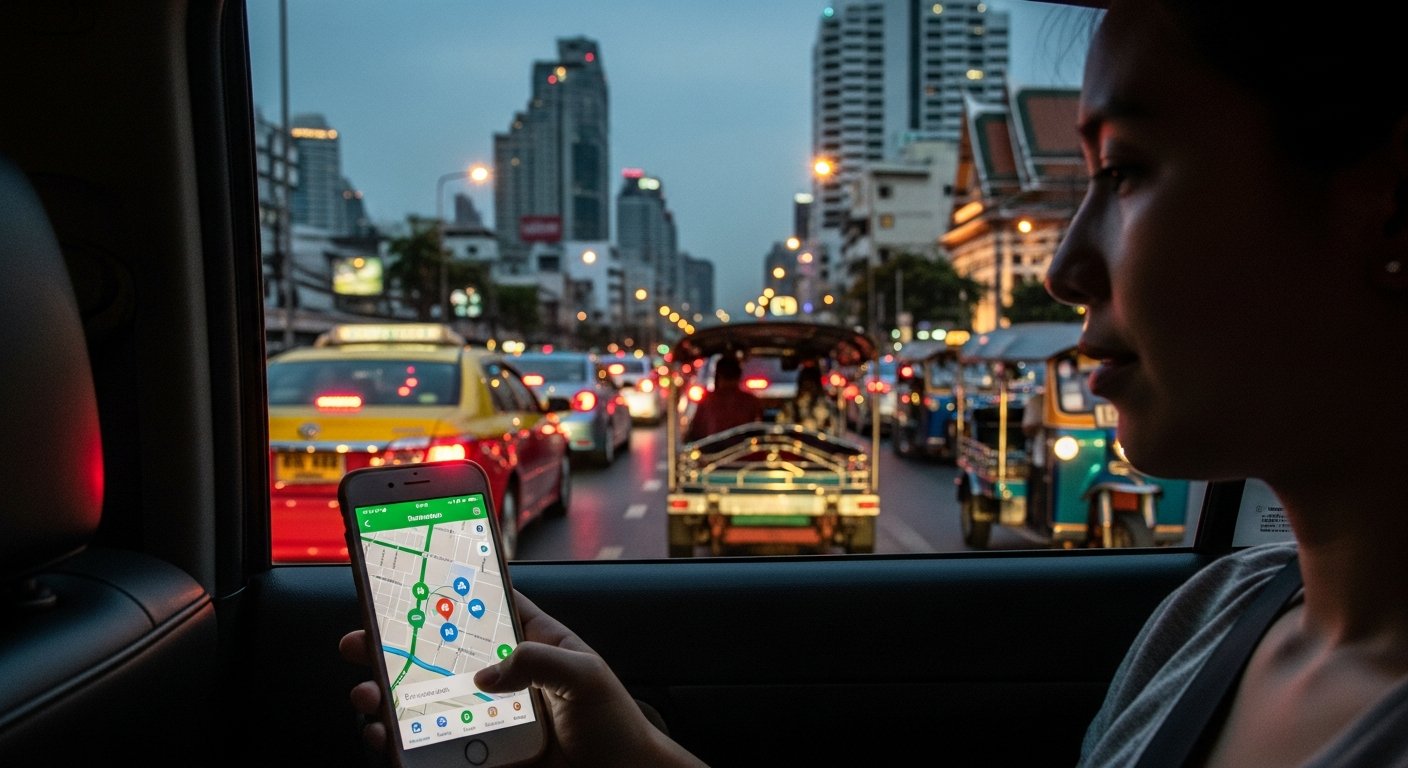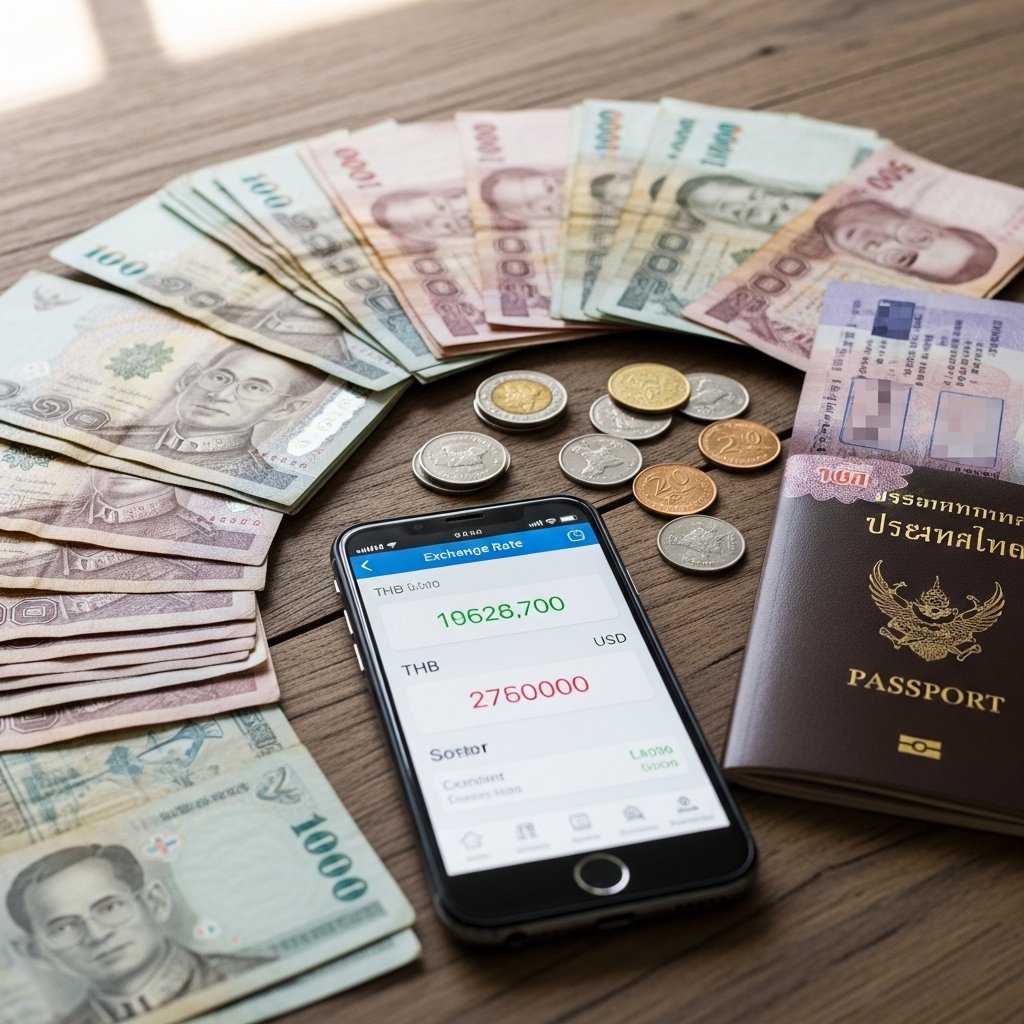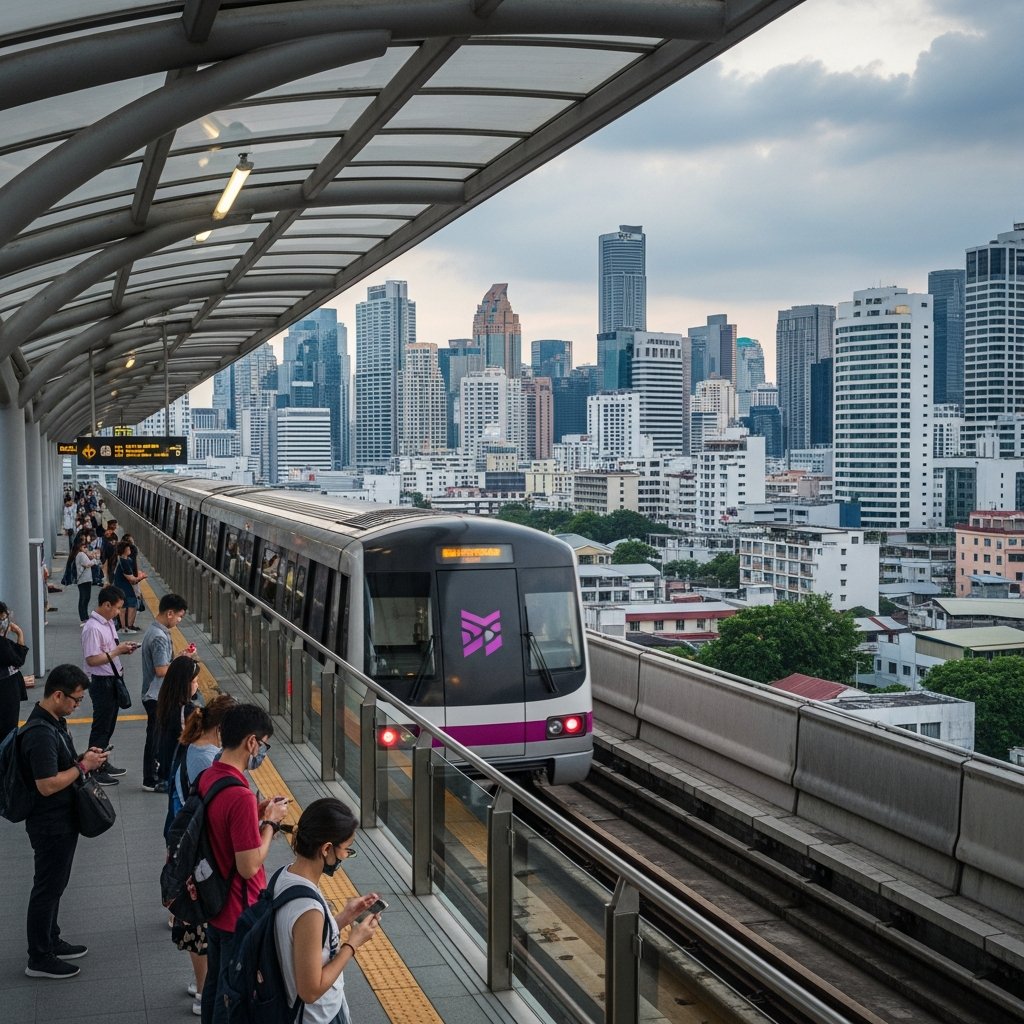
Bangkok’s transportation system looks like chaos from the outside. Elevated trains cross over gridlocked highways. Longtail boats share a river with ferries and floating noodle vendors. Tuk-tuks weave between city buses that look like they haven’t been serviced since 1987. And somewhere underneath all of it, there’s a subway.
But here’s the thing: once you understand which mode to use when, Bangkok becomes one of the most navigable cities in Southeast Asia. You can cross the entire city for under 100 baht if you know the system. You just need to stop thinking of it as one network and start thinking of it as six or seven overlapping ones, each with its own sweet spot.
The 10-second version: Use the BTS or MRT for anything near a train line; it beats traffic every time. Take a Chao Phraya orange-flag boat (฿15) to riverside temples. Open Grab or Bolt for everywhere else, and flag a metered taxi only when surge climbs above 1.5x. After midnight, Grab is your only safe bet. Everything below is the detail behind those rules.
| Going to… | Take | Cost |
|---|---|---|
| Anywhere on a train line | BTS / MRT | ฿16-59 |
| A riverside temple (Wat Pho, Grand Palace) | BTS to Saphan Taksin, then orange-flag boat | ฿15 |
| Somewhere off the train lines | Grab / Bolt | ฿50-200 |
| The airport | Airport Rail Link or pre-booked Grab | ฿45+ |
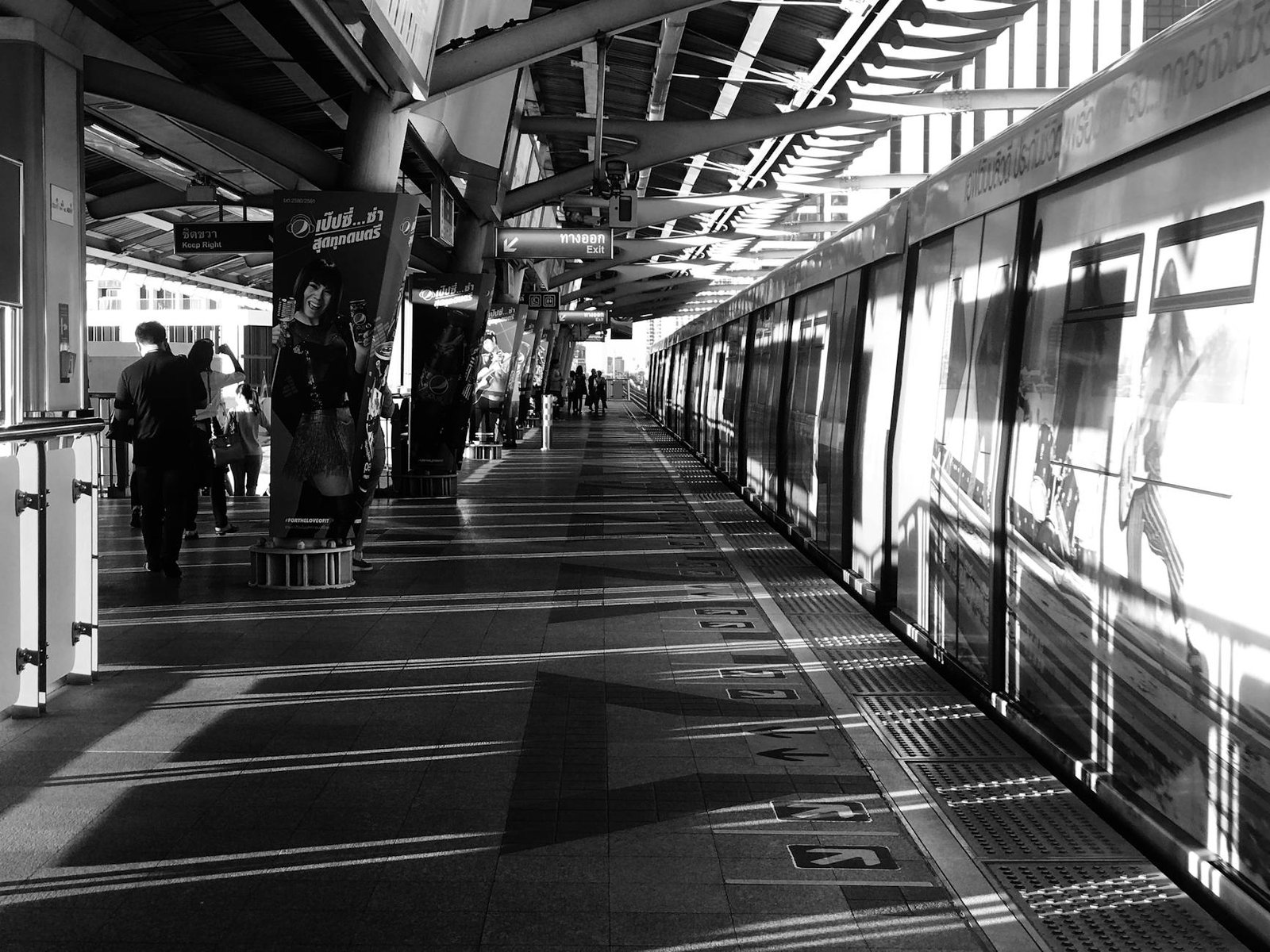
BTS Skytrain: The Backbone
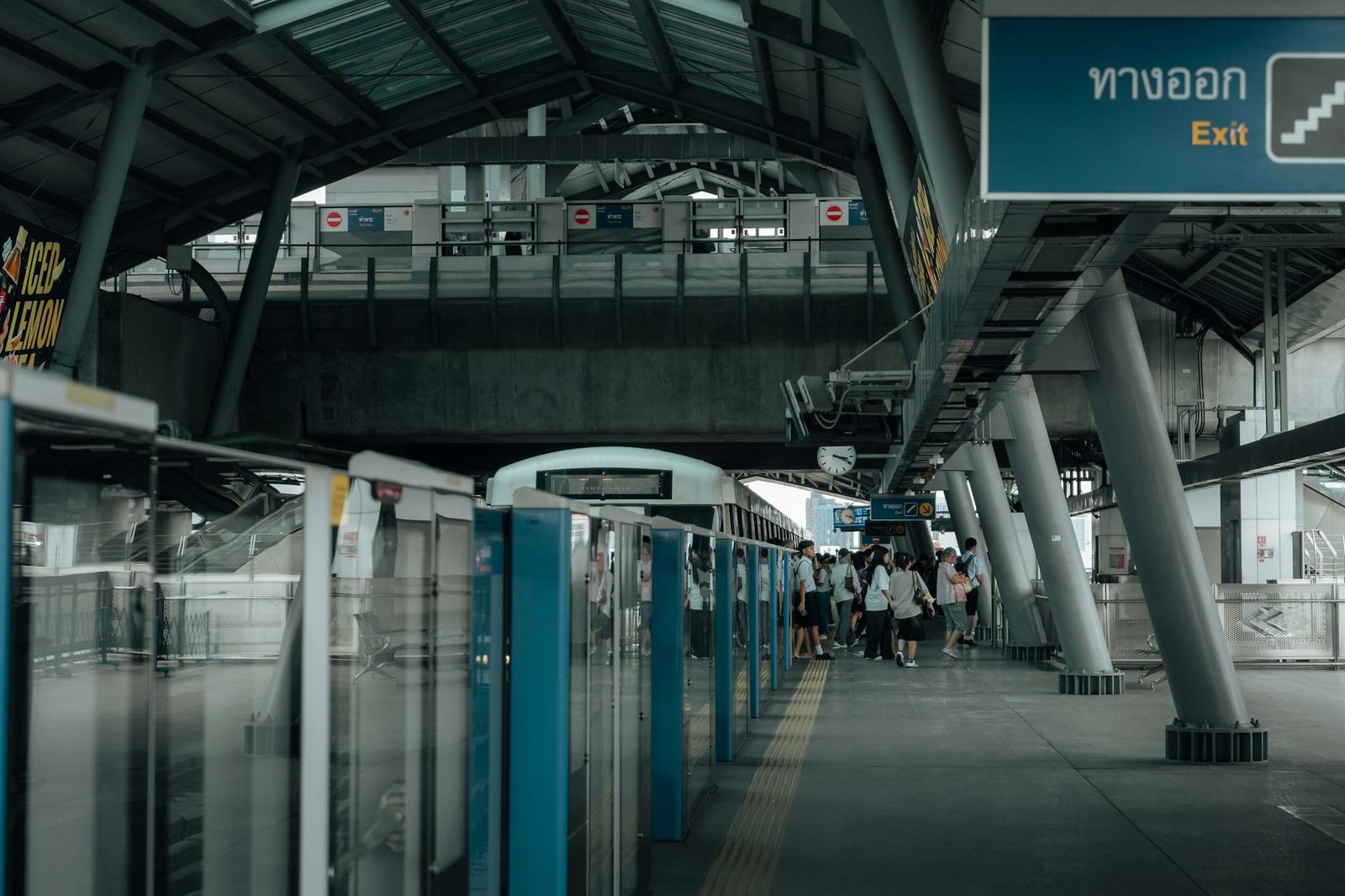
The BTS (Bangkok Mass Transit System) is the elevated train that runs above the worst of the traffic. Two lines (Sukhumvit and Silom) intersect at Siam station, covering most of the areas tourists actually visit.
Sukhumvit Line runs north-south through the shopping and nightlife corridor: Chatuchak (Mo Chit), Ari, Victory Monument, Siam, Nana, Asok, Phrom Phong, Thong Lo, Ekkamai, On Nut, and beyond. If you are staying on Sukhumvit (most first-timers do), this line is your lifeline.
Silom Line branches west from Siam through the business district: National Stadium, Ratchadamri, Sala Daeng (for Silom/Patpong), Saphan Taksin (for the river boats), and onwards to Wongwian Yai across the river.
| Detail | Info |
|---|---|
| Fare | ฿16-59 per trip depending on distance |
| Hours | 5:30 AM - midnight (last trains vary by station) |
| Payment | Single journey tokens (machines at every station) or Rabbit card |
| Frequency | Every 3-6 minutes during peak, 5-8 minutes off-peak |
Rabbit card vs single journey tokens: If you are staying more than three days, buy a Rabbit card (฿100 for the card + whatever balance you load). It saves time, since the token machines have queues during rush hour that the card tap gates don’t. You can also use Rabbit at 7-Eleven, some malls, and McDonald’s. Cards are sold at any BTS ticket office.
TIP
The BTS gets brutally crowded during rush hour (7:30-9 AM and 5-7 PM). If you have flexibility, shift your travel to 10 AM or after 7:30 PM for a completely different experience.
Key BTS connections:
- Siam — interchange between Sukhumvit and Silom lines, plus MBK and Siam Paragon malls. See our Bangkok shopping guide for the full mall rundown
- Saphan Taksin — transfer to Chao Phraya Express Boats (Sathorn Pier is right below)
- Mo Chit — Chatuchak Weekend Market, plus interchange to MRT
- Asok — interchange to MRT Sukhumvit station, and the heart of the nightlife district
MRT: The Underground Network
The MRT (Metropolitan Rapid Transit) is Bangkok’s subway system. The Blue Line is the one you’ll use, forming a loop through the city and hitting areas the BTS misses.
Key Blue Line stations:
- Sukhumvit — connects to BTS Asok (skybridge between them)
- Hua Lamphong — Bangkok’s historic train station and gateway to Chinatown. Walking distance to Yaowarat’s street food scene
- Wat Mangkon — drops you directly into the heart of Chinatown
- Sam Yot — near the Giant Swing and Rattanakosin (Old Town)
- Chatuchak Park — connects to BTS Mo Chit
- Kamphaeng Phet — literally at Chatuchak Market’s back entrance
- Thailand Cultural Centre — for the RCA nightlife area
| Detail | Info |
|---|---|
| Fare | ฿17-42 per trip |
| Hours | 6 AM - midnight |
| Payment | Single journey tokens (stored-value cards also available) |
| Frequency | Every 5-7 minutes |
The Purple Line extends north from Tao Pun into the suburbs (Bang Yai area). Unless your hotel is out there, you won’t need it.
BTS-MRT interchange tip: The two systems use separate payment. Your Rabbit card does not work on MRT, and vice versa. At interchange stations (Asok/Sukhumvit, Mo Chit/Chatuchak Park), you exit one system, walk through a connecting passageway, and tap into the other. Budget an extra 5-10 minutes for the transfer.
Chao Phraya Express Boats: The River Route
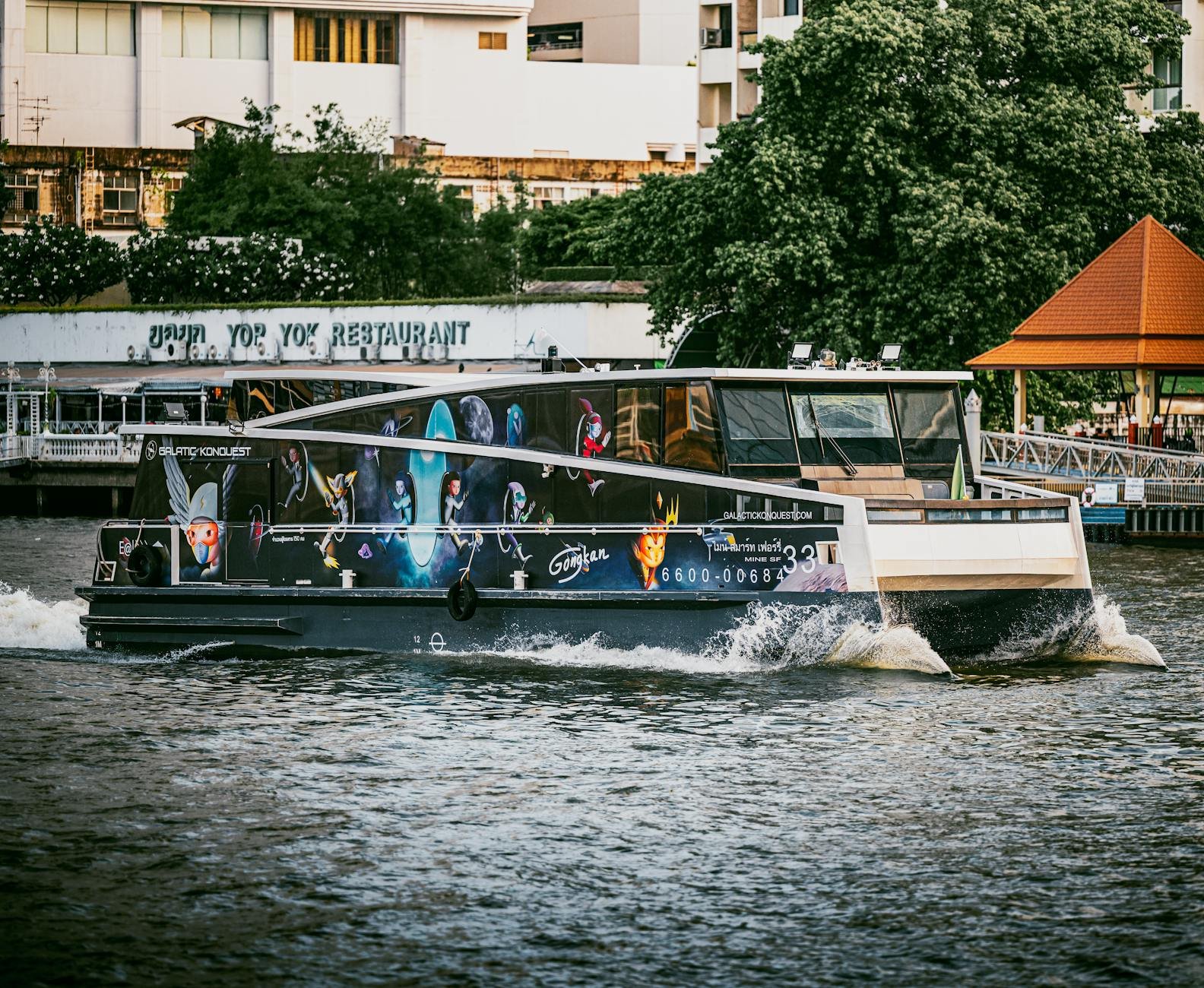
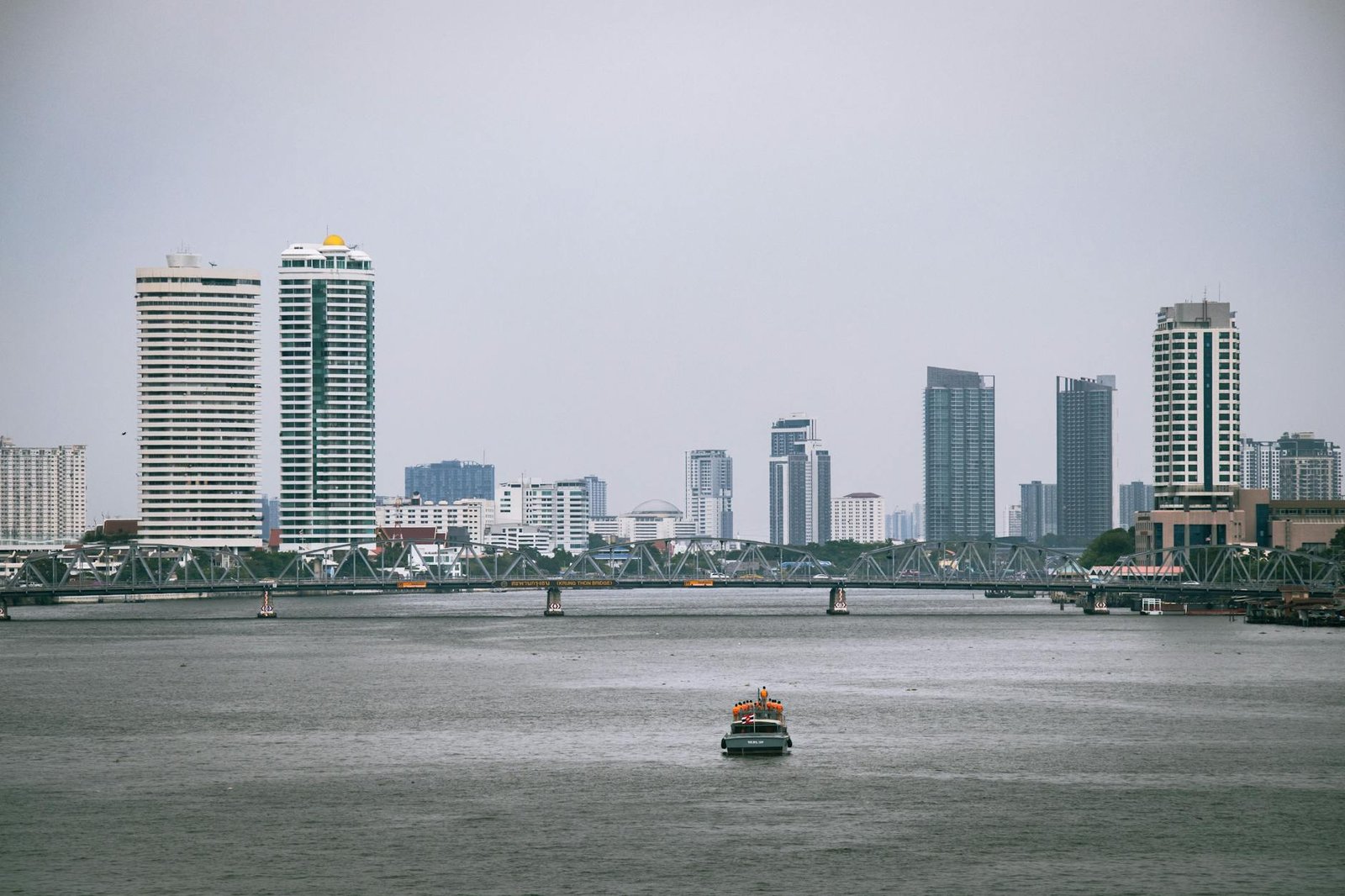
The Chao Phraya River is Bangkok’s oldest highway, and the express boat system running along it is one of the most underrated ways to travel: fast, scenic, and cheap.
How it works: Boats run along the river with stops at numbered piers (called “tha” in Thai). Different flag colors indicate different routes and stops. For tourists, two services matter:
Orange flag boats — the local workhorse. Flat fare of ฿15, no reserved seats, runs roughly every 10-15 minutes during the day. These stop at most major piers and are perfectly usable once you know which pier you need.
Tourist boat (blue flag) — ฿60 per trip or ฿180 day pass. Hop-on-hop-off with English announcements. More comfortable, less frequent, and honestly not necessary if you’re comfortable navigating the orange flag boats.
Key piers for tourists:
| Pier | What’s There |
|---|---|
| Sathorn (Central Pier) | Connects to BTS Saphan Taksin — this is your entry point from the train system |
| Tha Tien (N8) | Wat Pho (Reclining Buddha), plus cross-river ferry to Wat Arun |
| Tha Chang (N9) | Grand Palace and Wat Phra Kaew |
| Tha Maharaj (N9.5) | Tha Maharaj lifestyle mall, riverside dining |
| Phra Arthit (N13) | Khao San Road (10-minute walk) |
| Wat Arun Pier | Cross-river ferry from Tha Tien, ฿4 |
TIP
For the classic temple day trip: take BTS to Saphan Taksin, boat to Tha Tien for Wat Pho, cross-river ferry to Wat Arun, then boat to Tha Chang for the Grand Palace. All for under ฿100 in transport.
The boats run from roughly 6 AM to 7 PM (orange flag). After dark, the river shuts down for public transit. You’ll need Grab or a taxi back.
Grab: The Default for Everything Else
If the BTS, MRT, and boats are the skeleton, Grab is the muscle. It fills every gap: the last-mile walk from a train station, the late-night ride home, the trip to a restaurant in a soi too narrow for a bus route.
Why Grab works in Bangkok:
- Fixed price shown before you book — no meter games, no negotiating
- GPS tracking means you and the driver are looking at the same map
- No Thai language needed — the app handles communication
- Payment by card or cash
- Most rides within the city cost ฿50-150
For the deep dive on Grab vs Bolt (pricing, surge strategies, airport pickups, and scams), read the full Grab and Bolt guide. The short version: download both apps, compare prices every time, and use Grab as your default. If you’re arriving mid-2026, one extra wrinkle to check before you rely on Bolt at all: the Bolt Thailand license crisis — the operating license expired May 11 and the app is running on a short extension while regulators work through 2,193 violation cases.
When Grab is the wrong choice: Rush hour in Bangkok means traffic that doesn’t move. A 5 km Grab ride can take 45 minutes between 5-7 PM. If BTS or MRT covers the route, take the train. A trip that’s 45 minutes by car is 12 minutes on the Skytrain.
Metered Taxis: The Surge Backup
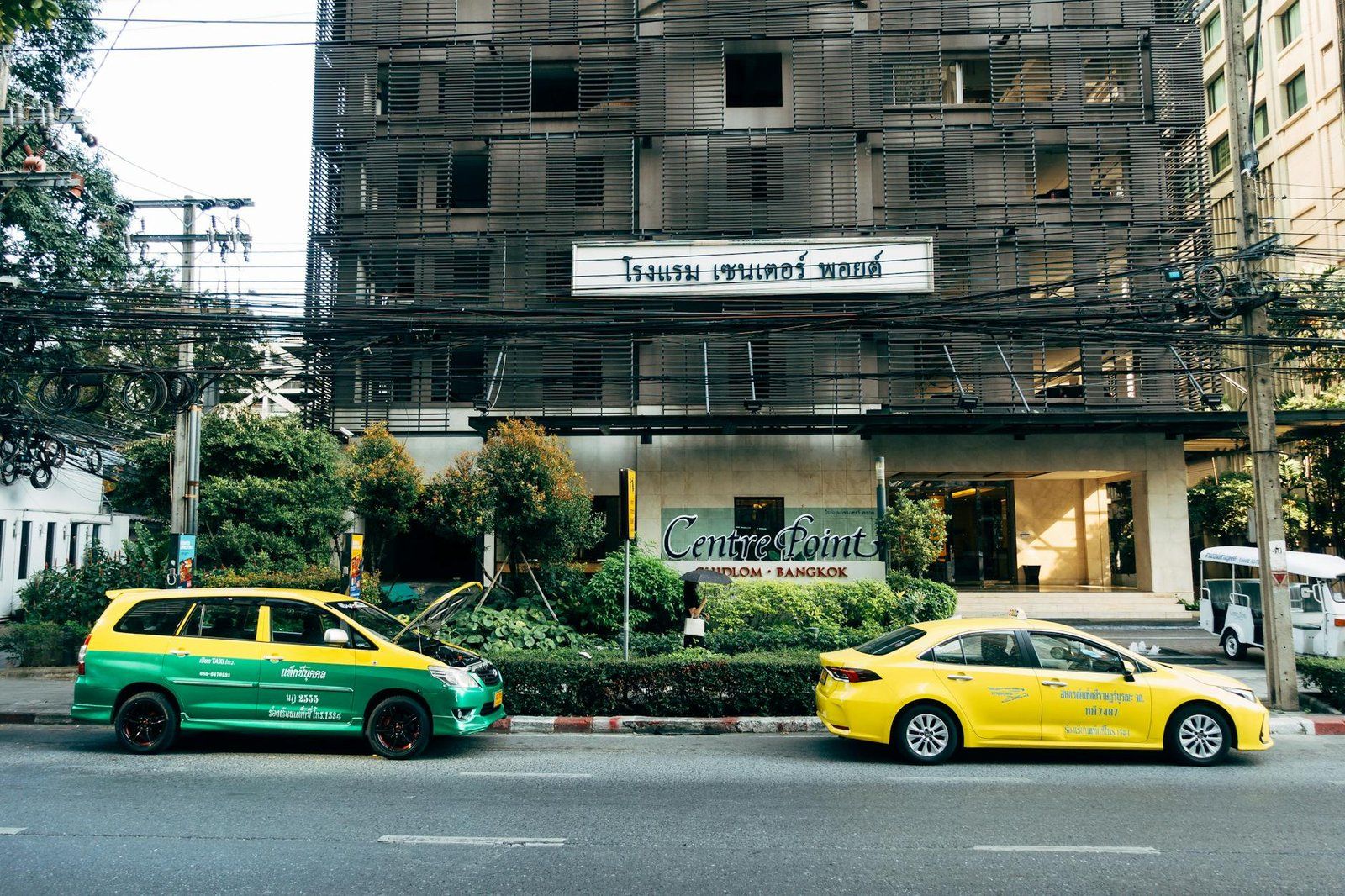
Bangkok’s metered taxis are bright pink, green, yellow, orange, or red, and they are everywhere. When Grab is surging during rain or rush hour, a metered taxi is often the cheaper option.
| Detail | Info |
|---|---|
| Flag fall | ฿35 for the first 2 km |
| Meter rate | ฿2 per 175 meters after that (with distance-based increments) |
| Typical fare | ฿60-150 for most intra-city trips |
| Expressway tolls | ฿25-75 per toll, paid by passenger |
The rules:
- Insist on the meter. If a taxi driver says “no meter” or quotes a flat price, close the door and flag another one. There are thousands of taxis in Bangkok, so never accept a flat fare from a metered cab
- Have your destination in Thai. Screenshot the Thai name from Google Maps. Show it to the driver. This prevents the “I don’t know where that is” excuse, which is sometimes genuine and sometimes a way to avoid a destination they don’t want to go to
- Small bills only. Drivers frequently claim they have no change for large notes. Carry 20s, 50s, and 100s
- Expressway tolls are your cost. The driver will ask before taking the highway. Say yes (it saves time) and pay cash at the toll booth. This is standard, not a scam
The taxis that refuse meters or try to negotiate tend to be parked outside tourist areas: Khao San Road, Grand Palace, major malls. Walk one block away, flag a moving taxi, and the meter goes on without discussion. Read our Thailand scams guide for the full list of transport-related tricks.
Tuk-Tuks: The Tourist Experience
Let’s be honest: tuk-tuks are not transportation. They are an experience. They cost more than a taxi, they’re slower than a Grab, they have no air conditioning, and they expose you directly to Bangkok’s exhaust fumes. But they are fun, they make great photos, and everyone should take one at least once.
The reality:
- ฿100-200 for short distances (what a Grab would do for ฿40-80)
- Always negotiate before getting in. The first price is always double what they’ll accept
- Never agree to “just stop at my friend’s shop” detours — this is Bangkok’s oldest tuk-tuk scam, where the driver gets a fuel coupon for bringing you to a gem store or tailor. See the scams guide for the full breakdown
- Best used for short, scenic hops — your hotel to a nearby temple, not Sukhumvit to Khao San Road
WARNING
If a tuk-tuk driver near the Grand Palace or Khao San Road offers you a “city tour” for ฿20-40, it is a scam. They will drive you to gem stores and tailor shops where they earn commissions. Decline politely and walk away.
Motorbike Taxis: Fast and Dangerous
The guys in orange vests standing at the mouth of every soi are motorbike taxis. They are the fastest way through Bangkok traffic because they weave between cars at speeds that will make you question your life choices.
Practical details:
- ฿20-100 depending on distance
- Point where you want to go, agree on price, hop on the back
- They’re most useful for short soi-to-main-road trips or BTS-to-hotel last-mile runs
- No helmets provided most of the time (some have a spare — take it if offered)
- No insurance, no tracking, no recourse if something goes wrong
I have taken hundreds of motorbike taxis and had exactly zero accidents. I have also seen enough near-misses to understand why every expat in Bangkok has a motorbike taxi horror story. Use them for short distances in residential areas. Avoid them on major roads during rush hour. And if it’s raining, absolutely do not get on one.
Khlong Saen Saep Canal Boats: The Local Shortcut
Bangkok was built on canals long before roads existed, and one canal boat route still operates as a genuine commuter line. The Khlong Saen Saep canal boat runs east-west through the city, connecting the Old Town (Golden Mount, Democracy Monument area) with Pratunam, and then onwards to Ramkhamhaeng and beyond.
Why you’d use it: It’s the fastest east-west public transit option through central Bangkok. A trip from the Golden Mount area to Pratunam takes 15 minutes. The same route by car during peak hours takes 45 minutes or more.
The catch: You will get wet. These boats are fast, the canal water is not clean, and the boarding process involves jumping onto a moving platform while a conductor holds a tarp to block the splash. It’s chaotic, it’s an experience, and it costs ฿10-20.
How to ride: Piers are marked with small signs along the canal. Pay the conductor on board. The main transfer point is at Pratunam pier (near CentralWorld mall). If you’re going from the Khao San area to the shopping district, this is genuinely the fastest option during the day.
How to Plan Any Route
Bangkok doesn’t have one unified transit system. You combine modes. Here’s the decision framework that works every time:
Going somewhere on the BTS/MRT line? Take the train. Always. It’s the fastest, most predictable option regardless of traffic.
Going to a riverside temple? BTS to Saphan Taksin, then Chao Phraya boat. Don’t even think about taking a car to the Grand Palace area. Traffic around Rattanakosin is the worst in the city.
Going somewhere off the train lines? Grab or Bolt. Compare prices in both apps. If surge is above 1.5x, walk to the nearest main road and flag a metered taxi instead.
Short hop within a neighborhood? Motorbike taxi for speed, walk if it’s under 500 meters, Grab if you have luggage or it’s raining.
Heading to the airport? Pre-book a Grab the night before, or take the Airport Rail Link from Phaya Thai BTS station to Suvarnabhumi (฿45, 30 minutes, zero traffic). For full airport logistics (including Don Mueang transfers and the common arrival scams), check the Thailand airport guide.
Leaving the city for Hua Hin or the coast? Bangkok-to-Hua Hin is the most underrated weekend trip in the country — 200 km southwest, three transport options that range from ฿180 minivan to ฿2,500 private car, plus a slow scenic train that exists more for the romance than the schedule. The Hua Hin first visit guide breaks down the four ways out of Bangkok with current 2026 prices, journey times, and which one to take depending on how much luggage you’re bringing.
Going out at night? BTS/MRT run until midnight. After that, Grab is the only safe, trackable option. Metered taxis work too, but only if they use the meter. Avoid tuk-tuks after dark unless you know the price already. The Bangkok nightlife guide covers the key areas and how to get between them.
The Cheat Sheet
| Mode | Best For | Avoid When | Cost |
|---|---|---|---|
| BTS | Shopping, nightlife, Siam area | Rush hour crowds | ฿16-59 |
| MRT | Chinatown, Chatuchak, RCA | — | ฿17-42 |
| Chao Phraya Boat | Riverside temples, Khao San | After dark | ฿15 (orange flag) |
| Grab/Bolt | Last-mile, late night, rain | Rush hour traffic | ฿50-200 |
| Metered taxi | When Grab surges | Tourist areas without meter | ฿35 flag + meter |
| Tuk-tuk | The experience, short hops | Long distances, rush hour | ฿100-200 negotiated |
| Motorbike taxi | Short soi runs, speed | Rain, highways, luggage | ฿20-100 |
| Canal boat | East-west through Pratunam | If you hate getting splashed | ฿10-20 |
Daily transport budget: A typical tourist day using mixed transport costs ฿150-300. That’s BTS/MRT for planned routes (฿100-150), one Grab ride (฿60-100), and maybe a river boat (฿15-60). Compare that to one airport taxi (฿300-400) and you’ll see why trains win.
FAQ
Is the BTS/MRT safe at night?
Yes. Both systems are well-lit, have CCTV, and are staffed until closing. The last trains run around midnight. After that, switch to Grab.
Can I use one card for BTS and MRT?
No. As of 2026, BTS uses the Rabbit card and MRT uses a separate stored-value card or tokens. There is no universal transit card yet. Buy a Rabbit card for BTS and use tokens for MRT unless you are making many MRT trips per day.
How do I get from the airport to the city center?
The Airport Rail Link connects Suvarnabhumi Airport to Phaya Thai BTS station: ฿45, about 30 minutes, and completely avoids traffic. From Don Mueang, you’ll need Grab, a metered taxi, or the A1/A2 airport bus (฿30) to Mo Chit BTS/MRT. Full details in the airport transfer guide.
Are tuk-tuks worth it?
Once, for the experience. Take a short ride, enjoy the open-air chaos, get your photos. Then switch back to Grab for everything else. They are not a practical transportation option, just a memorable one.
What apps should I download before arriving?
Grab and Bolt for ride-hailing — our full comparison covers setup and savings strategies. Google Maps for route planning, including BTS, MRT, and boat routes in its directions. That’s all you need. The transit system is intuitive once you’ve ridden it once.