You do not need to speak Thai to travel Thailand. Bangkok’s tourist infrastructure runs on English menus, pointing, and the universal language of holding up your phone with a Google Maps pin. You will survive just fine with zero Thai.
But “surviving” and “actually connecting with the place” are different experiences. Thirty phrases, not a hundred, not a conversational level, just thirty, will change how Thailand treats you. Vendors will laugh with you instead of at you. Taxi drivers will stop trying to skip the meter. Street food aunties will give you the portion they give locals. It is a remarkably small investment for a remarkably large return.
Here is the minimum viable phrasebook: every phrase a tourist actually needs, organized by the situations where you will use them.
How Thai Pronunciation Works (60-Second Version)
Thai is a tonal language with five tones, which means the same syllable can mean completely different things depending on pitch. The good news: for tourist-level Thai, getting tones slightly wrong will not cause problems. Context does the heavy lifting. A vendor knows you are trying to say “how much”, you are standing at their stall pointing at something.
Two rules that matter:
The “kh” sound is an aspirated K, like the K in “kite,” not the “ch” in “cheese.” When you see “kh” in this guide, think hard K with a puff of air.
The “r” sound often gets softened to an “l” in casual Bangkok Thai. So “aroy” (delicious) often sounds like “aloy.” Both are understood.
The Essentials (5 Phrases You Use Every Single Day)
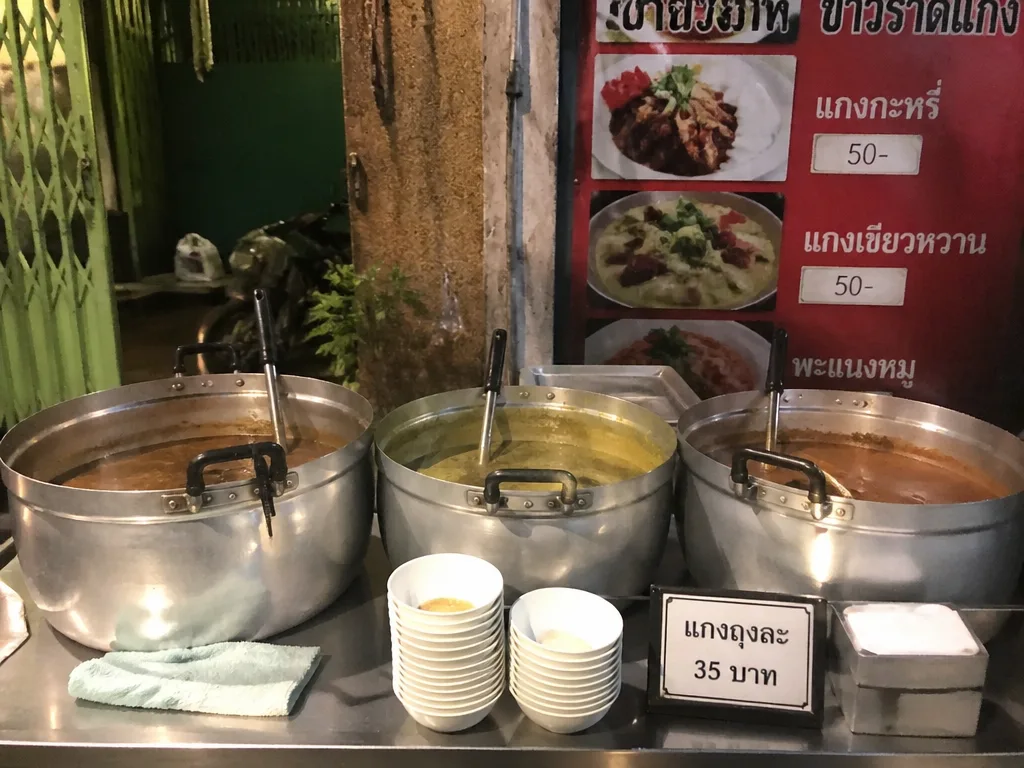
These are non-negotiable. You will use them dozens of times per day, and they cover roughly 60% of all tourist interactions.
| English | Thai Script | Pronunciation | When to Use |
|---|---|---|---|
| Hello | สวัสดี | sa-wat-DEE | Every interaction. Shop, hotel, restaurant, tuk-tuk. Always. |
| Thank you | ขอบคุณ | khop KHUN | After every transaction, every favor, every interaction. Thais notice. |
| Yes | ใช่ | CHAI | Confirming anything. “Is this the right stop?”, Chai. |
| No | ไม่ | MAI (falling tone) | Declining anything. Pair with a smile. |
| Sorry / Excuse me | ขอโทษ | khor TOHT | Bumping into someone, getting attention, squeezing past on a crowded BTS. |
The polite particles: khrap and kha. This is the single most important thing in this entire guide. Thai has gendered politeness particles that go at the end of sentences. Men say khrap (ครับ), women say kha (ค่ะ). Adding these to anything you say, “khop khun khrap,” “chai kha”, instantly signals respect. Skip them and you sound blunt, like a toddler demanding things. Use them and you sound like someone who made an effort. Every phrase in this guide should end with khrap or kha.
Words are only half of the greeting, though. The other half is the gesture: a slight bow with palms pressed together at chest level, called the wai. Getting the height wrong is the single most common foreigner mistake — too high looks sarcastic, too low looks like you’re praying to the receptionist. Our Thai wai greeting guide breaks down the four heights (peer, elder, monk, royalty), when not to wai (taxi drivers, hotel staff serving you, anyone visibly busy with their hands), and the awkward fallback when someone wais you first and you’re holding a bag of mango sticky rice.
Numbers and Money (8 Phrases That Save You Cash)
Thailand runs on cash negotiation, especially at markets, with tuk-tuks, and at any business without a barcode scanner. Knowing numbers and two key bargaining phrases will save you real money. This matters most when dealing with situations covered in our guide to scams in Thailand, if you can understand the number a driver quotes, you know immediately whether it is reasonable.
| Number | Thai Script | Pronunciation |
|---|---|---|
| 1 | หนึ่ง | neung |
| 2 | สอง | song |
| 3 | สาม | saam |
| 4 | สี่ | see |
| 5 | ห้า | haa |
| 6 | หก | hok |
| 7 | เจ็ด | jet |
| 8 | แปด | bpaet |
| 9 | เก้า | gao |
| 10 | สิบ | sip |
| 100 | ร้อย | roi |
| 1,000 | พัน | phan |
Combine them logically: 50 = haa-sip (five-ten), 200 = song-roi (two-hundred), 500 = haa-roi (five-hundred). Thai numbers follow an elegant pattern, once you know 1 through 10, you can construct any number up to 9,999 by stacking the right pieces.
The three money phrases:
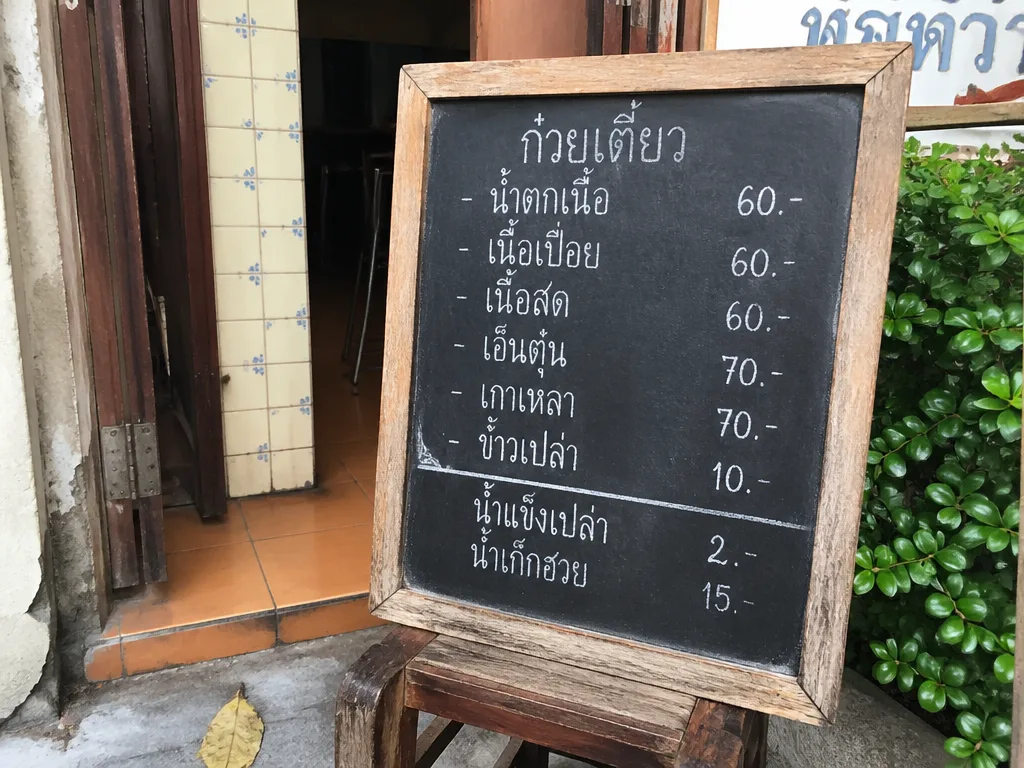
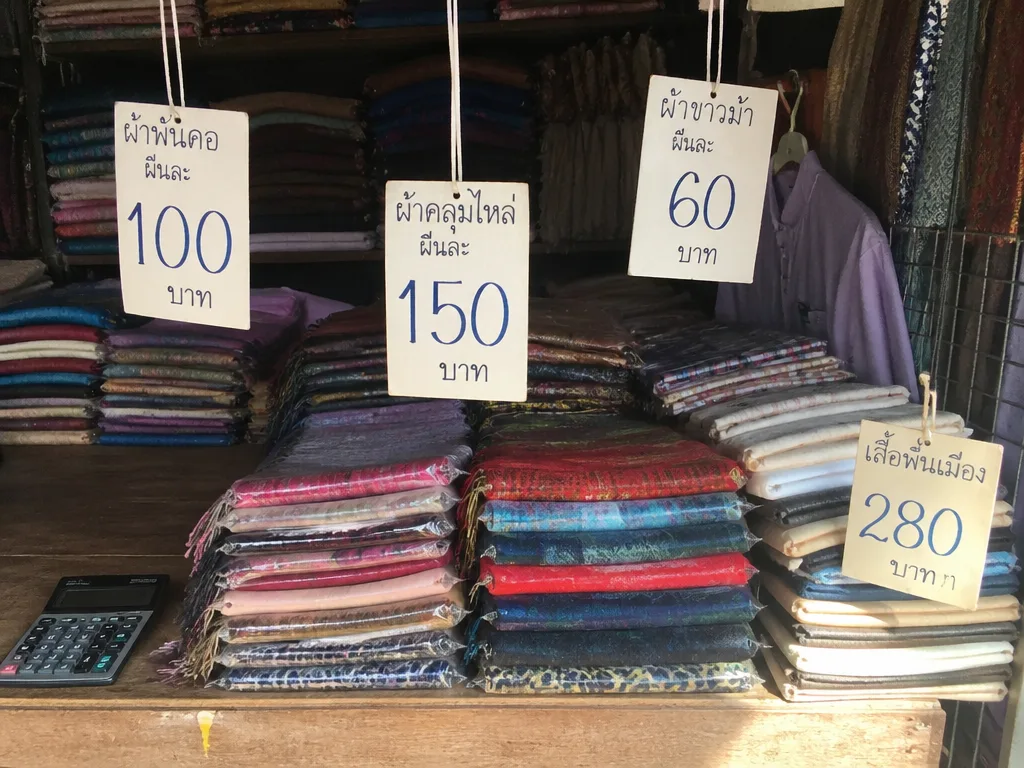
“How much?”: เท่าไหร่, TAO-RAI?: Point at literally anything and say this. It is the phrase you will use most after sawasdee and khop khun.
“Too expensive!”: แพงไป, PAENG bpai!: Say it with a smile. This is not rude in Thai culture. It is an invitation to negotiate. At Chatuchak Market, Khao San Road, or any tourist-facing vendor, the first price is a suggestion.
“Can you give a discount?”: ลดได้ไหม, LOT dai MAI?: The polite follow-up to “paeng bpai.” This phrase alone has saved me thousands of baht over the years. Vendors expect it. At a tailor shop, at a night market, at a tour booking counter, if there is no price tag, there is a negotiation. Just never use this at 7-Eleven or shopping malls. Fixed prices are fixed.
Food and Ordering (6 Phrases for Better Meals)
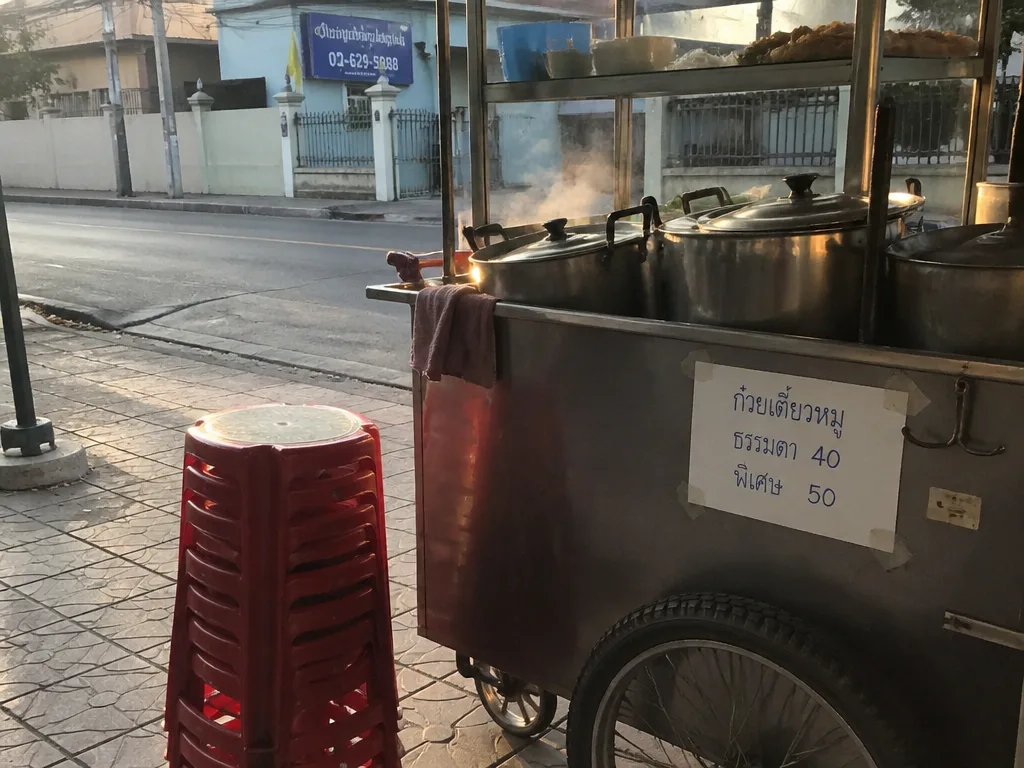
Thai food culture is interactive. Ordering is not passive menu-pointing, it is a conversation about how you want things prepared. These six phrases give you control over the most important variable: spice level. They also connect to the broader street food experience we cover in our Bangkok street food rules.
| English | Thai Script | Pronunciation | Context |
|---|---|---|---|
| This one (pointing) | อันนี้ | an NEE | Point at a dish, a photo, or the plate someone else is eating. Universal. |
| Not spicy | ไม่เผ็ด | mai PHET | Critical phrase. Thai “not spicy” is still spicier than Western “medium,” but it is survivable. |
| A little spicy | เผ็ดนิดหน่อย | phet NIT noi | The sweet spot for most tourists. You get flavor without pain. |
| Delicious! | อร่อย | a-ROY | Say this to the cook. Mean it. They will beam. Some will give you extra next time. |
| Check, please | เช็คบิล | check bin | Works everywhere from street stalls to rooftop restaurants. The hand-writing-in-air gesture works too. |
| No sugar | ไม่ใส่น้ำตาล | mai SAI nam-taan | Essential for drinks. Thai iced tea and coffee default to sugar levels that would alarm a dentist. |
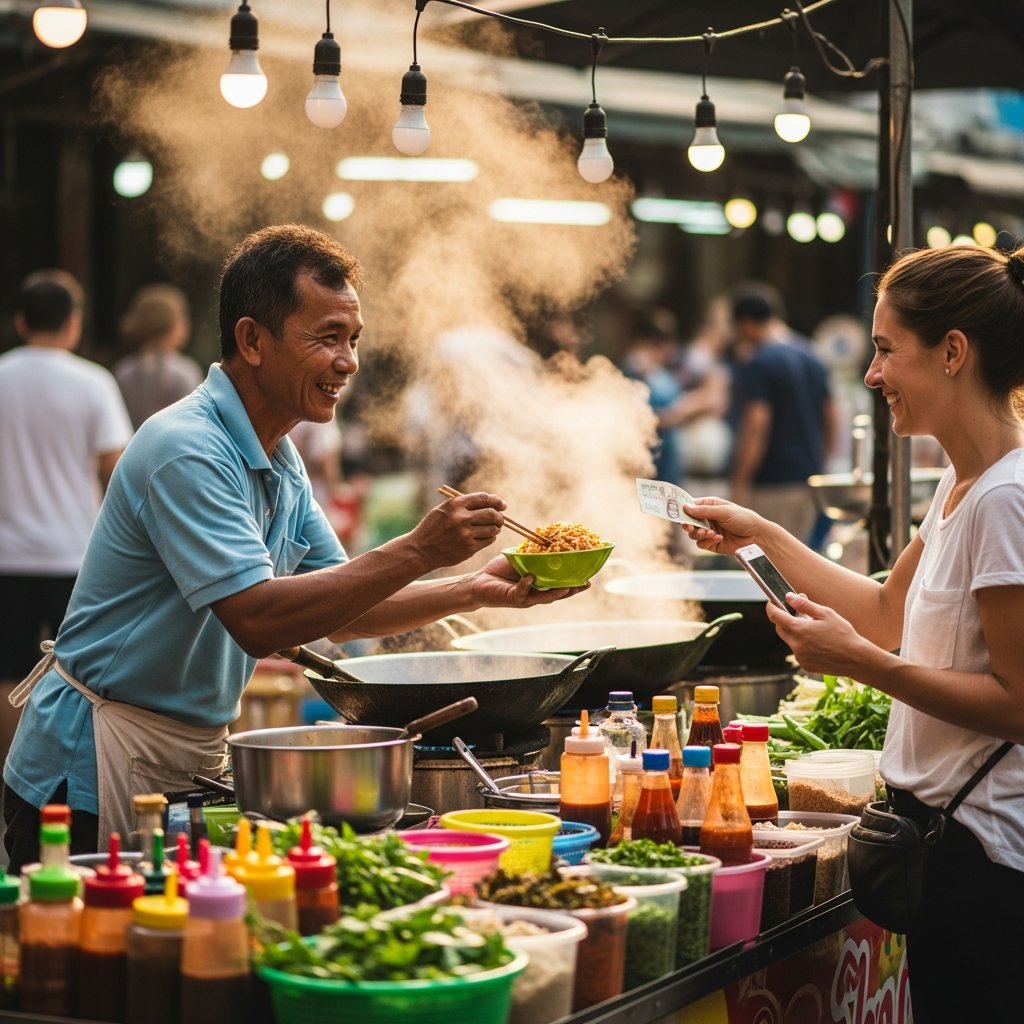
Pro tip: At street food stalls, you often do not need words at all. Point, hold up fingers for quantity, and say “mai phet” if you need to. But dropping “aroy” after the meal, genuinely, looking at the cook, turns a transaction into a connection. The tipping guide covers the money side of showing appreciation, but “aroy” is the non-monetary version and arguably means more to the person who cooked your pad kra pao.
Transportation (5 Phrases for Getting Around)
Getting around Bangkok and beyond means taxis, tuk-tuks, songthaews, and motorbike taxis. While ride-hailing apps like Grab and Bolt handle most of the communication for you, there are still plenty of situations, flagging a metered taxi, riding a songthaew in Chiang Mai, or directing a motorbike taxi through a narrow soi, where these phrases are essential.
| English | Thai Script | Pronunciation | Context |
|---|---|---|---|
| Go to… | ไป… | bpai… | The foundation phrase. “Bpai Khao San Road”, that is a complete instruction to any driver. |
| Stop here | จอดตรงนี้ | jot trong NEE | On a bus, in a taxi, on a songthaew. Pair with a hand signal for clarity. |
| How far? | ไกลไหม | glai MAI? | Useful before committing to a walk in 35-degree heat or deciding between taxi and motorbike. |
| Turn left / Turn right | เลี้ยวซ้าย / เลี้ยวขวา | liao SAI / liao KWAA | For directing taxis when GPS is not cooperating. Left = sai, right = kwaa. |
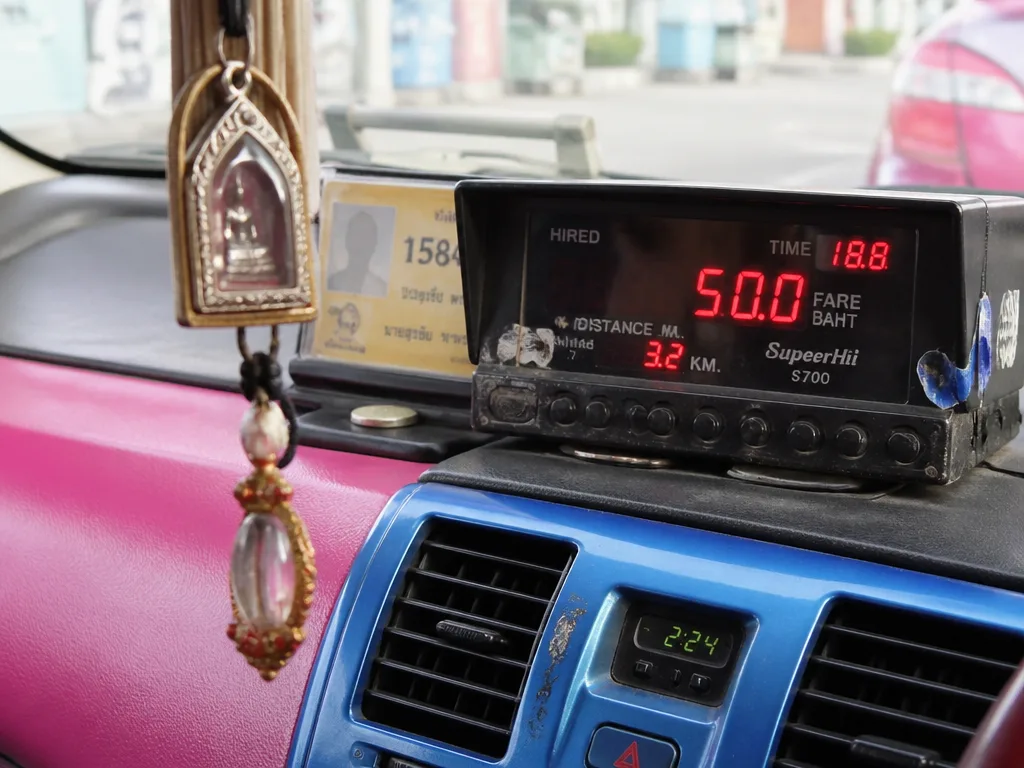
| Meter, please | มิเตอร์ | mi-TOER | For Bangkok taxis only. Say it before you get in. If they refuse, close the door and flag another one. |
The meter phrase deserves emphasis. Bangkok taxis are legally required to use meters. A metered ride from Siam to Khao San Road costs 60-80 THB. A “negotiated” ride for the same trip will cost 200-300 THB. Saying “mi-toer” confidently and being willing to walk away if they refuse is the single biggest money-saving hack in Bangkok transportation. At Suvarnabhumi or Don Mueang airport, there is a designated taxi queue that enforces meter use, our Thailand airport guide covers the process in detail.
Emergency Phrases (6 Phrases You Hope You Never Need)
You probably will not use most of these. But the one time you need “hospital” or “help,” you need it immediately, not after fumbling with a translation app. Learn these before you need them.
| English | Thai Script | Pronunciation | Context |
|---|---|---|---|
| Help! | ช่วยด้วย | CHUAY duay! | Loud, urgent. For genuine emergencies only. |
| Hospital | โรงพยาบาล | rohng pa-ya-BAAN | Tell any taxi or tuk-tuk driver this word and they will get you there. |
| Police | ตำรวจ | tam-RUAT | For serious situations. See the tourist police number below. |
| I don’t understand | ไม่เข้าใจ | mai KHAO jai | Prevents you from agreeing to things you did not mean to agree to. Use freely. |
| No thank you | ไม่เอา | mai AO (+ khrap/kha) | For persistent touts, tuk-tuk tour offers, or anyone pushing something you do not want. Firm but polite. |
| Tourist Police | สายด่วนตำรวจท่องเที่ยว | call 1155 | 24/7 English-speaking hotline. Handles scams, theft, overcharging, disputes. |
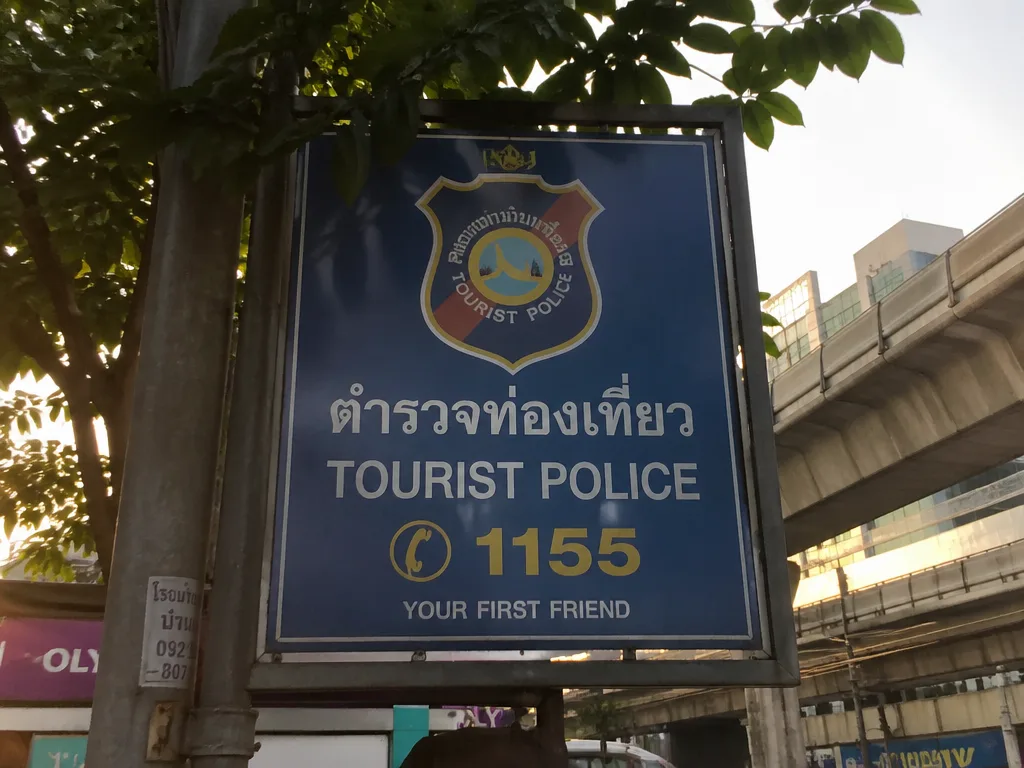
Tourist Police: 1155. Save this number in your phone right now. The Tourist Police hotline operates 24 hours with English-speaking officers. It covers scams, theft, lost passports, overcharging, and disputes with vendors or drivers. You can also walk into any Tourist Police office, there are branches near Khao San Road, Pattaya Walking Street, and Chiang Mai Old City. In a genuine medical emergency, call 1669 (ambulance) or go directly to the nearest hospital. For regular police, the number is 191.
Bonus: The Phrases That Win Hearts
These are not survival phrases. You will not die without them. But they are the ones that make Thai people genuinely happy when a foreigner says them.
“Sabaai dee mai?” (สบายดีไหม), “How are you?” / “Are you well?”, This is what Thais say to each other as a greeting. Using it with a regular taxi driver, a restaurant owner you visit twice, or a hotel receptionist you see each morning moves you from “tourist” to “person who belongs here.”
“Phet mak mak!” (เผ็ดมากๆ), “Very, very spicy!”, Use this when a dish destroys you. The kitchen staff will hear your distress, confirm it with knowing laughter, and respect you for trying.
“Suay!” (สวย), “Beautiful!”, For complimenting a place, a view, someone’s outfit, or their cooking presentation. Universally appreciated. Works for temples, sunsets, and som tam alike.
“Mai bpen rai” (ไม่เป็นไร), “No worries / it’s okay”, The most Thai phrase in the Thai language. Someone bumps into you? Mai bpen rai. A dish takes a while? Mai bpen rai. Saying this signals you understand the Thai approach to life: most things are not worth stressing about.
These greeting phrases land hardest at temples, where staff and monks notice effort more than anywhere else. If your itinerary includes the Chiang Mai temple loop — Wat Phra Singh, Wat Chedi Luang, Doi Suthep — the Chiang Mai temple guide covers the dress code, the shoes-off zones, the donation customs that aren’t obvious, and where a quiet “sawasdee khrap” to the monk on duty turns an ordinary visit into a five-minute monk chat about your trip.
The Cheat Sheet
Screenshot this. The five phrases that matter most, ranked by how often you will actually use them:
- Khop khun khrap/kha (ขอบคุณครับ/ค่ะ), Thank you, 50+ times per day
- Sawasdee khrap/kha (สวัสดีครับ/ค่ะ), Hello, every interaction
- Tao rai? (เท่าไหร่), How much?, every purchase
- Mai ao khrap/kha (ไม่เอาครับ/ค่ะ), No thank you, every hawker encounter
- Aroy! (อร่อย), Delicious!, every meal
That is the entire list. Thirty phrases. You can learn the essentials on the flight over and pick up the rest in your first two days. You do not need an app, a class, or a textbook. Just these words, a willingness to sound imperfect, and the awareness that trying, even badly, matters more to Thai people than getting it right.
Thailand is called the Land of Smiles for many reasons, but the fastest way to earn one is to stumble through “khop khun khrap” at a street food stall and actually mean it. The smile you get back is not the tourist-service smile. It is the real one.