Bangkok’s street food is the best in the world. That’s not hyperbole — it’s the consensus of chefs, food writers, and the 12 million residents who eat most of their meals from vendors. But most first-time visitors approach it with a mix of excitement and anxiety that leads to two mistakes: eating at the wrong stalls (tourist-facing, mediocre, overpriced) or avoiding street food entirely out of hygiene concerns. Both are wrong.
Street food in Bangkok is overwhelmingly safe in 2026 if you know the signals. And the ordering process has an etiquette that, once you understand it, turns you from a confused tourist pointing at everything to someone who gets served faster and better.
The Safety Rules
Rule 1: Eat Where Thais Eat
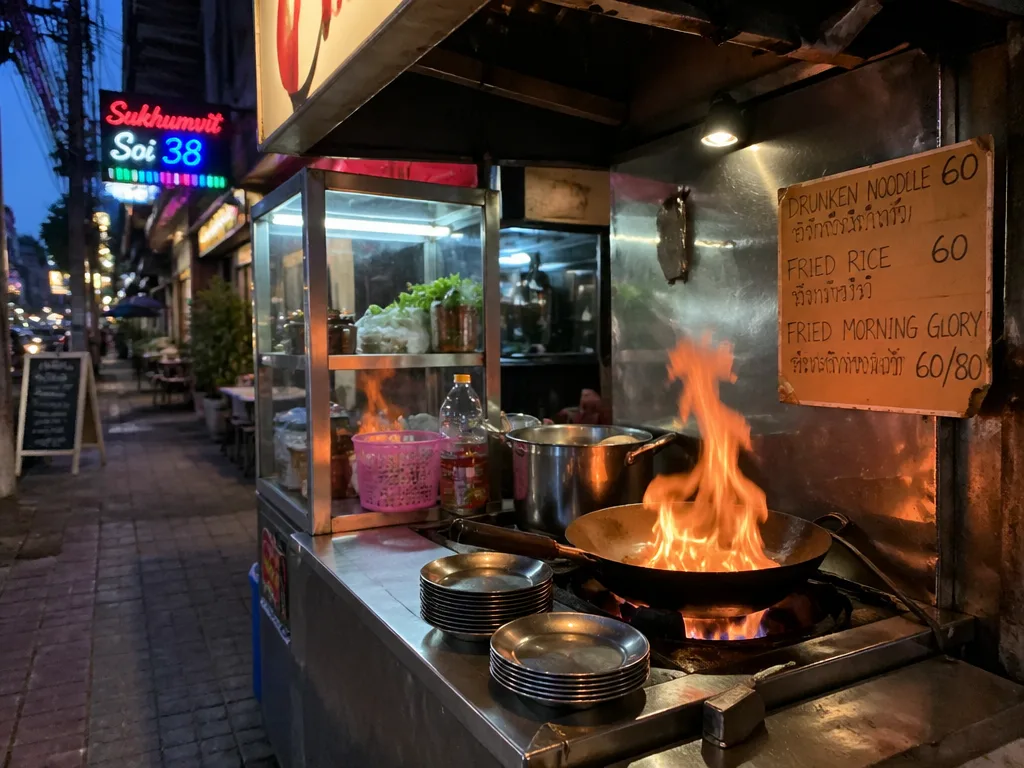
This is the only rule that matters, and it covers 90% of safety concerns. A stall with a queue of Thai office workers at lunch is safe. A stall on Khao San Road with English menus and photos is less certain. Thai workers eating there daily is the best health inspection you’ll find.
Rule 2: Check the Turnover
High turnover means fresh ingredients. The pad thai vendor who makes 200 plates before noon uses fresh noodles that morning. The pad thai cart that’s been sitting idle since yesterday doesn’t. Look for stalls that are actively cooking, not stalls where food sits in trays waiting.
Rule 3: Look at the Ice
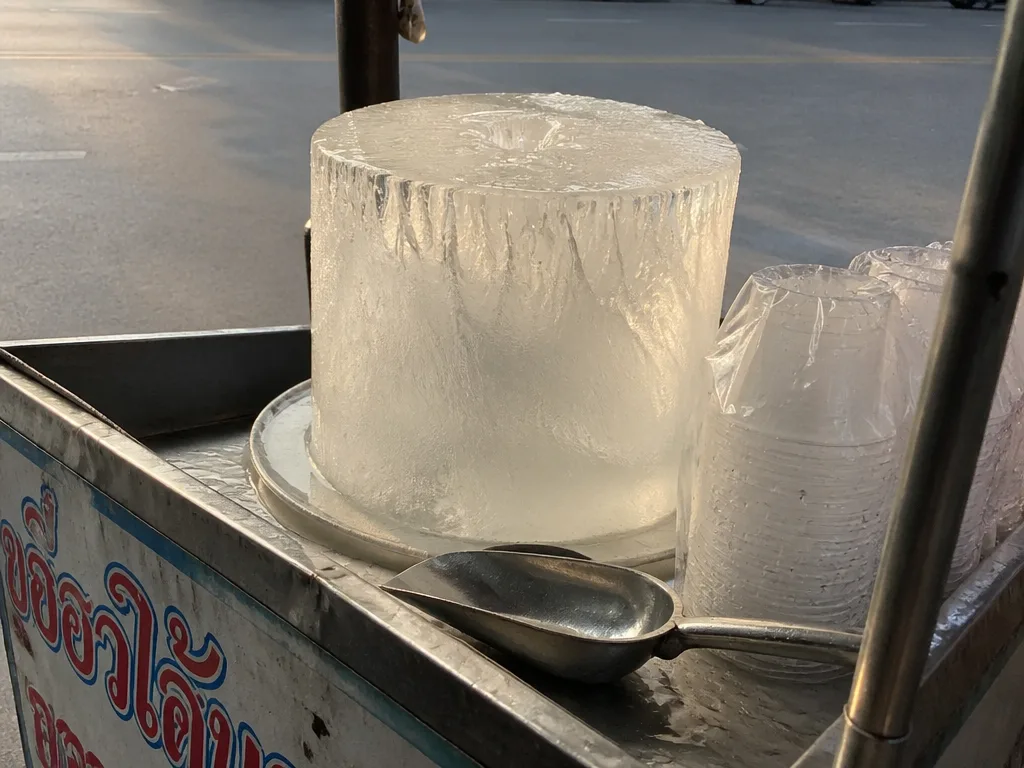
Street food ice in Bangkok comes from commercial ice factories and is safe. The tube-shaped or cylindrical ice you see in drinks is factory-made. If you see a big block being chipped by hand, that’s also factory ice, just in block form. Ice has not been a significant health risk in Bangkok for decades.
Rule 4: Cooked-to-Order Beats Pre-Made
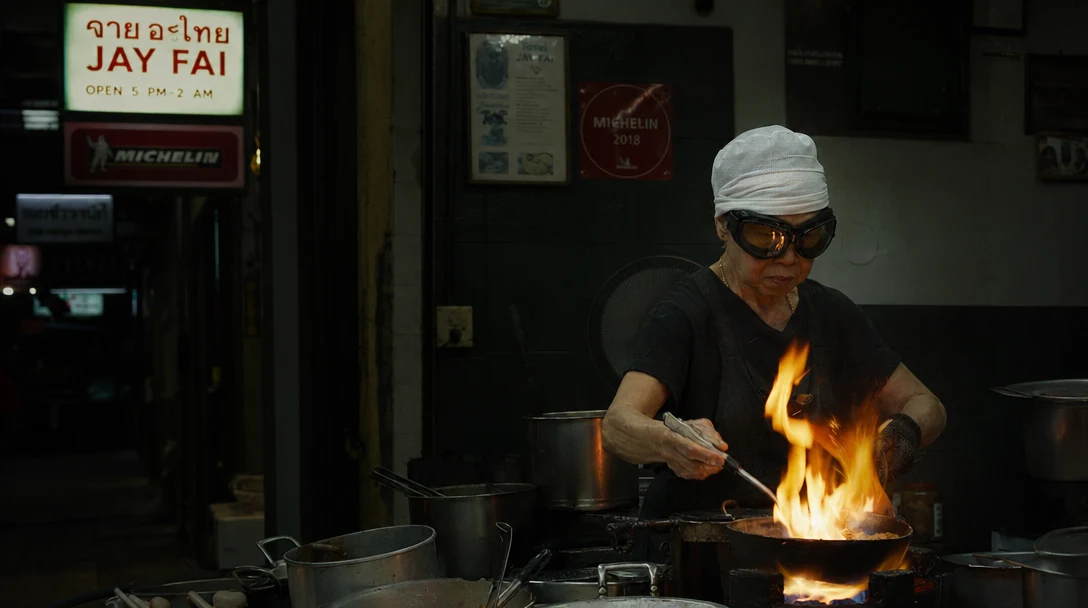
The safest street food is wok-fried to order in front of you. High heat kills everything. Dishes that sit at room temperature (curries in pots left out for hours, pre-made fried rice) carry more risk, though even these are usually fine if the stall has turnover.
Rule 5: Fruit, Peel It or Skip It
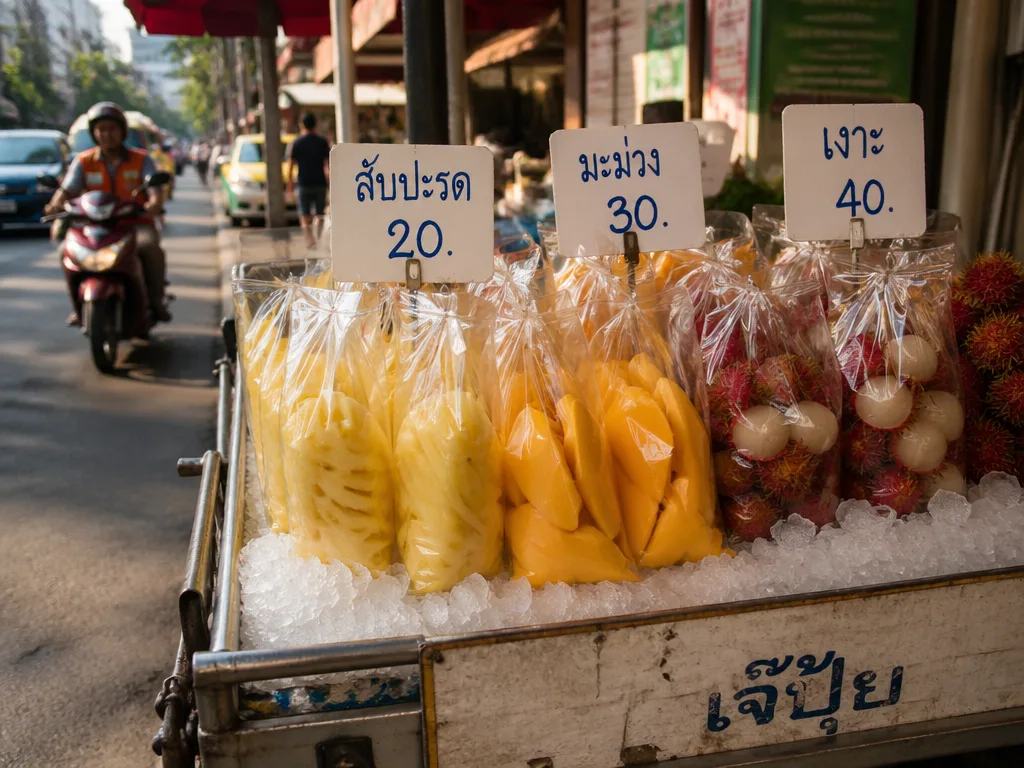
Pre-cut fruit on ice is generally safe at busy stalls. But if you want zero risk, eat fruit you peel yourself: mangoes, mangosteens, rambutans, longans. The concern isn’t the fruit — it’s the knife and cutting board.
Rule 6: Your Stomach Needs Calibration
If you’ve never eaten Thai street food before, your stomach needs 24–48 hours to adjust to new bacterial flora. This isn’t food poisoning — it’s your gut encountering bacteria it hasn’t met before. Start with cooked dishes on day 1 (pad kra pao, grilled skewers, noodle soups). Add raw items (som tam with raw crab, raw shellfish) after day 2–3.
How to Order
The Point-and-Speak Method
Most street food vendors speak limited English. That’s fine. The ordering system is visual.
- Walk up and look at what’s being made. Most stalls have one or two dishes. The menu is what you see.
- Point at what you want. If there’s a display (raw ingredients, photos, finished plates), point.
- Say the dish name if you can. Even badly pronounced Thai gets you served faster than English. Key phrases:
- “Ao [dish name]” = I want [dish]. Example: “Ao pad thai” (I want pad thai).
- “Sai [ingredient]” = Add [ingredient]. “Sai kai” (add egg).
- “Mai sai [ingredient]” = Don’t add [ingredient]. “Mai sai phrik” (no chili).
- “Ped nit noi” = A little spicy. Essential survival phrase.
- “Mai ped” = Not spicy. Use this and accept that you’re eating a different dish than the cook intended.
- Hold up fingers for quantity. One plate = one finger. Two = two.
- Say “ao” and point. If all else fails, this works everywhere.
For more essential phrases, see our Thai survival phrases guide.
Customization Rules
Thai street food is customizable, but within limits:
- Spice level: Always adjustable. Vendors expect foreigners to ask for less spice.
- Protein swap: Usually OK (chicken, pork, shrimp). Price may change.
- No rice: Fine. Say “mai ao khao.”
- Extra rice: “Ao khao ik” or just point at the rice and hold up two fingers.
- Vegetarian: “Gin jeh” (strict vegan Buddhist style) or “mai sai neua sat” (no meat). Many stalls can accommodate; some can’t if their base sauce has fish sauce or shrimp paste (most do).
Paying
Most street food is cash-only. Some stalls now accept PromptPay or mobile payment, but don’t count on it.
- Ask the price before eating if there’s no menu board. Say “Tao rai?” (How much?).
- Standard pricing: Single-dish plates are ฿40–80. Noodle soups ฿50–80. Grilled skewers ฿10–20 each. Fruit bags ฿20–30.
- Don’t haggle. Street food prices are fixed. Trying to negotiate a ฿50 pad thai down to ฿40 is insulting.
- Small bills. Carry ฿20 and ฿100 notes. Paying for a ฿50 dish with a ฿1,000 note is difficult for vendors.
For more on money in Bangkok: currency and exchange guide and money essentials.
The Etiquette
Don’t Block the Flow
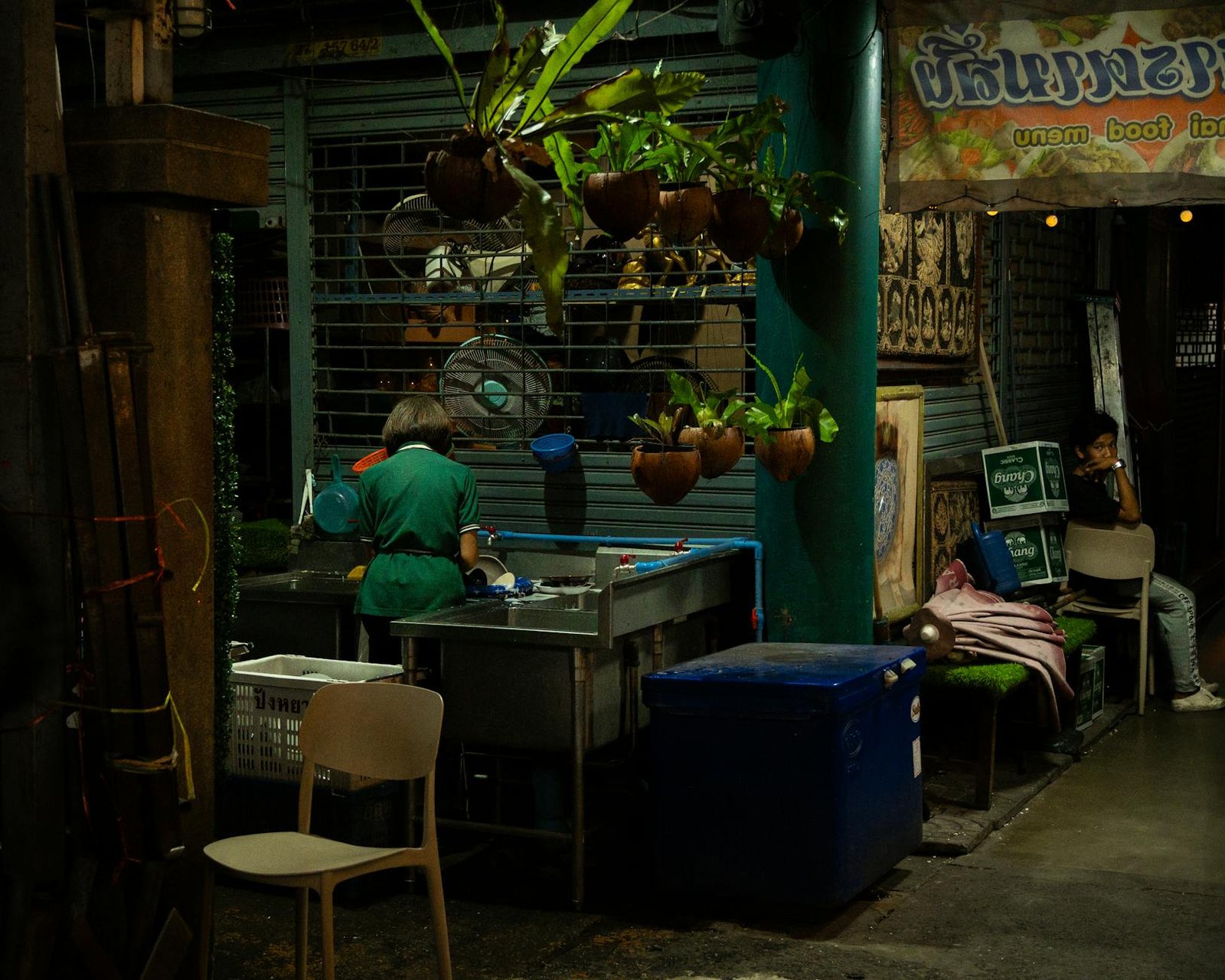
Street stalls operate in tight spaces. Order, step aside, wait. Don’t stand in front of the cooking area while deciding. Other customers need access.
Clean Up After Yourself
Most stalls have a bus tray or bin. Stack your plates and put them there. Leaving a mess at shared tables is rude.
Don’t Photograph the Cook Without Asking
A quick photo of the food is fine. Pointing a camera at the cook’s face during service is not. Ask first: “Thai rup dai mai?” (Can I take a photo?).
Use the Condiment Station Correctly
Every noodle stall and many rice stalls have a condiment station: fish sauce, chili flakes, sugar, chili vinegar. These are meant to be used. Thai food is finished at the table. Add what you want, but don’t dump half the sugar bowl into your boat noodles.
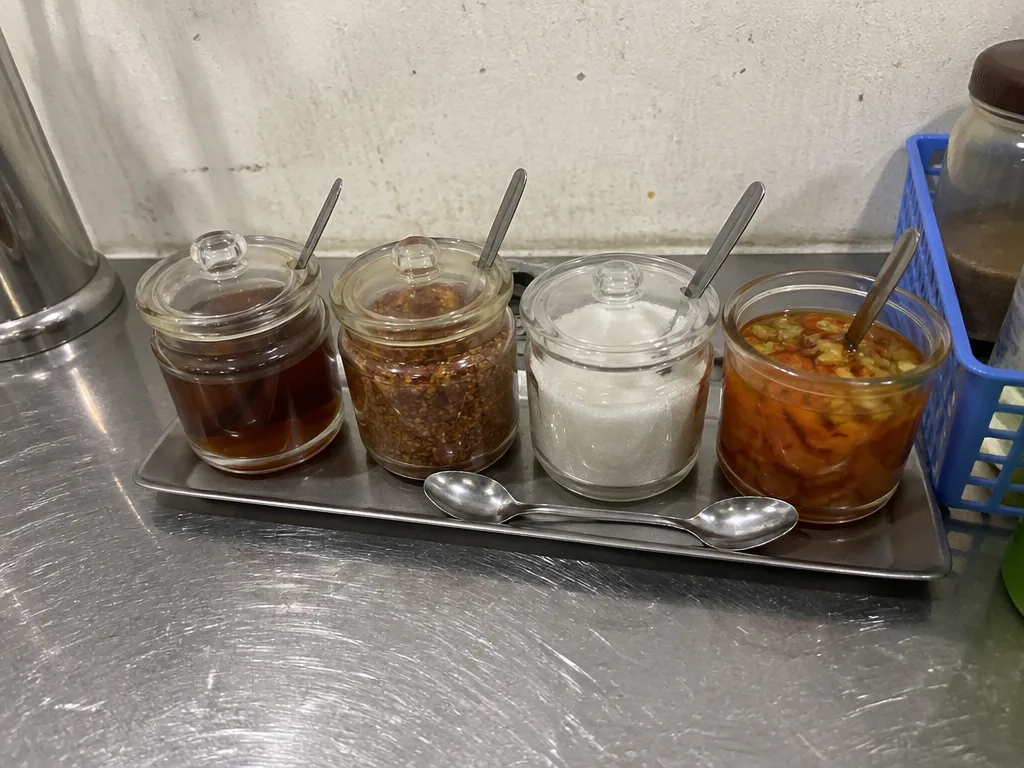
The standard combination for noodle soup: a spoon of fish sauce, a spoon of sugar, a shake of chili flakes, and a splash of chili vinegar. Adjust from there.
Tipping
Street food vendors do not expect tips. Rounding up (leaving the ฿10 change from a ฿50 payment on a ฿40 dish) is fine but not expected. See our tipping guide for other contexts.
When to Eat
Bangkok street food follows a schedule:
- Breakfast (6:00–9:00): Jok (rice porridge), pa tong ko (fried dough), coffee carts, and some noodle stalls.
- Lunch (11:00–13:00): The main event. This is when the largest selection is available and the stalls are freshest. Office workers eat lunch at street stalls. Follow them.
- Afternoon (14:00–17:00): Many stalls close. Dessert carts, fruit vendors, and some noodle stalls remain.
- Dinner (17:00–22:00): Night markets open. Grilled meats, seafood, and specialized dishes appear. Some stalls are dinner-only.
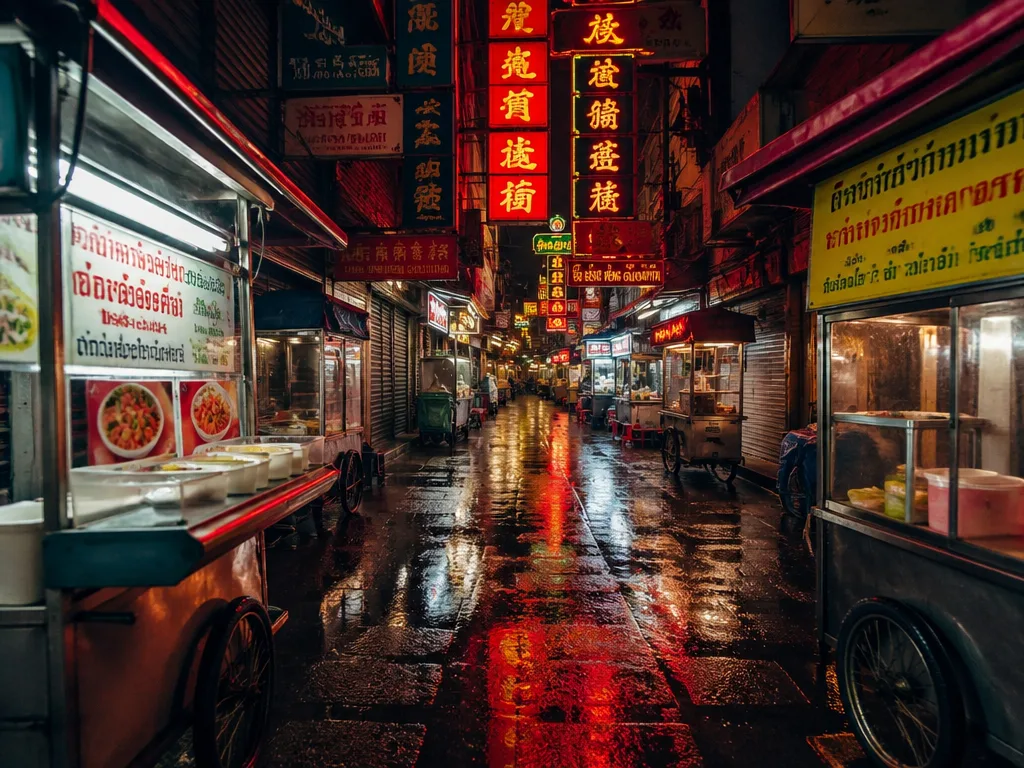
- Late night (22:00–3:00): Khao San Road, Chinatown, and scattered stalls near BTS stations. Drunk food (pad thai, grilled moo ping) thrives.
The worst time to eat street food is 14:00–16:00. Selection is low and what’s available has been sitting.
Where to Start
If you’re new to Bangkok street food, these are high-quality, tourist-accessible areas with genuine local food:
- Yaowarat (Chinatown): The mothership. Our Chinatown food guide covers it in detail.
- Silom Soi 20: Lunch-only, office worker crowd. Incredible selection. See our Silom guide.
- Sukhumvit Soi 38: Evening stalls. Diminished from its prime but still delivers.
- Chatuchak Market: Weekend only. See our Chatuchak food guide.
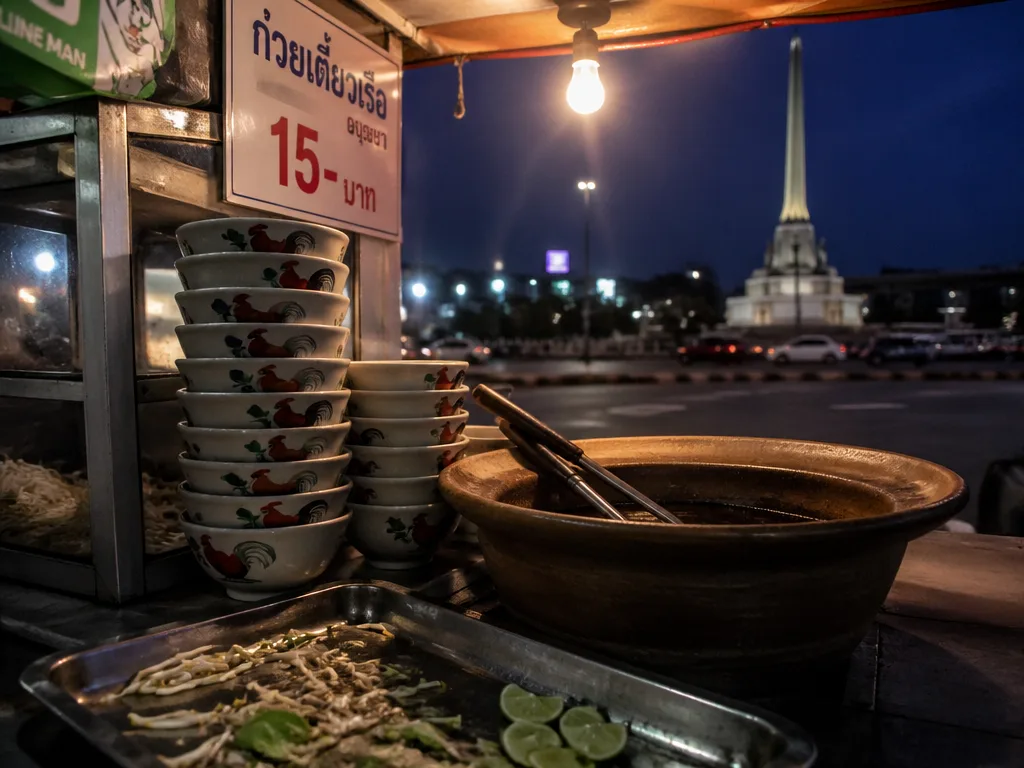
- Victory Monument area: Boat noodle alley, 50+ stalls serving small bowls of boat noodles for ฿15–25 each.
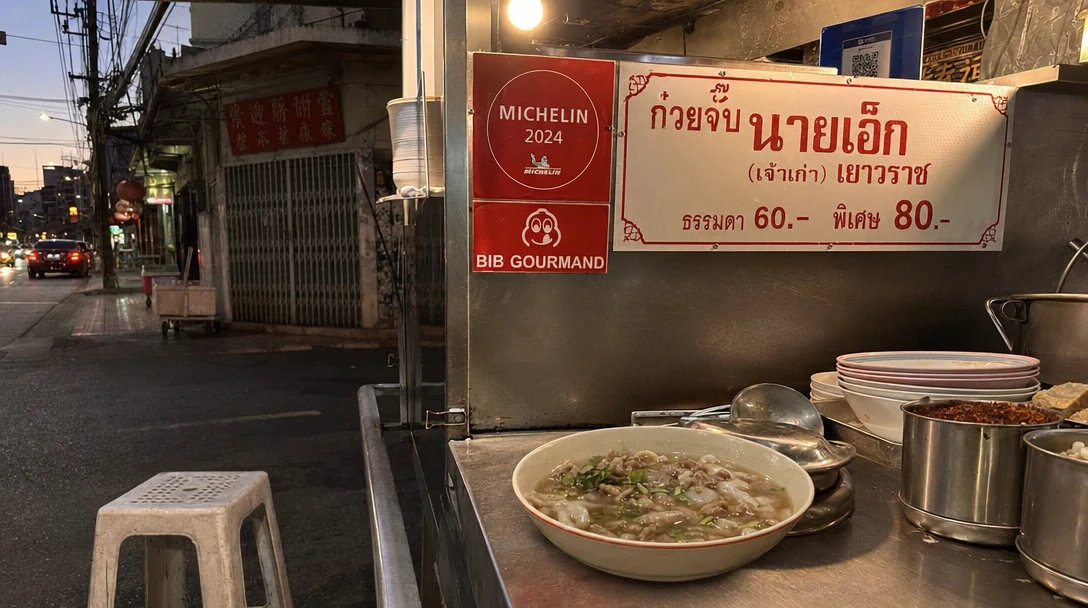
For the michelin-starred street vendors: our Michelin street food guide.
The Dishes You Should Know
| Dish | What It Is | Where | Price |
|---|---|---|---|
| Pad thai | Stir-fried rice noodles, tamarind sauce, shrimp/chicken | Everywhere | ฿50–80 |
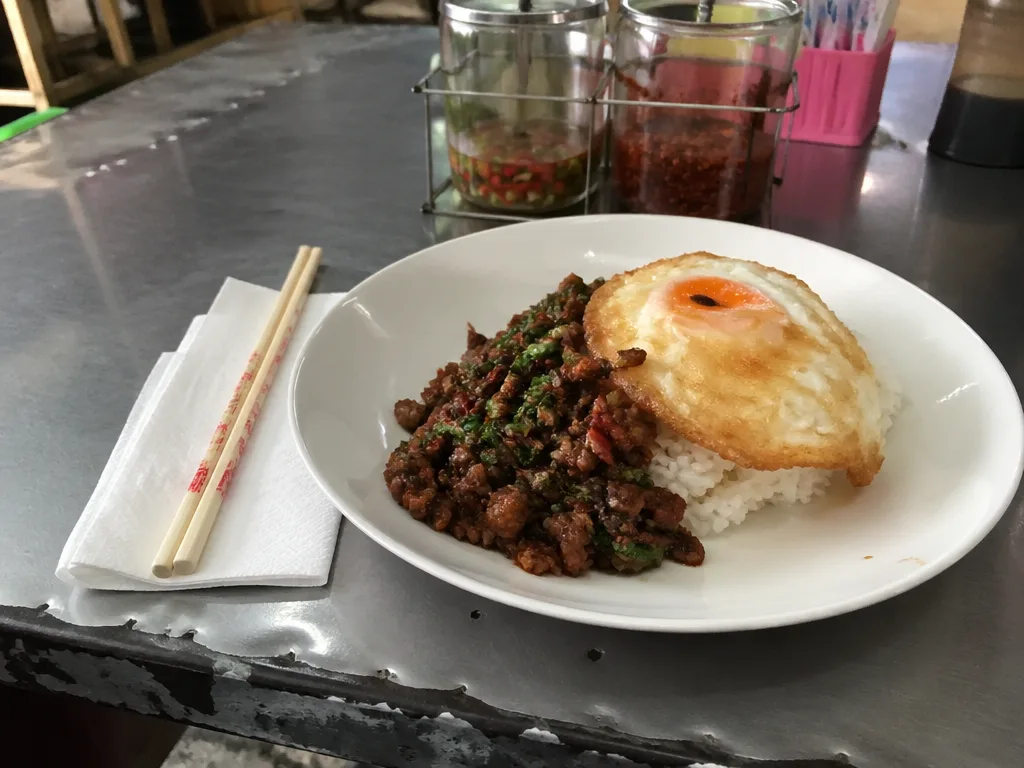
| Pad kra pao | Basil stir-fry with protein + rice + fried egg | Rice stalls | ฿50–70 |
| Khao man gai | Hainanese chicken rice | Specialist stalls | ฿50–60 |
| Som tam | Green papaya salad | Isaan stalls | ฿40–60 |
| Kuay teow | Noodle soup (various broths) | Noodle stalls | ฿50–80 |
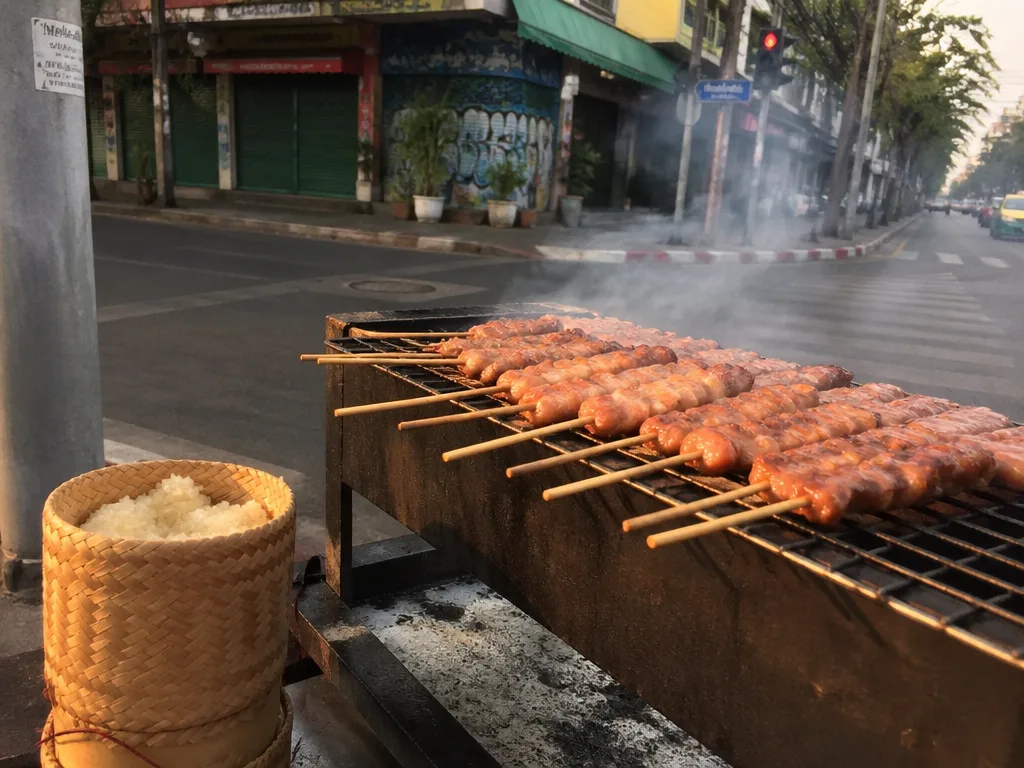
| Moo ping | Grilled pork skewers + sticky rice | Morning/night | ฿10–15/stick |
| Mango sticky rice | Mango + coconut sticky rice | Dessert carts | ฿80–120 |
| Boat noodles | Small-bowl pork/beef noodles | Victory Mon. | ฿15–25/bowl |
| Jok | Rice porridge with egg/pork | Morning | ฿35–50 |
| Roti | Indian-influenced fried flatbread | Night markets | ฿30–60 |
The 5 Mistakes Tourists Make
-
Eating on Khao San Road and thinking that’s Bangkok street food. It isn’t. The Khao San food stalls cater to backpackers and charge 2–3x local prices for mediocre versions. Walk 10 minutes in any direction for the real thing.
-
Ordering “not spicy” and being surprised it’s still spicy. Thai “not spicy” is calibrated to Thai palates. It’ll still have heat. If you truly can’t handle spice, say “mai sai phrik leuy” (don’t add any chili at all).
-
Skipping the condiment station. The food is served expecting you to season it. If you eat noodle soup without adding anything, you’re eating it incomplete.
-
Eating only pad thai. Pad thai is fine. It’s also the one dish every tourist orders. You’re in a city with 300,000 street vendors. Branch out.
-
Being scared of street food and eating at 7-Eleven instead. The irony is that 7-Eleven food is industrially produced, while the pad kra pao auntie next door cooks with fresh ingredients in front of you. The street stall is safer and better.