Sukhumvit Road stretches 488 kilometers from Bangkok to the Cambodian border. The 15-kilometer section between Nana and On Nut contains more restaurants per square meter than most cities have in total. The problem: 80% of what you’ll find walking the main road is overpriced, mediocre, and designed for tourists who don’t know better.
The other 20% is staggeringly good. You just have to turn into the right soi.
I’ve lived within walking distance of Sukhumvit for a decade. The places I keep going back to aren’t the ones with English menus propped up on the sidewalk or the ones with TripAdvisor stickers on the door. They’re the ones where the lunch crowd is entirely Thai office workers, the auntie remembers your order, and the bill makes you wonder if there’s been a mistake.
Here’s where Bangkok residents actually eat on Sukhumvit.
The Geography of Eating on Sukhumvit
Sukhumvit is organized by BTS stations, and each one has a different food personality. Understanding this saves you from wandering aimlessly.
Nana (Soi 3–11): Middle Eastern, Indian, and Korean food. The best shawarma and biryani in Bangkok live here, alongside the tourist nightlife strip.
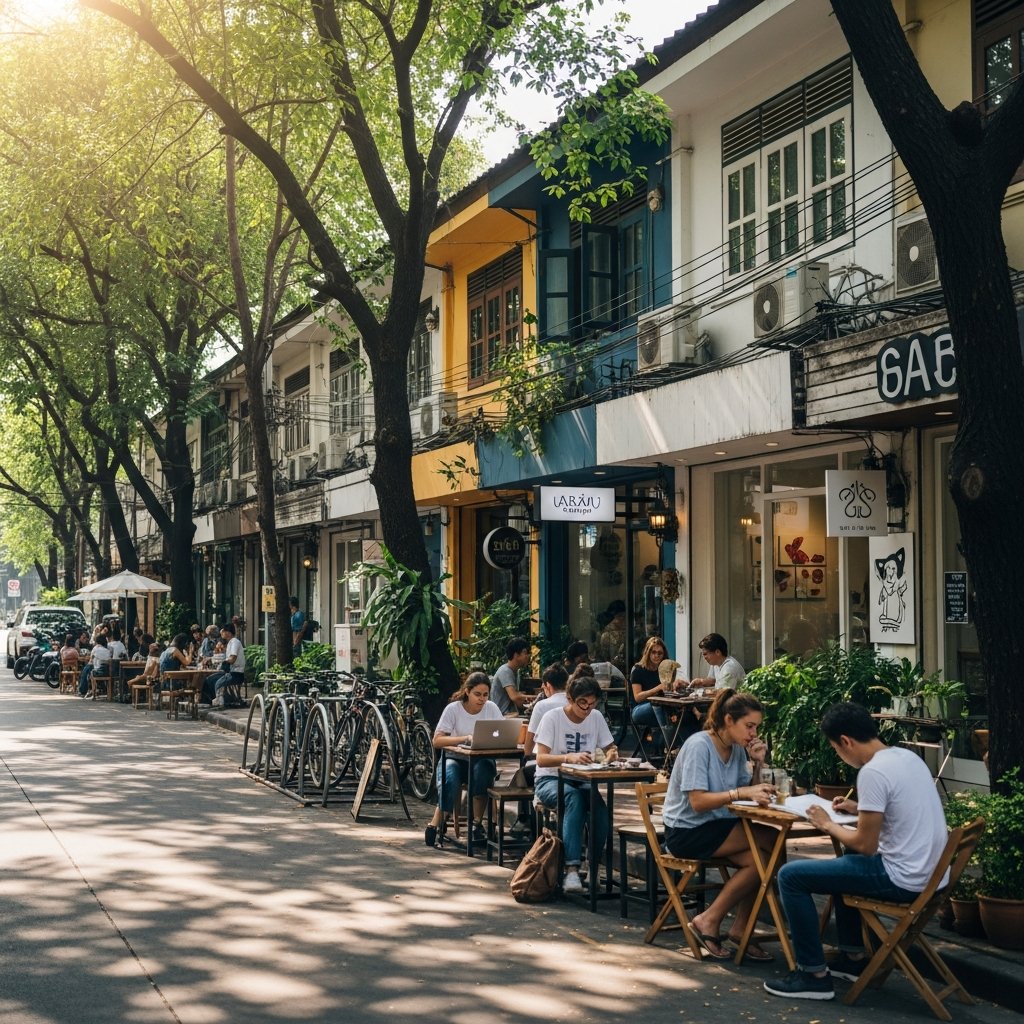
Asok–Phrom Phong (Soi 19–39): The sweet spot. Residential enough for real neighborhood restaurants, urban enough for quality sit-down spots. This is where most of the picks below are concentrated.
Thong Lo–Ekkamai (Soi 49–63): Trendy restaurants, Japanese food, and upscale Thai. More expensive, more Instagram-friendly, less “local” in the traditional sense.
Phra Khanong–On Nut (Soi 71+): Where young Thai professionals live. The cheapest and most authentic food on the entire strip. Worth the extra two BTS stops.
The 5 Must-Know Spots
1. Rung Rueng Pork Noodle Soup — Phrom Phong
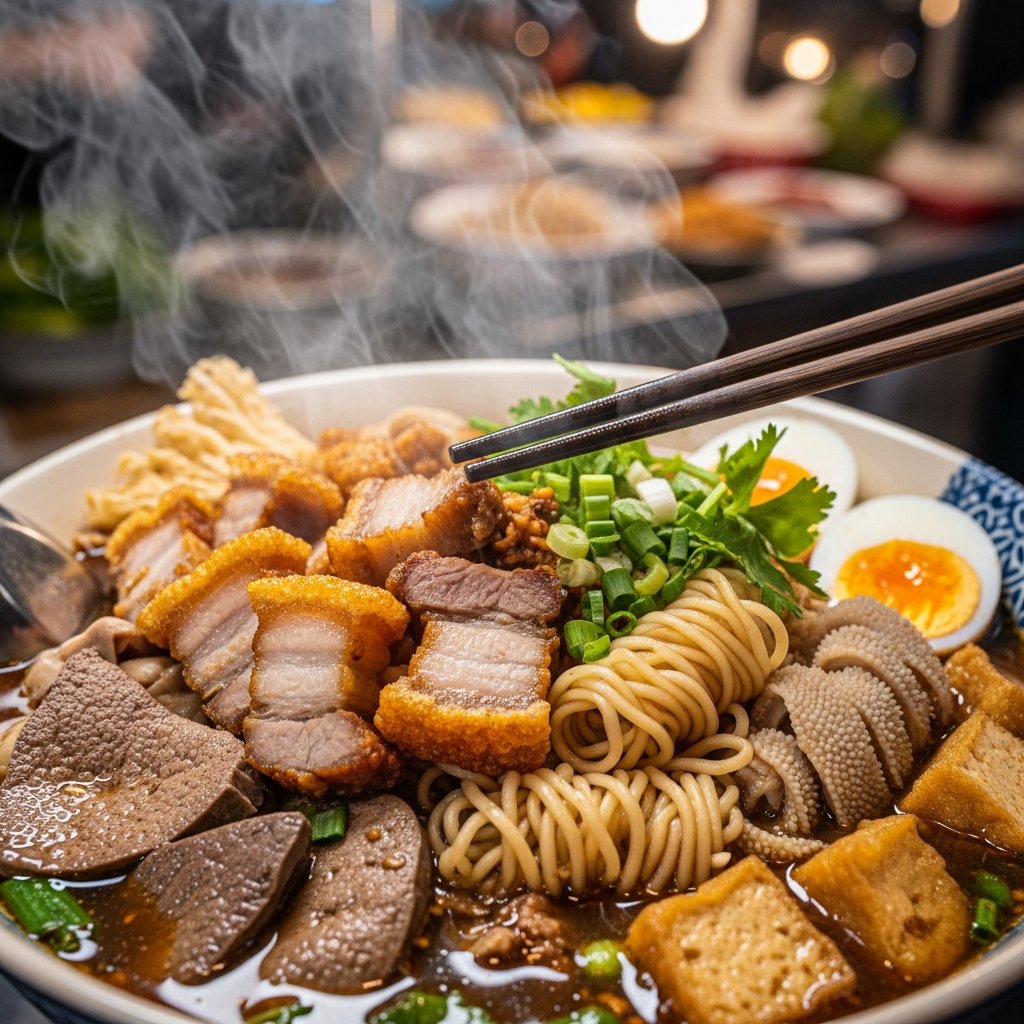
This is the pork noodle stall that ruined all other pork noodle stalls for me. Hidden on Soi 26 near Phrom Phong BTS, Rung Rueng serves one thing — kuay tiew moo (pork noodle soup) — and does it with the kind of precision that earns Michelin Bib Gourmand recognition. Which it has.
The broth is clear, peppery, and deeply savory. The pork slices are tender, not chewy. The crispy garlic on top ties everything together. Order the small size first. You will order a second bowl.
The shop is tiny — maybe 30 seats across indoor and sidewalk tables. The lunch rush (11:30 AM–1 PM) means waiting. Come at 11 AM or after 2 PM.
Price: ฿50–70 | Hours: 10 AM–8 PM (closed Sundays) Where: Sukhumvit Soi 26 — Google Maps
2. Gedhawa — Northern Thai, Soi 35
Northern Thai food is the regional cuisine most tourists never try because they’re too busy ordering pad thai for the fourth time. Gedhawa fixes that. This small, no-frills restaurant on Soi 35 serves khao soi (curry noodles), sai oua (northern sausage), and nam prik ong (chili dip with minced pork) that would hold its own in Chiang Mai.
The khao soi here uses a coconut curry broth that’s rich but not heavy, with perfectly crispy fried noodles on top. The sai oua has actual herbs in it — lemongrass, galangal, kaffir lime — not the filler-heavy version you get at tourist restaurants.
Come for dinner. Order the khao soi, sai oua, and a plate of cab moo (crispy pork rinds) to share. You’ll eat like a Northern Thai local for under ฿200 per person.
Price: ฿80–200 | Hours: 11 AM–9 PM Where: Sukhumvit Soi 35 — Google Maps
3. Khua Kling Pak Sod — Southern Thai Fire
If Gedhawa is the gentle introduction to regional Thai food, Khua Kling Pak Sod is the advanced class. This restaurant specializes in Southern Thai cuisine, which is the spiciest, most aggressive regional cooking in Thailand. The name translates to “fresh stir-fried dry curry,” and that dish — khua kling — is exactly where you should start.
Khua kling is minced meat (pork or beef) dry-fried with an absurd amount of curry paste, turmeric, and chili. There’s no coconut milk to soften the blow. It’s intense, complex, and deeply satisfying if you can handle heat.
For the less masochistic: the gaeng som (sour curry with shrimp) is milder and equally excellent. The stir-fried sataw beans with shrimp paste are funky and addictive.
This place has multiple branches across Bangkok, but the Sukhumvit location is the most accessible.
Price: ฿120–300 | Hours: 11 AM–10 PM Where: Multiple locations; Sukhumvit branch recommended — Google Maps
4. Whale Market — Soi 16 Lunch Market
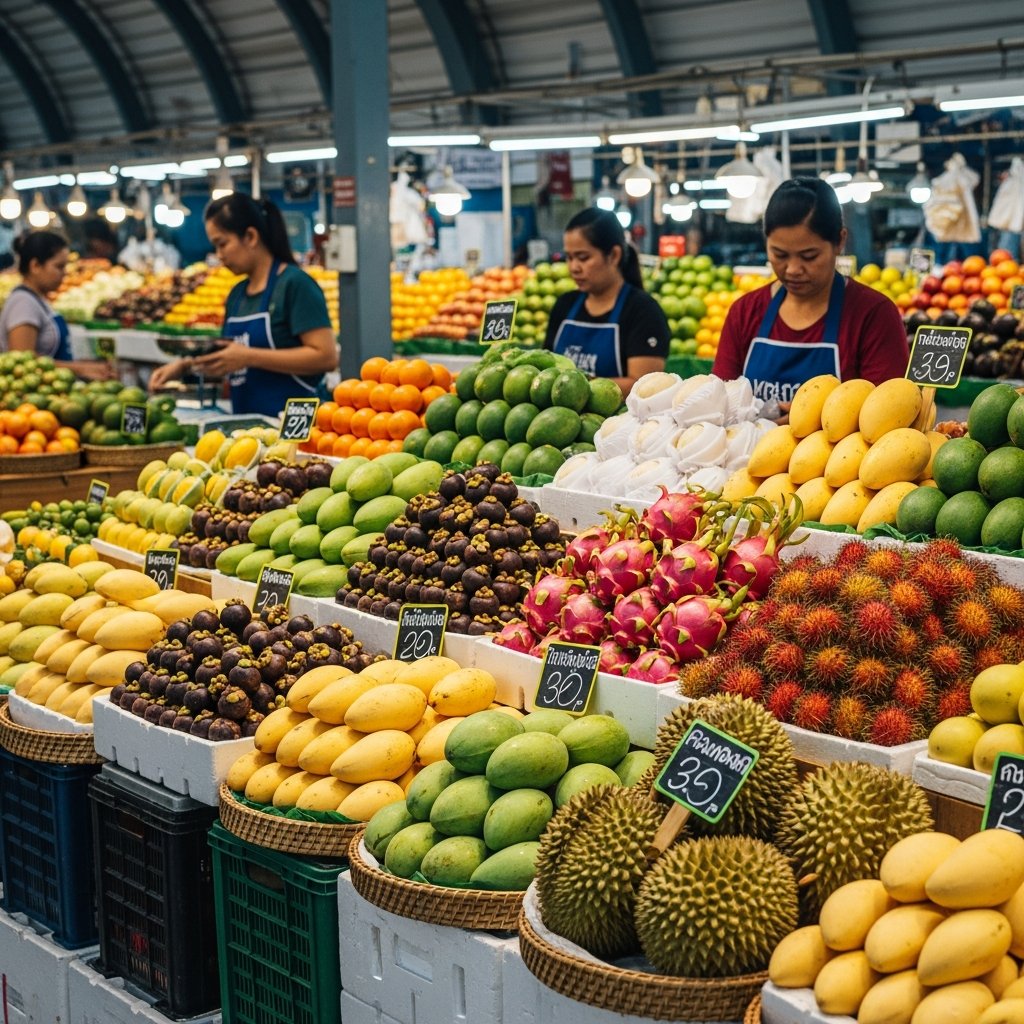
This is the spot I send people to when they say “I want to eat where real locals eat.” Whale Market is a lunch-only market tucked inside Sukhumvit Soi 16, near the Benchasiri Park end. It’s not on Google Maps listings with thousands of reviews. It doesn’t have an Instagram. It has 20-odd food stalls serving Thai office workers from the surrounding condo towers and businesses.
The made-to-order pad kra pao (basil stir-fry) stall in the middle section is dependably excellent — crispy holy basil, wok-charred minced pork, a runny fried egg, and rice for ฿50. The som tam (papaya salad) vendor near the entrance makes it fresh to order, and you can dial the spice level.
Whale Market operates roughly 10 AM to 2 PM on weekdays. If you show up at noon, every stool will be occupied by someone in an office uniform. That’s how you know you’re in the right place.
Price: ฿40–80 | Hours: 10 AM–2 PM (weekdays only) Where: Sukhumvit Soi 16 — Google Maps
5. Sukhumvit Soi 38 Street Food — The Evening Stretch
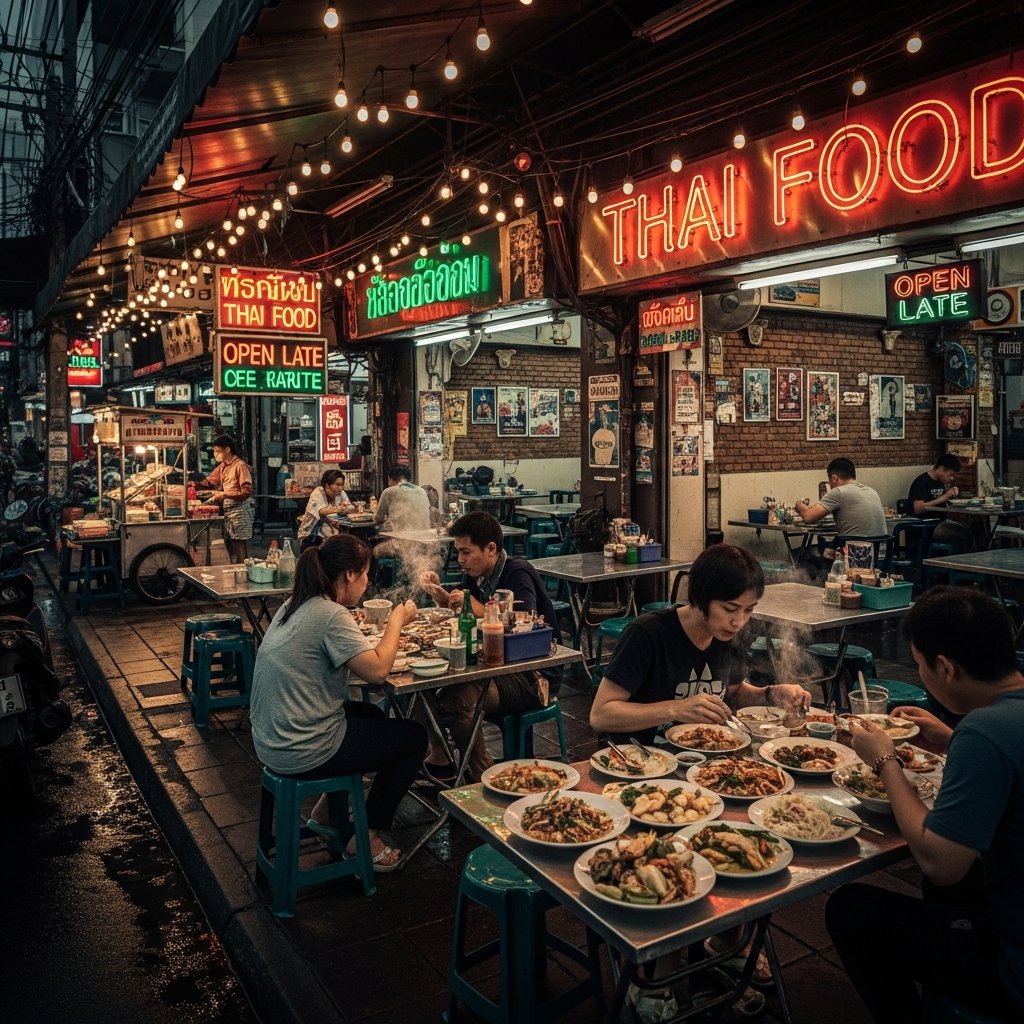
Soi 38 used to be the most famous street food destination on Sukhumvit. The old market got demolished for condo development a few years ago, but the street food scene has quietly rebuilt itself. The current version is smaller and less hyped, which means fewer tourist markups and shorter waits.
The standout stalls now include a pad thai operation that uses thinner noodles and higher wok heat than average, plus a grilled pork skewer vendor who sets up around 5 PM and sells out by 8. The khao niew mamuang (mango sticky rice) cart at the soi entrance is reliable when mangoes are in season (April–June).
Walk the full soi before committing. Prices vary, and the stalls closer to the main road charge more for the same food.
Price: ฿40–100 | Hours: 5 PM–10 PM Where: Sukhumvit Soi 38 (Thong Lo BTS) — Google Maps
Quick Reference: All 5 Spots
| Spot | Cuisine | Price (THB) | Best For | Hours | Nearest BTS |
|---|---|---|---|---|---|
| Rung Rueng | Pork noodle soup | 50–70 | Solo lunch | 10 AM–8 PM | Phrom Phong |
| Gedhawa | Northern Thai | 80–200 | Dinner with friends | 11 AM–9 PM | Thong Lo |
| Khua Kling Pak Sod | Southern Thai | 120–300 | Spice lovers | 11 AM–10 PM | Asok/Phrom Phong |
| Whale Market | Thai lunch market | 40–80 | Weekday lunch | 10 AM–2 PM | Asok |
| Soi 38 Street Food | Mixed street food | 40–100 | Evening snacking | 5 PM–10 PM | Thong Lo |
The Soi Rules: How to Find Good Food Anywhere on Sukhumvit
You don’t need a list. You need a system. Here’s how to identify a good soi food stall without any prior research:
Look for the line. If Thai people are queuing for something on a street where 50 other options exist, that stall is doing something right. Tourists browse. Locals know exactly where they’re going.
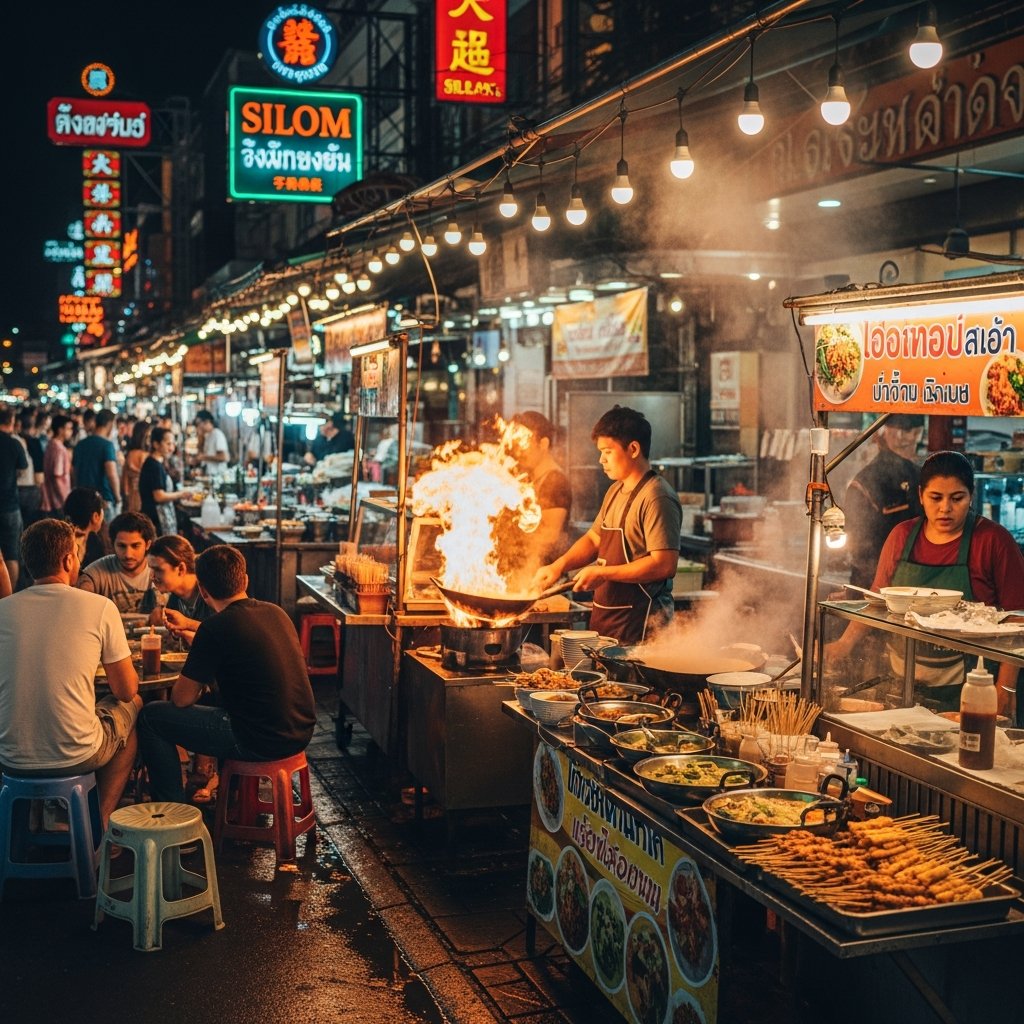
Check the wok. If the cook is using a wok over actual flame (not a flat griddle or electric stove), the food will taste different and better. Wok hei — that smoky, charred flavor — only happens over real fire.
Count the plastic stools. Stalls with 6–15 stools are almost always better than stalls with 40+ seats. Small operations mean the cook is making everything. Large operations mean someone’s cutting corners.
Ignore the English menu. The moment a stall invests in a laminated English menu with photos, their prices went up 30% and their audience shifted. The best stalls have a handwritten Thai menu on the wall — or no menu at all.
Follow the motorcycles. Motorcycle taxi drivers eat fast, eat cheap, and eat well. Their favorite stall near any BTS station is almost certainly excellent.
What to Skip on Sukhumvit
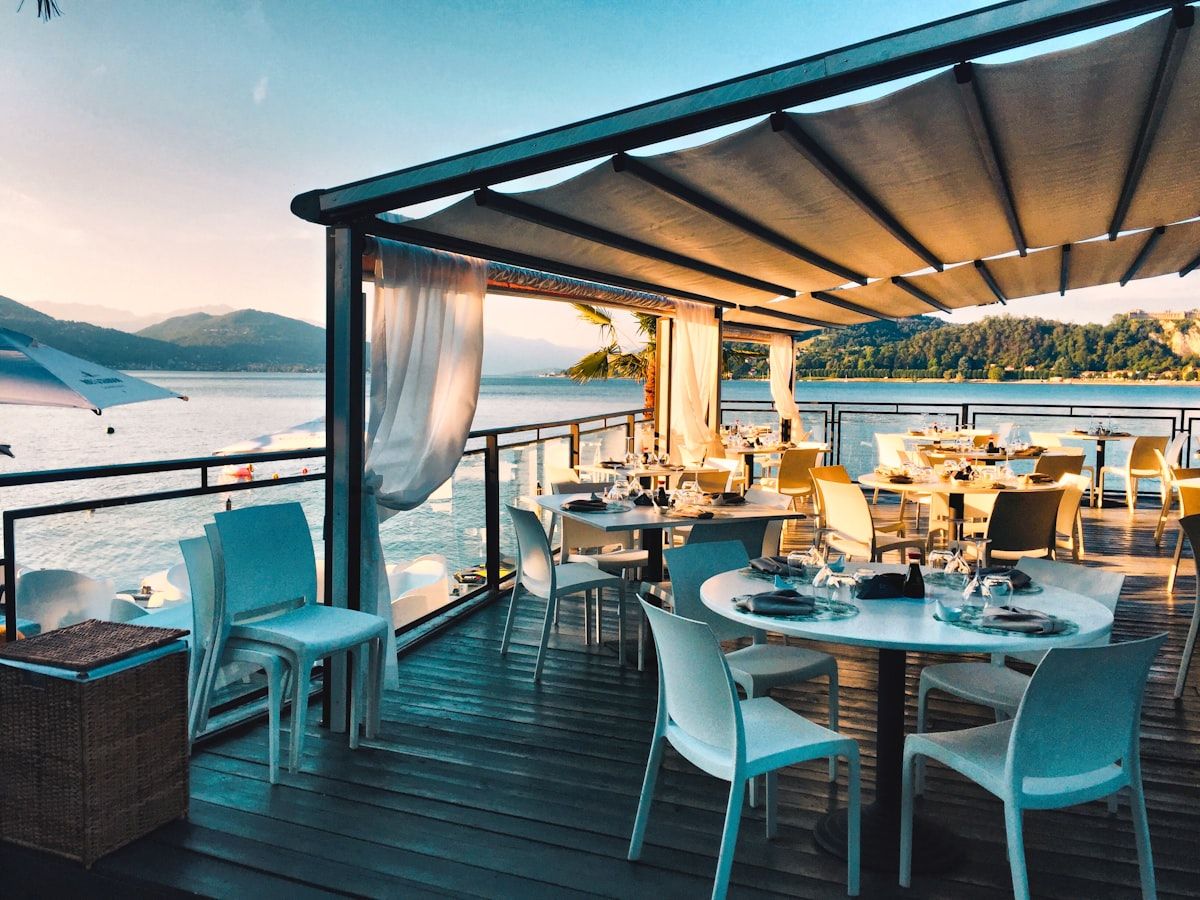
Any restaurant on the main road between Nana and Asok with someone standing outside handing you a menu. Walk one soi deep and the quality goes up while prices go down.
Hotel restaurants for Thai food. The pad thai at the stall two blocks from your hotel costs ฿60 and was made by someone who’s been making it for 30 years. The ฿900 hotel buffet version isn’t 15x better.
Practical Tips
BTS is your friend. Every spot on this list is within a 5-minute walk of a BTS station. Use the Sukhumvit line as your food highway — Nana, Asok, Phrom Phong, Thong Lo, Ekkamai, Phra Khanong, On Nut. Each stop is a different food neighborhood.
Cash for street stalls, QR for restaurants. Market stalls and street vendors are still cash-heavy. Sit-down restaurants almost universally accept QR payment (PromptPay). Carry ฿500 in small bills for the stalls.
Lunch is the move. Thai restaurant culture peaks at lunchtime. The made-to-order stalls are freshest, the khao rat gang (curry over rice) pots are fullest, and the prices are lowest. Dinner is fine, but lunch is when Bangkok eats.
Rain changes everything. During rainy season (June–October), outdoor stalls shut down during downpours. Have a covered backup option. The food courts inside Terminal 21 (Asok) and EmQuartier (Phrom Phong) are legitimate — better than most mall food courts worldwide.
For more Bangkok food exploration, check out our Yaowarat Chinatown guide for the best nighttime street food, or the Silom district guide for the business district’s hidden stalls. If you want the full market experience, the Chatuchak food guide covers the weekend warrior strategy.
Bottom Line
The best food on Sukhumvit isn’t on Sukhumvit. It’s one turn deep, inside the sois, at the places that don’t need your business because they’ve had the same customers for 15 years. A full lunch at any of these spots costs ฿50–200. That’s the price of one mediocre appetizer at the tourist restaurants you walked past to get here.
Turn into the soi. Follow the plastic stools. Eat where the office workers eat. You’ll never look at the main road the same way again.