Bangkok has over 200 fresh markets. Most tourists visit exactly one: Chatuchak. And Chatuchak is excellent — we wrote a full guide to eating there — but it’s a weekend shopping market that happens to have food, not a food market that defines how a city eats.
The markets that actually feed Bangkok’s 10 million residents operate daily, open before sunrise, and close before most tourists wake up. They don’t have Instagram accounts. They don’t sell souvenir magnets. They sell the raw ingredients, prepared foods, and street snacks that form the foundation of Thai cuisine — at prices that make supermarkets look like robbery.
Three markets are worth your morning. Each offers something completely different, and together they show you a side of Bangkok that no restaurant, no matter how “authentic,” can replicate.
The Three Markets
1. Or Tor Kor (Talad Or Tor Kor) — The Upscale Fresh Market
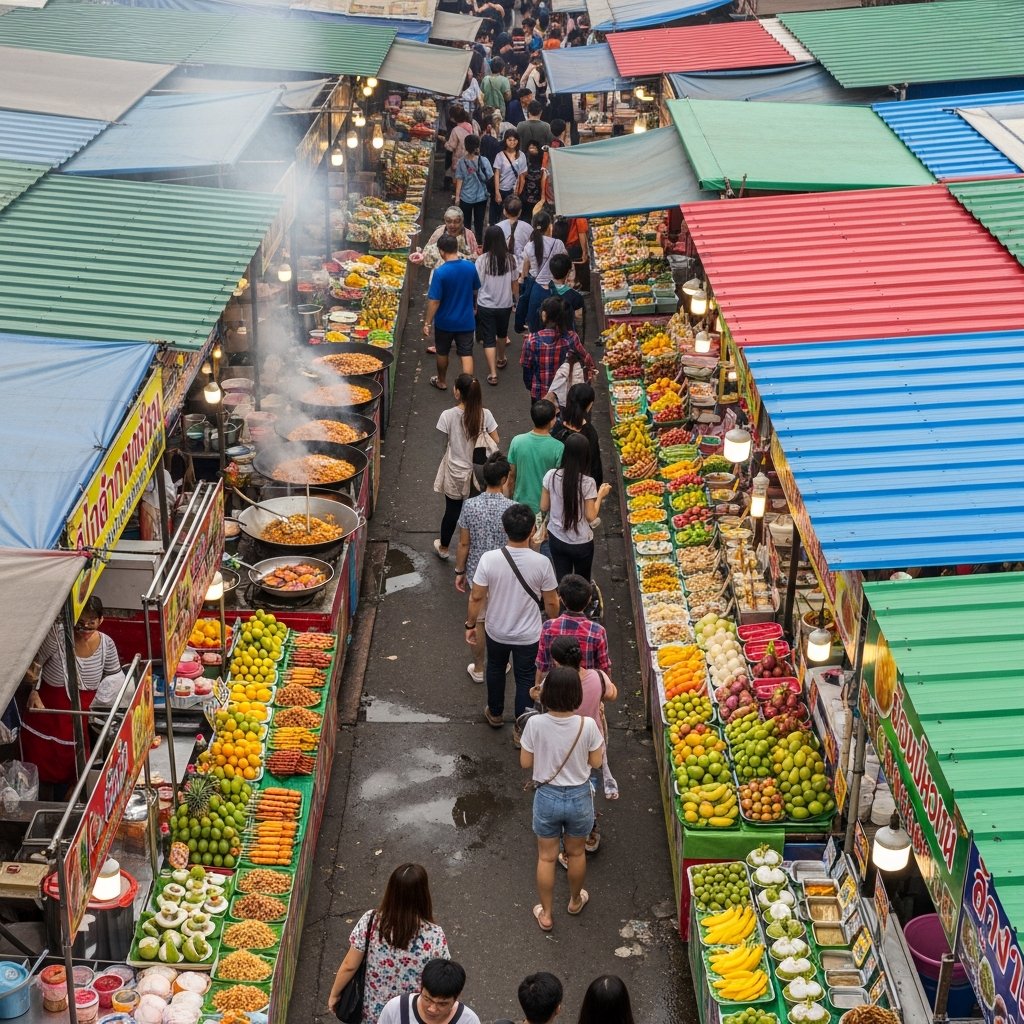
Or Tor Kor is the market that changed how I think about fresh markets. It’s clean. It’s organized. It’s air-conditioned in sections. And the quality of produce here is genuinely the best in Thailand — because it was designed to be.
Run by the Agricultural Marketing Organization (that’s what “Or Tor Kor” stands for), this market was built to showcase the best Thai agricultural products. The fruits are graded. The seafood is fresh, not frozen-and-thawed. The curry pastes are made by vendors who’ve been grinding the same recipe for decades. It’s what happens when a government decides a market should be a point of national pride.
What to buy and eat:
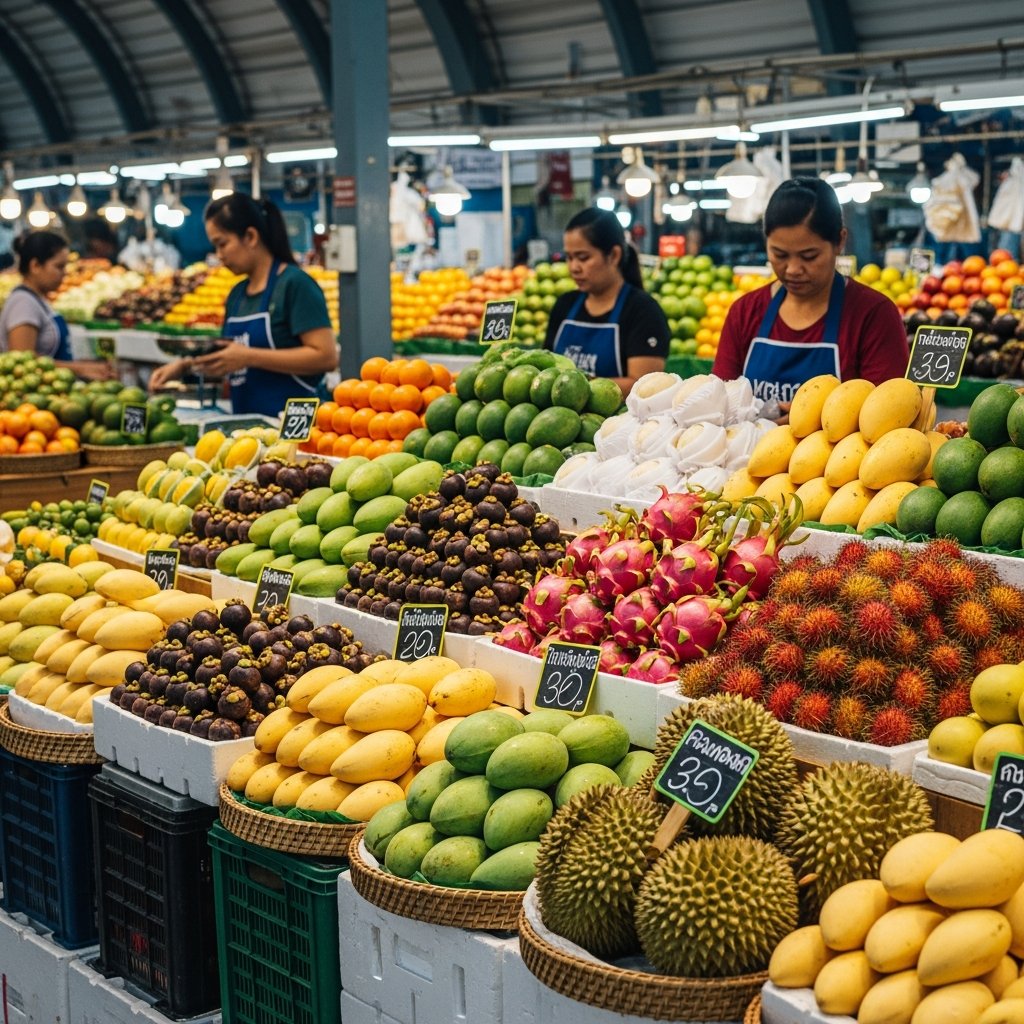
Tropical fruit. This is the single best place in Bangkok to buy fruit. The mangoes are sorted by variety and ripeness. The durian vendors can tell you exactly which plantation their fruit came from and what day it was harvested. The mangosteens are deep purple and yielding — not the hard, dried-out ones you find at tourist markets. Budget ฿100–200 for a selection that would cost ฿500+ at a hotel fruit plate.
Prepared curry. The prepared food section sells individual portions of Thai curries, stir-fries, and salads. Point at what looks good, get it packed over rice, and sit at the communal tables. A full plate runs ฿60–80. The massaman curry vendor in the middle section is particularly excellent — rich, complex, with potatoes that are soft but not disintegrating.
Seafood. Whole fish, prawns, squid, and shellfish displayed on ice. The prices are higher than Khlong Toei (see below) but the quality justifies it. If you’re staying somewhere with a kitchen, this is your seafood source.
Price range: Produce ฿20–300, prepared food ฿50–100, fruit ฿50–200 Hours: 6 AM–6 PM daily Where: Next to Chatuchak Market — Google Maps How to get there: BTS Mo Chit (Exit 1) or MRT Chatuchak Park (Exit 1). Walk 3 minutes north. If you’re visiting on a weekend, hit Or Tor Kor first thing in the morning and Chatuchak after.
2. Khlong Toei Market (Talad Khlong Toei) — The Real Deal
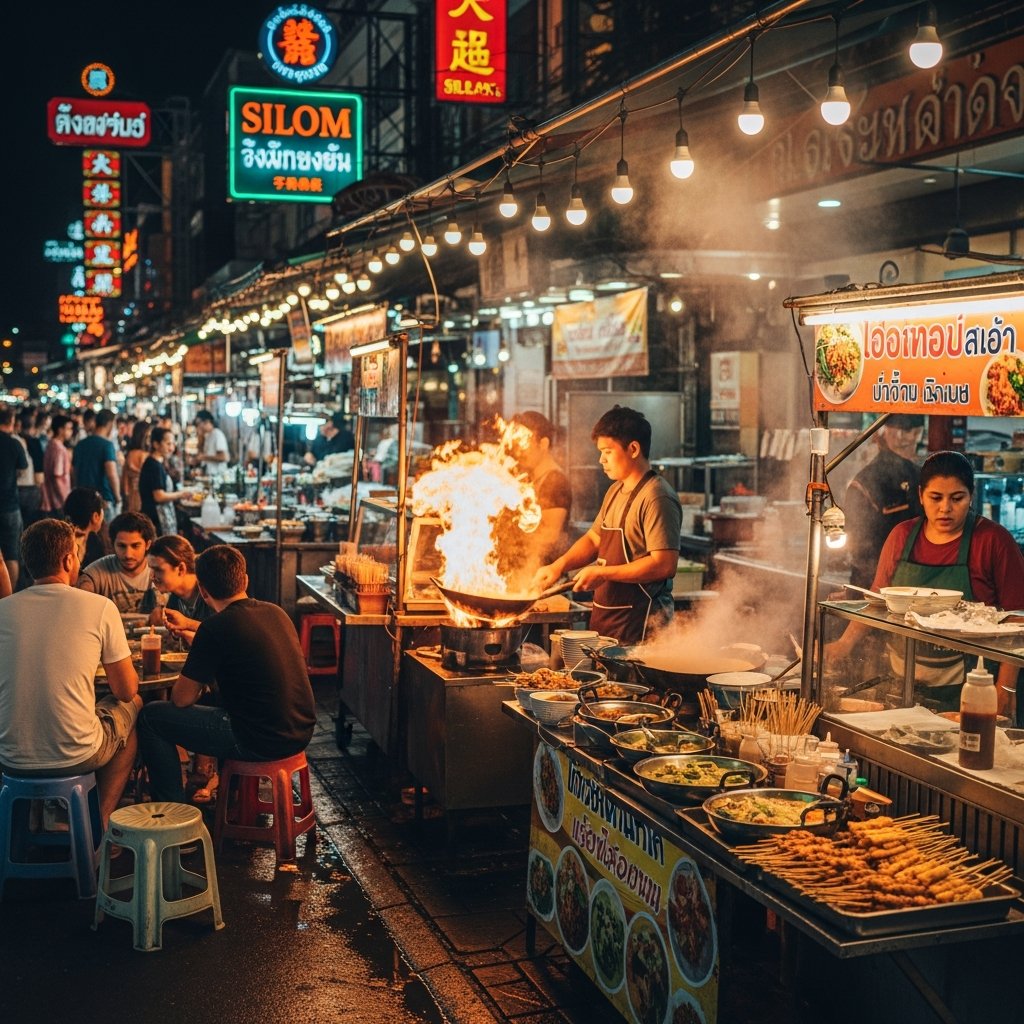
If Or Tor Kor is the curated gallery, Khlong Toei is the raw canvas. This is Bangkok’s largest wet market — a sprawling, intense, slightly overwhelming maze of stalls selling everything from live fish to banana leaves to pork parts you didn’t know existed. This is where Bangkok’s restaurants buy their ingredients every morning. This is where Thai grandmothers have been shopping for 50 years.
A warning: Khlong Toei is not sanitized for visitors. The floors are wet. The fish section smells like fish. The meat section is exactly what you’d expect a meat section to look like before the supermarket industry decided to wrap everything in plastic. If you’re squeamish, this might not be your market. If you want to understand how food actually works in Thailand, there’s nothing better.
What to buy and eat:
Herbs and spices. The herb section is astonishing. Bundles of lemongrass, galangal, kaffir lime leaves, Thai basil, holy basil, morning glory — all picked that morning, all priced at ฿10–20 per bundle. The dried spice vendors sell curry paste ingredients in quantities from 100 grams up. This is where Bangkok’s som tam vendors buy their bird’s eye chilies.
Meat and seafood. Whole chickens, pork loins, offal, river fish, ocean fish, prawns still twitching — all at wholesale-adjacent prices. A whole chicken runs ฿120–150. Prawns are ฿200–400 per kilo depending on size, roughly 40% cheaper than supermarkets.
Prepared food at the edges. The outer perimeter of Khlong Toei has prepared food stalls that cater to the market vendors and early-morning shoppers. The kuay tiew (noodle soup) stalls here open at 4 AM and serve some of the cheapest, most robust bowls in the city. A full breakfast — noodle soup, Thai iced coffee, and a pa tong go (Thai doughnut) — costs ฿60 total.
Price range: Produce ฿10–100, meat/seafood at wholesale prices, prepared food ฿30–60 Hours: 4 AM–2 PM daily (best before 8 AM) Where: Rama IV Road, near Queen Sirikit National Convention Centre — Google Maps How to get there: MRT Queen Sirikit National Convention Centre (Exit 1). Walk 5 minutes south. Grab a motorcycle taxi from the station for ฿20 if you’re not sure of the direction.
3. Khlong Lat Mayom Floating Market — The Weekend Escape
Khlong Lat Mayom is Bangkok’s best-kept market secret. Unlike the famous Damnoen Saduak (which is a tourist performance at this point) or Amphawa (beautiful but 90 minutes away), Khlong Lat Mayom is a floating market that actual Bangkok residents visit on weekends. It’s inside the city, reachable by car or taxi in 30–40 minutes from central Bangkok, and the food is outstanding.
The “floating” part is partially true — some vendors sell from boats along the canal, but most of the action happens on the canal banks where stalls and small restaurants line the water. The atmosphere is relaxed, shady (literal tree shade, not figurative), and feels like visiting a Thai grandmother’s neighborhood. Kids run around. Cats sleep on tables. Nobody’s in a hurry.
What to eat:
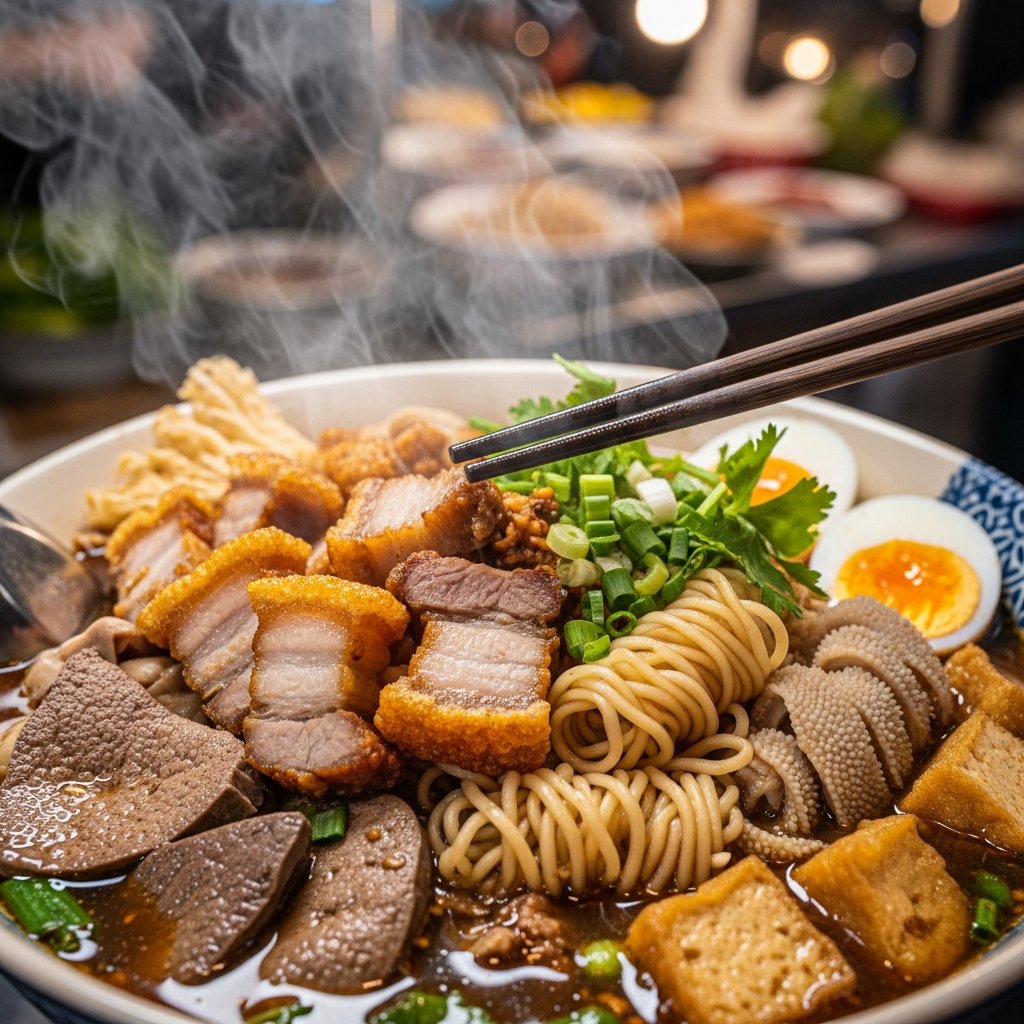
Boat noodles (kuay tiew ruea). The original Thai boat noodle experience — small bowls of intensely flavored pork or beef broth served from boats. Each bowl is tiny (฿15–20), so you order 3–5 bowls. The broth is thickened with blood (don’t let that stop you — it adds a richness that’s impossible to replicate) and spiked with cinnamon and star anise.
Grilled seafood. The canal-side stalls grill whole tilapia stuffed with lemongrass, prawns in their shells, and squid on charcoal. The smoky flavor from the grill plus the simplicity of the preparation makes this some of the best grilled seafood you’ll find without leaving Bangkok.
Desserts. Thai desserts at floating markets are a category of their own. Khanom krok (coconut pancakes), mango sticky rice, roti with condensed milk, and a rotating cast of colorful sweets made from coconut milk, rice flour, and palm sugar. Budget ฿20–50 per dessert and try at least three.
Price range: Boat noodles ฿15–20 per bowl, grilled seafood ฿80–200, desserts ฿20–50 Hours: Saturday–Sunday, 8 AM–4 PM Where: Khlong Lat Mayom, Taling Chan — Google Maps How to get there: Taxi from central Bangkok (30–40 minutes, ฿150–250 by Grab). No convenient BTS/MRT connection — this is a taxi destination.
Quick Reference: Three Markets Compared
| Feature | Or Tor Kor | Khlong Toei | Khlong Lat Mayom |
|---|---|---|---|
| Type | Premium fresh market | Wholesale wet market | Floating market |
| Hours | 6 AM–6 PM daily | 4 AM–2 PM daily | Sat–Sun 8 AM–4 PM |
| Best arrival | 8 AM | 6 AM | 9 AM |
| Getting there | BTS/MRT | MRT | Taxi only |
| Price level | Mid-range | Cheapest | Budget |
| Cleanliness | Excellent | Basic | Good |
| Tourist-friendly | Very | Low | Moderate |
| Best for | Fruit, prepared food | Raw ingredients, early breakfast | Boat noodles, grilled seafood, vibes |
| Intensity level | Easy | Advanced | Relaxed |
Why Markets Matter More Than Restaurants
Restaurants show you what a chef interprets Thai food to be. Markets show you what Thai food actually is. At Or Tor Kor, you see the ingredient quality — lemongrass sorted by freshness, fish sauce vendors offering three fermentation levels to smell. At Khlong Toei, you see the economics — the ingredients for a ฿200 restaurant pad kra pao cost ฿30 here. At Khlong Lat Mayom, you see the culture — Thai families eating boat noodles by a canal on Saturday morning, no tourist infrastructure in sight.
Practical Tips for Market Visits
Go early. Every market is better before 9 AM. Freshest produce, best energy, bearable temperature. By noon at Khlong Toei, the heat is suffocating.
Bring cash in small bills. Markets are cash-only. ฿1,000 notes are useless at 6 AM. Bring ฿500 in 20s, 50s, and 100s.
Bring a reusable bag. You’ll buy fruit, snacks, and prepared food. Eight plastic bags are harder to manage than one tote.
Dress down. Wear shoes you can wash. Leave the white sneakers at the hotel.
Eat first, shop second. At Or Tor Kor and Khlong Lat Mayom, eat the prepared food while you’re hungry, then browse for take-home items.
Combine markets. Or Tor Kor and Chatuchak are literally next to each other — hit Or Tor Kor at 8 AM, then walk to Chatuchak when it opens at 9. Khlong Lat Mayom is a standalone Saturday morning trip.
Bottom Line
The best meal in Bangkok might not be at a restaurant. It might be a ฿60 plate of curry over rice at Or Tor Kor, a ฿15 bowl of boat noodles at Khlong Lat Mayom, or a ฿40 noodle soup at Khlong Toei at 6 AM while the city is still waking up.
Markets are where Bangkok’s food story starts. Everything you eat at restaurants, street stalls, and food courts traces back to these places. Visiting one doesn’t just give you a good meal — it gives you context for every other meal you’ll eat in Thailand.
Wake up early. Bring cash. Follow the grandmothers. They’ve been doing this longer than any food blogger.