Thailand is one of the safest countries in Southeast Asia for tourists. Violent crime against visitors is rare. The real risk is financial: a constellation of tourist scams that have operated for decades, are well-known to locals and expats, and continue to catch first-time visitors because the same tricks work on people who haven’t been warned.
None of these scams are dangerous. All of them are avoidable with basic awareness. Here are the 12 you’ll actually encounter, ranked by how common they are.
1. The “Temple Is Closed” Tuk-Tuk Scam (Bangkok)
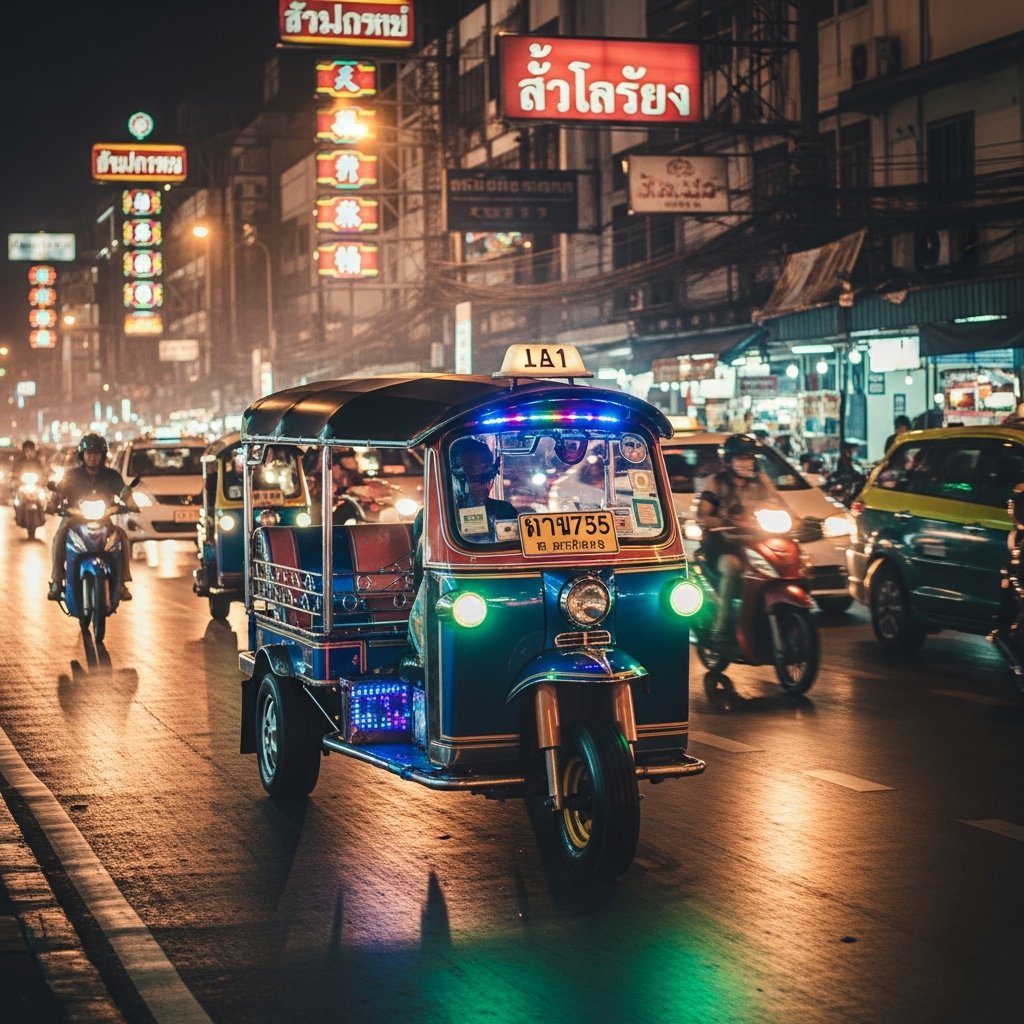
How it works: You’re heading to the Grand Palace or a major temple. A friendly stranger or tuk-tuk driver approaches: “Oh, the temple is closed today for a ceremony. But I know a great temple / gem shop / tailor / lucky Buddha nearby. I’ll take you for ฿20.”
The temple is not closed. The driver earns a commission from whatever shop he takes you to. The gem shop will pressure-sell you worthless stones at markup prices. The tailor will rush-produce a bad suit.
How to avoid: The Grand Palace and major temples are open every day. Walk past anyone who says otherwise. If you want a tuk-tuk, flag one yourself and state your destination.
For our temple route that avoids all of this, see Bangkok temple tour.
2. Taxi Meter Refusal (Bangkok)
How it works: You get in a taxi and the driver quotes a flat fare (฿300–500 for a trip that should be ฿100–200 on the meter). Or the driver starts driving without turning on the meter, then names a price at arrival.
How to avoid: Before entering any taxi, say “meter” or “mit-ter.” If the driver refuses, close the door and take the next one. Bangkok has thousands of taxis — never negotiate.
Better yet, use Grab. Fixed price, GPS tracked, no negotiation. See our Grab and Bolt guide.
3. The Jet Ski Damage Scam (Phuket, Pattaya, Koh Samui)
How it works: You rent a jet ski. When you return it, the operator “discovers” pre-existing damage and demands ฿10,000–50,000 in repair costs. Some operators carry photos of “damage” that existed before your rental. In extreme cases, local men appear to intimidate you into paying.
How to avoid:
- Video the jet ski from all angles before riding. Show the operator the video.
- Take a photo of the operator and the registration number.
- Agree on the full rental terms before paying.
- If confronted: stay calm, call the Tourist Police (1155), and do not hand over your passport as “collateral.”
4. Gem Shop Scam (Bangkok)
How it works: You’re told about a “special government sale” or “factory clearance” on Thai gems (sapphires, rubies). Sometimes a well-dressed local in a suit starts a conversation and steers you there. You buy gems at what seems like a bargain price to resell at home for profit.
The gems are real but worth a fraction of what you paid. There is no government sale. The resale market doesn’t exist as described.
How to avoid: Never buy gems as an investment in Thailand unless you are a trained gemologist. Decorative jewelry from reputable stores is fine; “investment gems” are always a scam.
5. The Bar Bill Overcharge (Pattaya, Bangkok, Phuket)
How it works: You order 3 drinks at a go-go bar or nightclub. The bill shows 6 drinks, or includes “lady drinks” you didn’t order, or has a hidden “service charge” that triples the total.
How to avoid: Ask for prices before ordering. Count your drinks. Review the bill line-by-line before paying. Take a photo of the price list when you enter. In case of dispute: pay what you actually ordered, tell them to call the police, and walk to the exit. They almost never escalate.
More on nightlife pricing: Bangkok nightlife 101.

6. The Wrong Change (Everywhere)
How it works: You pay with a ฿1,000 note. The vendor gives you change for ฿500 and insists you only gave them a ฿500 note. Thai banknotes are different colors and sizes, making this harder to fake — but in dim lighting (bars, night markets), it works.
How to avoid: Announce the denomination when you pay: “Neung phan” (one thousand). Watch the transaction. Pay with smaller notes when possible.
7. The Longtail Boat Overcharge (Islands)
How it works: Longtail boat operators at tourist piers (Ao Nang, Railay, Koh Phi Phi) quote inflated prices, especially for island-hopping trips. A ฿1,500 trip gets quoted at ฿4,000.
How to avoid: Check posted price boards (many piers have them). Book through your hotel or a reputable tour operator. For Krabi specifically, see our Krabi island hopping guide.

8. The Fake Monk (Bangkok)
How it works: A man in monks’ robes approaches you, offers a bracelet or amulet, then asks for a “donation” of ฿500–1,000. Real monks don’t solicit donations from strangers on the street, and they don’t handle money directly.
How to avoid: Politely decline and walk away. A real monk will never pressure you for money.
9. The Bird Seed / Fish Food Hustle (Bangkok)
How it works: Near temples or the Chao Phraya river, a vendor hands you a bag of seeds to feed birds/fish. It seems free. After you feed the animals, they demand ฿100–200 payment.
How to avoid: Don’t accept anything handed to you unsolicited. A firm “mai ao” (don’t want) works.
10. The Suit Scam (Bangkok)
How it works: Tuk-tuk drivers take you to a tailor offering “incredible deals” — a custom suit for ฿3,000. The suit arrives poorly made with cheap fabric. The fit is terrible. By the time you realize, you’ve left Bangkok.
How to avoid: Use our Bangkok tailor guide. Legitimate tailors exist and deliver excellent work, but they cost ฿8,000+ for a quality suit and need 3+ days with multiple fittings.

11. The Ping Pong Show Scam (Bangkok, Pattaya)
How it works: A tout on the street invites you to a “free ping pong show” at an unmarked bar. Inside, you’re presented with an enormous bill (฿5,000–20,000) for drinks you didn’t order or a “cover” that wasn’t mentioned. Intimidation follows.
How to avoid: Never follow touts to unmarked venues. If you want to see a show, go to a well-known venue with posted prices. Better yet, skip it entirely — most are exploitative.
12. The Airport Taxi Surcharge Scam (Suvarnabhumi)
How it works: Instead of taking the official taxi queue (Level 1), you accept a “limousine” or “private car” offer from a tout in the arrivals hall. Cost: ฿1,500–3,000 for a trip that costs ฿300–450 by meter.
How to avoid: Use only the official taxi queue on Level 1 with the ticket machine, or book Grab. See our airport guide.
What to Do If Scammed

- Stay calm. Confrontation escalates situations in Thailand.
- Call the Tourist Police: 1155. They speak English, they respond quickly, and they have authority over tourist-related disputes.
- Document everything. Photos, receipts, names, locations.
- Report online: The Tourist Police also accept reports at touristpolice.go.th.
- Credit card disputes are your friend for large purchases (gems, tailoring) paid by card.
The Bigger Picture
Thailand’s scam ecosystem is a tiny fraction of the tourist economy. The vast majority of Thai people are honest, generous, and want you to have a good experience. These 12 scams exist because they target high-volume tourist corridors (Grand Palace area, Patong, Walking Street) where a constant stream of new arrivals provides fresh targets.
Outside those corridors — in local neighborhoods, in small towns, on quieter islands — scams are virtually nonexistent. The further you get from the tourist trail, the more Thailand’s genuine hospitality shows. Which is one more reason to follow the advice in all our other guides: go where the locals go.
Further Reading
- Bangkok temple tour — The scam-proof route
- Bangkok tailor guide — Legitimate tailors
- Bangkok Grab and Bolt guide — Skip taxis entirely
- Thailand airport guide — Safe arrival
- Thai survival phrases — Language for self-defense
- Tipping guide — Normal vs abnormal charges
- Royal family etiquette — Cultural awareness