You’ve probably seen it a hundred times in your first day in Bangkok. A hotel employee greets you with hands pressed together and a slight bow. A restaurant hostess does the same. The cashier at 7-Eleven does a small version of it when handing you your change.
That gesture is the wai (ไหว้), and it’s one of the most important cultural practices in Thailand. Most travelers acknowledge it with a nod and move on. But if you take five minutes to actually understand it (what the hand position means, when to use it yourself, when not to) you’ll have an entirely different quality of interaction with Thai people.
Let me walk you through it.

What Is the Wai?
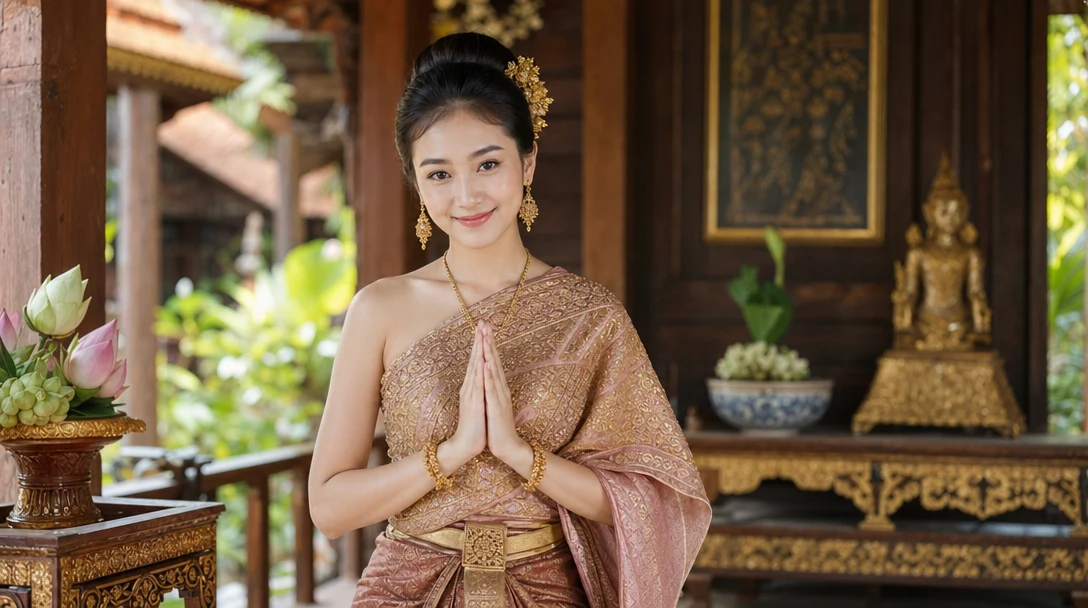
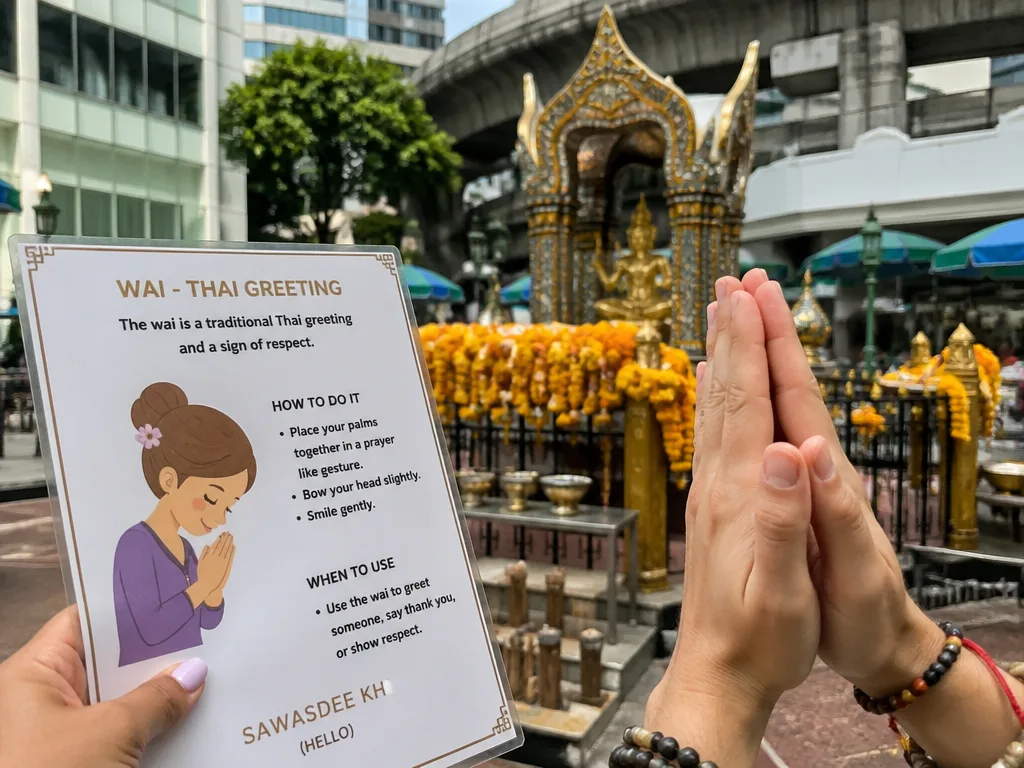
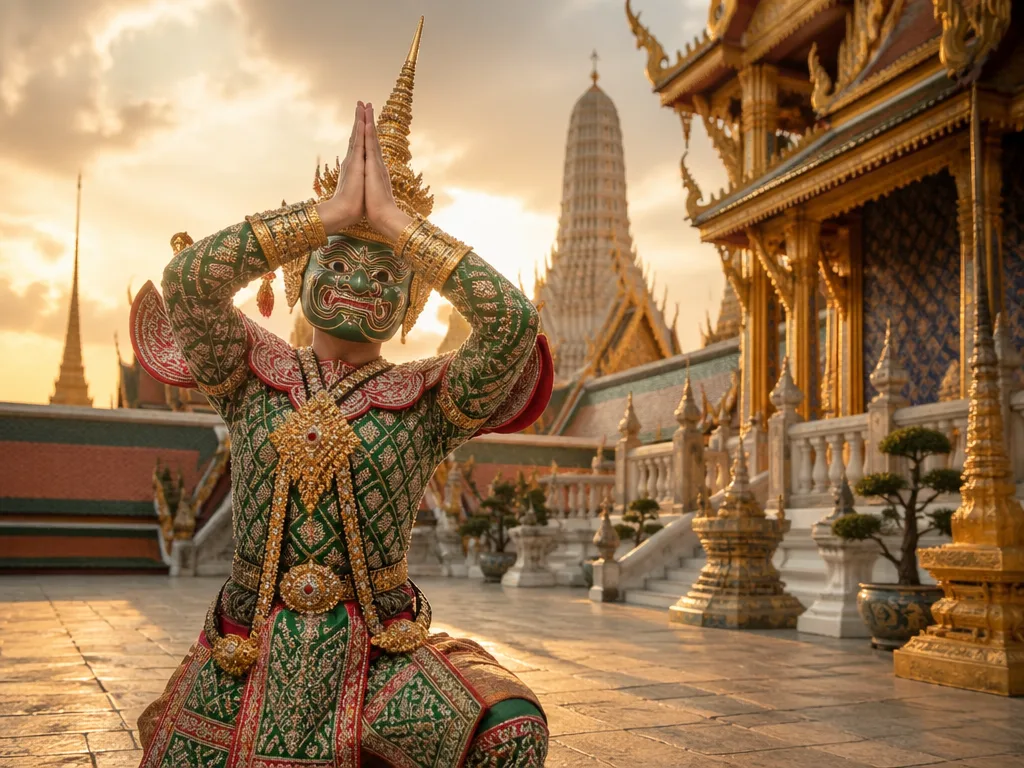
The wai is Thailand’s traditional greeting. It consists of pressing your palms together, fingers pointing upward like a prayer position, and making a slight bow of the head. The gesture communicates respect, acknowledgment, and social awareness all at once.
Unlike a handshake, the wai is non-contact, which makes it elegant and practical. Unlike a bow alone, the hand position carries specific information about your relationship to the person you’re greeting.
The origin is rooted in Buddhist and Hindu traditions throughout the region, and a related gesture (called “namaste” or “anjali mudra”) appears across South and Southeast Asia. Thailand’s version has evolved its own distinct social grammar, particularly around the hand height.
That hand height is everything.
The Three Levels: What Height Communicates
This is what most tourists never learn, and it’s the most important part.
Level 1 — Chest Height (Fingertips below the nose)
Who it’s for: Peers, people of similar social standing, service workers, shopkeepers, friends.
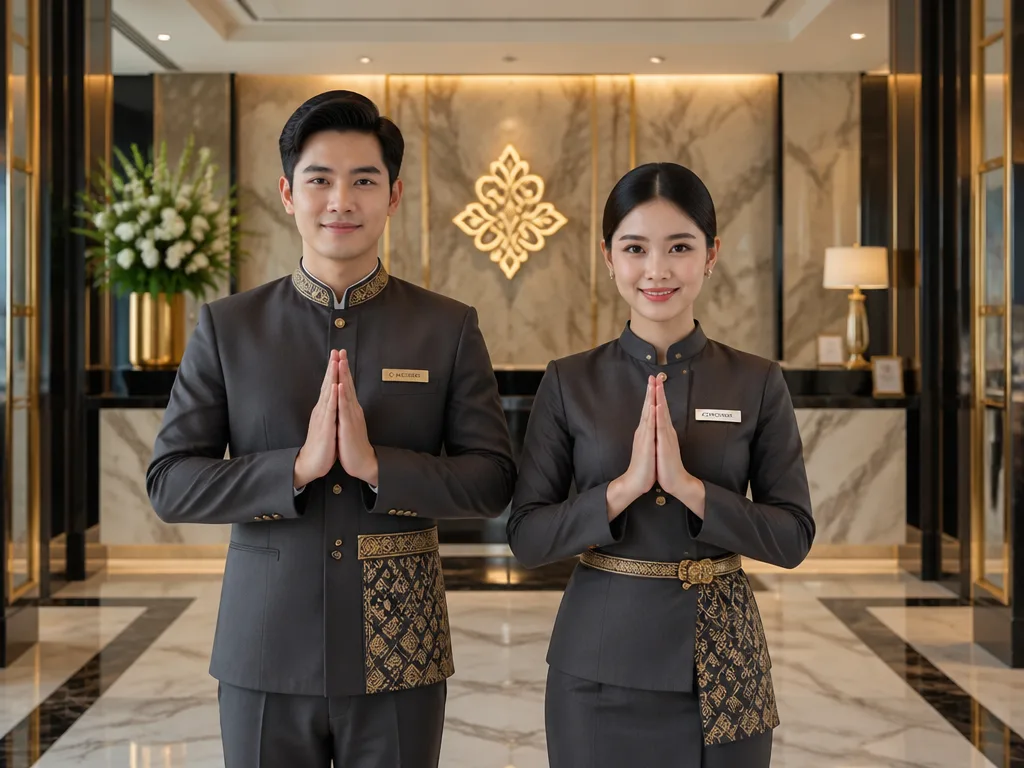
When a hotel staff member greets you, they’re performing a formal Level 1 or Level 2 wai (it’s an occupational courtesy extended to guests). When you return the gesture at chest level, you’re acknowledging them respectfully without over-formality.
As a foreign visitor, the chest-level wai is your go-to. It’s warm, appropriate, and never offensive.
Level 2 — Nose Height (Fingertips between eyes and nose)
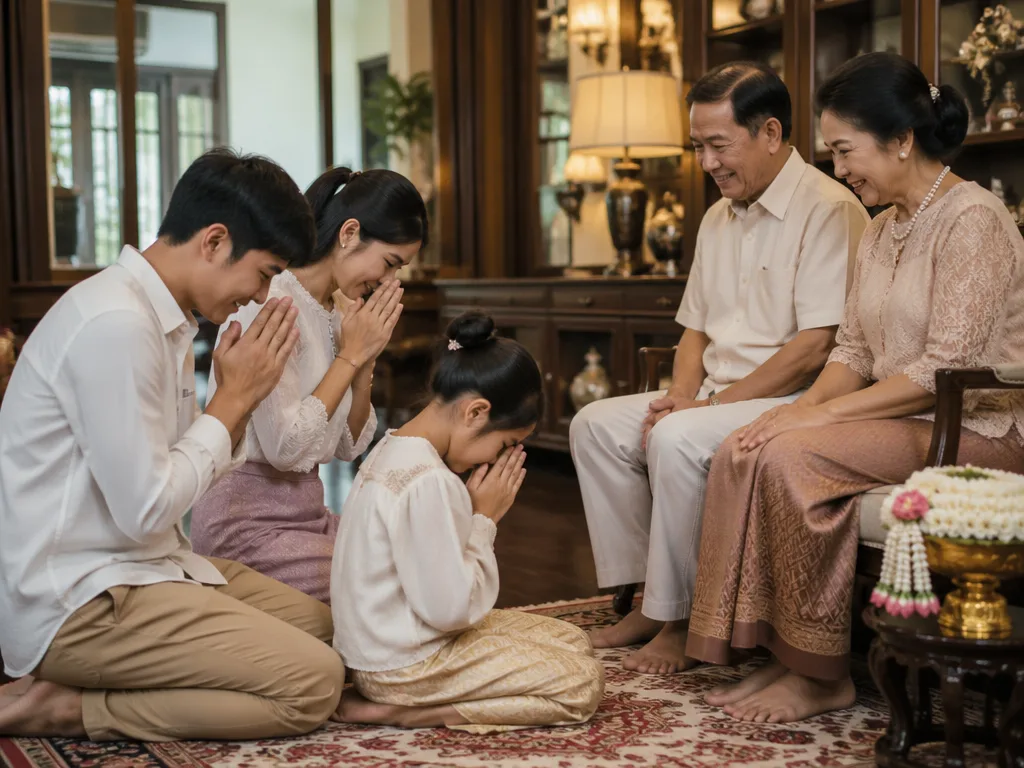
Who it’s for: Elders, teachers, bosses, people clearly senior to you in age or status.
If a Thai friend introduces you to their parents, a nose-level wai is the right move. At a temple, when interacting with staff or guides who are older or clearly in a position of authority, the nose-level wai signals genuine respect.
Thai people notice this. Getting it right earns real goodwill.
Level 3 — Forehead Height (Fingertips at or above the eyebrows)
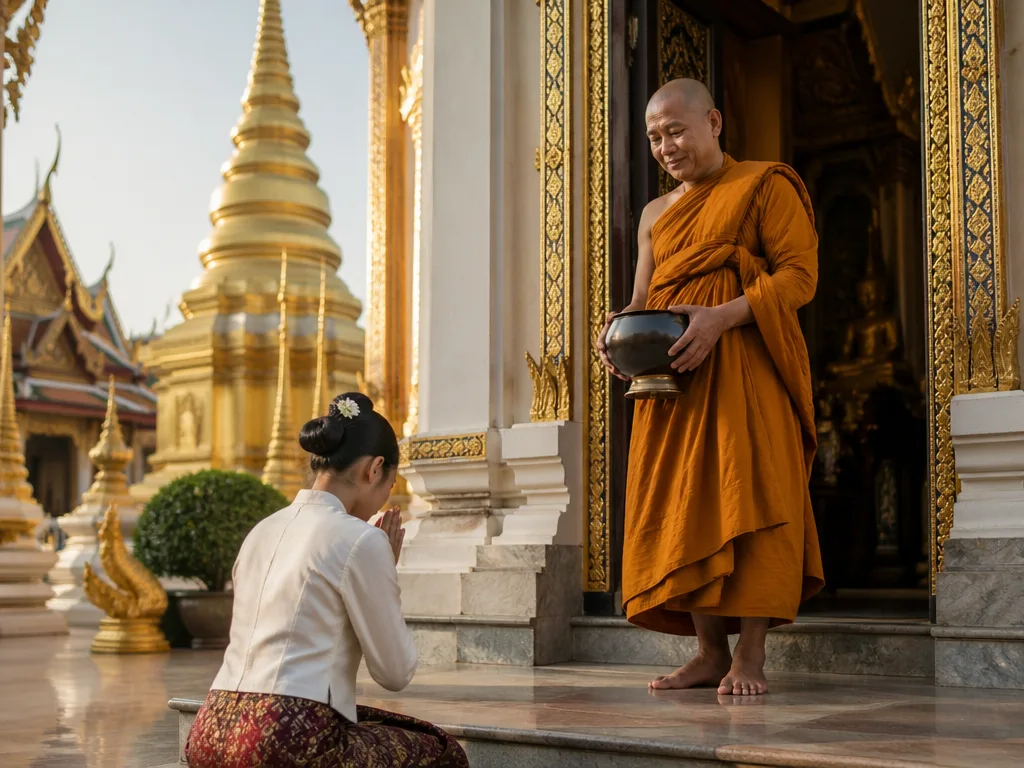
Who it’s for: Buddhist monks, members of the royal family, images of the Buddha.
This is the highest expression of the wai. In a temple context, when presenting offerings or acknowledging a monk, the forehead wai signals the deepest form of respect in Thai social grammar.
The important practical note for travelers: women should never touch monks or hand objects directly to monks. The forehead wai, however, is always appropriate and appreciated.
What to Say With the Wai
The wai is typically paired with “sawasdee khrap” (สวัสดีครับ) if you’re male, or “sawasdee kha” (สวัสดีค่ะ) if you’re female. The “khrap” and “kha” are polite particles that soften the greeting and signal courtesy.
You’ll hear Thai people, especially women, adding “kha” to almost everything in service contexts. It’s a linguistic softener that functions a bit like “please” or “if you would.” Picking up on this pattern and using it yourself (male travelers using “khrap,” female travelers using “kha”) is one of the fastest ways to get a noticeably warmer response from Thai people.
Our Thai Survival Phrases Guide covers the phonetics in detail. Even a rough attempt at pronunciation is received well.
Practical Situations: What Actually Happens
When a Hotel Employee Wais You
Return it. You don’t need to go elaborate. A simple chest-level wai with a slight bow is perfect. Don’t ignore it (that’s rude), and don’t over-engineer it (that’s awkward). Just return the gesture naturally.
If you’re mid-conversation and someone wais while saying goodbye, the same rule applies.
At a Restaurant
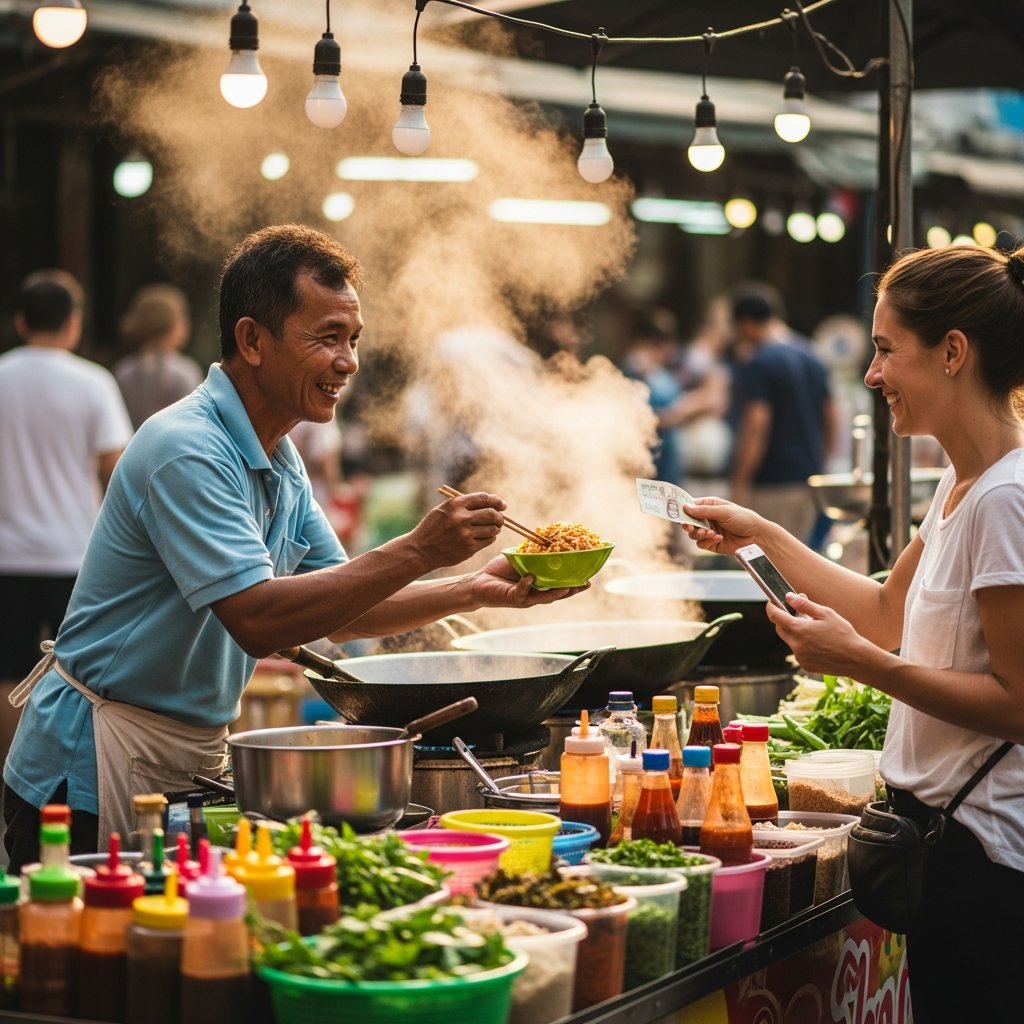
The hosts at many Thai restaurants, especially mid-range and above, will wai as you enter. Return it. At street food stalls and local shops, nods are equally common and there’s no wai expectation.
Waiing while seated is unusual. It implies you’re bowing, which doesn’t quite work in a chair. If someone wais you while you’re seated, a slight head bow with pressed hands at chest level is the adapted version.
At a Temple
Temples are where the wai carries the most weight. When you enter and see the main Buddha image, a wai is appropriate. When monks are nearby, the forehead wai is the correct register.
For everything else you need to know about temple visits, read the Thai royal family etiquette guide before visiting. The cultural context makes the experience considerably richer.
When You Shouldn’t Wai
Don’t wai children. In Thai social structure, the wai flows upward in hierarchy: the junior person initiates to the senior. Waiing a child suggests you’re treating them as your superior, which comes across as strange. A smile and perhaps a gentle head pat (from the back of the head, never the crown, which is sacred) are appropriate.
Don’t wai service workers for minor transactions. Returning their wai is fine. Initiating a deep wai at a convenience store checkout is awkward; it creates a social imbalance that doesn’t quite fit.
Don’t wai while carrying things. If your hands are full, a head bow conveys the same respect without the logistical tangle.
The Spirit House Wai: A Different Context
Throughout Bangkok, in front of shops, hotels, and homes, you’ll notice small shrines: elaborately decorated miniature structures with offerings of flowers, incense, and food. These are spirit houses (san phra phum, ศาลพระภูมิ), believed to house protective spirits.
Many Thai people wai these shrines as they pass. You’ll see it most often in the morning, when people stop briefly, press their palms together, and close their eyes for a moment before continuing.
As a visitor, you’re not expected to participate in this ritual. But watching it happen at the entrance of a luxury hotel, at a street corner beside a 7-Eleven, at the gate of an ancient temple, gives you a glimpse of the spiritual texture that runs underneath the surface of daily Bangkok life.
The Wai in Modern Bangkok
The younger generation in Bangkok still uses the wai, but there are generational gradations. Among peers of the same age in casual settings, especially in international or creative industries, a handshake or even a hug might substitute, particularly if the interaction is with a foreigner who’s become a regular.
The wai in corporate settings, though, remains standard. Meeting a Thai business contact for the first time? Wai. Meeting their boss? Higher wai. Understanding this is part of operating effectively in Thai professional contexts.
For context on broader Thai etiquette and alcohol laws that govern social behavior, those are worth a read too.
Why This Actually Matters for Your Trip
Here’s the practical payoff: Thai people respond visibly and genuinely to foreign visitors who engage with the wai correctly.
Not with dramatic enthusiasm. Thai social communication is generally more reserved than that. But with something real: a slightly longer smile, a moment of warmth, a sense that you’re not just passing through but are actually paying attention. At restaurants, this often translates to better service. At temples, it changes the quality of interaction with caretakers and monks. In markets, it can dissolve the transactional defensiveness that sometimes characterizes the vendor-tourist dynamic.
The wai takes thirty seconds to learn. The return on that investment across a two-week trip is surprisingly substantial.
This is part of our Thai culture and etiquette series. Read next: Thai Survival Phrases for the words that go with the gesture, or Thai Royal Family Etiquette for the deeper cultural context. And if you’re planning evenings out, Bangkok Nightlife 101 has everything you need. Our Thai Massage Guide also explains the massage-wai dynamic you’ll encounter at reputable shops.