Thai Massage Guide 2026: Types, ฿250–1,500 Prices, and Where to Go
A one-hour Thai massage in Bangkok runs ฿250 on a side street, ฿400–700 in a mid-range Sukhumvit shop, and ฿1,500+ inside a hotel spa — for the same hour of work. By the end of this guide you’ll know which of the 5 massage types fits your body, what each one should cost in 2026, and how to pick a good shop without getting upsold.
Thai massage is a cornerstone of any trip to this country. But here’s what first-timers always say: “There are too many types, I have no idea which one to pick.” Thai massage, oil massage, foot massage, aroma, herbal ball. The names alone don’t tell you much.
And then there’s the pricing. Anywhere from 200 to 2,000 baht. The same “Thai massage” can cost 300 baht at one place and 800 at another. Of course it’s confusing.
I’ve been based in Bangkok since 2023, and in this guide I’ll cover the differences between massage types, real 2026 prices, how to pick a good shop, etiquette, and my personal recommendations by area all in one place.
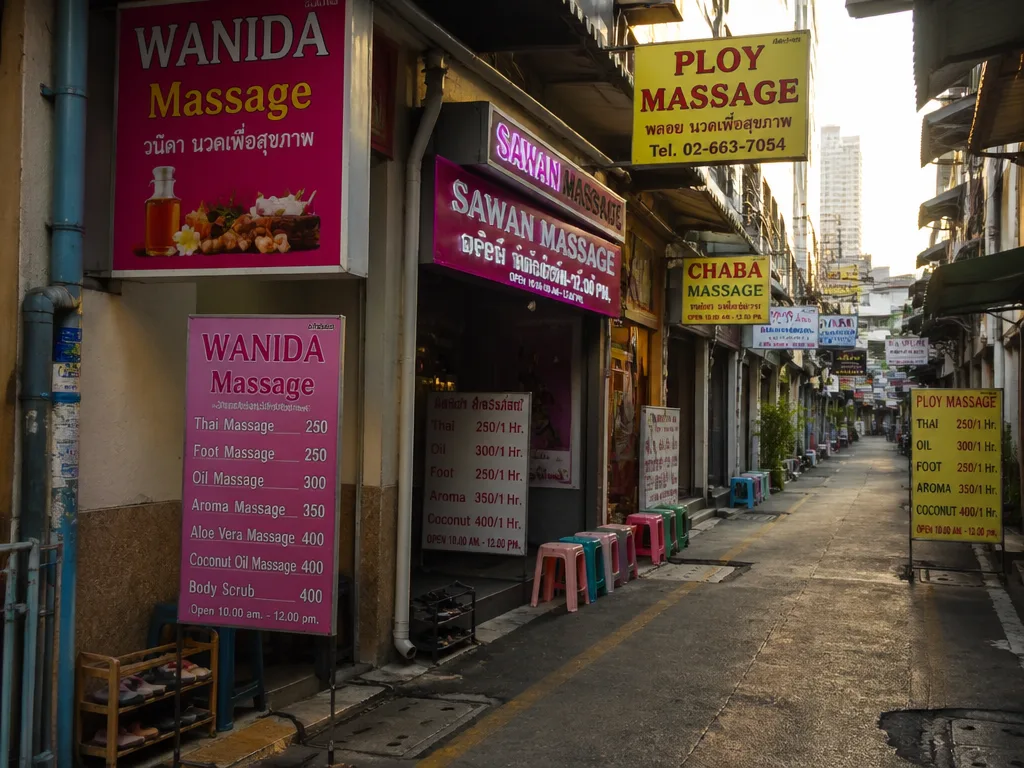
What Types of Massage Can You Get in Thailand?
There are roughly 5 main types of massage available in Thailand. Each one has a completely different style, so picking the right one for your condition matters.
Thai Massage (นวดแผนไทย)
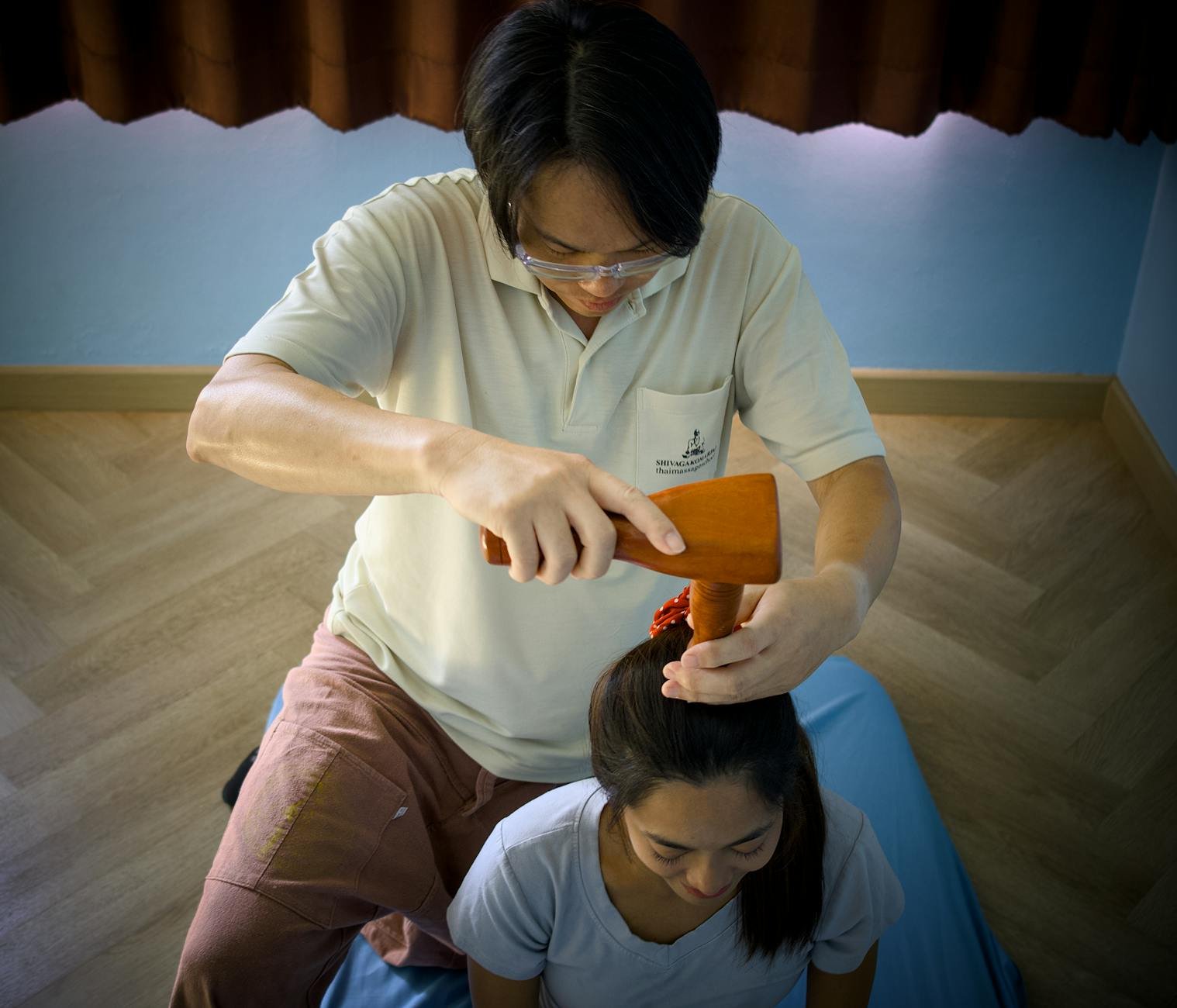
The classic. You stay fully clothed while the masseuse uses their elbows, knees, and feet to stretch and press your entire body. It can be a little painful on the first go, especially around the shoulders and lower back, where involuntary groans are pretty much guaranteed.
But once it’s over, your body feels incredibly light. If you get one right after a long flight, your jet lag recovery speeds up dramatically. I get a Thai massage the moment I land in Bangkok, every single time.
If you’re nervous as a first-timer, just say “bao bao (เบาๆ)”. It means “go easy.” They’ll dial down the pressure.
Price: 1 hour 300–500 THB (local area, outside tourist zones). In touristy parts of Sukhumvit, it can go up to 500–700 THB.
CAUTION
If you have back injuries, herniated discs, or are pregnant, consult your doctor before getting a Thai massage. The deep stretching and pressure can aggravate existing conditions.
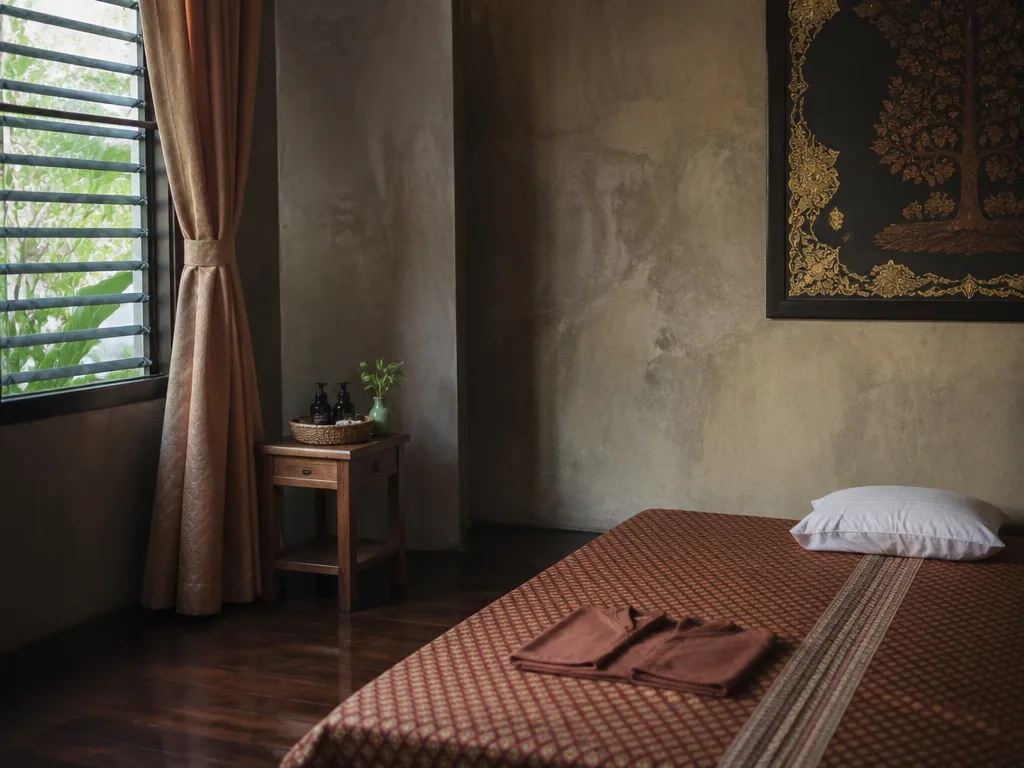
Oil Massage (นวดน้ำมัน)
Aroma oil is applied and you’re massaged with smooth, gliding strokes. Much gentler than Thai massage, with the focus on muscle relaxation. Perfect for when you’ve been walking all day and your body is aching.
One thing to note: oil massage leaves oil on your skin. Check ahead of time if the shop has a shower. Most do, but some smaller local shops don’t.
Price: 1 hour 400–800 THB. High-end spas can charge 1,000 THB or more.
Many places let you choose your oil. Lavender is great for sleep, lemongrass gives a refreshing kick. If you’re not sure, just say “aroma (อโรมา)” and they’ll go with the most popular one.
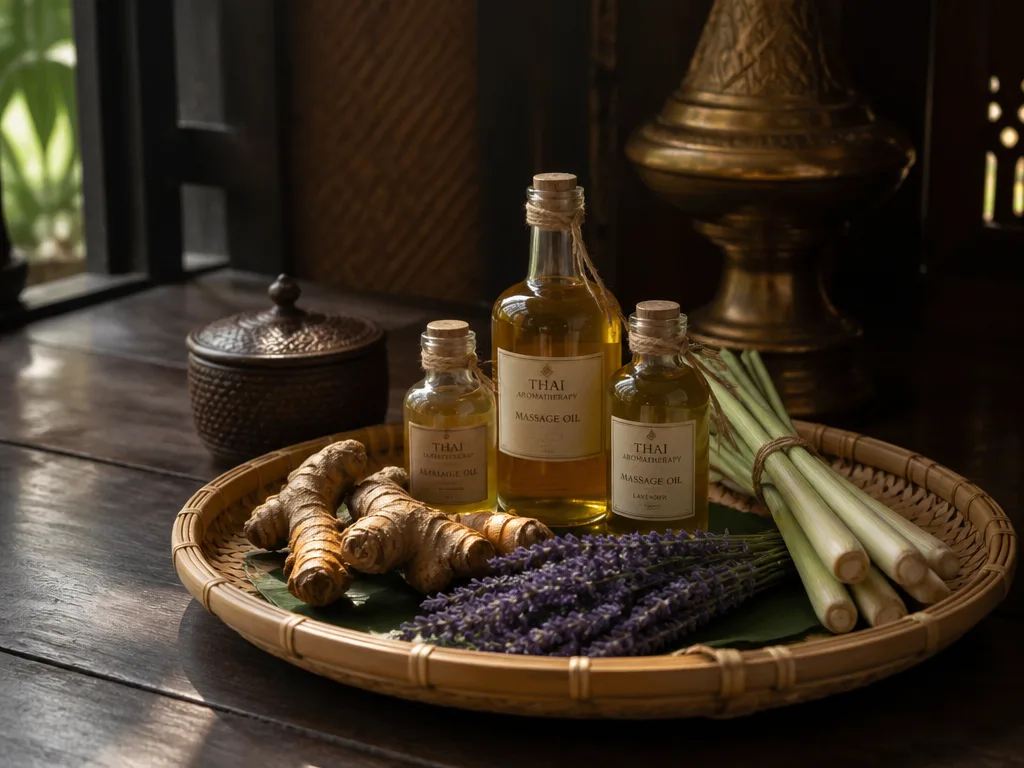
Foot Massage (นวดเท้า)
Targets your feet and calves. Bangkok travel means a lot of walking. Hitting 20,000 steps in a day is the norm. An hour-long foot massage in the evening, and your feet are completely reborn the next morning.
It’s the cheapest option, so you can easily get one every day without breaking the bank. When I’m in Bangkok, I get a foot massage almost daily. Best bang for your baht, hands down.
Price: 1 hour 200–400 THB
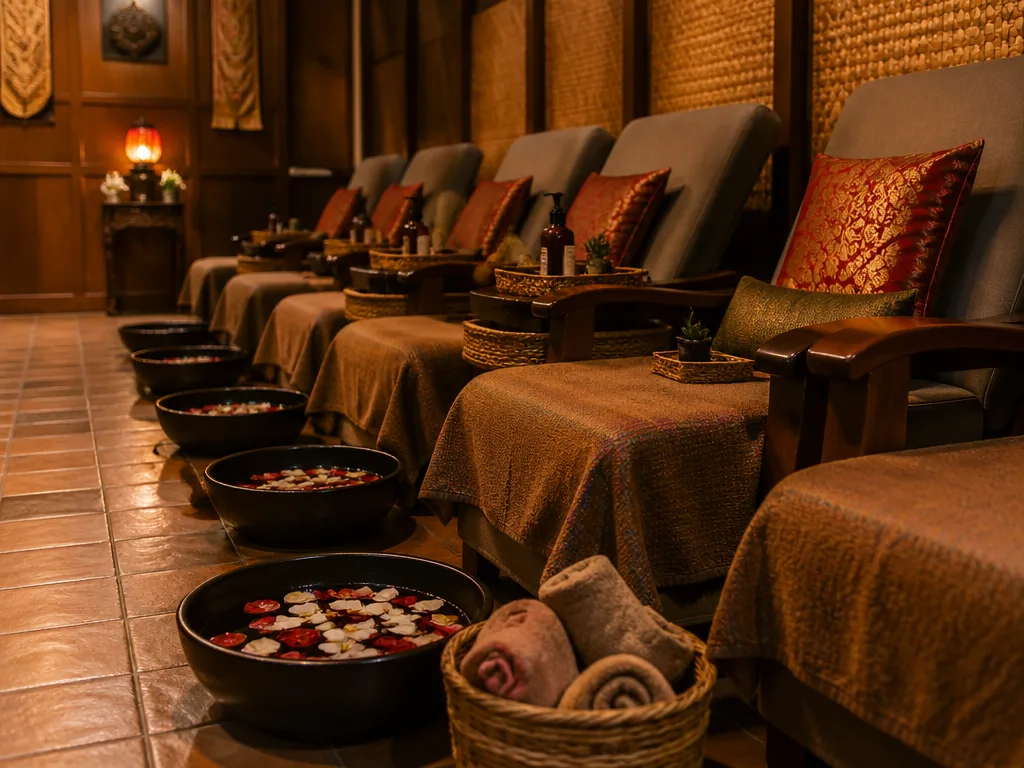
Herbal Ball Massage (นวดประคบสมุนไพร)
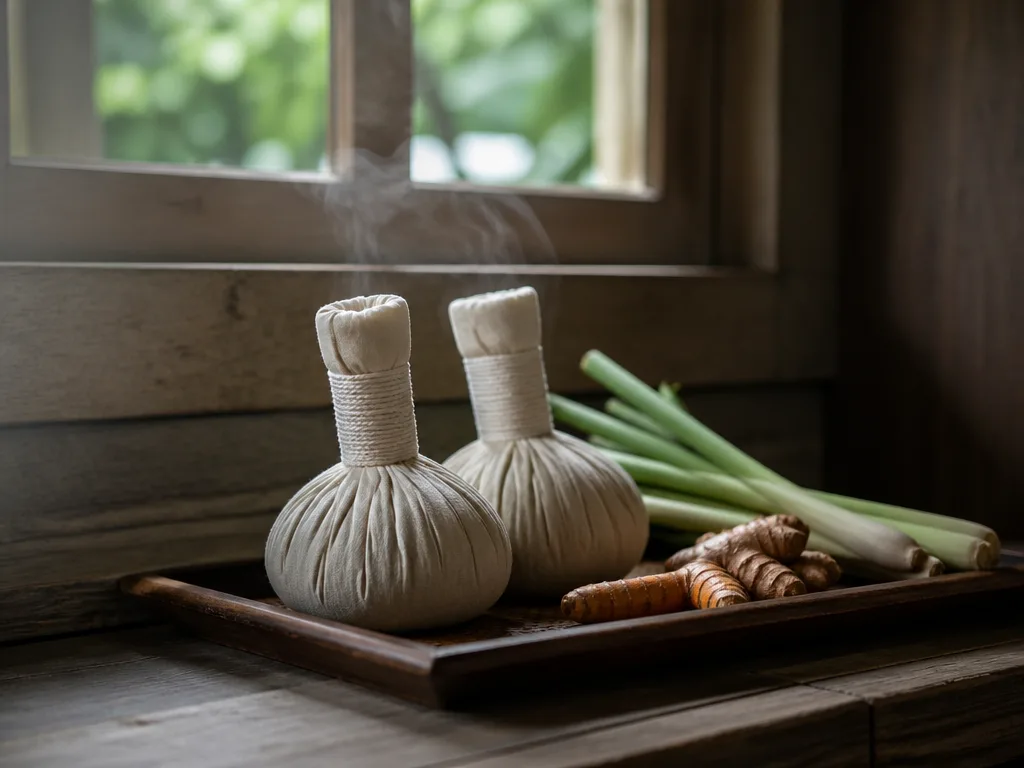
Traditional Thai herbs are wrapped in cloth and steamed, combining a hot compress with massage. The herbal ball contains lemongrass, turmeric, ginger, and more. It smells amazing and does wonders for muscle relaxation.
Most tourists don’t know about this, but it’s been surging in popularity at local spas over the past five years. The most popular combo is Thai massage with a herbal ball add-on. For the best herbal ball experience in Bangkok, try Wat Pho, the birthplace of Thai massage.
Price: 90 minutes 600–1,200 THB (Thai massage combo)
Premium Spa (Luxury Spa)
These are the massages you get at five-star hotels or upscale spa chains. Divana, Let’s Relax, and Health Land are the big names. The facilities, service, and atmosphere are on a completely different level from local shops.
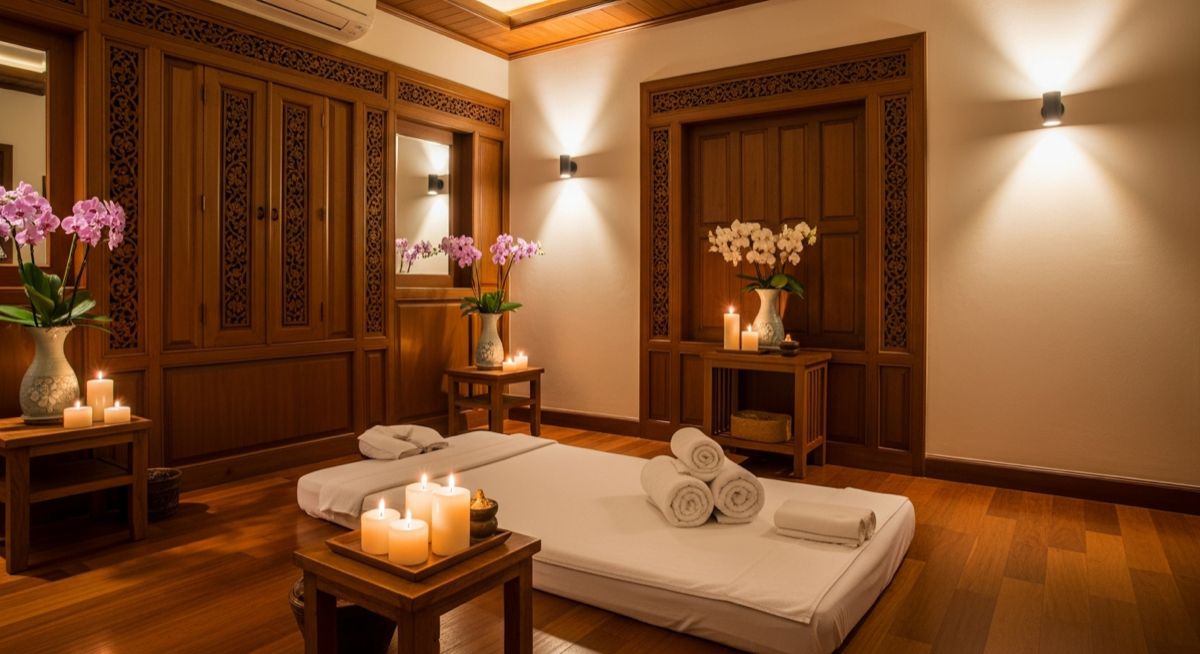
The experience: welcome drink at reception, store your stuff in a private locker, slip into a luxury robe, get your massage, then finish with tea and fruit. Great for special occasions or couple’s trips. See our Bangkok Luxury Spa Guide for the five that actually justify the price tag.
The catch? Prices are 3–5 times higher than local shops, so getting one every day isn’t realistic. Think of it as a one-time treat.
Price: 2 hours 1,500–3,000 THB. At Let’s Relax, a 2-hour Thai massage package runs about 1,200 THB.
Massage Type Comparison
| Type | Intensity | Duration | Price (1 hour) | Best For |
|---|---|---|---|---|
| Thai Massage | Strong | 60–120 min | 300–500 THB | After a flight, stiff body |
| Oil Massage | Gentle | 60–90 min | 400–800 THB | Fatigue relief, relaxation |
| Foot Massage | Medium | 60 min | 200–400 THB | Daily, best value |
| Herbal Ball | Gentle–Medium | 90 min | 600–1,200 THB | Special experience, sore muscles |
| Premium Spa | Your choice | 120–180 min | 1,500–3,000 THB | Special occasions, couples |
Stuck specifically between the top two? Most first-timers really just want to know whether to book Thai or oil for their first session, and the answer changes based on jet lag, sun exposure, and how bad your shoulders are. Our Thai massage vs oil massage breakdown walks through that decision with verified 2026 prices from Wat Pho, Health Land, Let’s Relax, and Asia Herb side by side.
What to Expect: Your First Thai Massage (Step by Step)
If it’s your first Thai massage, the routine below is what plays out at almost every shop, from ฿250 side-street spots to ฿1,500 hotel spas. The decor changes; the steps don’t.
-
Arrival and check-in. Walk in, give your name, and tell them which service and duration you want. At chain shops like Health Land you may fill in a short health form (back issues, surgeries, allergies). Slip off your shoes at the entrance and put them on the shelf provided.
-
Change into the loose cotton set. They’ll hand you a pajama-style top and drawstring pants. Use the changing room or curtained corner. Take off jewelry, watches, and belts. Wallet and phone go into a small basket that stays beside your mat or into a locker if the shop has one. Keep valuables with you, not at reception.
-
Foot wash. Before any Thai or oil treatment you get a quick foot wash in a wooden bowl with warm water and sometimes herbs. This is also the moment to use the bathroom; you won’t want to interrupt later.
-
Choose your pressure. Once you’re on the mat the therapist will ask, often just with a hand gesture. Three words cover 95% of cases: เบา (bao) = light, กลาง (klang) = medium, หนัก (nak) = hard. First-timers should start at bao or klang. You can always upgrade mid-session by saying “nak nak.”
-
The position sequence. A standard 60-minute Thai massage moves through four positions: face up (legs, arms, abdomen), side-lying (hips and back), face down (back, shoulders, deep stretches), then seated (neck, head, final stretches). The therapist will guide you with light taps. Just follow.
-
If something is wrong, say so. Pain that makes you wince, a stretch that pulls your knee the wrong way, room too cold — speak up. “Baw, kha” (no, female speaker) or “baw, krap” (no, male speaker) plus pointing at the body part is enough. Therapists prefer feedback over a quiet guest who leaves bruised.
-
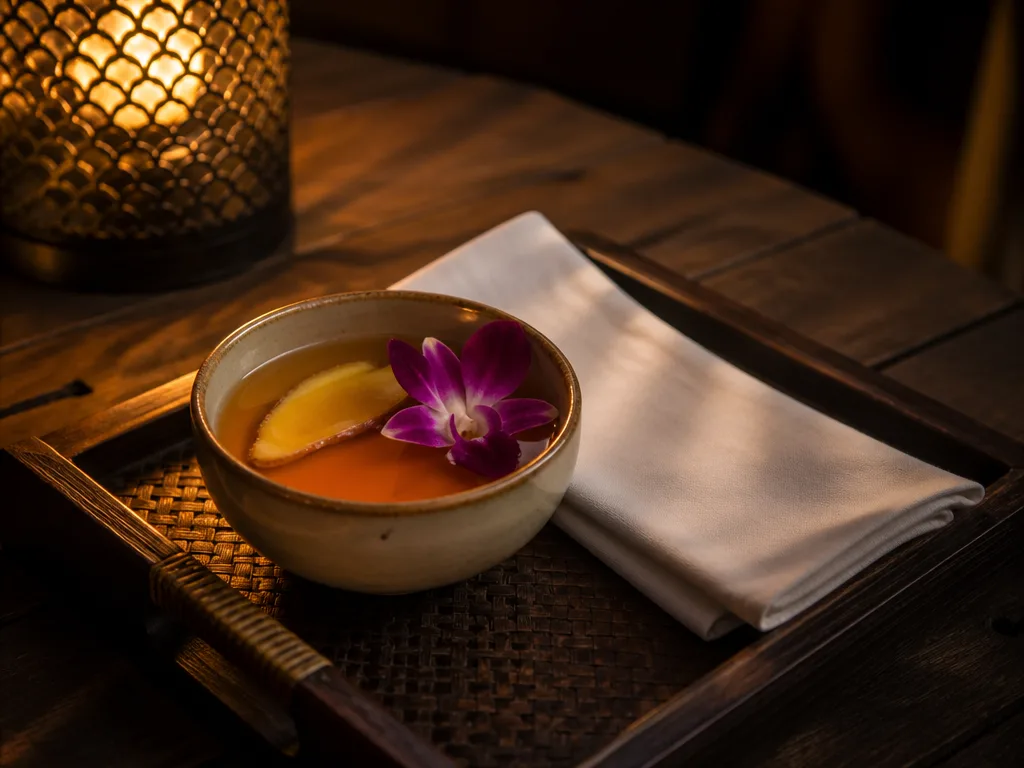
Tea and recovery. When the session ends you’ll be offered warm ginger or lemongrass tea. Sit for 5 minutes before standing. Thai massage drops your blood pressure briefly and you can feel woozy.
-
Pay and tip. Settle the bill at the counter. Hand the tip directly to your therapist, not to the cashier (see the tipping section below for amounts). A simple “khob khun ka/krap” while handing it over closes the loop properly.
Where Should You Go? Recommendations by Area
Sukhumvit: Tourist + Local Mix
Plenty of solid massage shops between Sukhumvit Soi 24 and 39. Prices lean toward the tourist range, but quality is generally dependable. Health Land Asoke offers great value for the price.
Get off at BTS Phrom Phong or Thong Lo station and you’ll find several shops within walking distance. Need help navigating Bangkok’s transit system? See our Bangkok Transportation Guide.
Silom: Office Worker Territory
Silom is a business district by day and a nightlife hub after dark. The massage shops follow the same pattern. Quite a few offer lunchtime discounts for office workers.
Want to know more about Silom? Check out our Complete Silom Guide.
Khao San Road: Backpacker Central
The cheapest massages in Bangkok. Foot massage for 150–200 THB, Thai massage for 200–300 THB. For tips on finding the good shops and avoiding the bad, read our Street Massage Guide.
Quality varies widely, though. Ultra-cheap shops often have less experienced masseuses. Go cheap if you want, but always check Google Maps reviews first.
Beyond Bangkok: Where Massage Becomes a Wellness Holiday
The same logic doesn’t apply once you leave the city. On the islands, the scene shifts from quick neighborhood shops to half-day spa programs at the resorts themselves — and Koh Samui has quietly become the most serious wellness destination in the country, anchored by Kamalaya, Absolute Sanctuary, and a wave of newer ocean-view spa villas. Our Koh Samui spa and wellness guide covers the retreats worth the flight, the 3–7 day detox programs, and the day-spa picks if you’re only there for a weekend.
Side-Street Local Shops: The Real Value
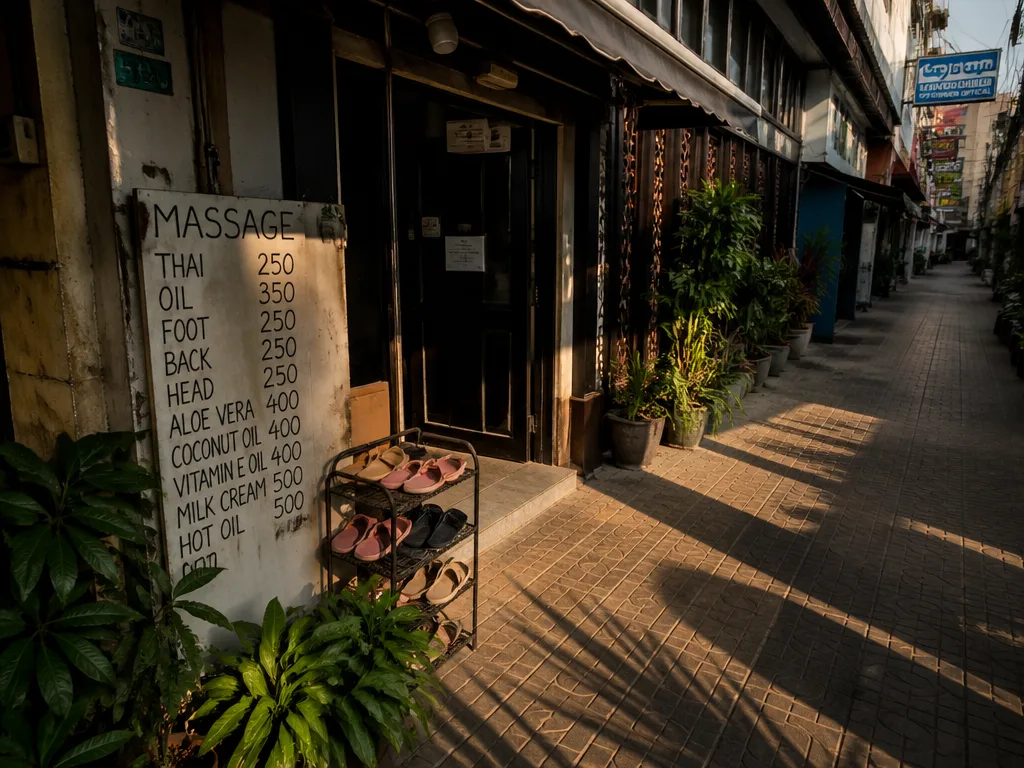
This is the key insight from years of living here: go one block off the main tourist road and prices drop 30–40%. Massage quality is often better, too. Shops with loyal local regulars have masseuses whose skills have been proven over time.
“Go one block off the main tourist road and prices drop 30-40%, and massage quality is often better, too.”
Thai Massage in Bangkok: Best Neighborhoods
If you’re picking your massage spot based on where you’re staying or sightseeing, here’s the neighborhood-by-neighborhood breakdown with venue tiers and 2026 price bands.
Sukhumvit (mid-tier, ฿400–700, tourist-friendly)
The most reliable middle ground for first-time visitors. English signage, clear menus, easy BTS access. Health Land Asoke is the workhorse choice (around ฿550–700 for 2-hour Thai depending on the branch and time, large facility, 7-day booking). Asia Herb Association runs branches at Benchasiri Park, Nana, and Sukhumvit 24 (Phrom Phong) — expect roughly ฿1,500 for 90 minutes with herbal ball, ฿1,300+ for 2-hour Thai with herbal ball combos. You won’t get the “wow” of a luxury spa, but you won’t be ripped off either.
Thonglor / Phrom Phong (upscale, ฿800–1,500+)
Where Bangkok residents go for date-night and special-occasion spa. Divana Nurture Spa on Sukhumvit Soi 11 sets the standard: signature packages typically ฿1,300–1,650 for 60–90 minutes (Aromatherapy / Lay Overbliss line), with longer 2-hour rituals stepping up further. Garden setting, very polished service. Oasis Spa Sukhumvit 31 is the other classic, swan-pond aesthetic with multi-hour signature packages in a similar mid-luxury band. Book 1–2 days ahead, and check Klook or Hungry Hub before the concierge — published online rates often undercut walk-in pricing. Compare it to a ฿180,000 won spa day at Banyan Tree Seoul and you’ll see why locals come here too.
Silom / Sathorn (mixed tiers)
Office-worker volume during weekdays, then nightlife pivots after dark. Health Land Sathorn mirrors the Asoke branch on price and quality. Hotel spas inside the Sukhothai, COMO Metropolitan, and Banyan Tree push into the ฿2,500–4,500 range for 90 minutes. Worth it if you’re already a hotel guest; overpriced if you’re commuting in just for the massage.
Old Town / Wat Pho area (authentic temple training)
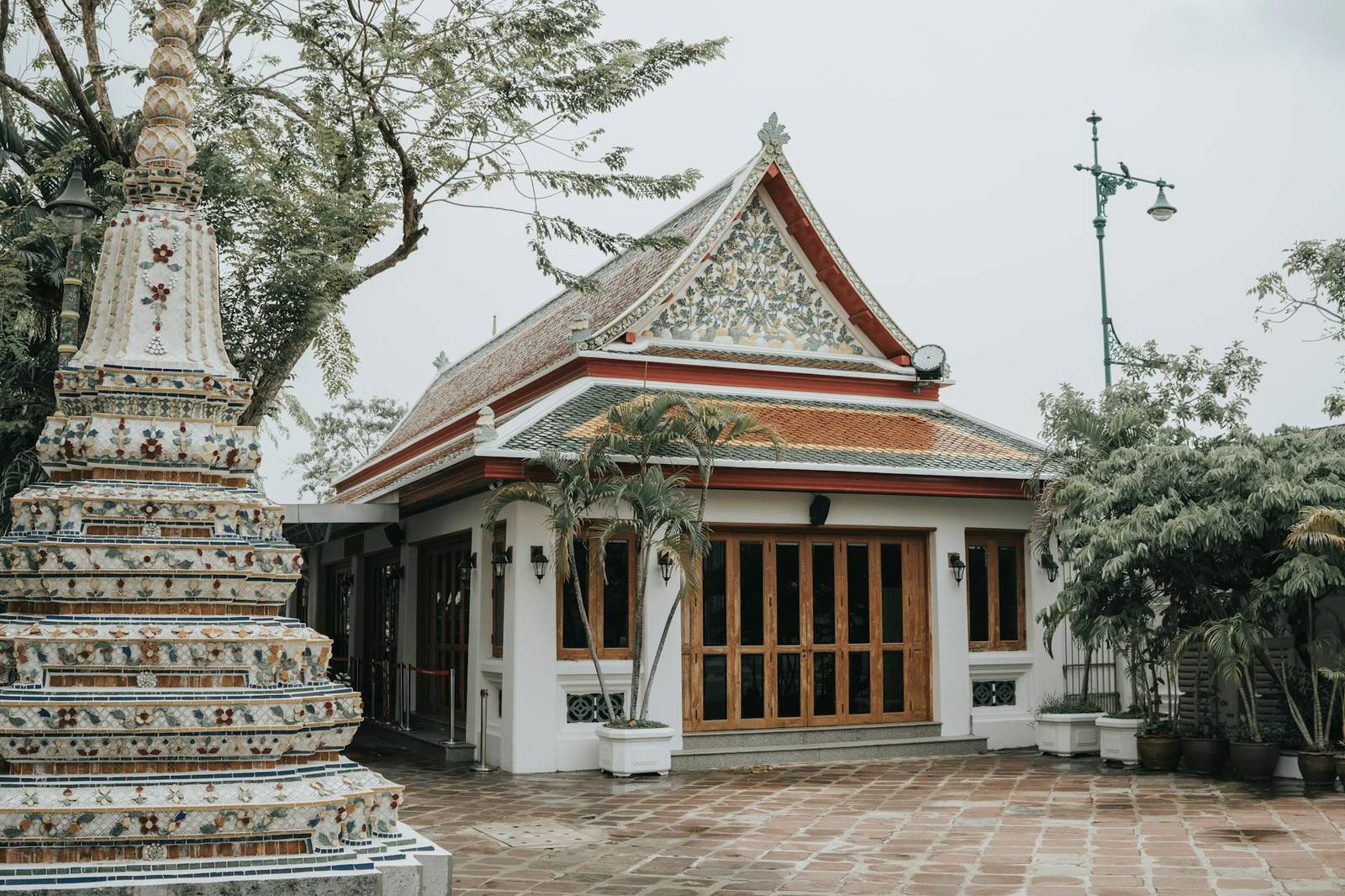
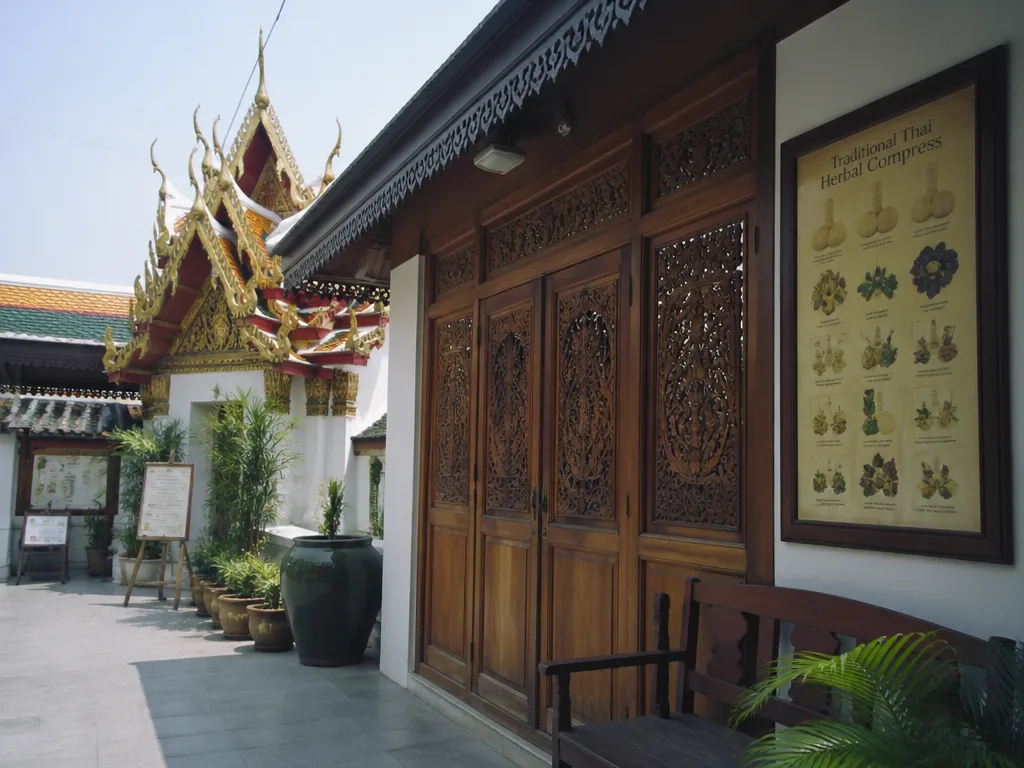
Wat Pho Traditional Medical and Massage School is the spiritual home of Thai massage and where many therapists in Bangkok actually trained. The on-site clinic runs ฿260 for 30 minutes and ฿420 for 60 minutes of Thai massage as of 2026, with foot massage at ฿280/30 min and ฿420/60 min. Note the temple admission (฿200) is separate if you haven’t already paid it. No frills, but the lineage is real. Pair it with a temple visit for the most efficient half-day in Bangkok.
Khao San area (budget walk-ins, ฿250–350)
The cheapest legitimate Thai massage in town. Walk Soi Rambuttri or the alleys behind Khao San and you’ll see open-front shops with mats lined up at street level. Quality varies wildly. Stick to shops with 4.0+ Google reviews, posted prices, and visible certificates. Avoid anyone touting from the curb.
How much does a Thai massage cost in Bangkok?
A one-hour Thai massage in Bangkok costs ฿250–350 at side-street local shops, ฿400–700 at mid-range Sukhumvit and Silom shops, and ฿1,500 and up inside hotel and premium spas. Oil massage runs about ฿100–200 higher per hour. Foot massage is the cheapest entry at ฿150–400 depending on the same venue tiers.
Here’s a fuller breakdown of Bangkok massage prices by area as of 2026. The same Thai massage can cost over twice as much depending on where you get it.
| Area | Thai Massage (1h) | Oil Massage (1h) | Foot Massage (1h) |
|---|---|---|---|
| Khao San Road | 200–300 THB | 300–500 THB | 150–200 THB |
| Silom/Sathorn | 300–500 THB | 500–700 THB | 200–350 THB |
| Sukhumvit | 400–600 THB | 500–800 THB | 250–400 THB |
| Side-street local | 250–350 THB | 350–500 THB | 150–250 THB |
| Premium Spa | 800–1,500 THB | 1,000–2,000 THB | 500–800 THB |
NOTE
Five years ago, a one-hour Thai massage was 200 baht. Prices have gone up with inflation, but compared to massage prices back home (easily $50+ USD), it’s still an absolute steal.
Exchange rate reference: 1 THB is roughly 0.03 USD (as of April 2026). A 200 THB foot massage works out to about $6.
How to Pick a Good Massage Shop
Just Check These Things
- Is the price list posted outside? Shops that say “come inside and ask” with no posted prices are more likely to overcharge
- Cleanliness. Peek inside from the entrance. Are the sheets and pillows clean?
- Are there customers inside? Avoid shops that are completely empty in the middle of the day
- Masseuse certifications. If you see Thai Ministry of Health certificates on the wall, that’s a good sign
Using Google Maps Reviews
Search “Thai Massage” on Google Maps and nearby shops will pop up. Aim for 4.0+ stars with at least 50 reviews and you’ll rarely go wrong. Focus on reviews from the past 3 months. Older reviews may reflect masseuses who’ve since moved on.
Shops to Avoid
WARNING
Shops with no posted prices that quote verbally are the number one tourist trap. If they won’t display a price board, they’re charging based on how foreign you look.
- Places that aggressively tout from the street
- Shops that emphasize “special massage” (could be adult services)
- Prices that are abnormally cheap compared to neighboring shops
Massage Etiquette: Just Follow These Rules
Before Your Massage
- Shower beforehand. It’s basic courtesy, especially before an oil massage
- Keep valuables in a locker or your bag
- Tell them your preferred pressure: “bao bao (เบาๆ)” for gentle or “naek naek (แรงๆ)” for strong
During Your Massage
- If it hurts, speak up. Say “jep (เจ็บ)” or simply “that hurts.” Don’t tough it out, you could actually get injured
- Taking phone calls or chatting loudly is bad form
- Falling asleep is totally fine. Masseuses actually like it (it means you’re comfortable)
Tipping Etiquette
Tipping after a massage is really important in Thailand. Masseuses earn low base wages, so tips are a significant part of their income.
| Massage Type | Recommended Tip |
|---|---|
| Foot massage (1 hour) | 50 THB |
| Thai / oil massage (1 hour) | 50–100 THB |
| Thai / oil massage (2 hours) | 100–200 THB |
| Premium spa | 100–200 THB |
The key: Don’t leave it at the counter. Put it directly into the masseuse’s hand. If you leave it at the counter, the owner might pocket it. Hand it over with a “khob khun khrap (ขอบคุณครับ)” or “khob khun ka (ขอบคุณค่ะ)” and you’ll make their day.
TIP
50-100 THB is the standard tip for a one-hour massage. For a two-hour session, 100-200 THB. Always hand the tip directly to your therapist, not to the counter.
For a deeper dive into tipping culture, check out our Complete Thailand Tipping Guide.
Massage Tips From 10 Years of Living Here
After a decade in Bangkok, I’ve had literally hundreds of massages. Here’s what I’ve learned.
“At 200 baht, a foot massage costs less than a cup of coffee back home. That’s the magic of Thailand right there.”
-
It’s totally fine to get one every day. Foot massage in particular puts zero strain on your body. If anything, you’ll feel better the next day. At 200 baht (about $6), it costs less than a cup of coffee back home. That’s the magic of Thailand right there.
-
Find a regular masseuse. If you keep going to the same shop and requesting the same person, they’ll remember your body. “Your left shoulder was acting up last time, right?” And they’ll focus on it. That kind of personalized care makes a huge difference.
-
2–4 PM is the golden hour. Fewer tourists, and the masseuses are in their best form. Early morning sessions can mean a masseuse whose body hasn’t warmed up yet, and evening sessions come with accumulated fatigue.
-
Chains aren’t automatically better. Let’s Relax and Health Land have great facilities, sure. But a 20-year veteran at a tiny 5-tatami local shop off some alley will often give you a far superior Thai massage.
How much should you tip for a Thai massage?
Tip ฿50–100 for a 1-hour Thai or foot massage at street and mid-range shops, and ฿100–200 for a 90 to 120-minute session or a premium spa visit. Tipping is not expected at most 5-star hotel spas where a 10% service charge is already added to the bill. Always hand the tip directly to your therapist, not to the cashier.
The reason the direct handoff matters: at smaller shops, anything left at the counter sometimes goes into the till instead of to the therapist. A folded ฿100 note pressed into their hand with a “khob khun ka/krap” is the unambiguous version. At chain spas with electronic payment, you can add the tip in cash separately at the end. For a fuller breakdown of when to tip and how much across every Thai service category, see our Thailand Tipping Guide.
Common Mistakes & Scams to Avoid
Most Bangkok massage shops are honest. The handful of bad actors cluster in predictable places. Here’s what to watch for.
Street touts promising “special massage.” Around Khao San, lower Sukhumvit (Soi 4, 7, 11 after dark), and parts of Silom, you’ll get approached by men with laminated cards offering “special Thai massage.” “Special” almost always means a different category of establishment. If you want legitimate therapeutic massage, walk past, ignore eye contact, and book at a shop with a posted price list.
The “extra service” upsell. Cheap walk-in shops in tourist areas sometimes have therapists who, mid-session, offer extras for an additional fee. The polite decline: a firm “no thank you, just Thai massage.” If they push, ask for the manager or end the session and pay only the original price. This rarely happens at chains (Health Land, Let’s Relax, Asia Herb) or reputable independents.
Hotel concierge kickbacks. Concierges at mid and upper-tier hotels often steer guests toward partner spas at full rack rate. The same Divana or Oasis booking through Klook or Hungry Hub is frequently cheaper after promo codes and online discounts — Divana itself offers 10% off when you book and pre-pay via its website, and 20% off with 7+ days lead time. Always cross-check the partner spa name on those platforms before letting the concierge book.
Grey-area parlors near nightlife zones. Massage shops within a 200m radius of Soi Cowboy, Nana Plaza, or Patpong are mostly not therapeutic massage. They look the same from the street but operate on a different model. Read our Soi Cowboy vs Nana Plaza guide for context. For an honest Thai massage in those neighborhoods, walk one or two blocks away to Sukhumvit Soi 24 or Silom Soi 4.
Pressing through real pain. Thai massage involves deep stretches and elbow pressure. Some discomfort is normal; sharp pain in a rib, knee, or lower back is not. Say เบา (bao) if it’s your first session and don’t tough out cracked ribs to seem brave. Bruising and soreness for 24–48 hours after a strong Thai massage is expected; pain lasting longer than 3 days needs a doctor.
FAQ
Does Thai massage actually hurt?
It varies by person, but first-timers may feel some discomfort, especially around the shoulders and lower back. It’s more of a “hurts so good” sensation rather than real pain. If it’s too much, say “jep (เจ็บ)” and they’ll ease up.
Can I eat right before a massage?
Best to avoid it. Wait at least 1 hour after eating. Thai massage in particular involves abdominal pressure, so going right after a meal will be uncomfortable.
Is it okay to have a male masseuse?
Absolutely. Male masseuses are common in Thailand, and many people actually prefer them for Thai massage since they tend to have more strength. If you have a gender preference, just mention it when you book.
Tourist area massage vs. local massage: what’s the difference?
Tourist area shops charge 30–50% more. Quality is often better at local shops. Tourist spots focus on turnover; local shops focus on keeping regulars happy. That said, tourist-area shops tend to have better English communication and cleaner facilities.
Do I have to tip?
It’s not mandatory, but tipping is practically essential in Thai massage culture. 50–100 THB is the standard. Hand it directly to your masseuse.
Is Thai massage painful?
Thai massage uses firm pressure and assisted stretching, so first-timers often feel intense sensations around the shoulders, lower back, and hamstrings. That’s discomfort, not injury. Real pain (sharp, localized, makes you flinch) is a signal to ease off. Say “bao bao” or “jep” and your therapist will dial the pressure down immediately.
How long is a typical Thai massage?
The standard session is 60 minutes, but 90 minutes is the better value in Bangkok. Therapists tend to rush the 60-minute version to fit the schedule, while a 90-minute booking gives you time for proper stretches and a deeper back sequence. 2 hours is the sweet spot at premium spas like Health Land and Let’s Relax, often priced only 50–70% higher than the 1-hour rate.
What should I wear for Thai massage?
Nothing of your own. The shop provides a loose cotton pajama set (top and drawstring pants) that you change into on arrival. Remove jewelry, watches, belts, and anything in your pockets. Oil massage is the exception: you’ll strip down to underwear (or a disposable paper one provided) and lie under a sheet.
Can I eat before a Thai massage?
A light meal or snack is fine 1 hour before. Avoid heavy meals, fried food, or large amounts of liquid in the 90 minutes leading up to your session. Thai massage involves abdominal pressure and inverted stretches, which feel awful on a full stomach. A glass of water and a piece of fruit is the right pre-session combo.
Is Thai massage safe during pregnancy?
Standard Thai massage is not recommended during pregnancy, especially in the first trimester. The deep stretches, abdominal pressure, and acupressure points used can be risky. Book a dedicated prenatal massage at a spa that lists it on the menu (Divana, Let’s Relax, and most 5-star hotel spas offer it). Tell the therapist you’re pregnant and which trimester before the session begins. When in doubt, decline and consult your doctor first.
General vs. Premium
Everything above covers traditional Thai massage, the kind you’ll find on every street and in every mall. Bangkok also has a premium massage scene concentrated in the Sukhumvit area. Our Premium Massage Guide breaks down the differences.
Massage is one of those experiences you simply can’t skip when visiting Thailand. Know the types and prices beforehand, and you’ll be able to enjoy it so much more smartly. When you’re in Bangkok, just try a foot massage. 200 baht and your world will change.
If you’re also planning Bangkok nightlife, read Bangkok Nightlife 101. And if it’s your first time in Thailand, make sure to check out the Royal Family Etiquette Guide before you fly.