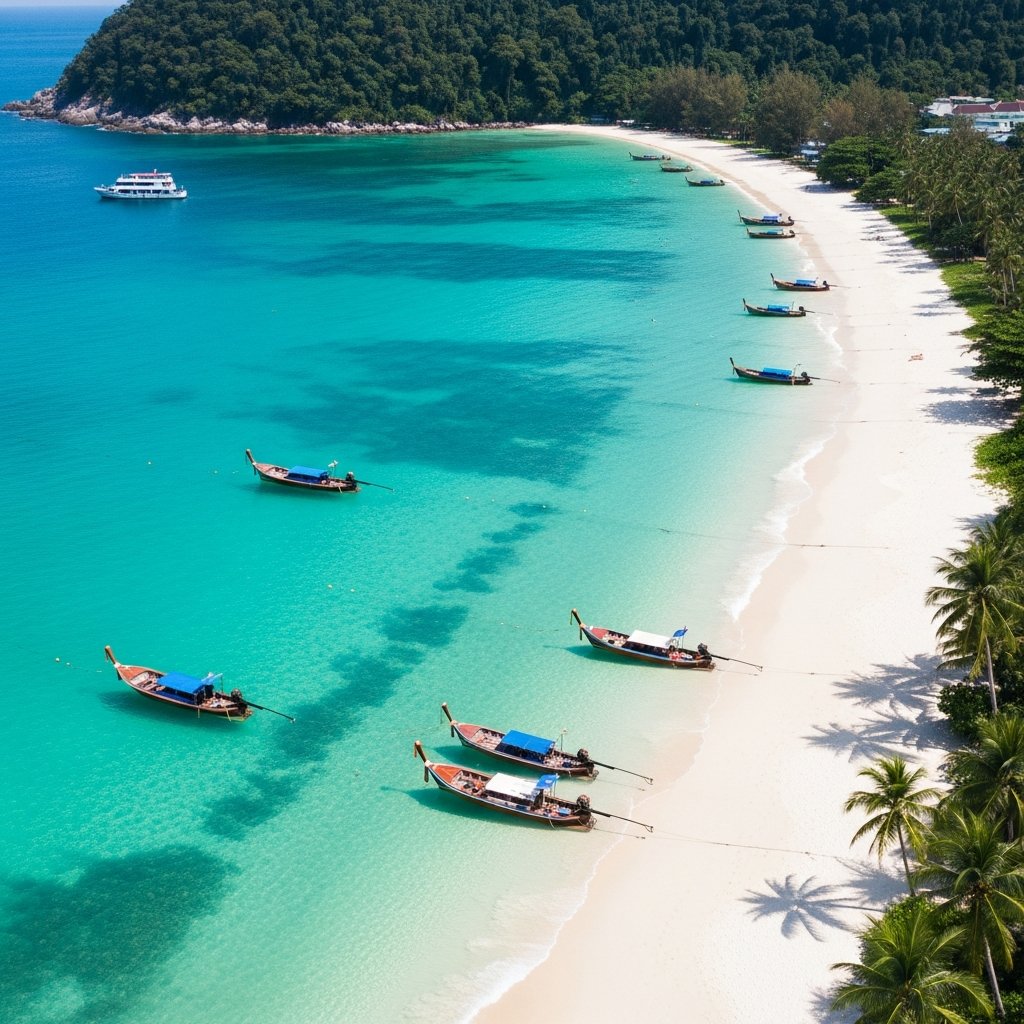
Phuket has more than 30 swimmable beaches spread across 50 km of coastline. Most first-time visitors stay at Patong and assume that’s what Phuket beaches are like, loud, crowded, full of jet skis. That’s like visiting Times Square and assuming that’s what New York is. Patong is one specific experience. The other 29 beaches offer completely different ones.
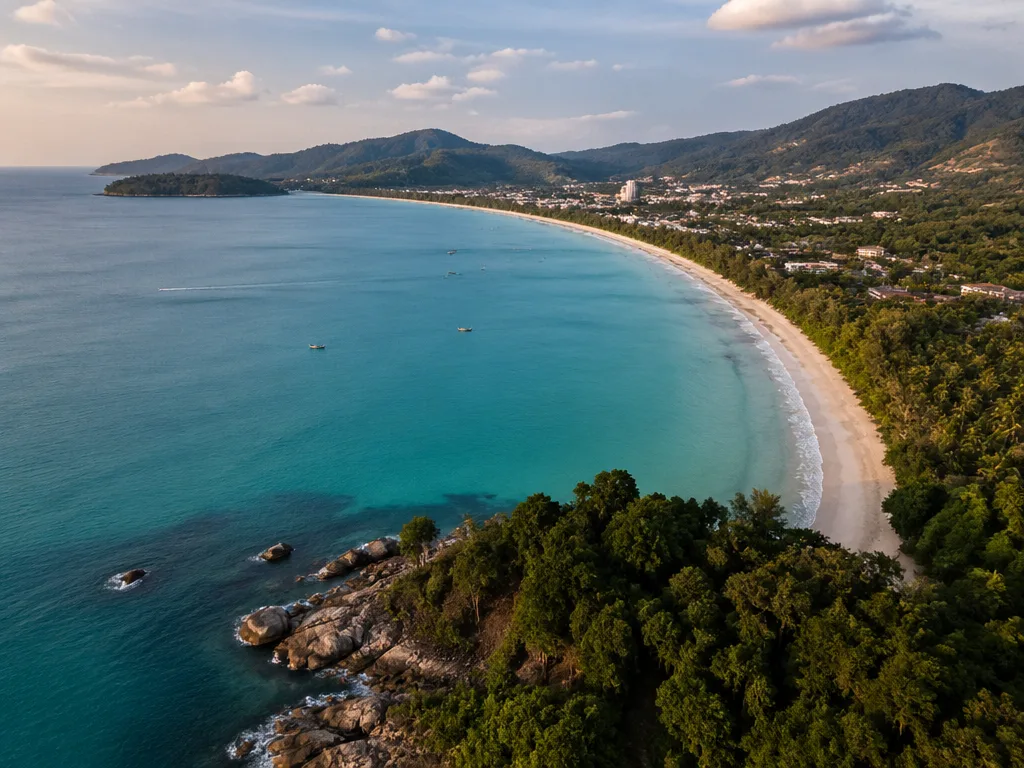
Here’s the real map: which beach for what, based on what you actually want from your trip.
The Beach Map, Quick Reference
| Beach | Vibe | Best For | Crowd Level | Getting There |
|---|---|---|---|---|
| Patong | Party/shopping | Nightlife + convenience | Very High | Central, walk |
| Kata | Balanced | Families + couples | Medium | 15 min south |
| Kata Noi | Quieter Kata | Couples + relaxation | Medium-Low | 20 min south |
| Karon | Long + open | Walks + mid-range stays | Medium | 12 min south |
| Kamala | Chill village | Repeat visitors + families | Low-Medium | 15 min north |
| Surin | Upscale | Luxury + sunset | Low-Medium | 20 min north |
| Bang Tao | Resort strip | Long stays + golf | Low | 25 min north |
| Nai Harn | Local favorite | Sunset + swimming | Medium | 30 min south |
| Freedom (Patong) | Hidden cove | Snorkeling + photos | Low | Boat or hike |
| Ya Nui | Tiny gem | Snorkeling + quiet | Low | 32 min south |
| Rawai | Seafood pier | Locals + seafood dinner | Medium | 30 min south |
| Mai Khao | Deserted | Solitude + airport proximity | Very Low | 35 min north |
| Nai Yang | Relaxed | Budget + trees | Low | Near airport |
The West Coast Beaches (Andaman Sea)
Patong Beach
The one everyone knows. 3.5 km of sand backed by the largest tourist infrastructure on the island, hotels, malls, Bangla Road’s neon-lit nightlife strip, and all the convenience and chaos that comes with being Phuket’s capital of tourism.
The case for Patong: Everything is walkable. Nightlife, restaurants, shopping, massage parlors, and the beach are all within 10 minutes. If this is your first time in Thailand and you want maximum options with minimum planning, Patong delivers.
The case against: It’s the loudest, most commercialized beach on the island. Jet ski operators, parasail vendors, and beach chair touts work the sand aggressively. The water isn’t Phuket’s cleanest. If you want a “tropical escape,” this isn’t it.
Best for: Solo travelers, first-timers who want nightlife, short stays (1–2 nights). Stay if: You prioritize convenience and nightlife over beach quality. Skip if: You want quiet, clean water, or genuine Thai atmosphere.
For nightlife details, see our Phuket nightlife guide.
Kata Beach
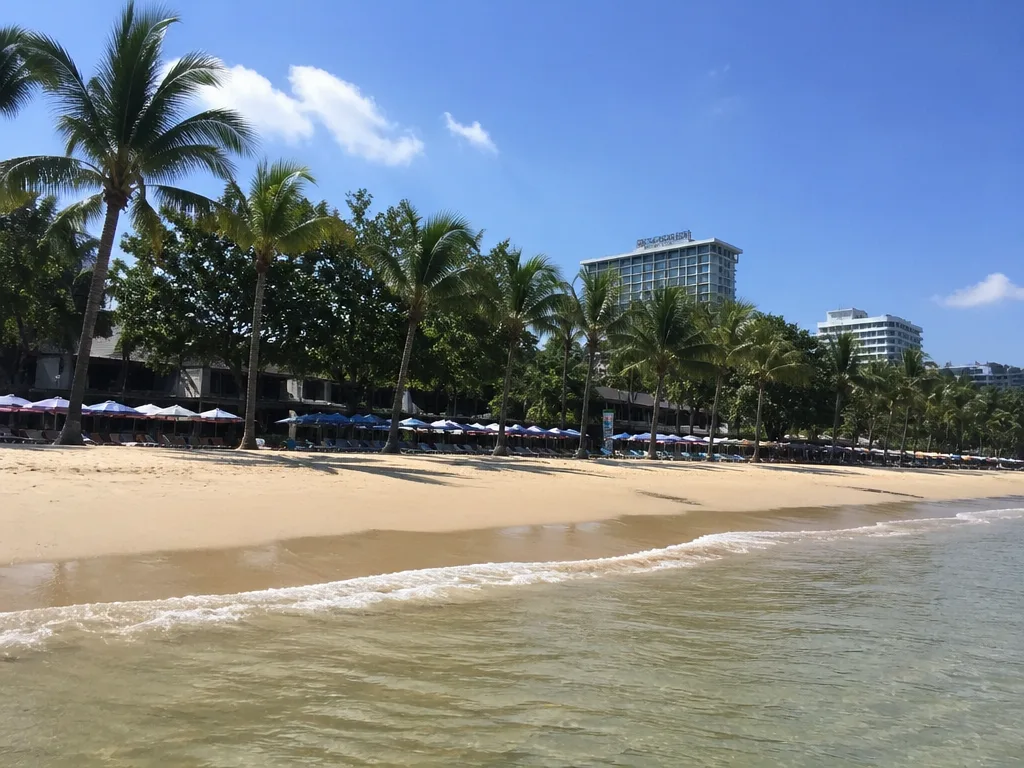
The Goldilocks beach. Not as hectic as Patong, not as sleepy as the far north. Kata has a proper town behind it, restaurants, bars, shops, ATMs, without Patong’s intensity. The beach itself is a 1.5 km crescent of soft sand with decent swimming and reasonable crowds.
The case for Kata: The infrastructure of a tourist beach with the personality of a smaller town. Good surf in low season (May–October). Walking distance restaurants that aren’t just tourist traps.
Best for: Families, couples, mid-range travelers, repeat visitors. Stay if: You want beach + town without Patong chaos.
Kata Noi Beach
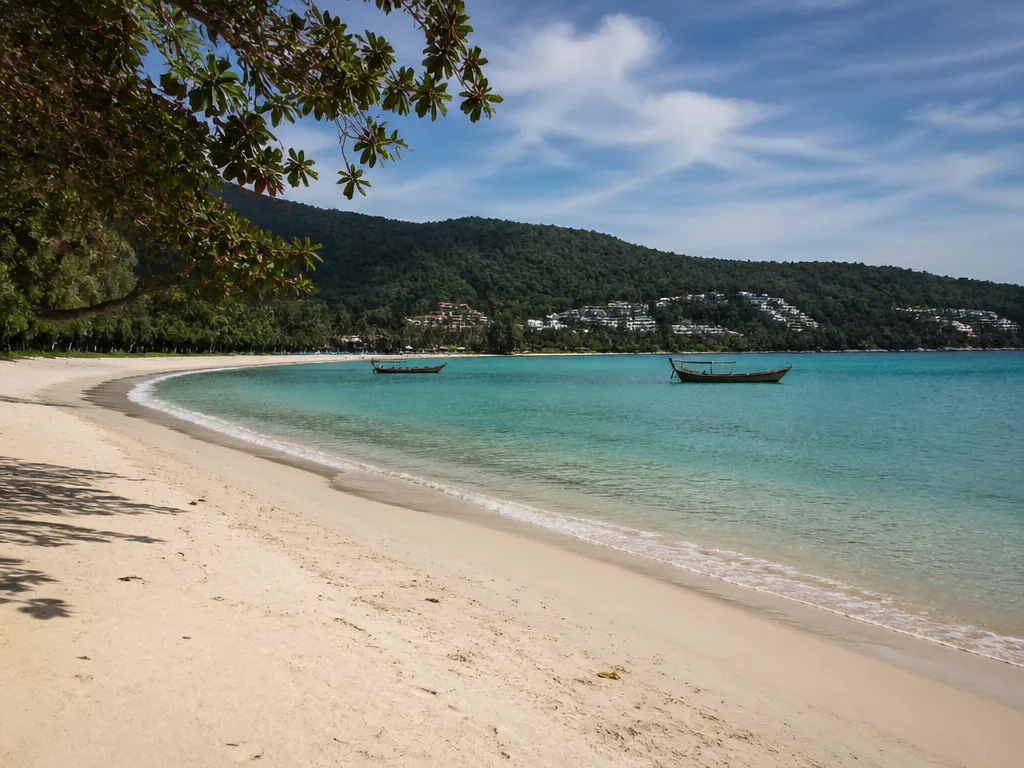
Kata’s quieter little sister. A 700-meter cove south of Kata proper, backed by hillside resorts and a few restaurants. The water is clearer than Kata, the crowd is smaller, and the feel is more relaxed.
Best for: Couples, honeymoon travelers, people who want a good beach without a scene.
Karon Beach
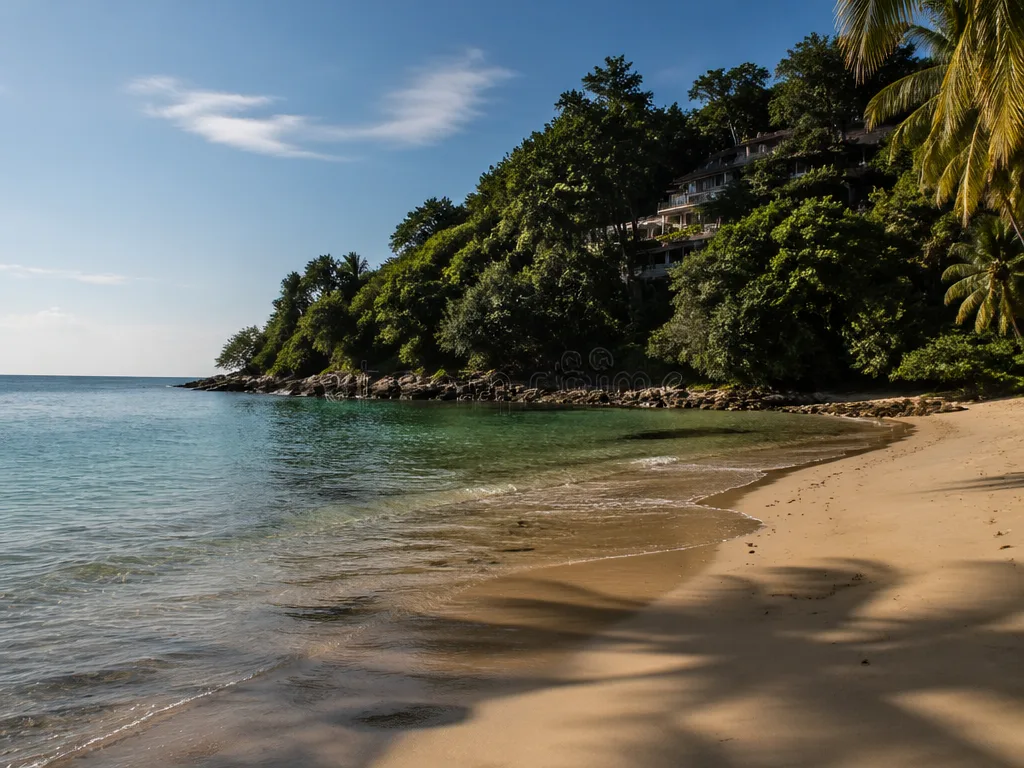
Phuket’s second-longest beach at 3 km. Wide, flat, and with a distinctive squeaky sand (it literally squeaks when you walk on it, a geological quirk). Karon has a calmer town than Patong, decent restaurants, and some of the best mid-range hotels on the island.
Best for: Walkers (3 km unbroken sand), mid-range stays, people who find Patong too much.
Kamala Beach
The village beach. Kamala retains a genuine Thai fishing village atmosphere despite the resorts that have crept in. The beach is 2 km, the sand is soft, the water is clear, and the town behind it has local restaurants and a mosque (Kamala has a significant Muslim community). No jet skis, no parasails.
Best for: Repeat visitors, families who want Thai atmosphere, people staying a week+.
Surin Beach
The upscale choice. Surin sits between Kamala and Bang Tao, fronted by luxury resorts (Amanpuri is here) and a strip of beach clubs that were half-demolished in the government’s 2014 beach cleanup but have partially returned.
Best for: Luxury travelers, sunset cocktails, design-conscious visitors.
Bang Tao Beach (Laguna Phuket)
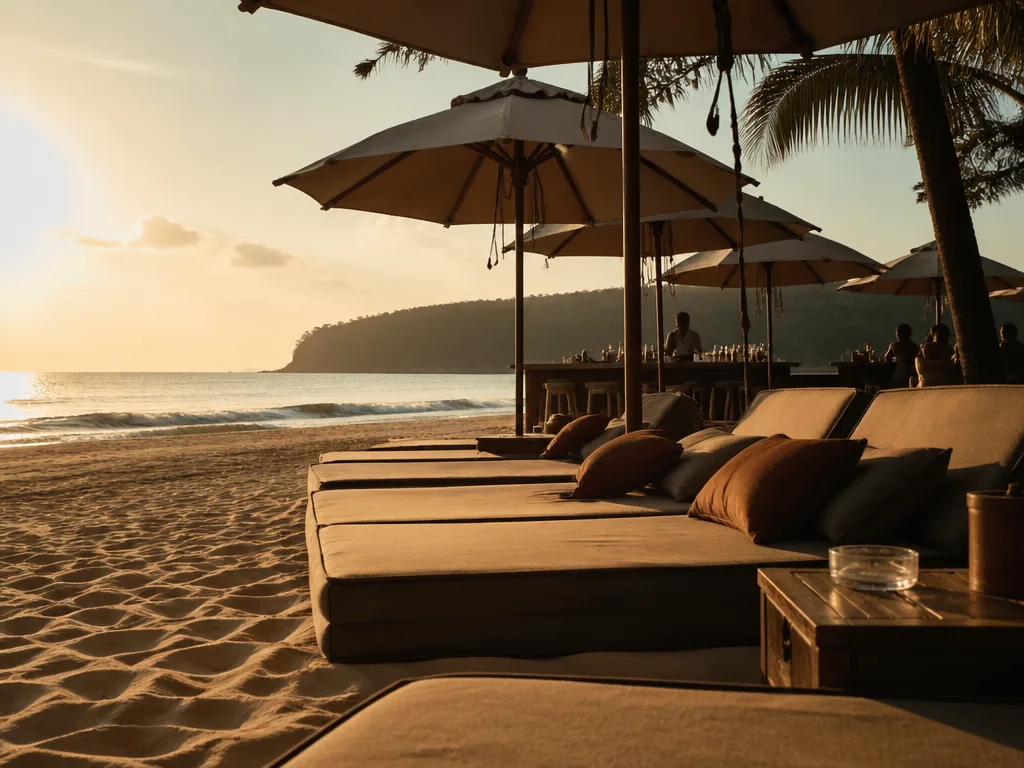
An 8 km stretch dominated by the Laguna Phuket resort complex, Banyan Tree, Angsana, Outrigger, Dusit Thani, and others linked by a lagoon shuttle. This is the long-stay, resort-world beach. If you never want to leave the compound, this is the place.
Best for: Family resort vacations, golf (Laguna Golf Club), extended stays.
Nai Harn Beach
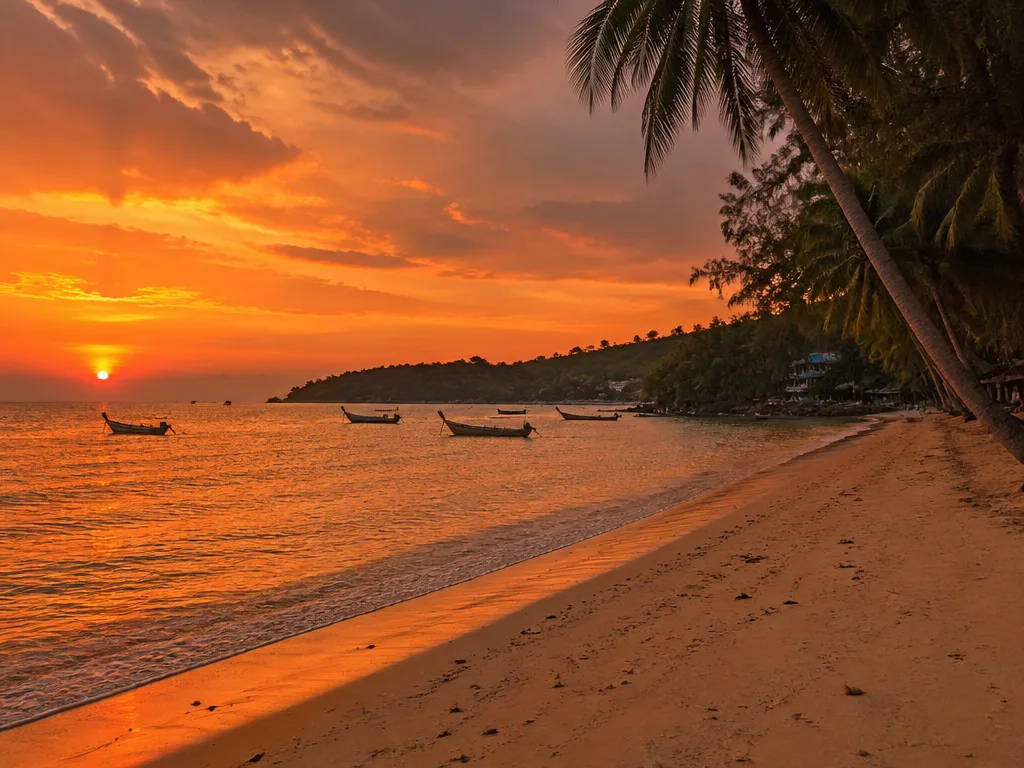
The local favorite. At the southern tip of the island, Nai Harn is the beach Phuket residents go to on weekends. It’s backed by a lake and a Buddhist monastery (Nai Harn Monastery), giving it a buffer zone that prevents overdevelopment. The water is excellent, the sunset is legendary, and the vibe is distinctly less touristy than the west coast beaches above.
Best for: Sunset, swimming, locals’ scene, travelers who rent a scooter/car. Access: You need your own transport. No direct songthaew.
Ya Nui Beach
A tiny 200-meter cove between Nai Harn and Promthep Cape. Good snorkeling on the rocky sides, small enough to feel private. There’s a beach restaurant and kayak rental. During low season, waves can make swimming difficult, it’s mainly a high-season destination.
Best for: Snorkeling, quiet afternoons, photography (Promthep Cape viewpoint is a 3-minute drive).
Freedom Beach
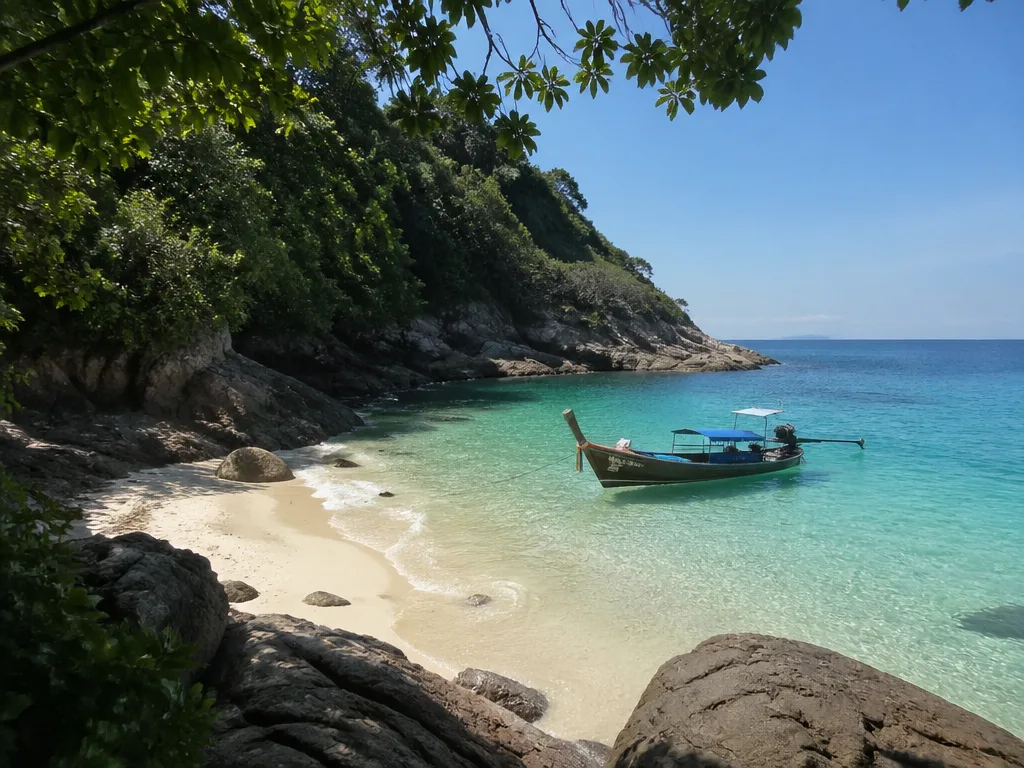
Phuket’s “hidden” beach, accessible only by longtail boat from Patong (฿1,500–2,000 round trip) or a steep 20-minute jungle hike from a trailhead near Merlin Beach Resort. The reward: 300 meters of white sand, clear turquoise water, and dramatically fewer people than anything on the west coast.
Best for: Snorkeling, Instagram-worthy photos, escaping Patong for a half-day.
The South
Rawai Beach
Not a swimming beach, Rawai is a pier and seafood market on the south coast. Longtail boats depart here for Coral Island, Racha Islands, and Bon Island. The real draw is the seafood: buy fresh catch from the pier vendors, then take it to one of the cookshops behind to prepare it. That’s one of the best seafood dinners on the island at local prices.
Best for: Seafood dinner, boat departure point, local atmosphere.
The North
Mai Khao Beach
The longest beach on Phuket (11 km) and the emptiest. Part of Sirinat National Park, Mai Khao has no development except a handful of luxury resorts (JW Marriott, SALA Phuket) spaced far apart. Planes from Phuket International Airport fly directly overhead, which is either annoying or photogenic, depending on your priorities.
Best for: Solitude, plane-spotting, luxury isolation.
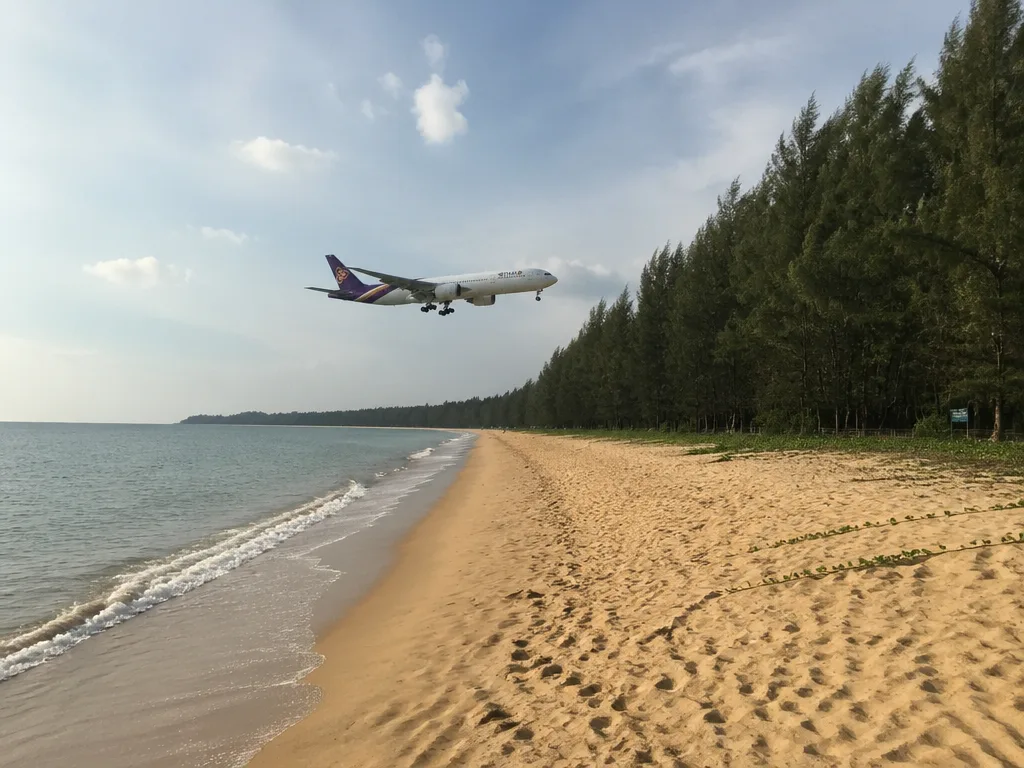
Nai Yang Beach
A quiet, tree-shaded beach near the airport. Budget-friendly, local restaurants, and a genuine non-touristy feel. Good for first/last night stays near the airport without the airport-hotel depression.
Best for: Budget travelers, airport proximity, trees.
How to Choose
| Your Priority | Go To |
|---|---|
| Nightlife + convenience | Patong |
| Best overall beach + town | Kata |
| Quiet + good water | Kata Noi or Nai Harn |
| Luxury + sunset | Surin |
| Family resort | Bang Tao (Laguna) |
| Thai village atmosphere | Kamala |
| Snorkeling | Freedom or Ya Nui |
| Seafood dinner | Rawai |
| Complete solitude | Mai Khao |
| Near airport, budget | Nai Yang |
Practical Notes
Transport between beaches: Phuket has no public transit worth mentioning. Options: rent a scooter (฿200–350/day, need license), rent a car (฿800–1,500/day), use Grab (works island-wide), or hire a driver for the day (฿1,500–2,500). Tuk-tuks exist but overcharge tourists by 3–5x.
Beach chairs: ฿100–200 per chair at most beaches. Not mandatory, you can bring your own mat. At some beaches (Surin, Freedom), chairs were removed during the 2014 cleanup and haven’t fully returned.
Swimming safety: West coast beaches have undertows during low season (May–October). Red flags mean don’t swim. Nai Harn and Kata Noi are particularly affected. Always check conditions.
Jellyfish: Seasonal risk, mostly box jellyfish in monsoon months. Some beaches post warnings. Vinegar is the first-aid treatment, many lifeguard stations stock it.
Sunscreen: Apply before going in the water. Thailand gets UV index 11+ year-round. European visitors underestimate this consistently.
For comprehensive first-visit planning, see our Phuket first-visit guide. Island hopping from Phuket: Phuket island hopping guide. Food across the island: Phuket food guide. Spas: Phuket spa guide.
Further Reading
- Phuket first-visit guide, Where to stay, how many days
- Phuket island hopping, Phi Phi, Similan, Racha
- Phuket food guide, Best restaurants by area
- Phuket nightlife, Bangla Road and beyond
- Phuket spa guide, Wellness on the island
- Rainy season guide, When to visit