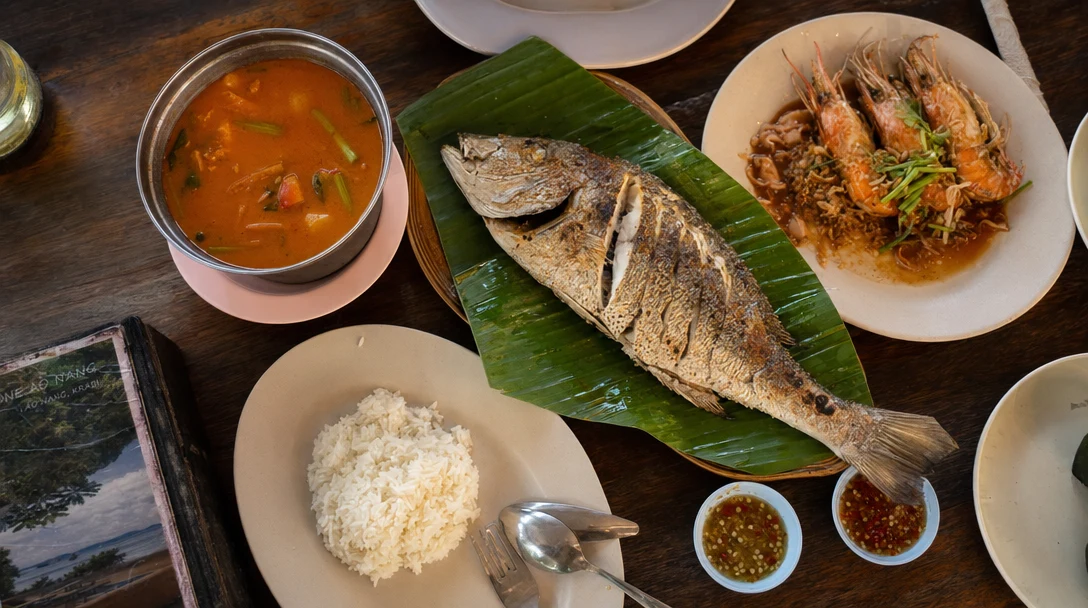
Phuket’s food gets a bad reputation, and it’s mostly unearned. The reputation comes from the Patong tourist strip, the sunburn-and-bucket-of-Leo beach bars, the overpriced “Thai fusion” restaurants, the English breakfast places on every corner. That’s a real thing. It’s also about 5% of the food on this island. The other 95% is Peranakan heritage cuisine in Old Phuket Town, working fishermen’s markets in Rawai and Chalong, Muslim halal cooking in the north, and Hokkien-Chinese noodle shops that have been running out of the same shophouses for four generations.
If you only eat at hotel restaurants and beachfront places on Patong, you’ll leave wondering why anyone talks about Phuket food. If you eat where locals eat, you’ll leave trying to plan when you can come back.
Here’s the actual map.
What Phuket Food Actually Is
Phuket has a distinct food identity, separate from both Bangkok/Central Thai food and from generic “Thai island food.” Three main influences shape it:
Peranakan (Baba-Nyonya) cuisine. The descendants of Hokkien Chinese traders who married into local Malay and Thai communities, starting in the 18th-century tin-mining era. Peranakan food is the soul of Old Phuket Town: slow-cooked pork curries, tamarind-based sours, coconut-rich nonya rice dishes, rice noodles with heavy use of aromatic pastes.
Southern Thai (Pak Tai). Hotter and more intense than central Thai cuisine. More turmeric, more sator beans, more dried shrimp, more shrimp paste. Fish curries are central.
Muslim Southern. Halal cooking in the northern districts (Bang Tao, Cherngtalay) reflecting the significant Muslim population. Kao mok gai (Thai biryani), massaman curries, grilled fish, roti canai.
Add in the world-class seafood from the Andaman Sea and decades of Chinese, Malay, Indian, and Thai cross-pollination, and Phuket’s food is genuinely distinct. Bangkok it is not, see our Bangkok food guides for the capital’s counterpart scene.
Old Phuket Town, the Heart of the Food Scene
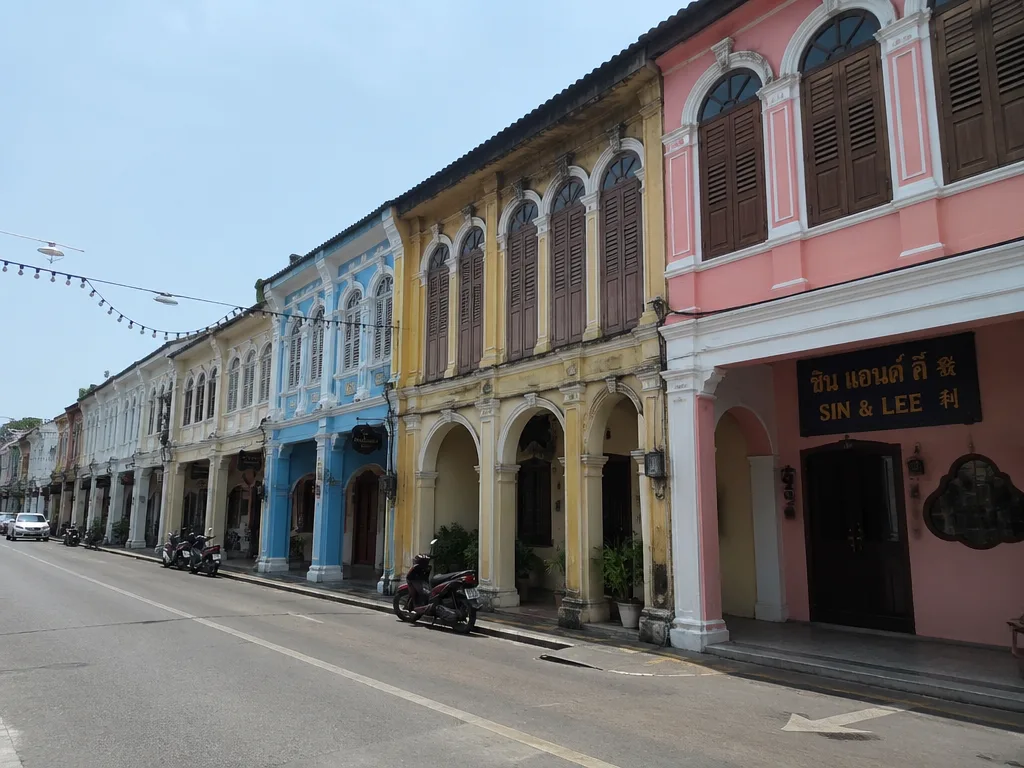
Old Phuket Town (not Patong, not Kata, a separate district in the island’s east) is a preserved Sino-Portuguese shophouse neighborhood and the anchor of any serious Phuket food trip. Half a day is the minimum; a full day with morning and evening visits is better.
The core food streets:
- Thalang Road: the main axis, Sunday Walking Street takes over at 4 PM
- Dibuk Road: older Peranakan restaurants, fewer tourists
- Krabi Road: middle ground, coffee culture stronghold
- Soi Rommanee: short, pastel, photogenic, concentrated cafes
Don’t miss (in order of priority for first-timers):
Mee Ton Poe (since 1946)
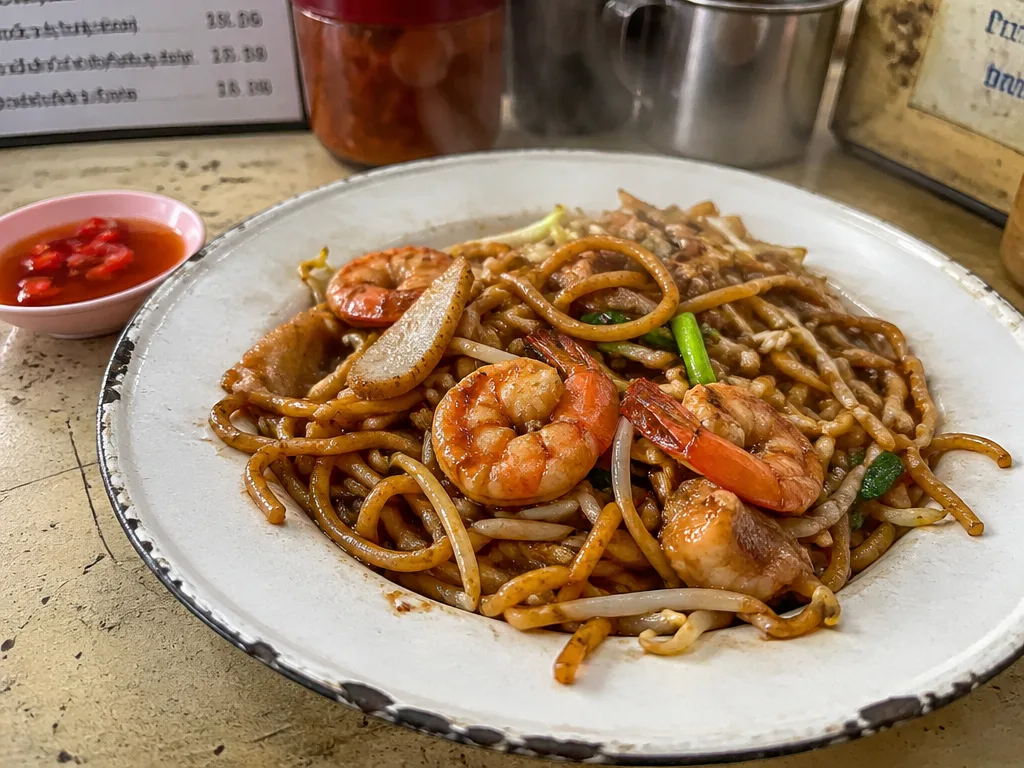
 Hokkien mee, the signature Phuket noodle dish, made the same way for nearly 80 years. Thick yellow noodles stir-fried with seafood, pork, bean sprouts, and a dark sweet-salty sauce. ฿80–120. Cash only. Lunch only. Always busy. On Thepkasattri Road, slightly outside Old Town.
Location: Thepkasattri Road, Old Phuket Town area
Raya Restaurant
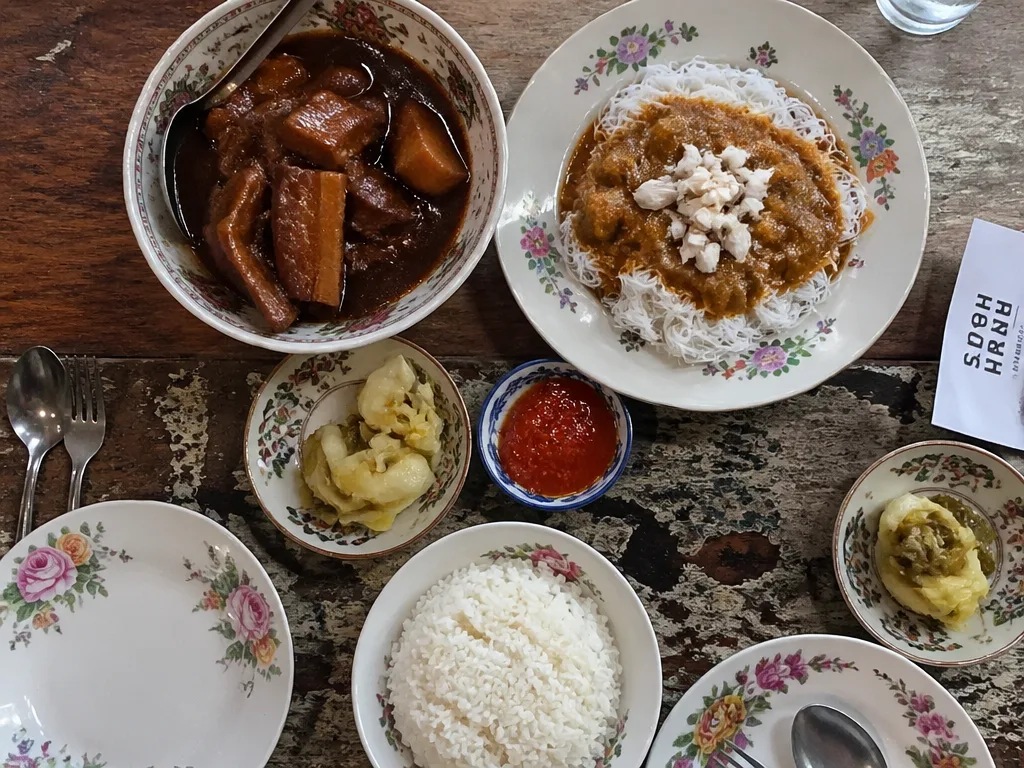 Peranakan cuisine in a restored 100-year-old mansion. The crab meat curry with rice noodles (kanom jin moo hong) is the dish people fly to Phuket to eat. ฿350–550 per dish. Expensive for local standards, worth every baht. Book a week ahead during high season.
Location: Dibuk Road, Old Phuket Town
Kopitiam by Wilai
 A classic Phuket kopitiam (Chinese-Malay coffee shop) updated for the modern era. Pandan toast with kaya jam, Hokkien coffee, mee hoon hun (curried rice noodles). ฿150–300 for a full breakfast. Open early (7 AM), which is when you want to go.
Location: Thalang Road, Old Phuket Town
Tu Kab Khao
 Upmarket Peranakan. Owned by the Na Takuathung family, who’ve been cooking Phuket cuisine for generations. The mu hong (slow-braised pork belly with garlic and pepper) is on every “best of Phuket” list for a reason. ฿350–650 per dish.
Location: Phang Nga Road, Old Phuket Town
O-Aew stalls (scattered)
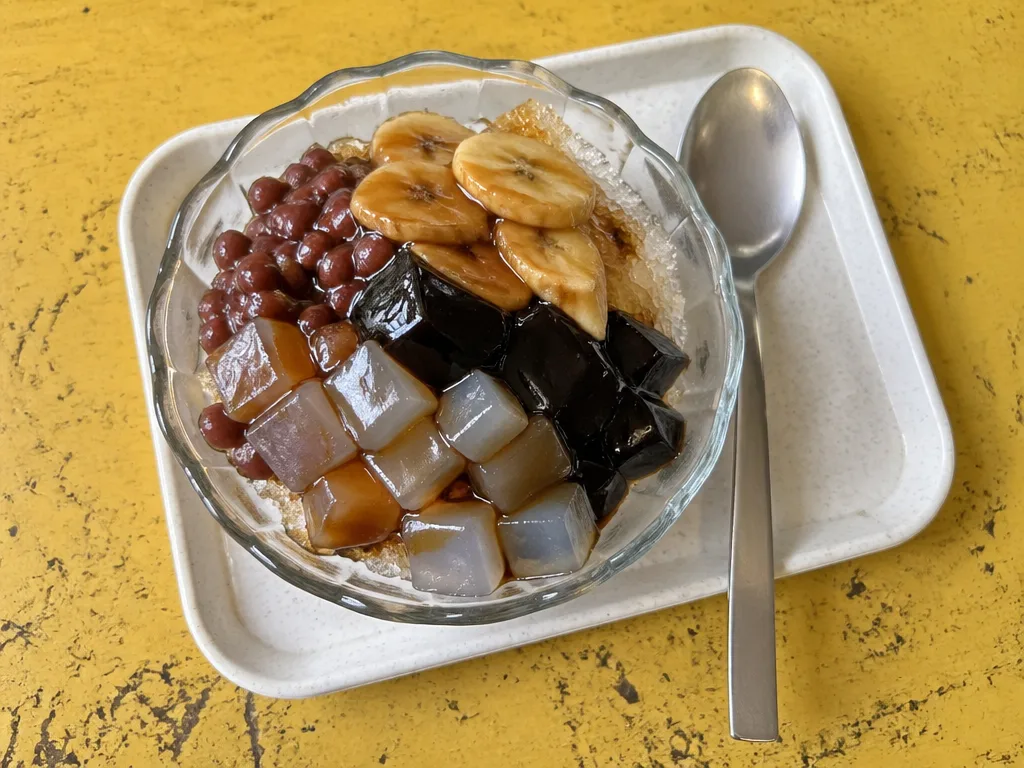
 A shaved-ice dessert with red beans, grass jelly, banana, and brown sugar syrup. Phuket’s signature sweet. ฿30–50 per bowl. Best examples are at the Walking Street market and at unnamed stalls along Ranong Road. Hard to mess up, hard to go wrong.
Location: Ranong Road and Walking Street area, Old Phuket Town
The Seafood Markets, Rawai and Chalong
If Peranakan is Phuket’s heart, seafood is its skeleton. The fishermen’s markets on the southeast coast are where the real seafood economy happens, and yes, you can buy, cook, and eat there as a traveler.
Rawai Beach Seafood Market
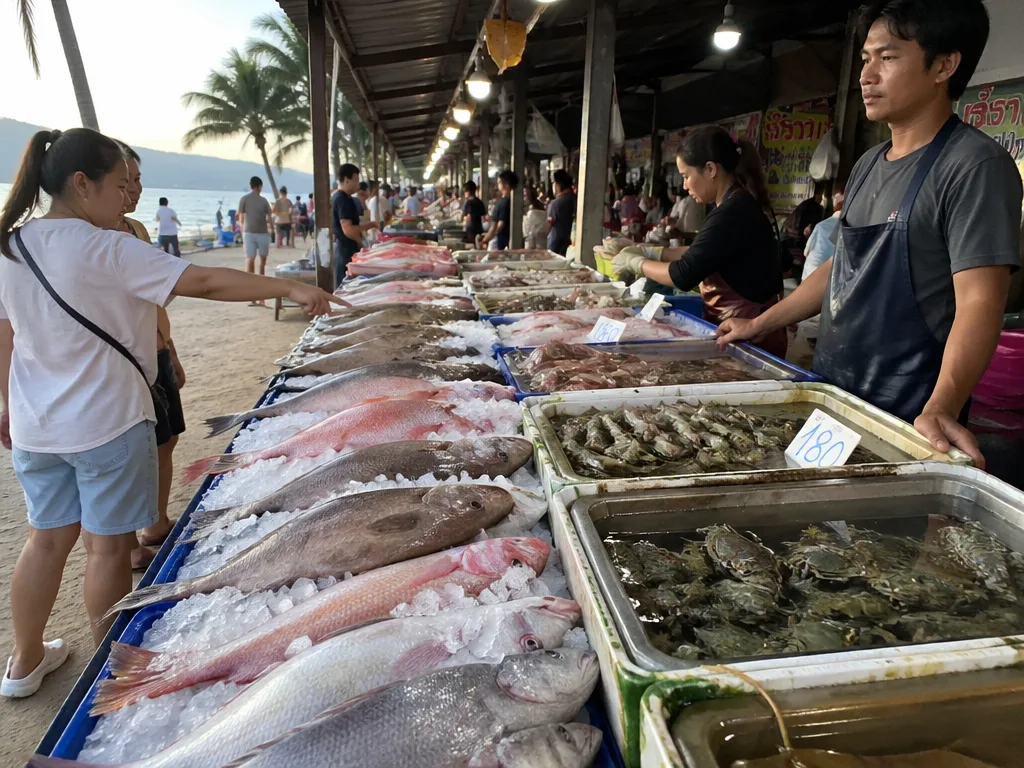
 The famous one. A strip of stalls along Rawai Beach where you pick your fish, lobster, crab, or prawn directly from the tanks or the ice, take it across the road to one of the adjacent restaurants, and pay them a modest cooking fee (฿100–200 per dish) to prepare it however you want: grilled, steamed, chili-basil, sweet chili.
How it works:
- Walk the stalls. Compare fish sizes and prices. Market prices (per kilo as of 2026):
- Local snapper: ฿400–600/kg
- Prawns (large): ฿700–1,200/kg
- Tiger prawns: ฿1,000–1,500/kg
- Flower crab: ฿500–800/kg
- Lobster: ฿1,800–2,800/kg
- Squid: ฿250–400/kg
- Choose your fish. Weigh it. Pay the market vendor.
- Walk across to one of the dozen adjacent restaurants. Tell them how you want it cooked. Pay the cooking fee + drinks + sides.
- They bring your seafood 20–40 minutes later.
Budget: A proper 2-person seafood dinner at Rawai comes out to ฿1,500–2,500, depending on what you pick. That’s roughly half of what a Patong beachfront seafood restaurant would charge for lesser quality.
Location: Rawai Beach, south Phuket
Chalong Pier Seafood
 Same model, smaller scale, less tourist-facing. Closer to Old Phuket Town. Locals eat here more than Rawai.
Location: Chalong Pier, Phuket
Banzaan Fresh Market (Patong)
 Inside Patong. Same pick-and-cook model. The most tourist-heavy of the three, but convenient if you’re staying in Patong and don’t want to travel. Prices are about 20% higher than Rawai.
Location: Nanai Road, Patong, Phuket
The Southern Thai Thing, Yellow Curries and Sator Beans
Phuket’s Southern Thai (Pak Tai) food is underrated because tourists mostly eat Peranakan and seafood. But the hot, aromatic, coconut-heavy southern curries are distinct and excellent.
Key dishes to try:
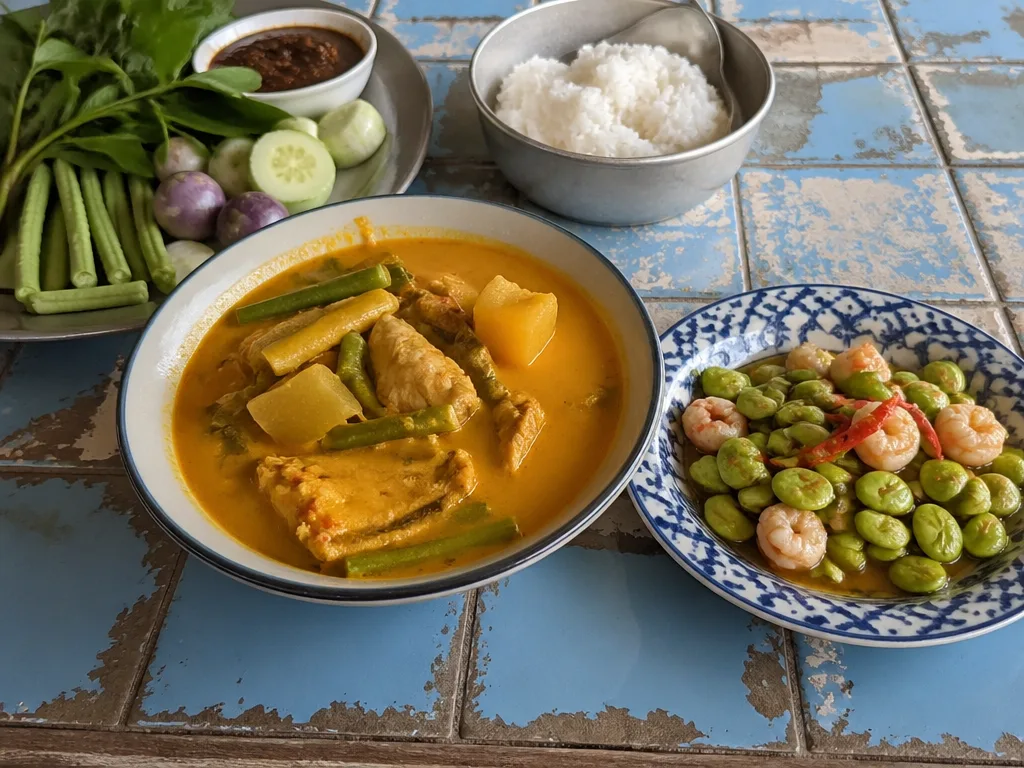
- Gaeng Som: sour yellow tamarind curry, usually with fish and vegetables
- Kua Kling: dry-fried minced meat with turmeric and southern chili paste, eaten with rice and fresh vegetables
- Sataw Goong: sator beans stir-fried with shrimp and shrimp paste, a southern aromatic bomb
- Gaeng Tai Pla: fermented fish gut curry, brutally hot, acquired taste but beloved locally
- Khao Yum Pak Tai: rice salad with toasted coconut, dried fish, lime leaves, and budu sauce
Where to try:
- Khun Jeed Yod Pak (Thepkasattri Road): Southern Thai, no-frills, extremely hot by default. Warn them if you want mild.
- One Chun Cafe & Restaurant (Old Phuket Town): More polished southern Thai, tourist-friendly translations.
- Tha Rua Seafood: southern Thai seafood specialty, not in Old Town.
Muslim Halal Phuket
Northern Phuket (Bang Tao, Cherngtalay, Surin) has a significant Muslim population and food scene worth planning a meal around.
- Mama Pom (Bang Tao): kao mok gai (Thai biryani), roti kaeng, Muslim-style grilled chicken. ฿80–150 per dish.
- Nitaya Kaimook (Cherngtalay): hidden Muslim coffee shop, famous for roti canai and teh tarik at breakfast.
- Hannah Muslim Food (Kamala): grilled fish with turmeric rice, strong local following.
For the broader context on halal food culture in Thailand, the Muslim food scene in southern Thailand is among the best in the country.
The Coffee Culture Nobody Talks About
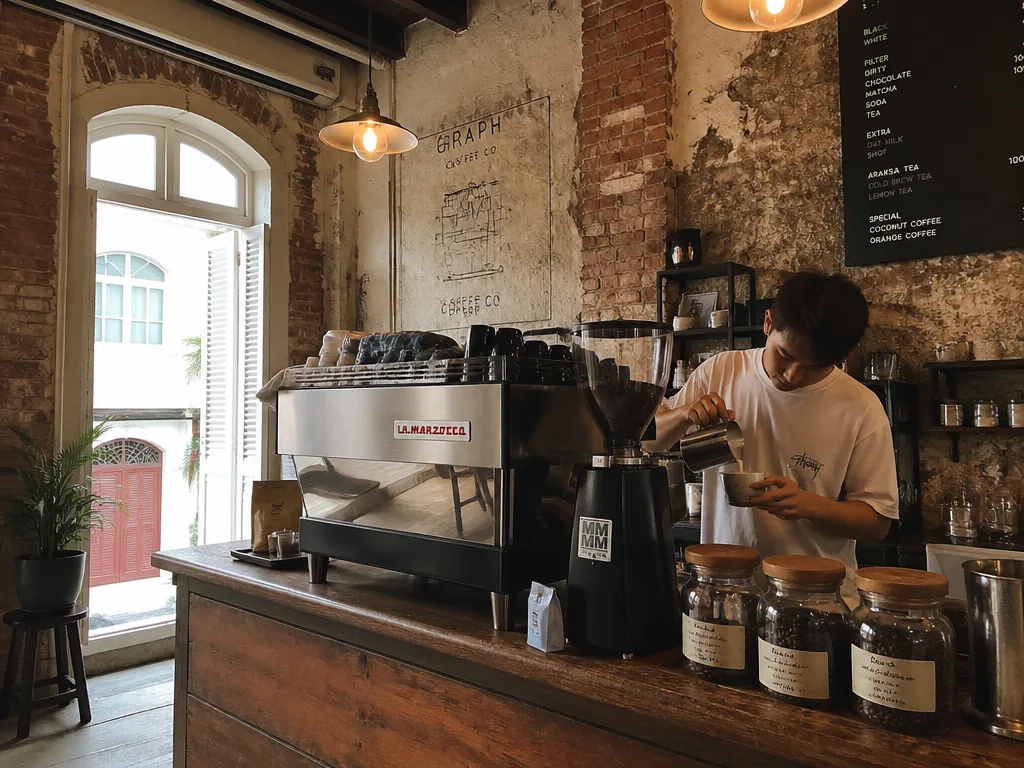
Old Phuket Town has quietly become one of southern Thailand’s best specialty coffee scenes. This is partly the urbanization of Old Town, partly the general Thai coffee renaissance we covered in our Bangkok cafe scene.
- Campus Coffee Roastery: the pro-roaster of Old Town, on Yaowarat Road
- Bookhemian: part bookstore, part specialty cafe, photogenic interior
- Kaya Cafe: the pandan-toast-and-kopi specialist
- Torry’s Ice Cream Boutique: technically ice cream, but the coffee affogato is local-famous
Street Food Markets
Phuket Indy Market (Thursday, Friday, Saturday nights)
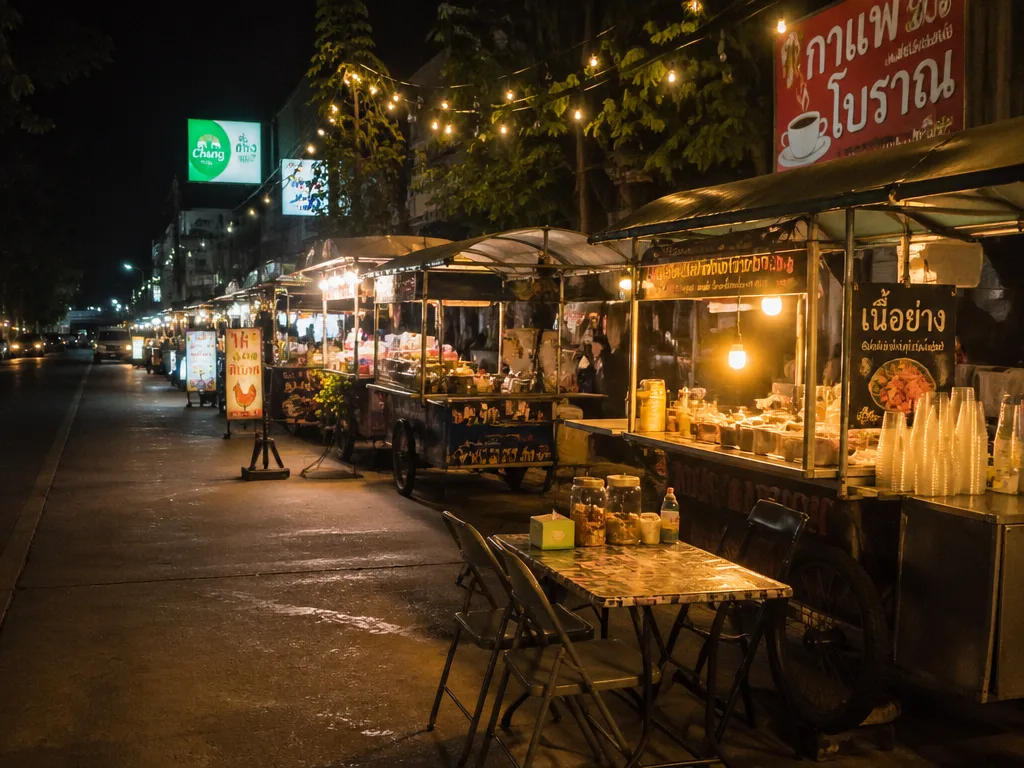 Limsuntorn Road, Old Town. 40+ food stalls. Younger crowd, creative stall concepts, 7 PM–midnight. Best option on weekend nights if you want grazing energy.
Location: Limsuntorn Road, Old Phuket Town
Lard Yai (Sunday Walking Street)
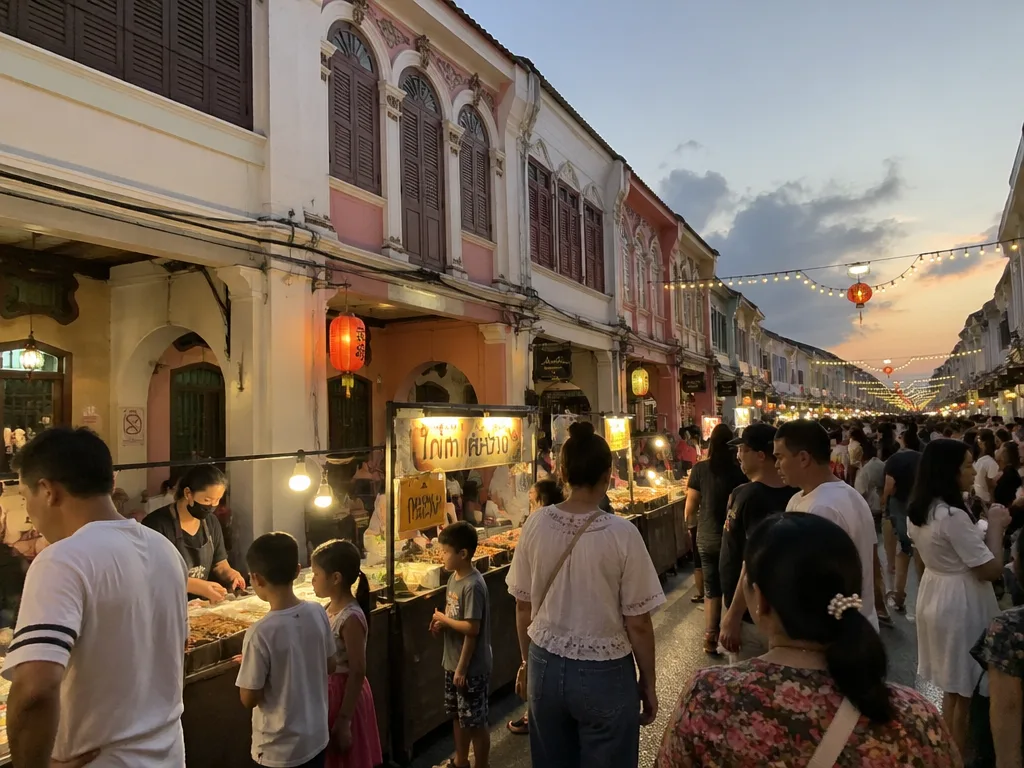
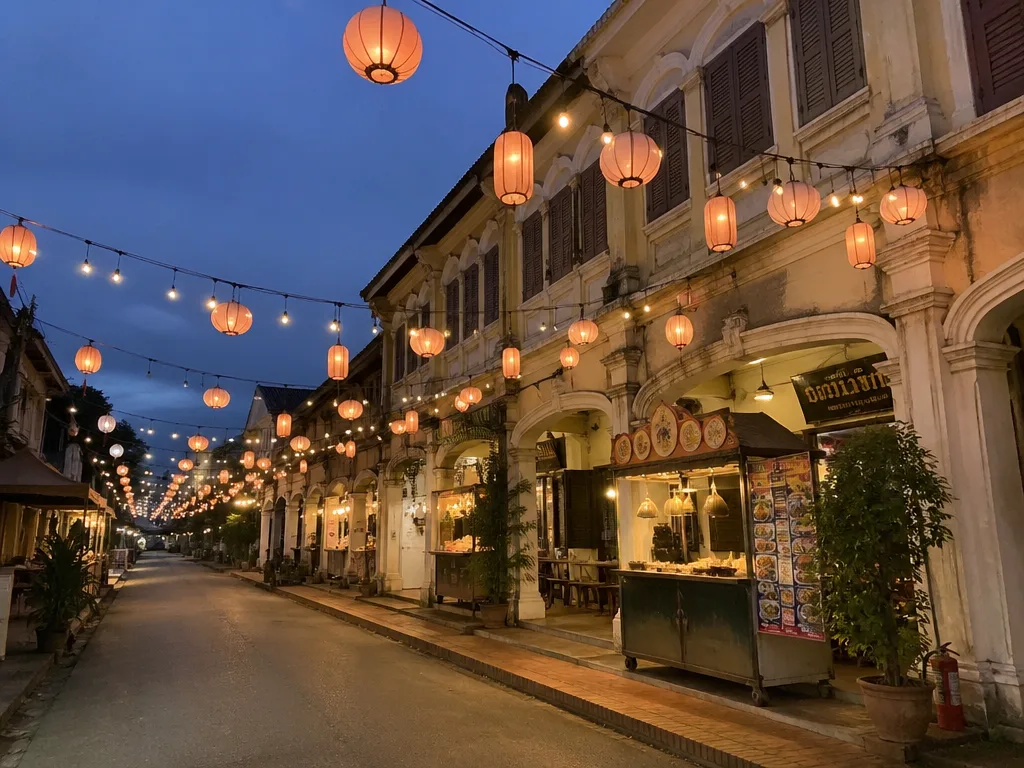 Thalang Road takes over 4–10 PM Sunday. Street food, Peranakan sweets, kid-friendly, photogenic. The single most atmospheric food experience in Old Phuket Town.
Location: Thalang Road, Old Phuket Town (Sundays 4–10 PM)
Naka Weekend Market
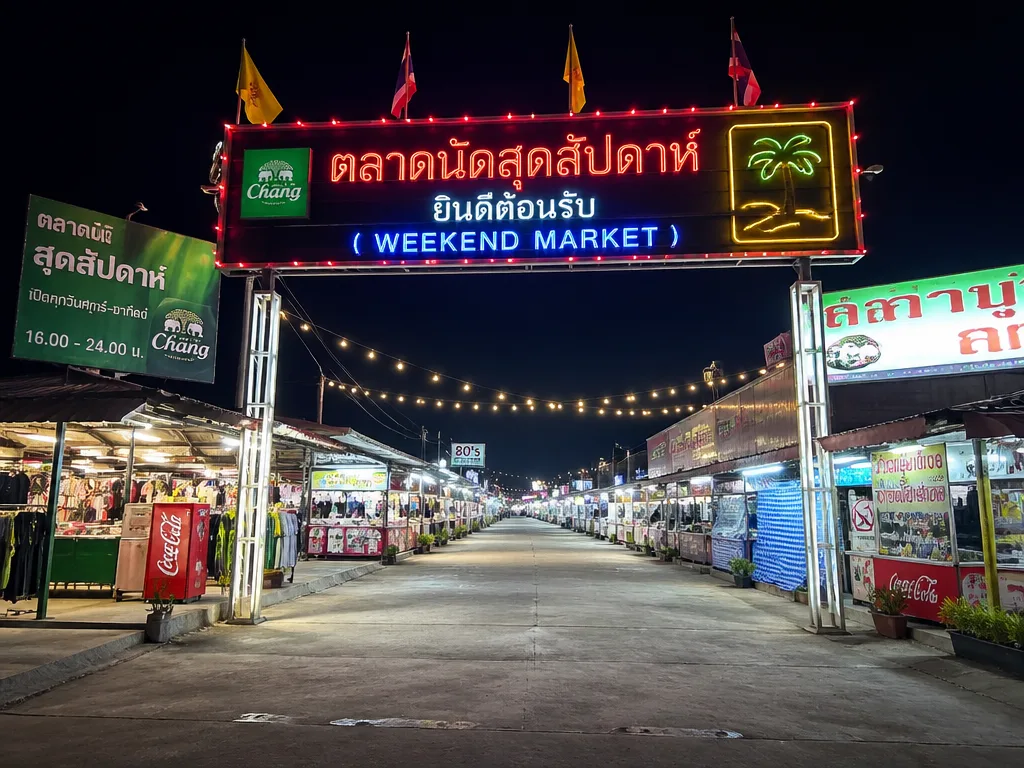 Phuket Town, Saturday–Sunday 4–10 PM. The island’s biggest night market. Clothes + food. Food concentration is in the back half.
Location: Wiset Road, Phuket Town
Chillva Market (Tuesday–Saturday nights)
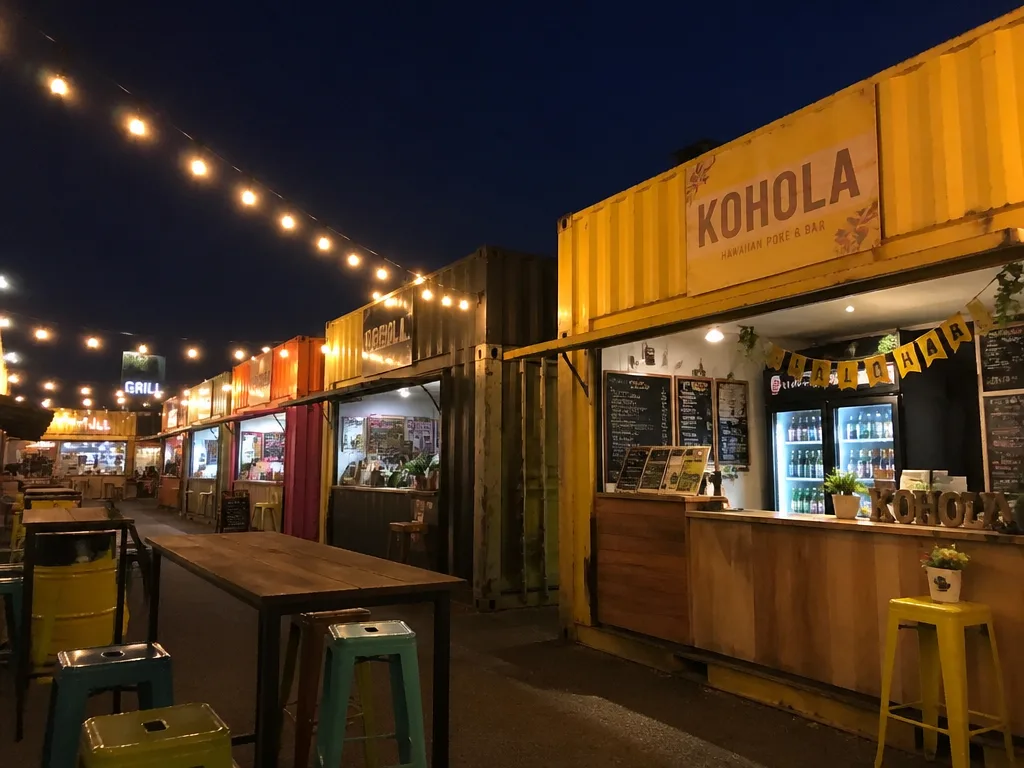 Phuket Town, 5–11 PM. Converted shipping containers. Instagrammy, younger vibe, solid food.
Location: Yaowarat Road, Phuket Town
What to Skip
Years of eating Thai food, direct opinions:
Skip: Any restaurant on Patong Beach Road advertising “Thai Fusion”, English breakfasts, or “European seafood”. Patong’s beachfront is Phuket’s worst food concentration by a significant margin.
Skip: Floating market tourist packages that include lunch. These are “prop markets” built for tour buses, not real floating markets.
Skip: “Phuket Fantasea Show Dinner” and similar megacomplex dinners. Buffet-level food at tour-package prices.
Skip: Sitting down at a restaurant with tuk-tuk drivers parked outside aggressively promoting it. That’s a commission arrangement, not a restaurant recommendation.
A Realistic 3-Day Eating Plan
Day 1 (Arrival, Old Town)
- Breakfast: Kopitiam by Wilai
- Lunch: Mee Ton Poe
- Afternoon snack: O-aew from a Walking Street stall
- Dinner: Raya Restaurant (book ahead)
Day 2 (Seafood + Southern)
- Breakfast: Hotel, or Kaya Cafe for pandan toast
- Lunch: Khun Jeed Yod Pak or similar Southern Thai
- Late afternoon: Rawai Beach seafood market dinner (arrive by 5 PM)
Day 3 (Mixing it up)
- Breakfast: Halal roti and teh tarik in Bang Tao
- Lunch: Tu Kab Khao for another Peranakan round
- Dinner: Chillva or Indy Market grazing
Budget estimate for a couple across 3 days: ฿4,500–7,000, depending on how much seafood and how many sit-down restaurants vs street food.
Budget Reality Check
Phuket is more expensive than Bangkok for food, and significantly more expensive than Chiang Mai. Tourist density is the driver.
| Meal Type | Chiang Mai | Bangkok | Phuket |
|---|---|---|---|
| Street noodles | ฿40–60 | ฿60–80 | ฿80–120 |
| Local sit-down meal | ฿100–180 | ฿150–250 | ฿200–350 |
| Peranakan at Tu Kab Khao/Raya (2 people) | N/A | N/A | ฿1,500–2,500 |
| Rawai seafood (2 people) | N/A | N/A | ฿1,500–2,500 |
| Patong beach-front seafood (2 people) | N/A | N/A | ฿3,000–5,000 (avoid) |
For comparison with Chiang Mai’s value equation, see our Chiang Mai food guide. Phuket is about 30–50% more expensive than Chiang Mai across categories for equivalent quality.
FAQ
Is Phuket food worth traveling for if I’ve had Bangkok Thai food?
Yes, genuinely. Peranakan cuisine is almost unavailable in Bangkok at this quality. Hokkien mee is a Phuket specialty. Southern Thai cooking has a distinct profile. Even a 3-day Phuket trip centered on Old Town and Rawai delivers dishes you can’t easily find elsewhere.
Where should I stay to be near the food scene?
Old Phuket Town for food-first trips. Kata or Karon for beach-plus-food balance (30-minute drive to Old Town). Patong only if your priority is nightlife or shopping; food access from Patong is possible but logistically annoying.
Is the seafood at Rawai actually fresh?
Yes. Most of the fish at Rawai market was caught within 12–24 hours. Visible tank systems for live crab, lobster, and prawns. Go at 4–6 PM for best selection.
What about street food hygiene?
Same principles as elsewhere in Thailand. Busy stalls with high turnover, visible cleanliness, separate preparation surfaces for raw and cooked. Market-based stalls are generally safer than the cheapest roadside operations. Since moving to Thailand in 2023 I’ve never had food poisoning from Phuket street food.
Should I take a food tour?
The “Bike Tours Asia” food bike tour of Old Phuket Town is legitimate and well-run (฿2,500–3,000 for a 3–4 hour tour with multiple stops). The generic “food tours” marketed at Patong hotels are usually restaurant-commission operations; skip these and DIY instead.
What’s the one dish I must eat in Phuket?
Moo hong (slow-braised pork belly with garlic, pepper, and soy). It’s the Peranakan signature. Available at Tu Kab Khao, Raya, and most proper Peranakan restaurants. Order it first. Everything else can follow.
Phuket’s food rewards anyone willing to travel 15 minutes outside the beach strip. Old Phuket Town plus one seafood market dinner is enough to change most people’s entire opinion of the island. For the rest of your trip, our Phuket nightlife guide, Phuket spa guide, and Phuket island hopping guide cover the non-eating parts. And the first-timer Phuket guide has the base-camp logistics.