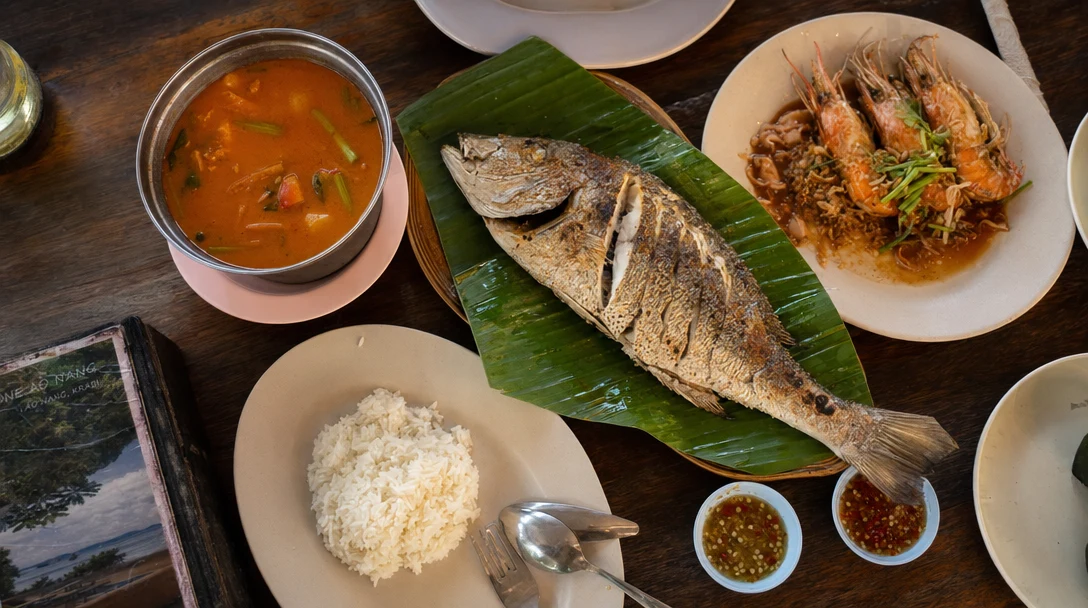
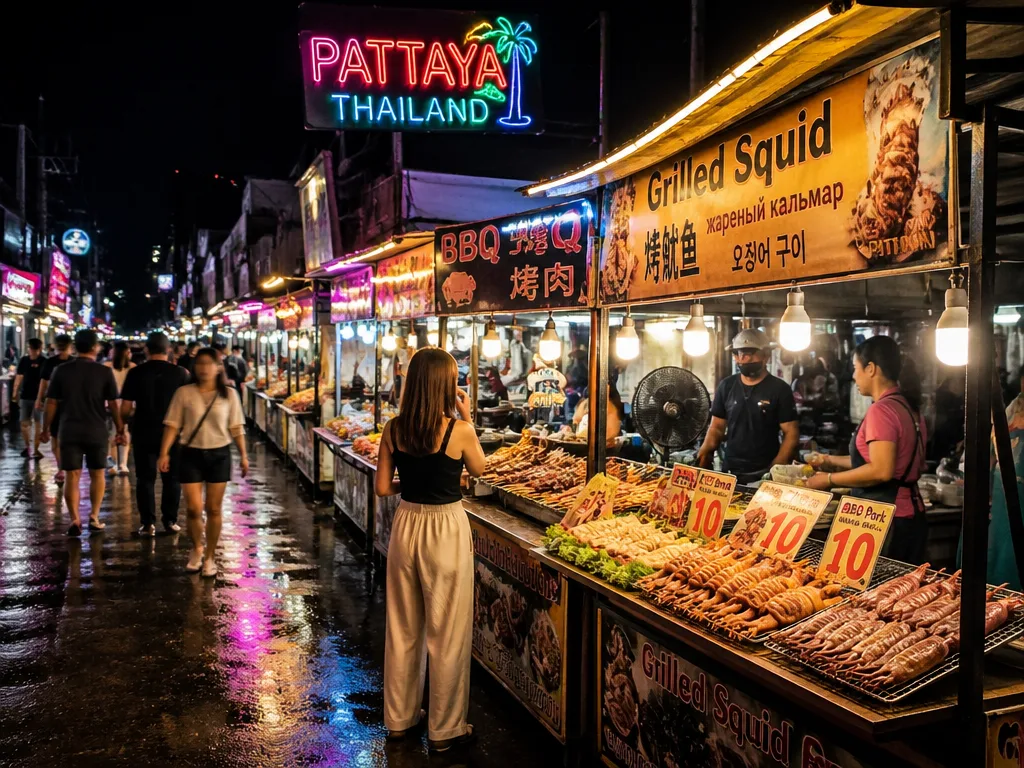
Pattaya’s food reputation is terrible, and most of it is deserved. If you only eat on Walking Street or Beach Road, you’ll think Pattaya food is mediocre, overpriced, and tuned for tourists. That’s because that Pattaya food is mediocre, overpriced, and tuned for tourists.
But if you walk 10 minutes in any direction, especially north to Naklua or south to Jomtien, Pattaya turns into a legitimate food city. Seafood markets where you pick your own fish, genuine Isaan street food that serves the large Thai labor population, Korean and Russian communities with their own restaurant scenes, and enough unassuming shop-house Thai places to keep you fed for a month without repeating.
Here’s the map, honestly rated, for 2026.
Pattaya’s Food Geography
The city has three food zones, and they deliver completely different experiences.
Naklua (North) is the real food destination. Seafood-heavy, Thai-Chinese and local Thai, Korean expat restaurants, less tourist inflation. If you have only one serious dinner in Pattaya, eat here.
Central Pattaya (Walking Street, Beach Road, Second Road) is mostly tourist-calibrated. Western chains, mediocre “Thai restaurants,” bar food. Some exceptions exist but the hit rate is low. Useful for late-night food after clubs.
Jomtien (South) is the local-Thai and expat residential scene. Softer prices, beach shacks, Indian and European restaurants catering to long-stay residents. Good for lunch and casual dinners.
Naklua: Where to Actually Eat
Mum Aroi (มุมอร่อย)
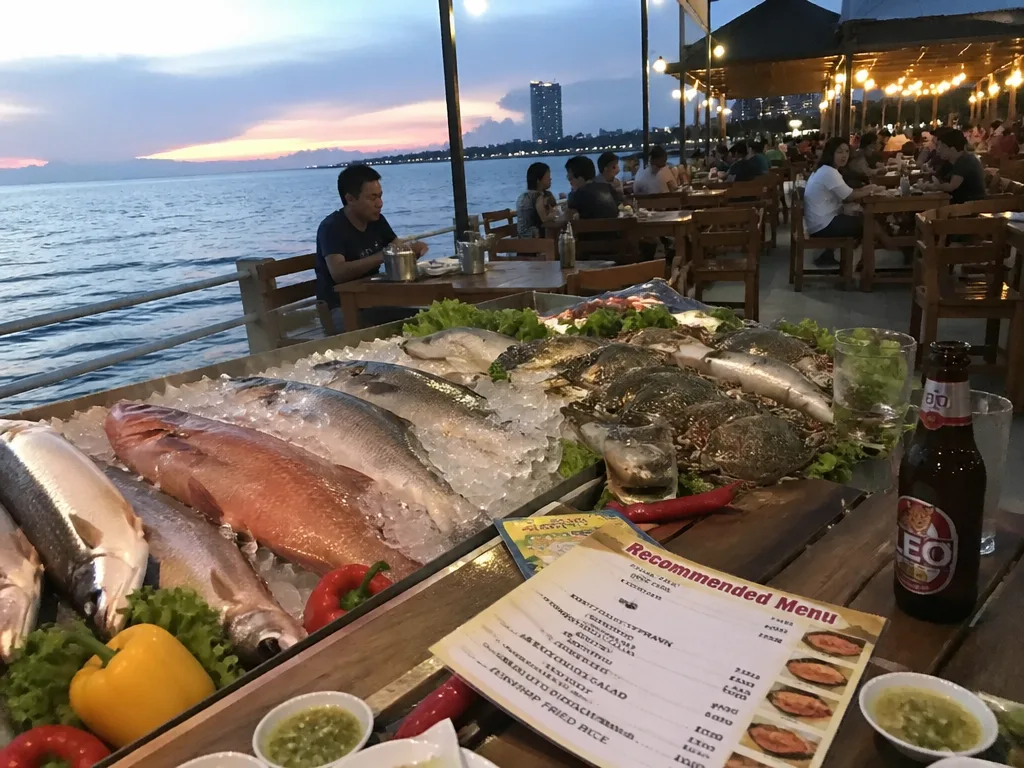
The Pattaya seafood institution. Occupies a sprawling open-air platform on the water in Naklua. You walk through an ice-packed seafood display, pick your crab, prawn or fish by weight, and choose how you want it cooked.
- What to order: Whole steamed garoupa with soy and ginger, charcoal-grilled prawns, stir-fried crab with curry powder, tom yum goong nam kon (creamy tom yum)
- Price: ฿600–1,200 per person with one or two seafood choices, rice and drinks
- Reservations: Essential for weekends and sunset
- Vibe: Loud, busy, families, Thai-majority on weekends
- Why it works: Seafood is genuinely fresh, Thai-style preparation is correct (not tuned for tourist palates), and the setting over the water is dramatic
Lung Ja Seafood (ลุงจ่า)
Smaller, slightly rougher Naklua seafood shack. Lower prices than Mum Aroi, equally good fish.
- What to order: Grilled squid, sea bass in three-flavor sauce, Thai herb salad with fresh prawns
- Price: ฿400–700 per person
- Best for: Locals’ pick, fewer tourists, cash-only budget dinner with serious flavor
The Korean Quarter
Naklua has a substantial Korean expat community and a cluster of legitimate Korean restaurants along Soi Naklua 18–22. Most are family-run, catering to long-term Korean residents who expect authenticity.
- What to order: Bulgogi, Korean BBQ (samgyeopsal), naengmyeon in summer, Korean-Chinese jjajangmyeon
- Price: ฿400–700 per person
- Tip: Look for restaurants with Korean-language menus and Korean staff, not Korean-themed restaurants with Thai-only staff
Central Pattaya: What’s Worth It
The tourist strip has a lot of food, and most of it is forgettable. Here’s what actually works.
Indian restaurants on Second Road
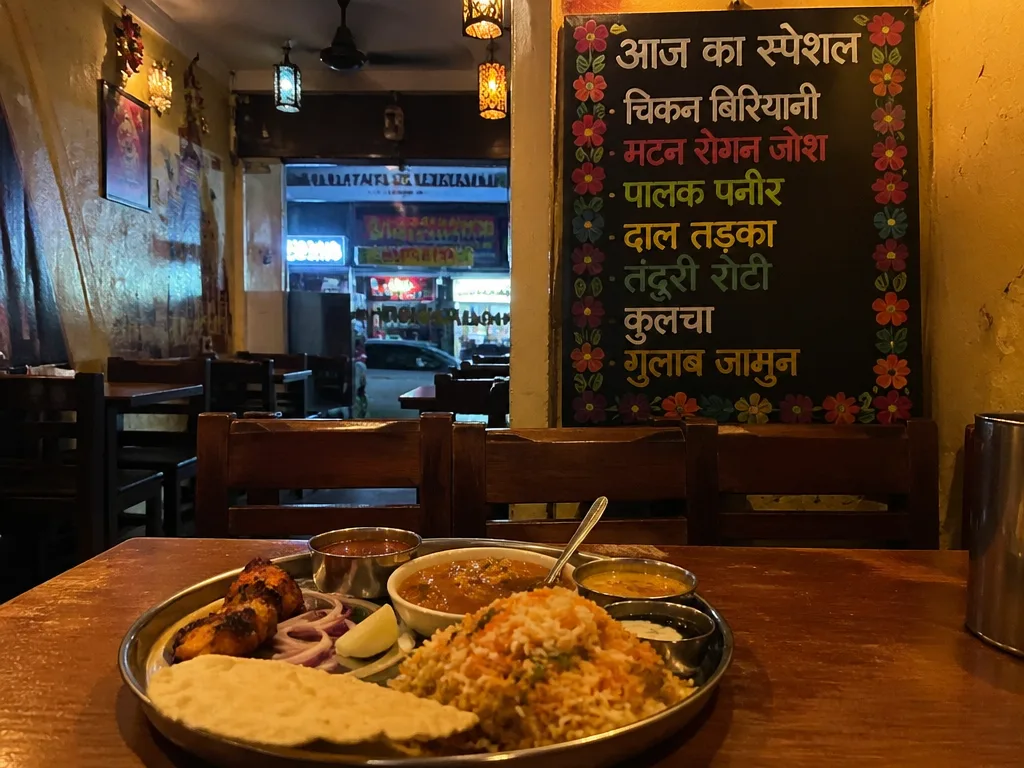
Pattaya has an excellent Indian food scene, driven by a large Indian tourist and expat population. Bombay Dhaba, Ali Baba, and Mantra are all solid. Biryanis, tandoori, and dals that stand up to Mumbai standards.
- Price: ฿400–700 per person
- Best for: Genuine Indian food you won’t find in Krabi or Koh Samui
Terminal 21 Food Floor
The shopping mall food court has quality Thai stalls and a decent international mix. Not destination food, but useful for a quick meal when you don’t want to walk far.
- Price: ฿150–300 per meal
- Best for: Family groups, picky eaters, non-committal lunches
Sai 3 (Third Road) Street Food
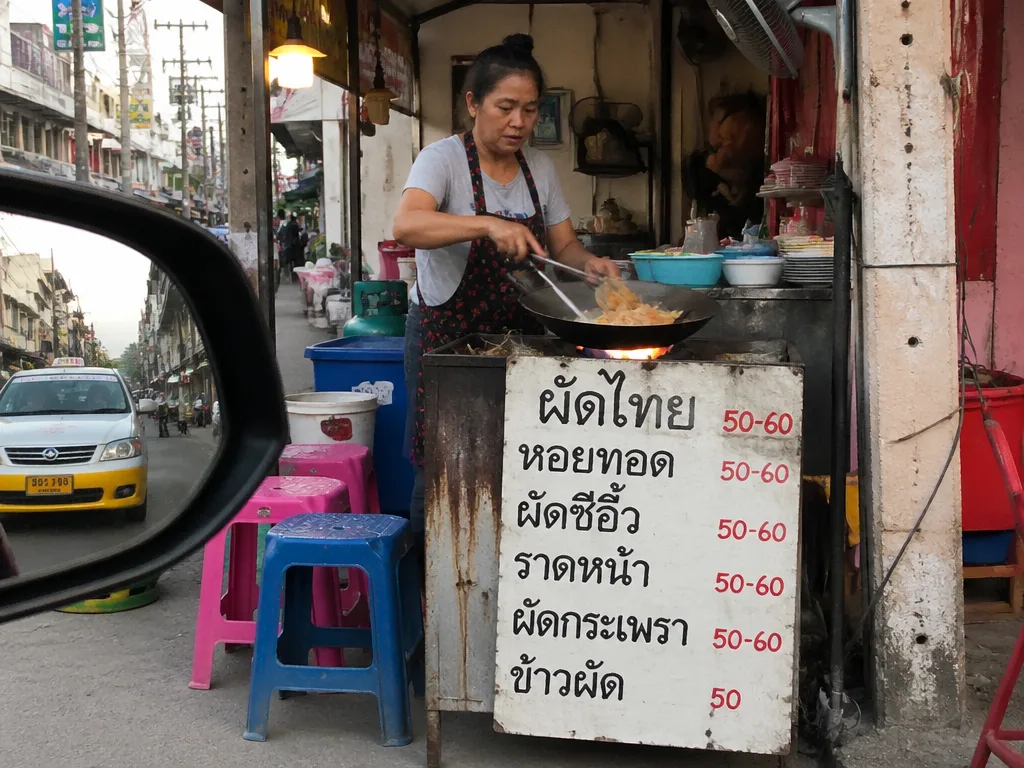
Second Road tourist inflation drops sharply when you walk inland to Third Road. Pad thai stalls, Isaan grilled chicken, curry vendors. This is where taxi drivers and bar workers actually eat.
- Price: ฿60–120 per dish
- Best for: Quick cheap lunch, local Thai food reality check
Jomtien: Food Without the Tourist Markup
Jomtien Beach Road seafood shacks
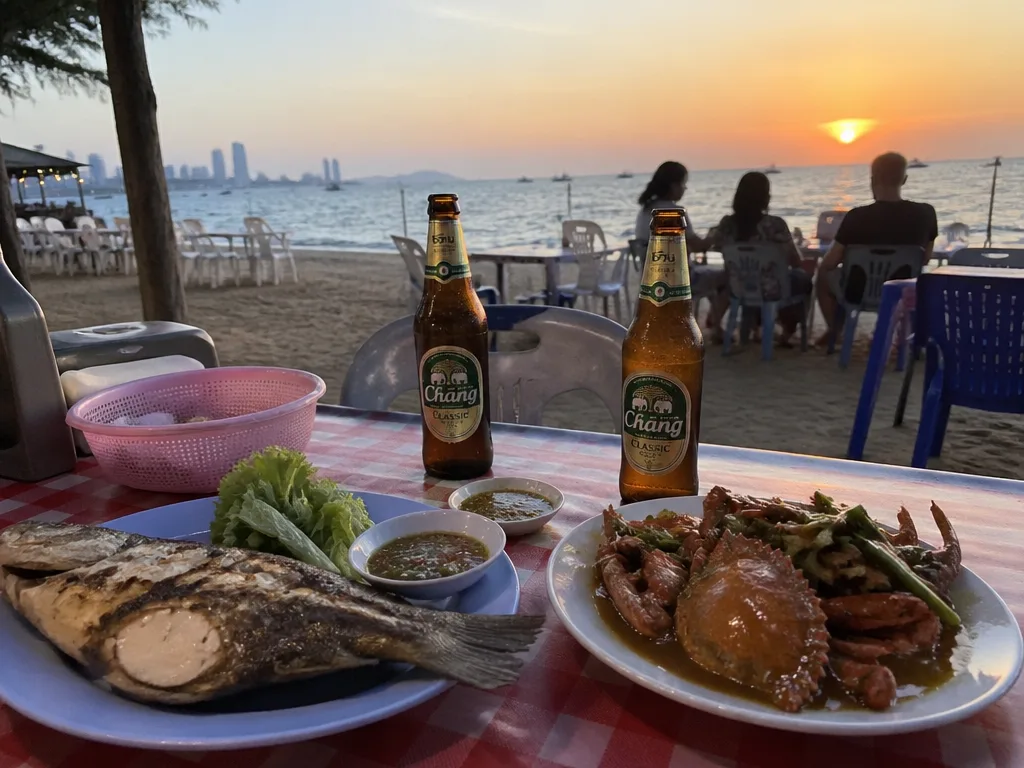
A row of open-air restaurants on the beach side. Prices are softer than Naklua, the setting is more casual, seafood is still good (though selection is smaller).
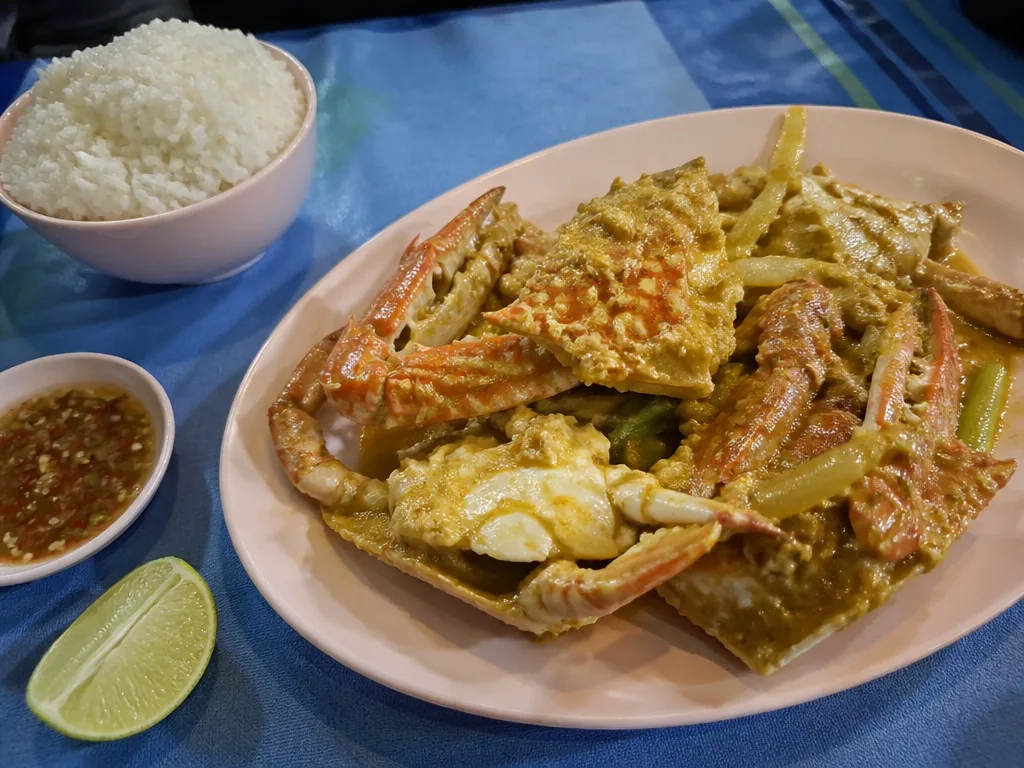
- What to order: Grilled sea bass, spicy seafood soup, stir-fried crab
- Price: ฿400–800 per person
- Vibe: Barefoot casual, sunset-facing, Thai families on weekends
The Ratatouille / Mata Hari (European)
Jomtien’s long-stay European community supports several excellent European restaurants. German, French, Italian. Run by owner-chefs, consistent quality, prices lower than Bangkok equivalents.
- Price: ฿500–1,200 per person
- Best for: Break from Thai food, romantic dinners, long-stay visitors
Local Thai shop-houses on Thappraya Road
Jomtien’s main inland road has a string of Thai shophouse restaurants serving the local condo community. No English menus at many. The reward is proper Thai home-style cooking at ฿80–150 per dish.
Floating Markets Near Pattaya
Pattaya Floating Market is the main tourist option (฿200 entry, food extra). It’s a built-for-tourists version of the concept, fine for photos but the food is mediocre.
Better: Pattaya Weekend Food Market at various locations throughout the year, or drive 40 minutes to Ban Rai Bueng Kaen Market for a more genuine local food experience.
What to Skip
- Beach Road “international” buffets. The ฿299 all-you-can-eat “seafood buffets” on Beach Road are cost-engineered sadness. Small portions of shrimp, a lot of lettuce, and nothing fresh.
- Walking Street Thai restaurants. Tourist versions of Thai food with inflated prices. The one exception: pad thai street carts on the side sois off Walking Street, which are cheap and fine for a late-night snack.
- “Authentic Thai Village” theme restaurants. The ones with traditional dancers and mediocre buffet. Skip them for actual Thai food.
- Open-air buffets on the main Jomtien strip. Same problem as Beach Road buffets. Quantity over quality.
Signature Dishes to Try in Pattaya
Beyond generic Thai food, these are the dishes that show up well in Pattaya specifically.
Hoy Tod (หอยทอด) is the oyster omelette: crispy-edged, served with sriracha and bean sprouts. Pattaya’s coastal access makes this consistently good. Most seafood restaurants do a version.
Crab Curry (Poo Pad Pong Curry) is stir-fried crab with yellow curry powder and egg. The Naklua version is the best in the country, and Mum Aroi’s preparation is iconic.
Thai-style Steamed Sea Bass uses lime, garlic, and chili over whole sea bass. Light, fresh, one of the signature Thai seafood preparations. Every seafood restaurant in Naklua does it.
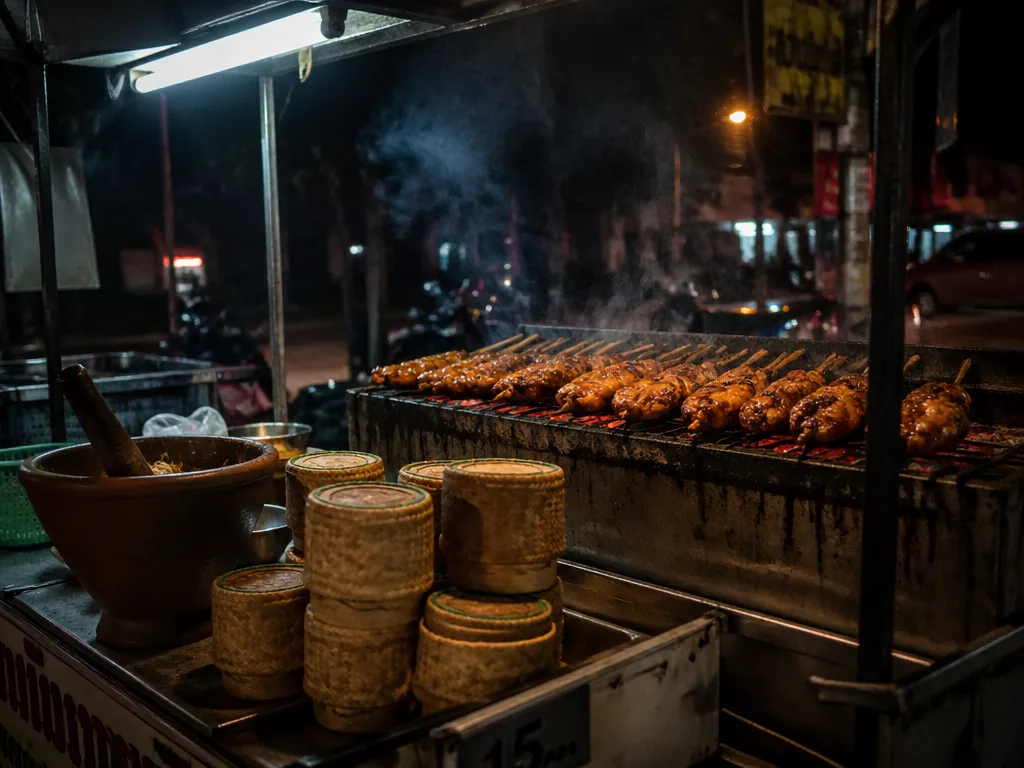
Isaan BBQ on side sois brings northeastern Thai grilled chicken (gai yang), papaya salad (som tam), sticky rice (khao niao). ฿150–250 for a full meal. Look for the smoke.
Drinks and Coffee
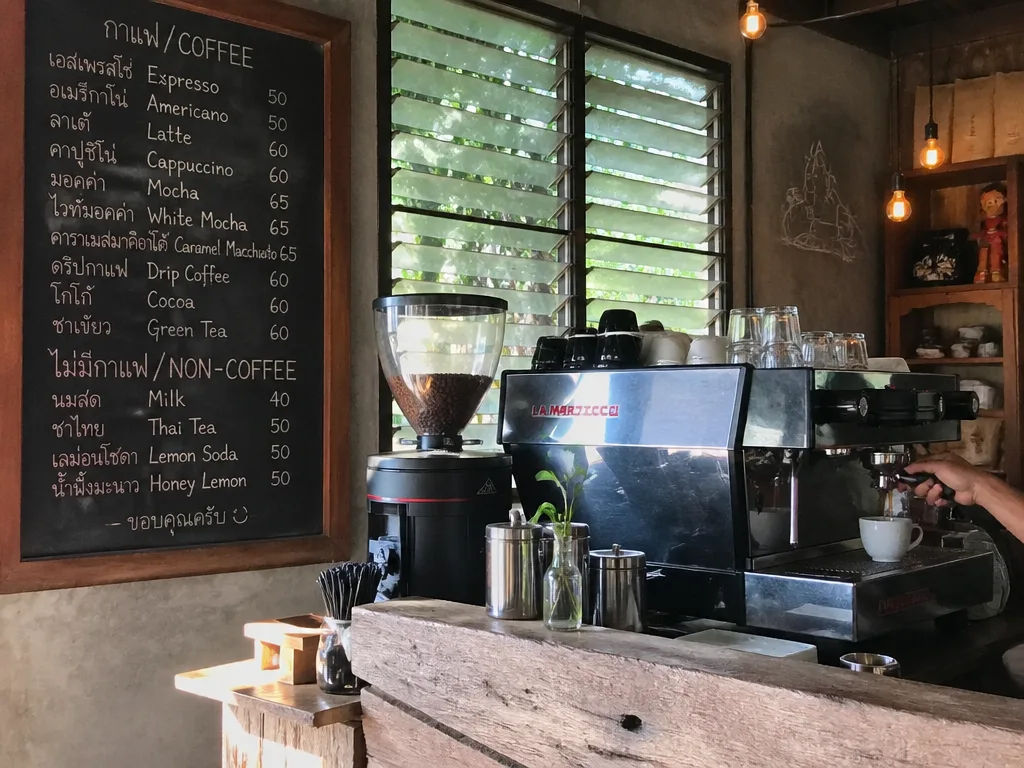
Specialty coffee is growing in Pattaya. Try Fika Pattaya (Naklua), Miss Ally (Jomtien), or the various independent roasters on Thappraya Road. ฿80–150 per cup.
Craft beer at Hops Brewhouse (Central Pattaya) is a brewery with their own beers on tap. ฿200–280 per pint.
Fresh coconut water is at every beach vendor and most restaurants. ฿40–80 per coconut. Best hangover recovery drink in the country.
Building a Food Day
Breakfast (8–10 AM): Hotel buffet, or Sai 3 Road street food (congee, Thai breakfast noodle soup) for under ฿100.
Lunch (12–2 PM): Terminal 21 food floor or a Thai shop-house on Third Road. ฿150–300.
Afternoon snack (3–5 PM): Fresh fruit cart, coconut ice cream, or a cafe stop. ฿80–200.
Dinner (7–9 PM): Naklua seafood (Mum Aroi or Lung Ja) once, Indian or European once, Jomtien beach shack once.
Late night (11 PM+): Walking Street pad thai cart, 7-Eleven sandwich, or skip.
Total food budget for 3 days done well: ฿3,000–5,000 per person. Done poorly (Beach Road buffets and tourist restaurants), the same money buys worse food.
Dietary Options
Vegetarian/vegan. Thai food is easy to adapt; say “jay” (เจ) for strict vegetarian. Indian restaurants have extensive vegetarian menus. Several Western-style vegan restaurants on Thappraya Road cater to long-stay visitors.
Gluten-free. Thai food is mostly rice-based and naturally gluten-free. Watch for soy sauce in stir-fries and check with servers. Indian restaurants can adjust.
Halal. Indian restaurants are mostly halal. Several halal Thai restaurants exist in the Soi Buakhao area serving the Muslim tourist population. Look for the halal signs.
Practical Notes
Cash: Most Naklua seafood places and shop-houses are cash-only. Central Pattaya restaurants take cards more often.
Service charge: 10% is standard at mid-range and upscale restaurants. Check the bill before tipping extra.
Tipping: See our tipping guide. ฿20–50 for casual meals, ฿50–100 for seafood dinners.
Reservations: Essential for Mum Aroi on weekends, recommended for European restaurants at dinner. Most other places are walk-in.
English menus: Widely available in Central and Jomtien. Spotty in Naklua shop-houses and Isaan street carts; point-and-order works fine.
The Bottom Line
Pattaya eats well if you know where to go. The formula:
- At least one serious dinner in Naklua. Seafood, probably Mum Aroi. Non-negotiable.
- One Indian or Korean meal in Central. Pattaya’s ethnic food scenes are better than you’d expect.
- One casual Thai shop-house lunch. Third Road or Jomtien shop-house.
- One Jomtien beach meal. For the setting as much as the food.
- Skip Walking Street restaurants entirely. Use them only for emergency late-night pad thai.
For what to do between meals, see our Pattaya first-visit guide, Pattaya daytime, and Pattaya beach guide. For the other side of Pattaya after dark, Pattaya nightlife is the full breakdown. If you’re planning a broader southern-Thailand eating trip, Krabi food and Phuket food are the companion guides.