
Southern Thai food punches harder than the cuisine most foreigners encounter in Bangkok restaurants. The curries are darker, the chili use is heavier, the seafood is fresher, and the pork is replaced in many dishes by fish or shellfish. Krabi sits in the middle of this food geography — more coconut-forward than Hat Yai, less Muslim-influenced than Phuket’s Peranakan scene, but unmistakably southern.
The mistake first-time visitors make is assuming Krabi food is just “Thai food at the beach.” It isn’t. Southern Thai cuisine is its own category, and Krabi is one of the better places to eat it. Here’s what to order and where to go.
Southern Thai Food: What Makes It Different
Three things distinguish southern Thai cooking from the central Thai food that dominates Bangkok menus.
More chili, more turmeric. Southern curries use dried red chilies in volume and turmeric as a base. The color of a proper southern curry is deep yellow-orange, not the lighter red of central Thai curries. Dishes like kaeng tai pla (fermented fish innards curry) are considered among the hottest in the country.
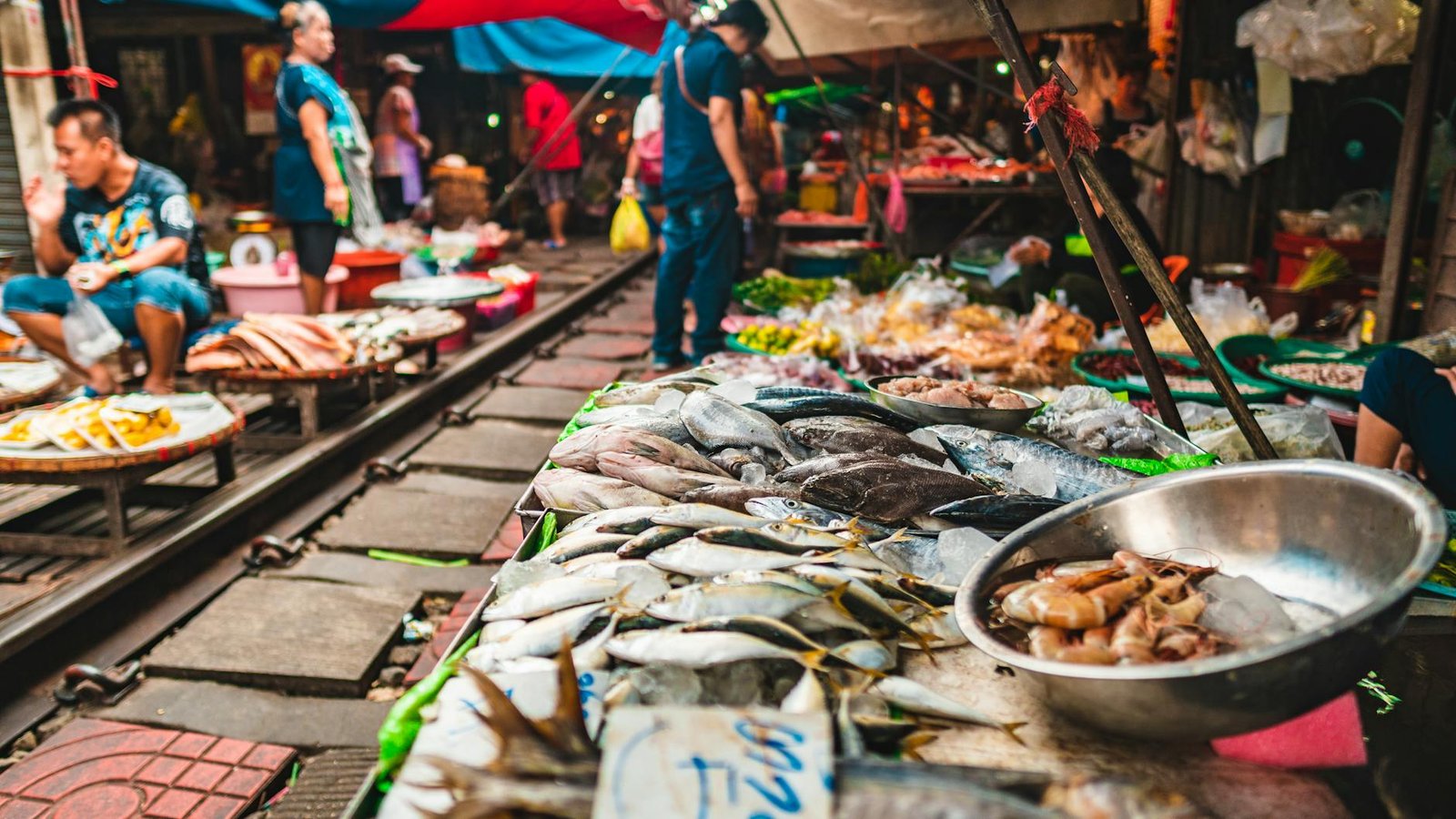
Seafood everywhere. Krabi’s coast and fishing villages supply restaurants with same-day catch. Squid, prawns, fish, and crab dominate menus. Pork and beef still appear, but they’re secondary.
Less sugar, more fermentation. Central Thai food leans sweet. Southern food leans sour, salty, and fermented. Budu sauce (fermented fish) is a regional staple. Pickled mustard greens show up in breakfast noodles.
The Dishes You Should Actually Try
Kaeng Som (Southern Sour Curry)
Forget what you think you know about Thai sour curry. The southern version is orange-red, heavy with turmeric, and built around fish — usually sea bass or snakehead — with vegetables like morning glory, papaya, or pak miang. It’s sour from tamarind and green mango, intensely spicy from dried chilies. Order it with steamed rice, not separately; this is a rice-accompaniment dish, not a stand-alone soup.
Where: Any local restaurant in Krabi Town. Ao Nang versions tend to be dialed down for tourists — the real thing will make you sweat.
Khao Yam (Southern Mixed Rice Salad)
A breakfast dish that looks like a lunch salad. A plate of rice (often blue from butterfly pea flower), surrounded by small piles of toppings: dried shrimp, pomelo, toasted coconut, chopped lemongrass, kaffir lime leaves, roasted chili, bean sprouts. You pour budu sauce over it, mix everything together, and eat.
Why it matters: This is the dish locals eat when they want something light and healthy. It’s also one of the most photographed southern Thai dishes because of the blue rice and colorful toppings.
Gai Tod Hat Yai (Hat Yai-Style Fried Chicken)
Deep-fried chicken with a distinctive flavor from a marinade that includes white pepper, coriander root, and sometimes turmeric. The breading is light and crunchy, and it’s served with fried shallots sprinkled on top. The chicken is usually much juicier than generic Thai fried chicken.
Where: Street vendors at any Krabi night market. Look for the vendor with the longest line.
Roti and Massaman
Krabi has a significant Muslim population, and massaman curry — a Persian-influenced, cardamom-scented dish with beef or chicken, potatoes, and peanuts — is the most famous crossover. Eat it with fresh roti (flatbread). The roti stands you’ll see on every street corner are a direct legacy of the region’s Muslim community.
Seafood: Crab, Prawns, Snapper
Ao Nang and the fishing harbor at Ko Kwang serve whole grilled fish, butter prawns, and crab curry at fair prices — not Bangkok prices, and not Phuket Patong tourist-trap prices either. A whole grilled snapper with seafood dipping sauce runs ฿400–800 depending on size. Tiger prawns by the kilo are ฿1,200–1,800 at mid-range places.
Where to Eat in Krabi
Ao Nang
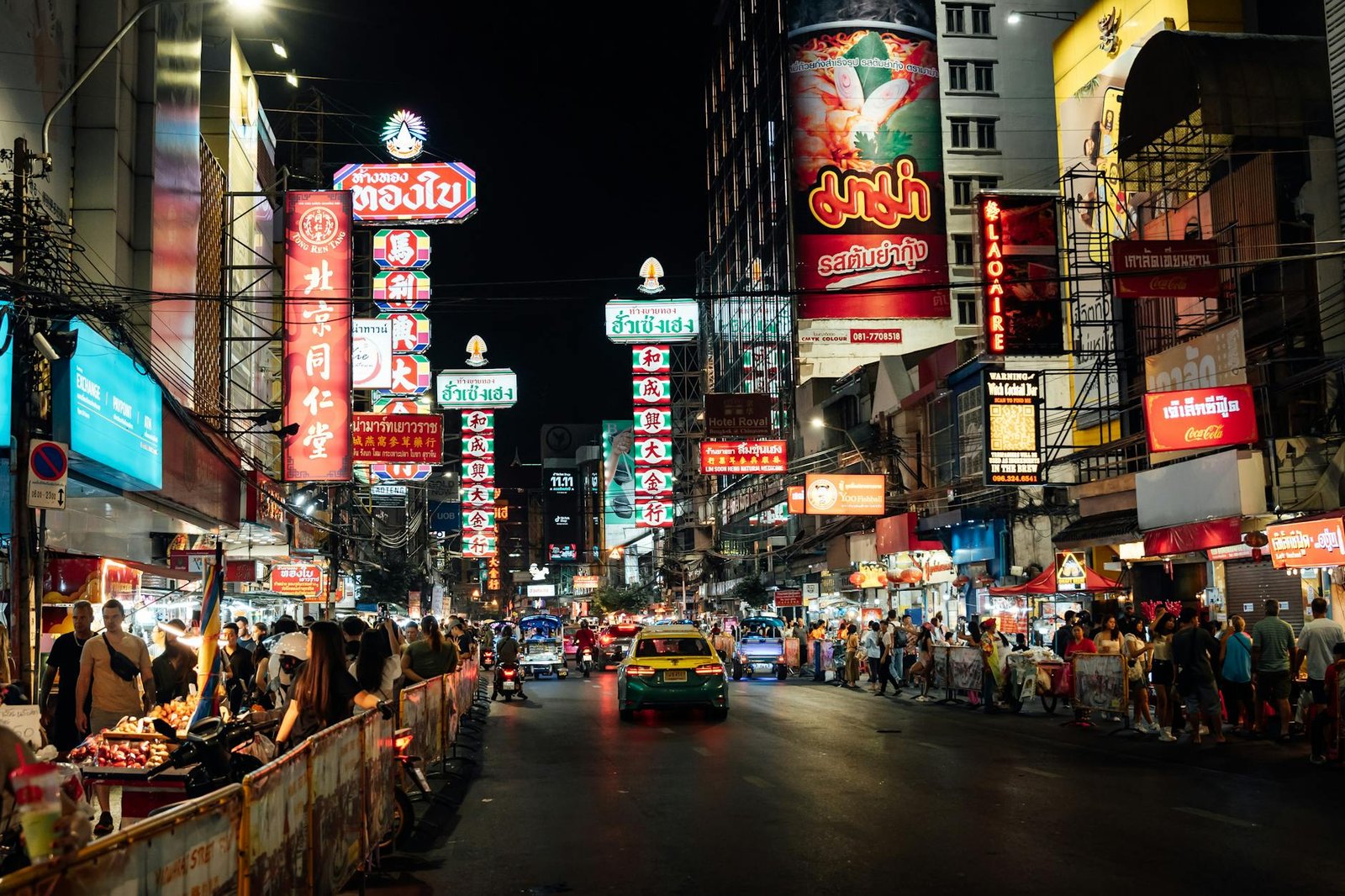
Krabi Night Market (Chao Fah Park, Krabi Town) — Not in Ao Nang itself, but a 20-minute drive. This is where locals eat. Seafood stalls, southern curries, grilled meats, southern-style fried chicken, fresh juice stands. Open 5 PM – 10 PM, Friday through Sunday.
Ao Nang Center Point Night Market — The in-town option. More touristy, higher prices, but decent for a first-night orientation. Open nightly.
Family-run seafood shacks on Ao Nang beach — The places with plastic tables right on the sand, seafood displays on ice at the front. Pick your fish, pay by weight, they grill it. Not the cheapest but the vibe is unbeatable.
Carnivore Steak & Grill (Ao Nang) — Not Thai food, but worth mentioning for the rare traveler who wants a proper steak break. Well-sourced meats, reasonable prices.
Railay
Railay East restaurants — Most dining on Railay clusters along the east-side walkway. Prices are 20–30% higher than Ao Nang because everything has to come in by boat. Quality is generally decent but not memorable. If you’re staying on Railay, plan at least one dinner back in Ao Nang for a better meal at a lower price.
Mama’s Chicken (Railay) — A Railay institution. Simple, reliable, fairly priced by Railay standards. Good massaman and pad thai.
Krabi Town
Thara Park area — Local food street with multiple southern Thai specialists. This is where to go for kaeng som and khao yam in their proper form.
Krabi Walking Street (Friday–Sunday nights) — The town’s weekend night market. Cheaper than Ao Nang, more Thai customers, better southern dishes.
What to Drink
Fresh coconut water — Cut open on request at any market. ฿40–60.
Thai iced tea (cha yen) — The orange-colored sweet milk tea. ฿30–50 at street stalls.
Butterfly pea flower lemonade — Blue lemonade that turns purple when you add lime. Pretty, cooling, everywhere.
Singha and Chang beer — Both are fine. Chang is slightly stronger. Local craft beer scene is basically nonexistent in Krabi — if that matters to you, Bangkok’s bar scene is where to look.
Muslim-friendly dining note: Krabi has many halal restaurants. Look for the green “Halal” sticker. Alcohol won’t be served at these places, but the southern Thai food is often better there than at mixed restaurants because the cook is not compromising for Western tastes.
Budget Guide
| Meal Type | Price Range (THB) |
|---|---|
| Street food dish | 50–100 |
| Night market meal | 150–250 |
| Ao Nang mid-range restaurant | 400–800/person |
| Seafood shack by weight | 500–1,200/person |
| Railay restaurant | 500–1,000/person |
| Resort or fine dining | 1,500+/person |
Two people eating a proper southern Thai dinner (appetizer, two mains, rice, drinks) at a local Krabi Town restaurant will pay ฿500–700 total. The same meal in Ao Nang costs ฿1,200–1,500. On Railay, ฿1,500–2,000.
What to Avoid
“Pad Thai” from touristy beach vendors. Pad thai in Krabi is a menu afterthought. It exists because tourists expect it. The local vendors don’t make it well because they don’t eat it themselves. Order southern dishes instead.
Large tour-bus restaurants on the way to/from tours. These exist to capture captive tourists. Food is mediocre, prices are inflated. If your tour stops at one, eat lightly and save your appetite for dinner.
Ice in unsealed drinks. Common advice for all of Thailand. Krabi tap water isn’t drinkable.
Expensive Western food at beachfront spots. The ฿800 “Western breakfast” is worse than a proper Thai breakfast for ฿150 and far worse than what you’d get at a hotel breakfast buffet. Eat Thai when you’re in Thailand.
The Krabi Food Itinerary (3 Days)
Day 1 Evening — Ao Nang beachfront seafood shack. Get a whole grilled fish and try one southern curry.
Day 2 Lunch — On the island tour, bring snacks. Most tour lunches are basic and uninspiring.
Day 2 Evening — Krabi Night Market (Chao Fah Park). This is your southern Thai crash course. Budget ฿400 for two people to try 5–6 dishes.
Day 3 Breakfast — Find khao yam at a local breakfast stall. ฿50–80.
Day 3 Lunch — Quick roti and curry at a Muslim restaurant near your hotel.
Day 3 Dinner — Ao Nang restaurant meal. Splurge on a proper southern sour curry with fish and a side of fresh squid.
Final Thoughts
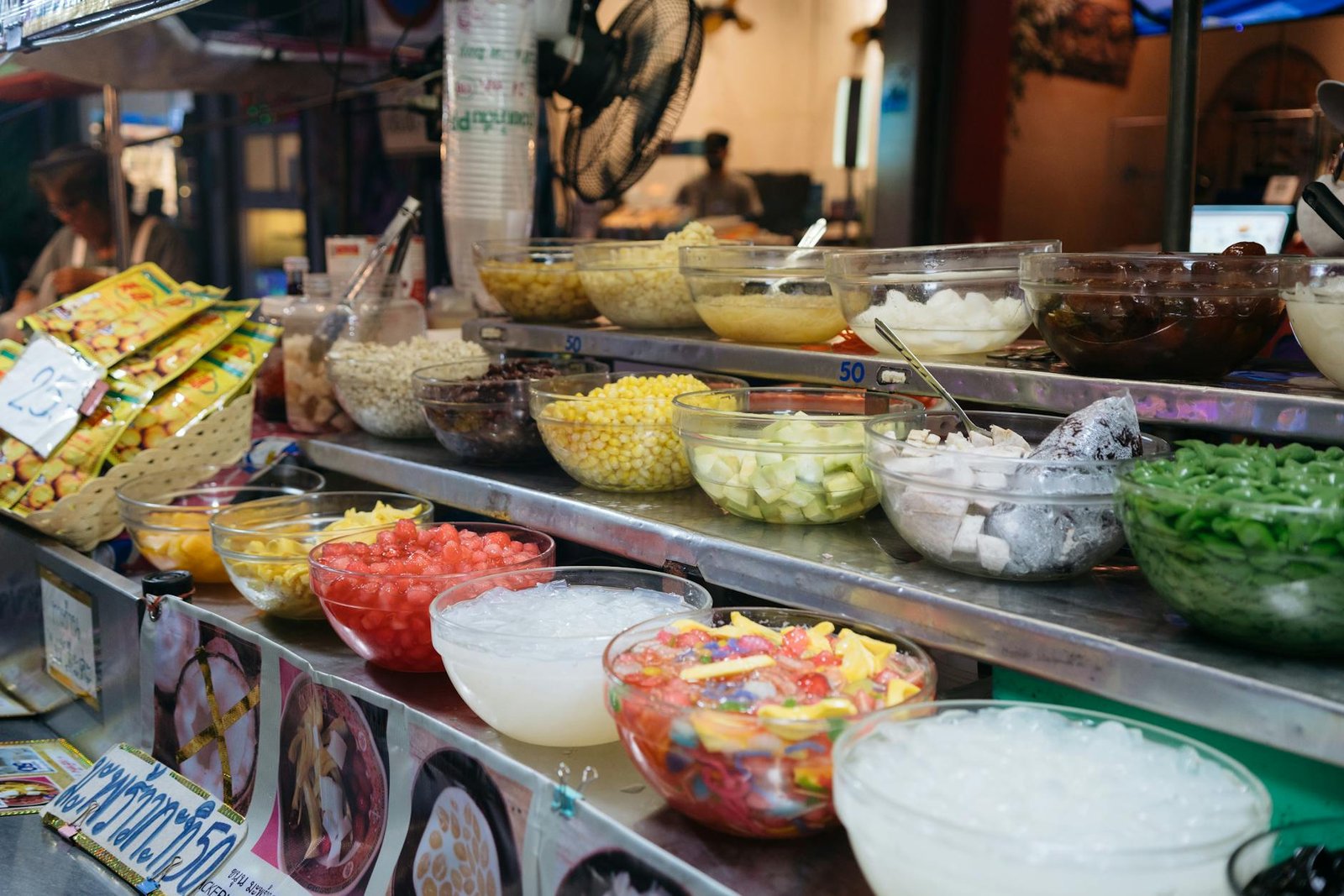
The food-motivated traveler should budget at least one full meal at Krabi Night Market and one proper southern-style lunch with a Thai family-run restaurant. Those two meals alone will reorient your sense of what southern Thai cooking is.
And if you’re comparing Krabi’s food scene to other destinations: it’s less innovative than Phuket’s Peranakan heritage dishes, less chaotic than Bangkok’s Chinatown food scene, and completely different from Chiang Mai’s northern Lanna cuisine. Each has its own identity. Krabi’s identity is seafood, spice, and the confident lack of central Thai dilution.
Before your trip, read our Krabi first visit guide for the bigger picture, and the Krabi island hopping guide to plan your water days. For tipping etiquette at restaurants, see the Thailand tipping guide.


