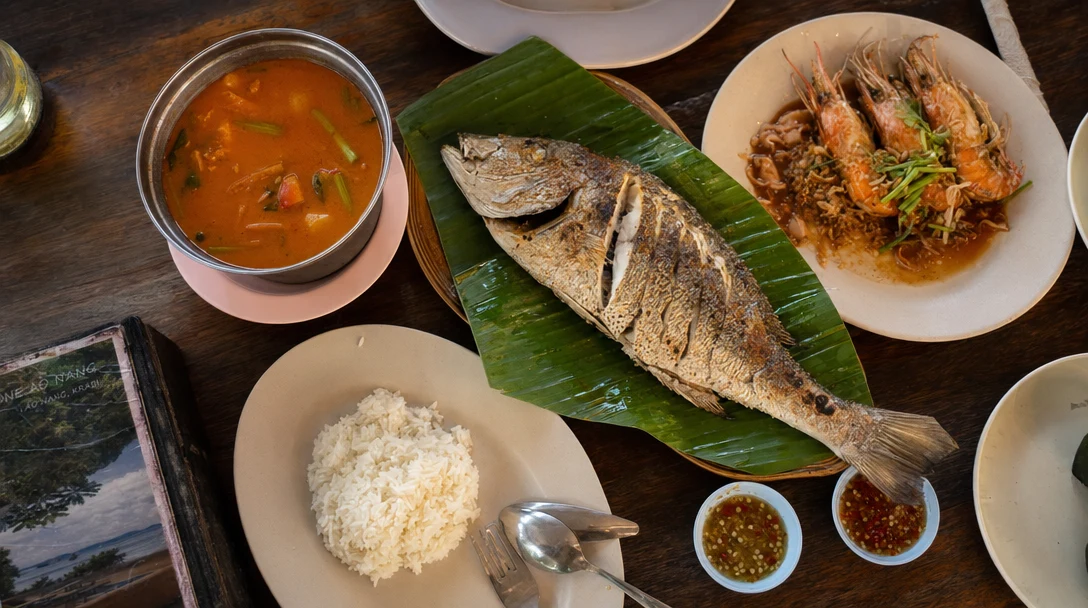
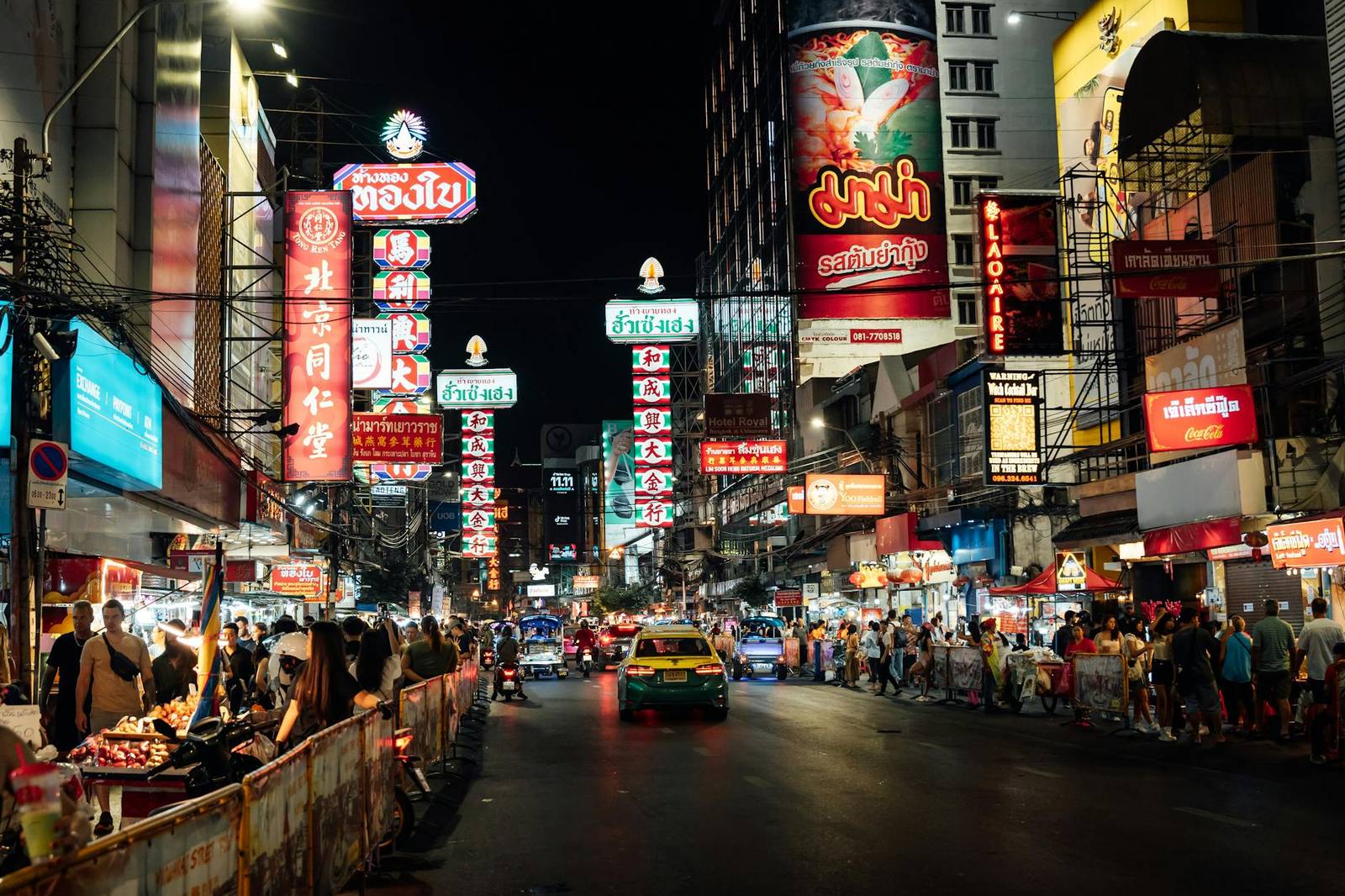
Bangkok and Chiang Mai don’t eat the same food. A lot of first-time visitors don’t realize this until they’re halfway through their second bowl of khao soi and suddenly notice nothing tastes like what they had in Bangkok three days ago. The soup is richer. The sausage is sour and herbal. The chili paste on the table is green and pungent instead of red and sweet. You’re not in central Thai territory anymore, you’re in the old Lanna kingdom, and the food has been evolving on its own mountain track for 700 years.
I’ve been eating my way through Chiang Mai since 2017, and I still find something new every time. This guide is what I wish someone had handed me on my first trip: what northern food actually is, where to eat it, and what not to waste your time on.
What Makes Chiang Mai Food Different
Northern Thai food, cuisine from the old Lanna kingdom, is a distinct regional cuisine with Burmese, Yunnanese Chinese, and Tai Yuan influences baked in over centuries. Unlike central Thai food, Lanna cuisine uses very little coconut milk (khao soi being the famous exception), very little sugar, and almost no fish sauce. Instead it leans on fermented fish paste (pla ra), sticky rice, and a family of dry herbal chili dips called nam prik.
The flavor profile is earthier, more bitter, more fermented. It sounds less accessible, but it’s genuinely more interesting once you get past the initial learning curve.
The quick orientation:
| Element | Bangkok/Central | Chiang Mai/Lanna |
|---|---|---|
| Staple starch | Jasmine rice | Sticky rice (khao niao) |
| Coconut milk | Heavy use | Rare (khao soi, gaeng hanglay) |
| Sweetness | Present in most dishes | Minimal |
| Signature sauce | Nam prik pao, sriracha | Nam prik ong, nam prik noom |
| Preserved meat | Moo ping, moo yor | Sai ua (herbal sausage), naem |
| Soup noodle star | Boat noodle, tom yum | Khao soi, khanom jeen nam ngiao |
If you’ve only had Bangkok Thai food, the first few bites of proper Lanna cooking can feel unfamiliar. Give it two meals and it clicks.
Khao Soi, The Dish You’re Here For
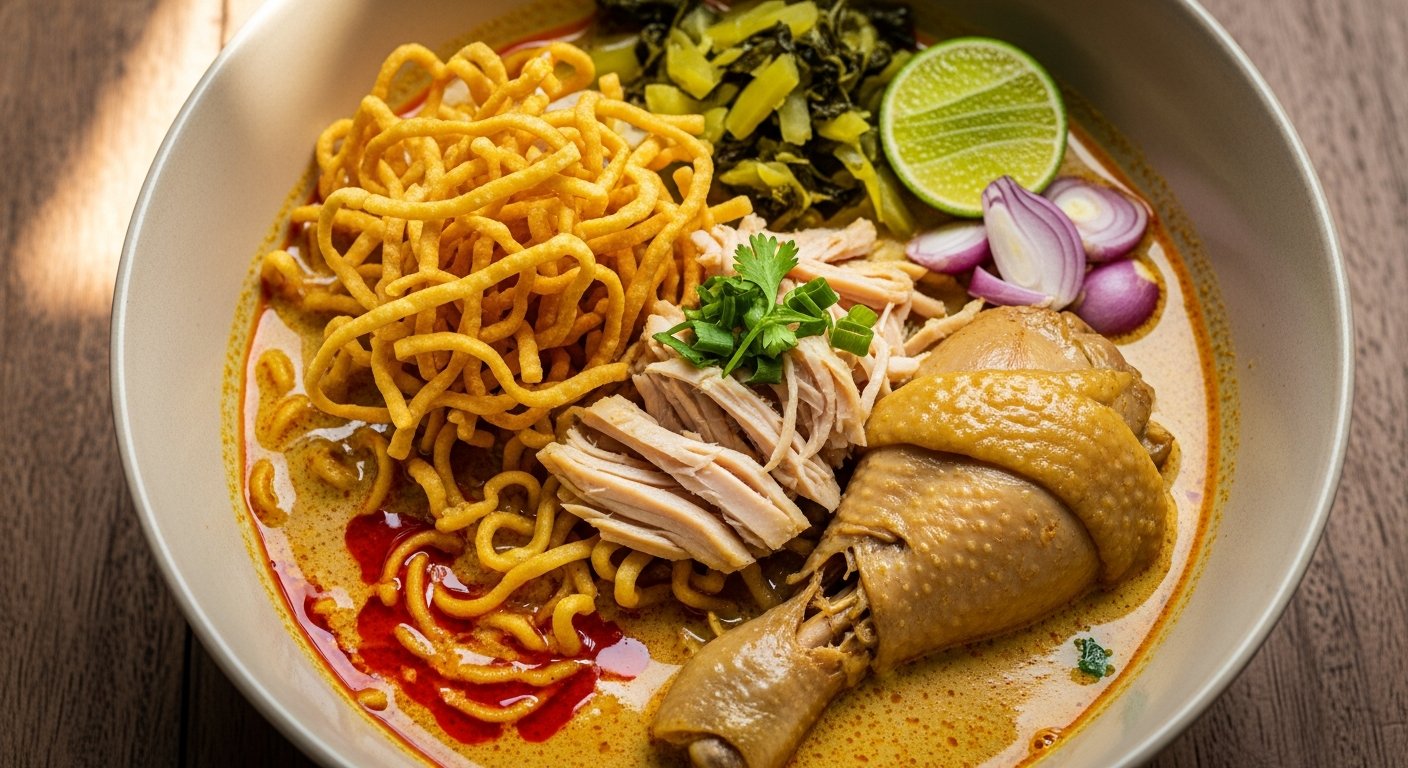
Khao soi is the coconut-curry noodle soup that defines Chiang Mai in every traveler’s memory. A bowl is egg noodles, soft ones underneath, shatteringly crispy deep-fried ones piled on top, swimming in a turmeric-gold broth thick with coconut milk, curry paste, and aromatic spice. It comes with pickled mustard greens, raw shallots, and a wedge of lime on the side. You add those as you eat. That’s non-negotiable, the pickles and shallots cut the richness, and the dish doesn’t work without them.
Where to eat it, in order of how I’d send a first-timer:
Khao Soi Khun Yai (near Wat Mon San, inside Old City), A tiny family-run shop open only for lunch, roughly 10 AM until the broth runs out (usually 1–2 PM). Thirty baht less than the famous tourist spots and, to my taste, better. The chicken leg version is ฿60. Come early.
Khao Soi Mae Sai (Santitham neighborhood, north of the moat), Bigger, older, and famous among locals. The broth is a touch sweeter than Khun Yai’s. ฿50–60 per bowl. Parking can be rough at lunch.
Khao Soi Islam (Charoenprathet Road, near the Night Bazaar), A halal version, and the oldest khao soi shop in the city (since the 1940s). The beef khao soi here is something most shops don’t even offer. ฿70. Worth a trip even if you normally prefer chicken.
Ong Thong Khao Soi: The Bangkok-based chain (we mentioned it in our Ari neighborhood guide) has a branch in Chiang Mai too. Solid, consistent, but if you’re already in the origin city, pick a local shop.
TIP
The chicken leg (bone-in thigh) version is the default for a reason. The dark meat absorbs the curry flavor better than breast, and the skin gives you a little fat contrast against the broth. Order it that way on your first bowl.
Sai Ua, Nam Prik, and Khanom Jeen Nam Ngiao
If you only eat khao soi in Chiang Mai, you’re missing three-quarters of what Lanna cuisine offers. These are the dishes you should hunt down next.
Sai Ua (Northern Herbal Sausage)
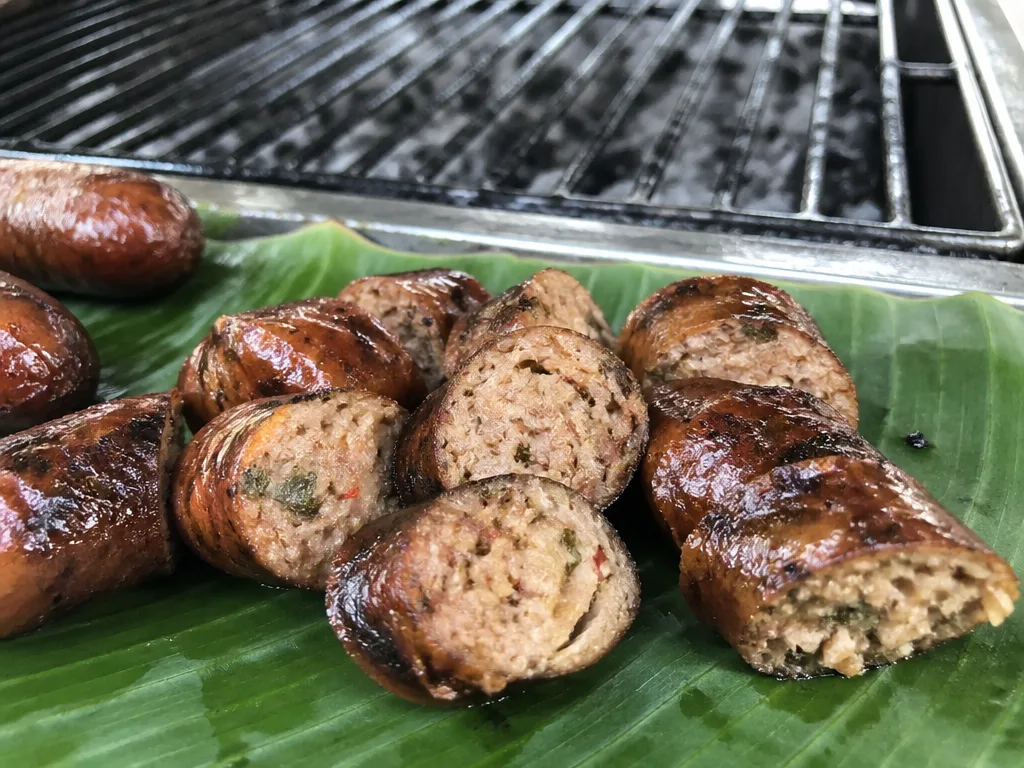
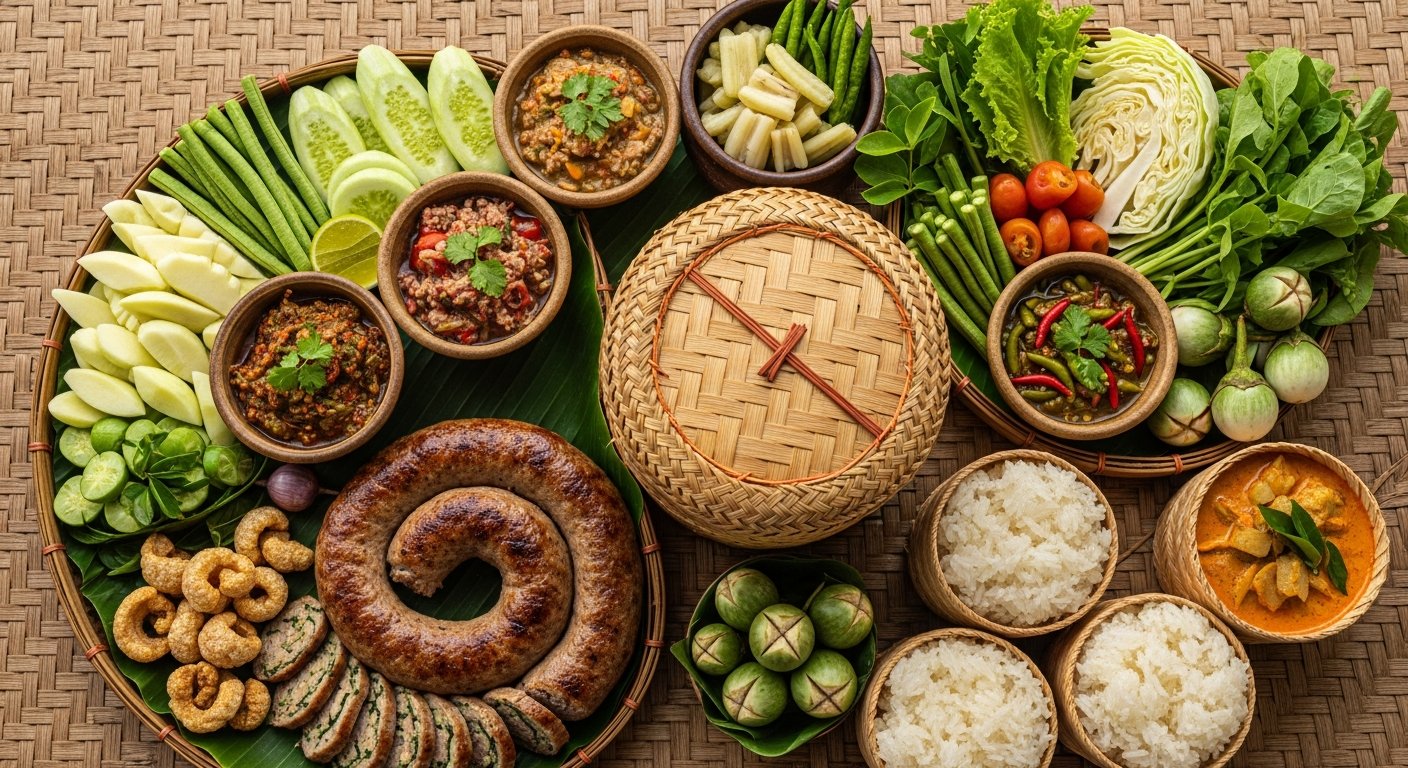
A coarse-ground pork sausage packed with lemongrass, kaffir lime leaves, galangal, garlic, and a lot of dried chili. Grilled over charcoal and sliced into thick coins. It’s aggressive, herbal, spicy, and unmistakable. Buy it by the kilo at any market (฿200–300/kg) and eat it with sticky rice and nam prik ong.
Best place: Damrong Sai Ua on Charoenmuang Road. They’ve been making sai ua the same way for three generations. Grab a kilo and a bag of sticky rice and you have lunch for two.
Nam Prik Ong (Tomato-Pork Chili Dip)
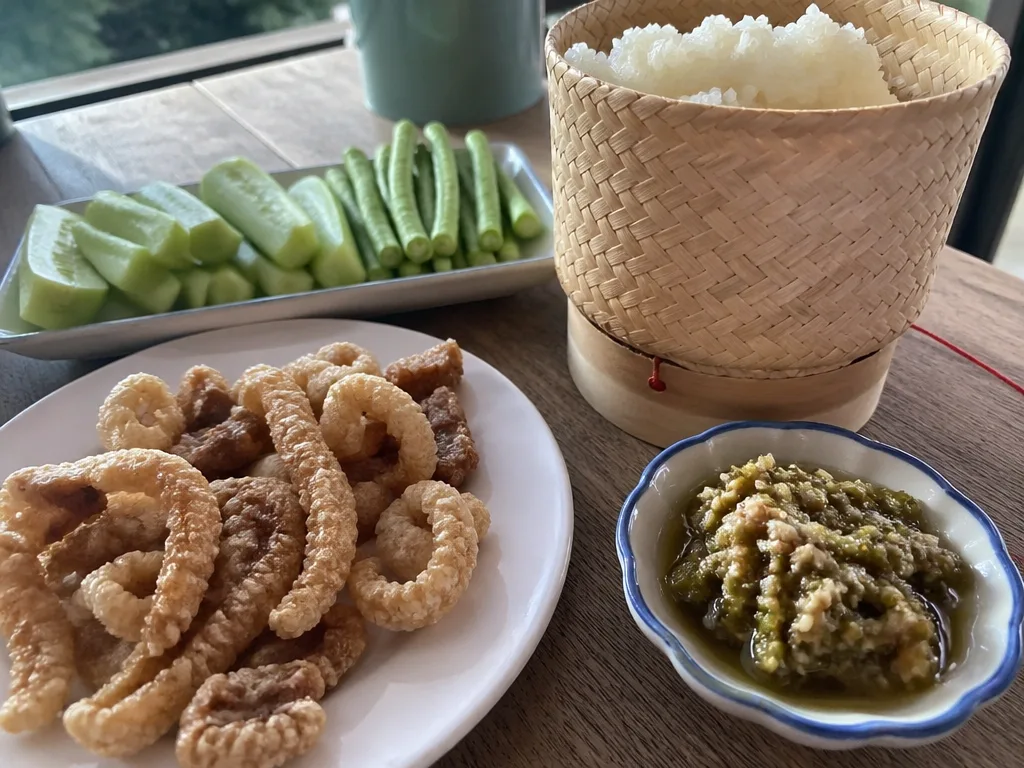
A tomato-and-minced-pork-based chili relish you eat with raw vegetables, pork rinds, and sticky rice. Milder than nam prik noom and a good gateway dish. Found at any Lanna restaurant; restaurants that make their own are easy to spot because the nam prik ong will be redder and chunkier than the commercial version.
Nam Prik Noom (Green Chili Dip)
Roasted green chilies pounded with garlic, shallots, and fish paste. Spicy in a roasted, smoky way, not the sharp raw way. Locally considered a flavor litmus test, if you can eat nam prik noom and smile, you’ve earned northern Thai food credentials.
Khanom Jeen Nam Ngiao
Rice noodles in a tomato-based pork rib broth with dried chili flowers, peanuts, and bean sprouts. A dish with clear Yunnanese Chinese influence, typically eaten for breakfast. Often served at the same shops that do khao soi. Cheap (฿40) and filling.
Gaeng Hanglay (Burmese-Style Pork Curry)
A braised pork belly curry with ginger, tamarind, garlic, and a mild sweetness. Burmese origin, Lanna execution. Eaten with sticky rice. Rich, slow-cooked, comforting. If you see it on a menu, order it, most shops only make it once or twice a week because it takes hours.
Warorot Market (Kad Luang), The Morning Food Tour
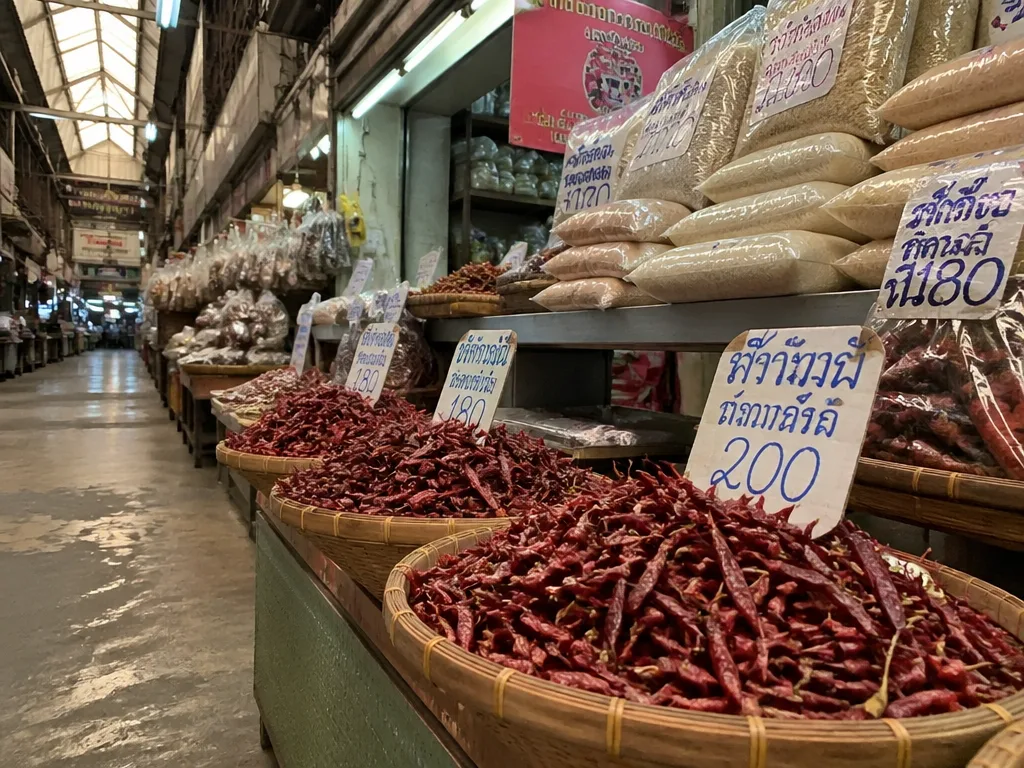
Warorot Market, locals call it Kad Luang (ກາດຫຼວງ, “great market”), is Chiang Mai’s main wet market, and it’s where you go if you want to understand northern food the way locals actually shop for it. Get there between 7 and 9 AM. By 11 AM the heat is brutal and the best stalls are packing up.
What to do there:
Ground floor is produce, dried goods, and prepared Lanna staples. This is where you buy sai ua, nam prik pastes in plastic bags, northern-style pork rinds (khaep moo), fried dried pork (moo sawan), and an absurd variety of chili pastes. Vendors will let you sample almost everything.
Second floor is clothing and souvenirs, you can skip it unless you’re shopping for hill-tribe textiles.
The flower market next door (Kad Dokmai) operates 24 hours and is stunning in the early morning. Worth a five-minute walk-through even if you’re not buying flowers.
Food stalls to target:
- Warorot sticky rice vendor (you’ll know it by the line): ฿20 for a warm bamboo container of fresh khao niao
- Kalae Thong: makes the best khaep moo (pork rinds) in the market, ฿60/bag, addictive
- Naem stalls: sour fermented pork sausages. Try one. If you like it, buy five for later.
The tour plan: start at 7 AM with coffee from one of the old Chinese-style shops on Chiang Moi Road (just outside the market), walk through Warorot for an hour, cross Ping River to Wat Ket Karam for quiet, and come back for late breakfast at one of the khanom jeen shops on the market’s perimeter. You’ll have eaten four dishes and spent less than ฿200.
Sunday Walking Street, The Market Everyone Tells You About
The Sunday Walking Street market on Ratchadamnoen Road runs every Sunday from about 4 PM to 10 PM. It’s the single most famous night market in Chiang Mai and one of the most atmospheric in Thailand, we covered the market layout in our Chiang Mai Old City guide. Food-wise, here’s the real talk.
The Sunday market is excellent for snacking and terrible for a real meal. The food courts are densely packed, seating is limited, and by 7 PM the popular stalls have lines. Treat it as a grazing event, not a dinner plan.
Snacks worth eating:
- Crispy pancakes (khanom krok), coconut batter cooked in small half-moons. ฿30 for a box of ten.
- Grilled squid on a stick: ฿60–80, usually good.
- Khao soi cups (yes, they sell khao soi in paper cups for walking), ฿50, surprisingly decent.
- Fresh coconut: ฿50–60. Worth it for the walking hydration.
- Mango sticky rice: obviously.
Skip: anything wrapped in obviously commercial packaging, the “traditional Thai costume” photo booths, the fried insects (these are a tourist gimmick in CM, they’re more of a northeastern Isaan thing).
Timing tip: arrive at 4:30–5 PM before the crowds, walk from Tha Phae Gate westward, buy snacks as you go, and be done by 6:30 PM. The market is three times more pleasant before sunset.
Chang Phueak Gate Night Market, Weeknight Go-To
For weeknight food, locals go to Chang Phueak Gate Night Market, just outside the northern wall of the Old City. Smaller than Sunday Walking Street, not tourist-focused, operates nightly from about 5 PM to midnight.
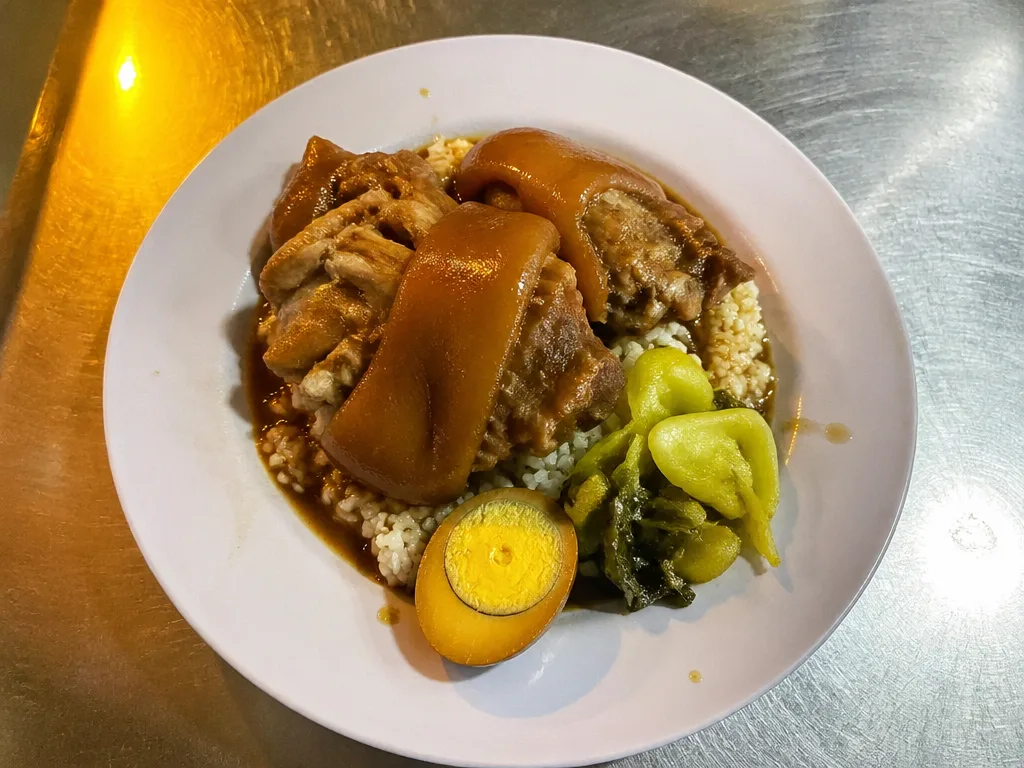
The reason to come: the famous Cowboy Hat Lady: a woman in a cowboy hat who sells khao kha moo (stewed pork leg over rice) out of a single stall. She’s been featured on every Anthony Bourdain-style food show you can think of, but the dish stands up to the hype. A plate is ฿50, comes with perfectly soft pork, boiled egg, and pickled greens. Weeknight lines are 10 minutes max. Weekends it’s 30+.
The rest of the market is standard Thai night market food, grilled meat skewers, pad kra pao, som tum, seafood. Prices are locally fair (mains ฿50–80) and seating is plastic chairs on the sidewalk. This is how 80% of Chiang Mai residents actually eat dinner.
Beyond Lanna, The Modern Chiang Mai Food Scene
Chiang Mai’s food scene has grown dramatically in the last five years. Digital nomads, returning Thai restaurateurs, and a generation of young chefs trained abroad have built a second food layer on top of the traditional one.
Specialty Coffee
Chiang Mai is arguably Thailand’s best coffee city. Northern Thailand grows excellent Arabica beans (Doi Chaang, Doi Tung, Doi Inthanon), and the local roaster culture is serious. A few worth your time:
- Akha Ama Coffee (Santitham): one of the original Thai specialty shops, Akha-tribe owned and managed. ฿80 for pour-over.
- Graph Ground (Nimman): experimental drinks, minimalist aesthetic, ฿150+ espresso-based menu.
- Ristr8to (Nimman): latte art competition pedigree, consistent pours, always busy. ฿100–140.
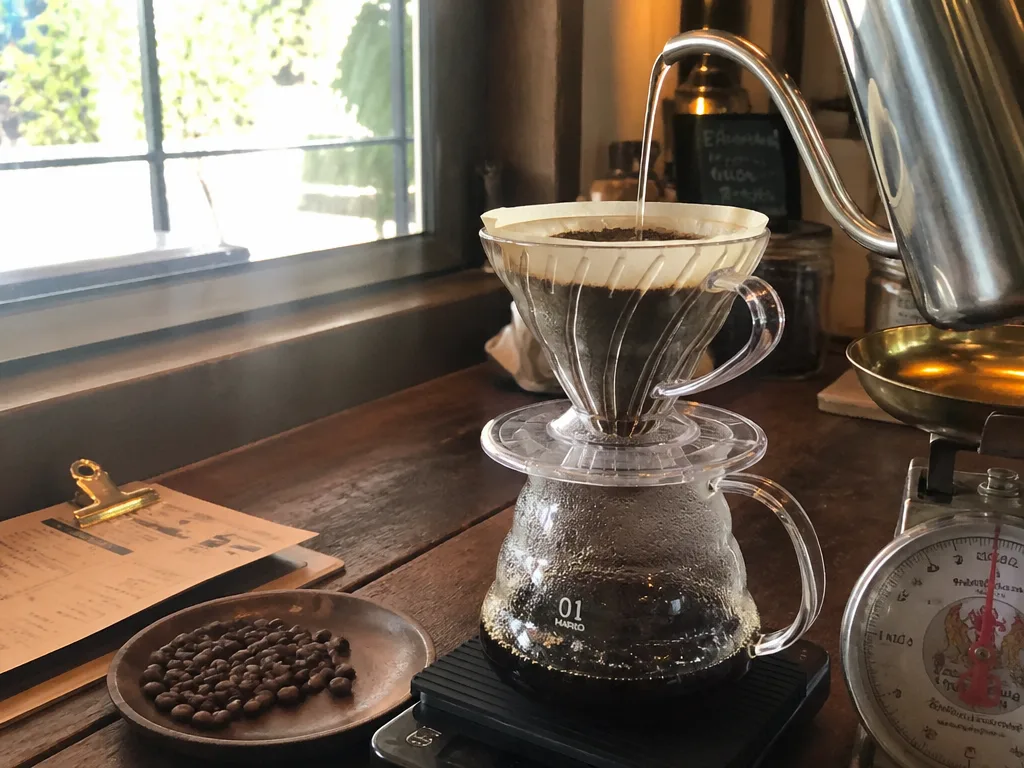
If you’re into coffee culture generally, our Bangkok cafe scene guide covers the capital’s counterpart scene. For a deeper dive into Chiang Mai’s cafe scene specifically — including the best spots to work from and the roasters worth seeking out — see our Chiang Mai cafe guide.
Modern Northern Thai
- Blackitch Artisan Kitchen: hidden tasting menu place, Lanna ingredients reinterpreted. ฿2,500–3,500 set. Book a week ahead.
- Huen Muan Jai: upscale-casual Lanna, good for introducing Lanna food to someone who hasn’t had it before. ฿600–900 per person.
- Khum Khantoke: touristy khantoke dinner (northern feast on a low round table with dancers), but well-executed. ฿500 including show.
Plant-Based / Wellness
Chiang Mai has more serious vegan restaurants than any other Thai city outside Bangkok:
- Free Bird Cafe: Burmese-owned vegan, all profits fund Burmese refugee education. Quality food, meaningful mission.
- May Kaidee: long-running vegan Thai, multiple locations.
What to Skip
Years of eating in Thailand has made me honest about certain things.
Skip: Anything described as “insect platter” (ant eggs excluded, those are regional to CM and legitimate), “traditional dance dinners” outside of Khum Khantoke if you want authenticity, elephant-themed everything, restaurants with photos of the food on the menu at tourist-heavy spots.
Skip: Eating Bangkok-style central Thai food here. You can get pad thai and tom yum anywhere in Thailand. You came to Chiang Mai for Lanna food. Order Lanna food.
Skip: The big “food tour” bus packages. Build your own with Warorot Market in the morning, Chang Phueak at night, and a sit-down Lanna dinner between. Cheaper, better, and you’ll actually eat at the pace you want.
Budget Reality Check
Chiang Mai is cheaper than Bangkok, often meaningfully so.
| Meal Type | Bangkok Price | Chiang Mai Price |
|---|---|---|
| Street noodles (khao soi/nam ngiao) | ฿60–80 | ฿40–60 |
| Sit-down local meal | ฿150–250 | ฿100–180 |
| Mid-tier restaurant (2 people) | ฿800–1,500 | ฿500–900 |
| Specialty coffee | ฿120–180 | ฿80–140 |
| Fine dining tasting menu | ฿3,500+ | ฿2,500+ |
For ฿500 per person per day you can eat very well in Chiang Mai. ฿800 puts you into specialty coffee and one sit-down dinner territory. Our Bangkok long-stay guide has similar numbers for comparison, Chiang Mai runs roughly 20–30% below Bangkok across the board.
FAQ
Is Chiang Mai food spicier than Bangkok food?
Yes, usually. Lanna cuisine uses more fresh and dried chili per dish than central Thai cuisine, and the spice tends to be upfront rather than balanced with sugar. If you usually ask for “mai phet” (not spicy) in Bangkok, say it twice in Chiang Mai.
When is Warorot Market open?
Daily from roughly 5 AM to 6 PM, with the most activity before 10 AM. The Flower Market next door (Kad Dokmai) is open 24 hours and is at its best between 4 and 7 AM.
Is the Sunday Walking Street worth it if I’m only here two nights?
Yes if one of your nights is a Sunday, it’s genuinely atmospheric. If you’re here Monday to Saturday, don’t reschedule around it. Chang Phueak Gate Night Market delivers 70% of the food experience without the crowds.
Where can I learn to cook northern Thai food?
Most Chiang Mai cooking schools teach central Thai (pad thai, green curry, tom yum). For Lanna-specific classes, look for Thai Farm Cooking School (half-day Lanna course, ฿1,300) or Asia Scenic (Lanna specialist day course, ฿1,200 with market visit included). Book directly, not through tour desks, same price, cleaner experience.
Is it safe to eat at the street markets?
Yes, with the same common sense you’d apply anywhere in Thailand. Follow the locals, eat where the line is, avoid raw seafood at stalls without visible refrigeration. In a few years of eating Thai street food I’ve had food poisoning twice, both times at tourist-district sit-down restaurants, never at a proper local market stall.
What’s the one dish I absolutely can’t leave without eating?
Khao soi. If you only have time for one Lanna dish, that’s it. If you have time for two, add sai ua with sticky rice. Three, throw in khanom jeen nam ngiao for breakfast.
Chiang Mai’s food is its own world, and the more time you give it, the more it opens up. For the rest of what to know before your first visit, check our Chiang Mai Old City guide. If you’re staying longer, our Chiang Mai digital nomad guide covers living here for weeks or months. And if you need a massage after all that eating, spoiler, you will, our Chiang Mai massage guide has the best-kept secrets in the city.