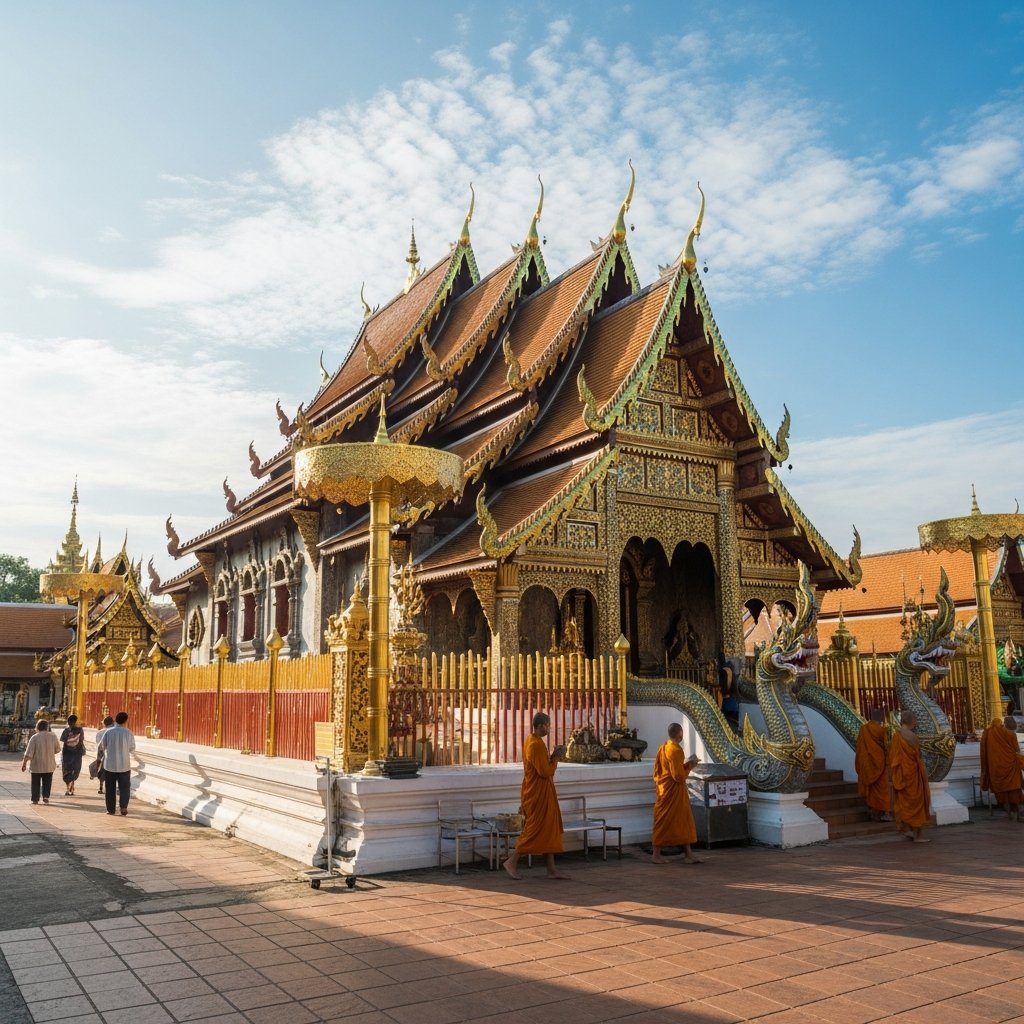
Chiang Mai is the anti-Bangkok. Where Bangkok hits you with traffic, noise, and relentless energy, Chiang Mai wraps you in temple bells, mountain air, and ฿40 khao soi. The Old City is a perfect square of ancient walls and moats covering about 2.5 square kilometers. Seven hundred years of Lanna culture lives in a space you can walk across in 30 minutes.
I first visited Chiang Mai in 2017 thinking I’d stay three days. I stayed twelve. That keeps happening to people. The city has a gravitational pull that’s hard to explain until you’re sitting in a temple courtyard at dawn with no sound except monks chanting and birds.
Here’s what to know before your first visit.
The Old City Layout
Chiang Mai’s Old City is a near-perfect square, roughly 1.6 km per side, surrounded by a moat and fragments of the original 13th-century brick wall. Five historic gates mark the cardinal entry points. Tha Phae Gate on the east side is the most iconic and the one you’ll see on every postcard.
Everything worth seeing on your first visit is either inside the moat or within walking distance of it. This is one of the few Thai destinations where you genuinely don’t need a car or Grab for your core sightseeing.
Orientation: Tha Phae Gate faces east toward the Ping River and the Night Bazaar area. The Sunday Walking Street market runs west from Tha Phae Gate along Ratchadamnoen Road, cutting straight through the center of the Old City.

The 4 Must-Visit Temples
Chiang Mai has over 300 temples. Nobody is visiting all of them. These four inside the Old City are the essential ones. Each represents a different era and style of Lanna architecture, and they’re all walkable from each other.
| Temple | Built | Highlight | Time Needed | Dress Code |
|---|---|---|---|---|
| Wat Chedi Luang | 1391 | Massive ruined chedi, monk chats | 45–60 min | Shoulders + knees covered |
| Wat Phra Singh | 1345 | Finest Lanna art, gold chapel | 30–45 min | Shoulders + knees covered |
| Wat Chiang Man | 1296 | Oldest temple in the city | 20–30 min | Shoulders + knees covered |
| Wat Phan Tao | 14th century | All-teak wooden chapel | 15–20 min | Shoulders + knees covered |
Wat Chedi Luang is the centerpiece. The partially ruined chedi (pagoda) was once the tallest structure in the Lanna kingdom at 82 meters. An earthquake in 1545 brought it down to its current 60 meters. The scale is genuinely impressive even in its damaged state. The temple also runs a popular Monk Chat program (daily, 9 AM–6 PM) where novice monks practice their English with visitors. These conversations are surprisingly candid and one of the most memorable experiences available in Chiang Mai.
Entry: ฿40 for foreigners
Wat Phra Singh houses Chiang Mai’s most revered Buddha image in the Lai Kham Chapel, a small wooden building with the finest Lanna-style murals in northern Thailand. The gold-and-red facade is stunning, but the real art is inside. Go in the morning when sunlight hits the murals through the windows.
Entry: ฿40 for foreigners
Wat Chiang Man is the oldest temple in the city, established by King Mengrai when he founded Chiang Mai in 1296. It’s quieter than the big two, which is part of the appeal. The crystal Buddha (Phra Setangkamani) in the rear chapel is small but has been venerated for over 1,800 years.
Entry: Free
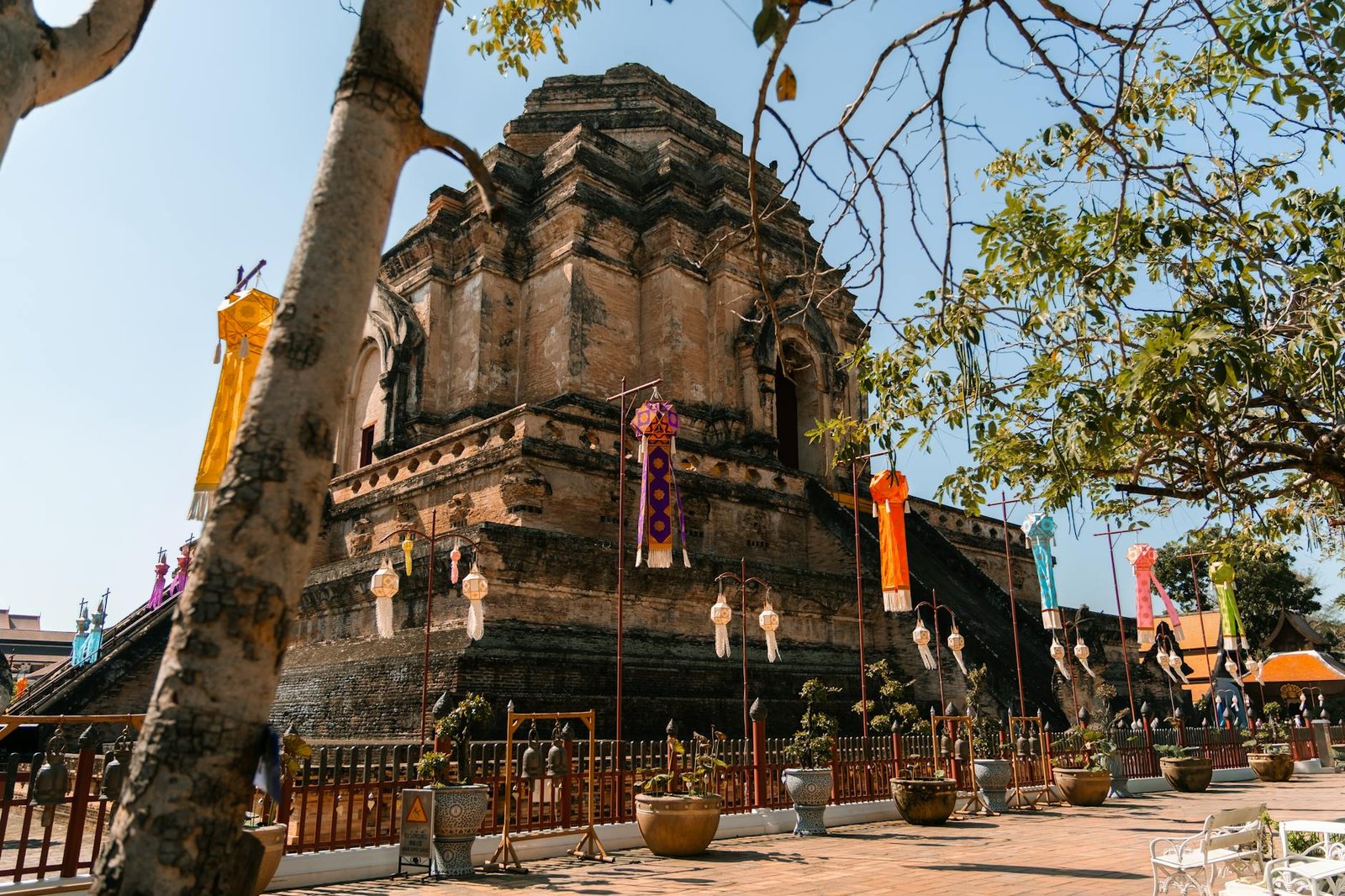
Wat Phan Tao is directly next to Wat Chedi Luang and easily missed. The main chapel is built entirely from teak wood panels: no concrete, no plaster. The simple wooden interior feels completely different from the gold-heavy temples around it. During Yi Peng (November), the temple grounds are decorated with thousands of lanterns, and it’s magical. Even on a normal day, it’s the most peaceful temple in the Old City.
Entry: Free
IMPORTANT
Temples require shoulders and knees to be covered. Keep a sarong or shawl in your bag even if it’s 35 degrees. Shoes come off before entering any chapel building.
Temple-visiting tips: Go early (8–9 AM) before the tour groups arrive. Temples close around 5 PM. Keep a sarong or shawl in your bag even if it’s 35 degrees. You need to cover shoulders and knees. Shoes come off before entering any chapel building. And please don’t pose inappropriately with Buddha statues. Read our royal family etiquette guide: the same principles of respect apply to religious spaces.
Doi Suthep — The Mountain Temple
Wat Phra That Doi Suthep sits at 1,055 meters elevation on the mountain overlooking the city. It’s 16 km from the Old City, and the gold chedi at the top glitters in the sunlight so brightly you can see it from downtown on a clear day.
Getting there:
- Songthaew from the Old City: ฿60 per person (shared, departs from near Tha Phae Gate when full — usually 8–10 people)
- Grab: ฿300–400 one way
- Scooter: Ride up the winding mountain road yourself (30 minutes, scenic but steep)
At the temple, you’ll climb 309 steps of the Naga staircase (or take an elevator for ฿50). The gold chedi at the top is genuinely dazzling, and the terrace offers panoramic views of Chiang Mai. On a clear day you can see the entire city grid and the rice paddies beyond.
Entry: ฿30 for foreigners Best time: Early morning (before 9 AM) for clear views and fewer crowds. Late afternoon works for photos but the haze often builds up.

Sunday Walking Street Market
This is the market that justifies timing your Chiang Mai visit around a Sunday. Every week from 4 PM to roughly 10 PM, Ratchadamnoen Road (the main east-west street through the Old City) closes to traffic and becomes the most atmospheric night market in Thailand.
What makes it different from tourist markets:
- Handmade goods dominate. Instead of the same mass-produced elephant pants you see at every Thai market, you’ll find hand-carved soap flowers, handwoven textiles from hill tribe villages, silver jewelry from local artisans, and paintings by Chiang Mai art students.
- The food is local. Northern Thai street food that you won’t find in Bangkok — sai oua (Chiang Mai sausage), khao kha moo (braised pork leg), khanom jeen nam ngiao (rice noodles in tomato-pork broth), and mango sticky rice that’s made fresh in front of you.
- Temple courtyards become food courts. Several temples along the route open their grounds as eating areas with tables and additional food stalls. These temple food courts are the best-value food on the street.
TIP
Bargaining is acceptable at the Sunday market, but these are not tourist-trap prices. Most items are fairly priced to begin with, so do not haggle aggressively over 20 baht.
Prices: Street food ฿30–80 per dish. Handmade crafts ฿100–500. Clothing ฿150–400. Bargaining is acceptable but these aren’t tourist-trap prices. Most items are fairly priced to begin with, so don’t haggle aggressively over ฿20.
Saturday Night Market on Wua Lai Road (south of the Old City) is the locals’ alternative: same concept, slightly smaller, noticeably fewer tourists. If you’re here on a Saturday, this is worth the visit.
Khao Soi — The Dish That Defines Chiang Mai
“Chiang Mai is the trip that reminds you why you came to Thailand in the first place. The temples are spectacular without being overwhelming, the food is some of the best in the country.”
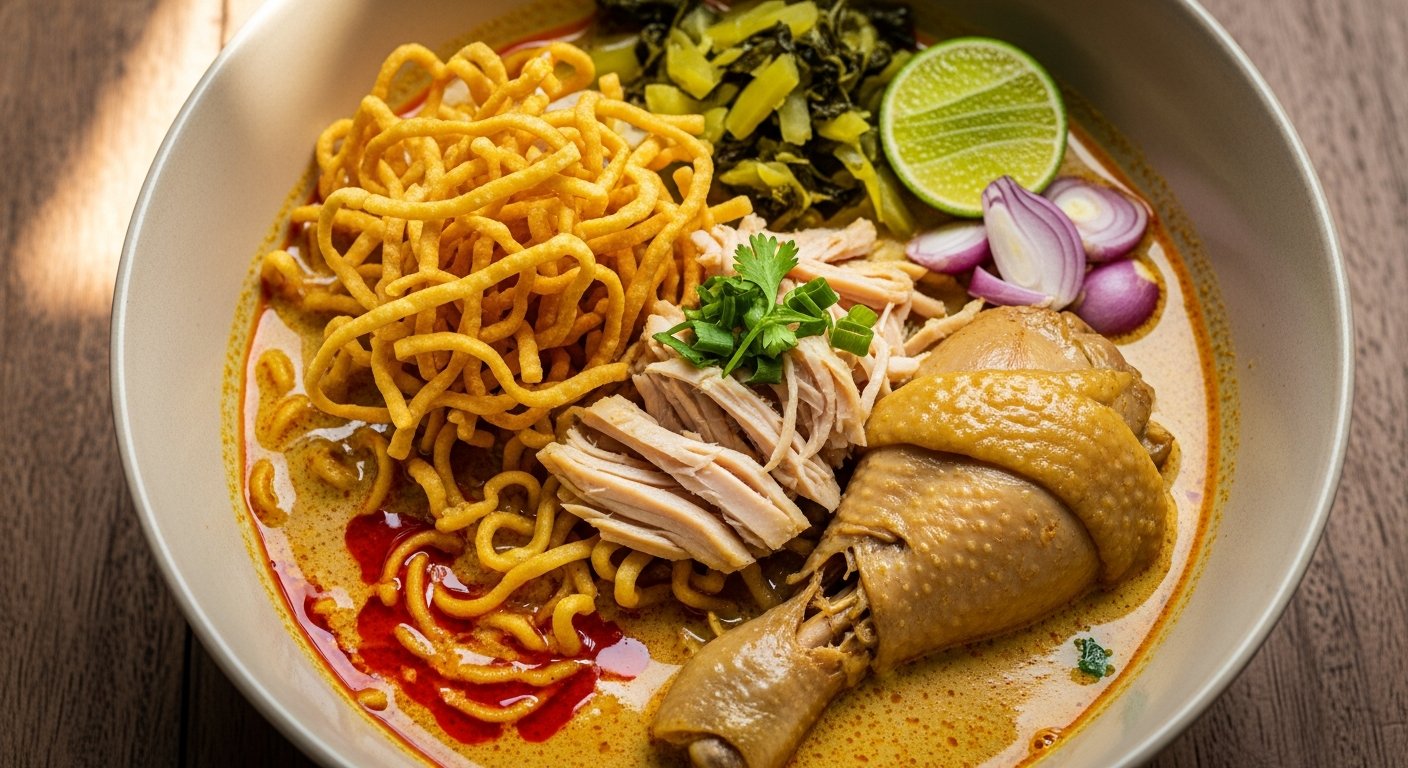
Khao soi is Chiang Mai’s signature dish, and you’ll eat it repeatedly. Egg noodles in a rich, coconut-curry broth topped with crispy fried noodles, pickled mustard greens, shallots, and a squeeze of lime. The combination of creamy, crunchy, tangy, and spicy in one bowl is remarkable.
Where to eat it:
Khao Soi Khun Yai — the one most locals recommend. A no-frills roadside stall north of the Old City that serves one thing and does it perfectly. The broth has depth that restaurant versions can’t match. ฿50 per bowl. Opens 10 AM, closes when the pot is empty (usually by 2 PM). Get there before noon.
Khao Soi Mae Sai — inside the Old City, consistent quality, slightly more tourist-friendly setup. ฿60–80.
Khao Soi Lam Duan Fah Ham — east of the moat, another local favorite with a loyal following. ฿50–60.
| Restaurant | Price | Location | Hours | Queue? |
|---|---|---|---|---|
| Khao Soi Khun Yai | ฿50 | North of Old City | 10 AM–sold out | Yes, weekends |
| Khao Soi Mae Sai | ฿60–80 | Inside Old City | 10 AM–4 PM | Rarely |
| Khao Soi Lam Duan Fah Ham | ฿50–60 | East of moat | 8 AM–4 PM | Sometimes |
Pro tip: Order it with chicken leg (not just chicken pieces). The bone-in leg swimming in the curry broth is the proper way, and it costs the same.
For more Thai street food deep dives, our Yaowarat Chinatown guide covers Bangkok’s best food street in the same detail.
Cooking Classes
Chiang Mai is the cooking class capital of Thailand, and this is one tourist activity that’s genuinely worth it. A full-day class includes a morning market tour (you’ll buy ingredients at a local market with your instructor), followed by 4–6 dishes cooked from scratch.
What to expect:
- Duration: 4–6 hours (half day) or 6–8 hours (full day with market tour)
- Price: ฿800–1,500 for a group class, ฿2,000–4,000 for private
- You’ll cook: pad thai, green curry paste from scratch, tom yum, spring rolls, mango sticky rice, and usually 1–2 more
- You eat everything you cook
Recommended schools: Thai Farm Cooking School (farm setting outside the city, includes garden tour), Mama Noi Thai Cookery School (Old City location, smaller groups), and Asia Scenic Cooking School (well-organized, good for beginners).
Book at least a day in advance — the good schools fill up, especially during high season (November–February).
The Digital Nomad Scene
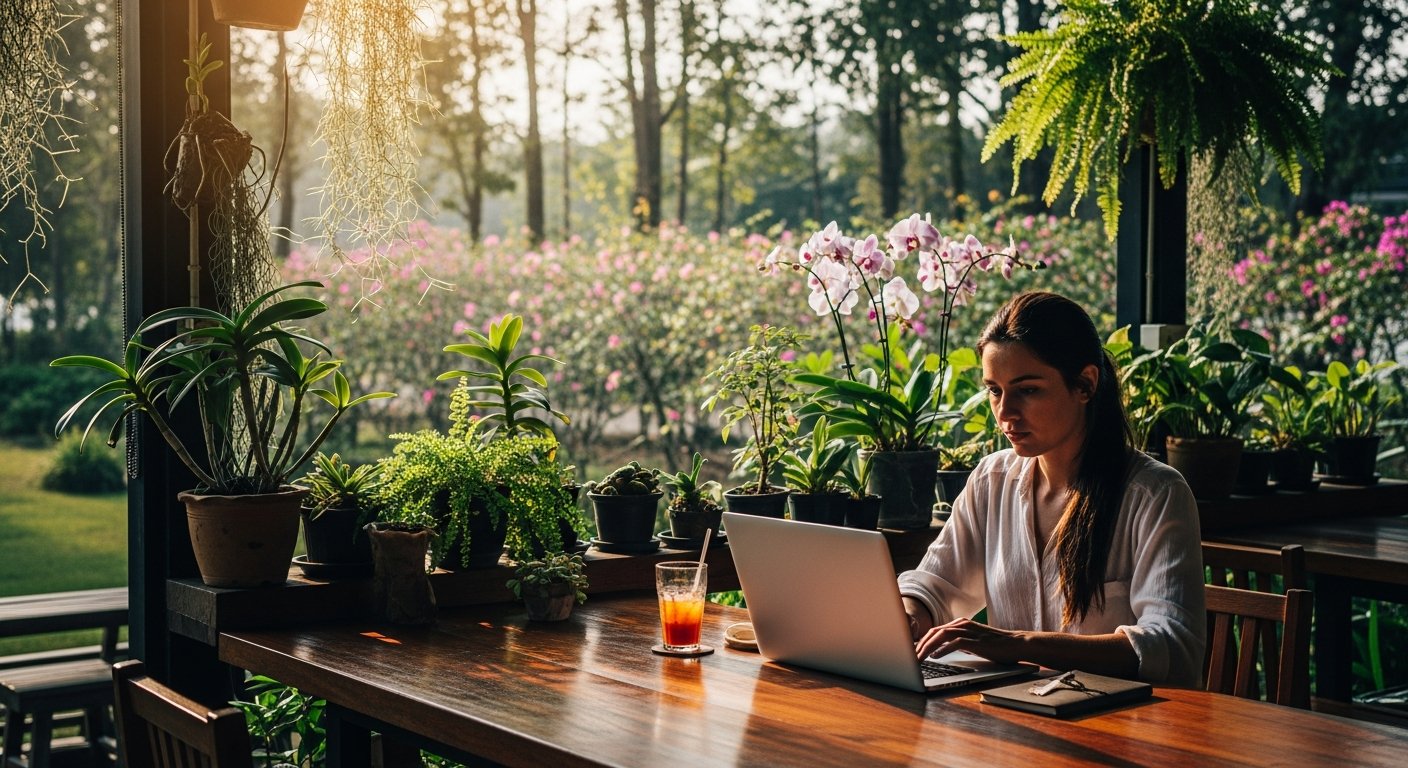
Chiang Mai has been the unofficial capital of the digital nomad world since around 2014, and the infrastructure reflects it. The Old City and Nimmanhaemin Road (“Nimman”) are packed with co-working spaces and cafes where you can work on fast Wi-Fi for the price of a latte.
Why nomads love it:
- Cost of living: ฿20,000–35,000/month for comfortable living (apartment + food + co-working)
- Internet: 100+ Mbps fiber is standard at co-working spaces
- Cafe density: possibly the highest per capita in Southeast Asia
- Community: meetups, events, co-living spaces — you’ll meet people immediately
Top co-working spots: Punspace (Old City and Nimman locations), CAMP at Maya Mall (free, run by AIS), Yellow (newer, good vibes on Nimman).
Nimman Road, about 1.5 km west of the Old City, is the hipster/nomad neighborhood — trendy cafes, boutique shops, and more English menus than Thai. It’s the Ekkamai of Chiang Mai. Some people love it, some find it too gentrified. Either way, the coffee is excellent.

Practical Information
NOTE
March through April brings the burning season. Farmers burn their fields and the air quality drops dramatically. The haze can be severe enough to ruin outdoor plans entirely.
Best time to visit: November through February is cool (15–25 degrees C), dry, and clear. This is Chiang Mai’s peak season and genuinely the best weather in Thailand. March through April brings the burning season: farmers burn their fields and the air quality drops dramatically. The haze can be severe. May through October is rainy season with afternoon storms, but mornings are usually clear and the hills are lush green.
Getting there from Bangkok:
| Transport | Time | Cost | Note |
|---|---|---|---|
| Flight | 1.5 hours | ฿1,000–3,000 | AirAsia, Nok Air, Thai Lion — book early |
| Train | 12–14 hours | ฿800–1,800 | Overnight sleeper, surprisingly comfortable |
| Bus | 9–10 hours | ฿500–800 | Air-con VIP class recommended |
The overnight train is a Thai travel classic. A second-class sleeper with air-con costs around ฿1,000, departs Bangkok Hua Lamphong at 6 PM, and arrives Chiang Mai at 7 AM. You save a night’s hotel cost. Book through the 12Go website at least a week ahead.
Getting around the Old City: Walk. Almost everything is within a 15-minute walk. For Doi Suthep and Nimman, use songthaews (฿30–60) or Grab (฿80–200). Bicycle rental is ฿50–100/day and is excellent for the flat Old City streets. For Bangkok transportation tips, we have a separate detailed guide.
Budget: Chiang Mai is significantly cheaper than Bangkok and Phuket. A comfortable daily budget is ฿1,000–1,500 (accommodation, food, transport, temple entries). Backpackers can manage ฿500–800. The savings come from lower food costs (street food ฿30–60), cheaper accommodation, and most sightseeing being free or under ฿50.
The Bottom Line
Chiang Mai is the trip that reminds you why you came to Thailand in the first place. The temples are spectacular without being overwhelming, the food is some of the best in the country, and the pace is slow enough to actually enjoy where you are.
For managing your money in Chiang Mai, the same currency exchange tips apply. Basic Thai phrases go even further outside Bangkok, and tipping etiquette is the same nationwide.
Give it at least three full days — one for Old City temples, one for Doi Suthep and a cooking class, one for the market and Nimman neighborhood. Come on a weekend to catch the Sunday Walking Street. And eat khao soi at Khun Yai before noon, because when the pot is empty, it’s empty.


