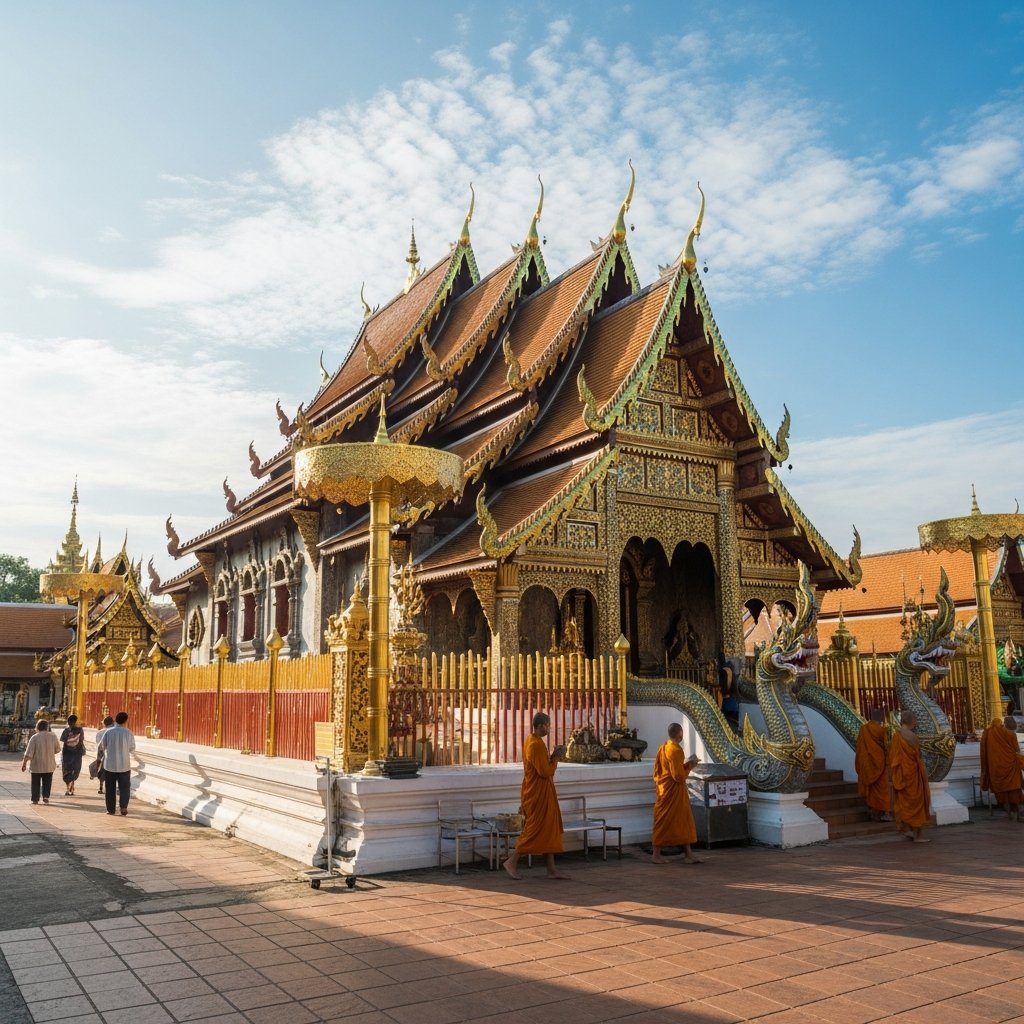
Chiang Mai has more than 300 temples inside the city and surrounding mountains. That’s roughly one temple for every 1,000 residents. You cannot see them all, and you shouldn’t try. Temple fatigue is real. By the fifth temple of the day, every golden chedi looks the same and every Buddha image blurs into the next.
The cure is selectivity. Eight temples in Chiang Mai are genuinely worth your time, each for a different reason. Three famous ones are tourist traps that guide books refuse to call out. Here’s the honest list.
The 8 Worth Your Time
1. Wat Phra That Doi Suthep, The Mountain Temple
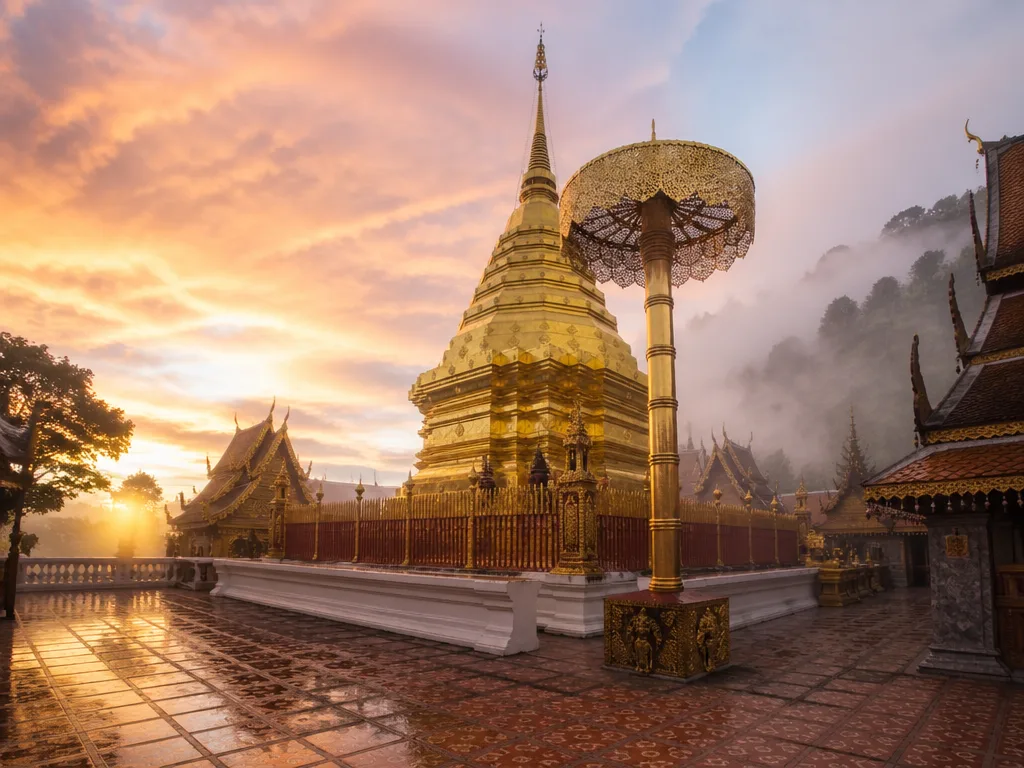
The one you can’t skip. Perched at 1,076 meters on Doi Suthep mountain, 15 km west of the city, this is Chiang Mai’s most sacred temple and the symbol of the city. The 309-step Naga staircase (or a funicular if your legs disagree) leads to a golden chedi said to enshrine a relic of the Buddha.
Why it’s worth it: The panoramic view of Chiang Mai and the surrounding valley from the terrace. On a clear morning, you can see the entire city grid below. The temple itself is impeccably maintained, covered in gold leaf, with detailed murals and a continuous stream of Thai pilgrims making merit.
When to go: 6:30 AM (opens at 6:00). By 10:00 the tour buses arrive. Sunset is beautiful but more crowded. Getting there: Songthaew (red truck) from Chiang Mai Zoo entrance, ฿60/person. Private Grab: ฿250 to 400. Admission: ฿30. Time needed: 45 to 90 minutes including the climb.
2. Wat Chedi Luang, The Ruined Giant
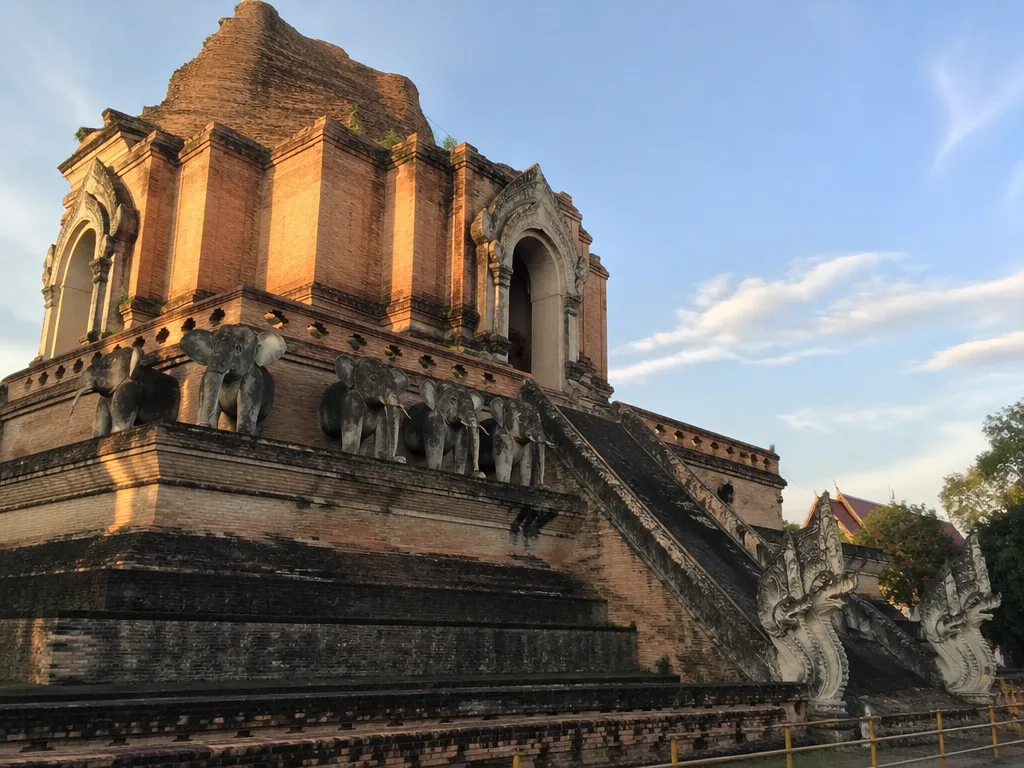
The largest ancient structure in Chiang Mai’s Old City. Built in 1401, the central chedi once stood 82 meters tall, roughly as high as Wat Arun in Bangkok. An earthquake in 1545 collapsed the upper portion, leaving a massive brick ruin that’s been partially restored but deliberately left incomplete. The scale is impressive even in ruin.
Why it’s worth it: The raw, unpolished grandeur. Unlike the gold-leaf perfection of most Thai temples, Wat Chedi Luang shows you what these structures look like after 600 years. The Naga staircase on the eastern side and the three elephant sculptures at the base are iconic.
Bonus: The City Pillar Shrine (Lak Muang) is in the same compound. And the “Monk Chat” program where monks practice their English with visitors under the trees most afternoons. Genuine cross-cultural exchange.
When to go: Late afternoon for warm light on the brick. Location: Center of Old City, Phra Pokklao Road. Admission: ฿40. Time needed: 30 to 60 minutes.
3. Wat Phra Singh, The Lanna Jewel
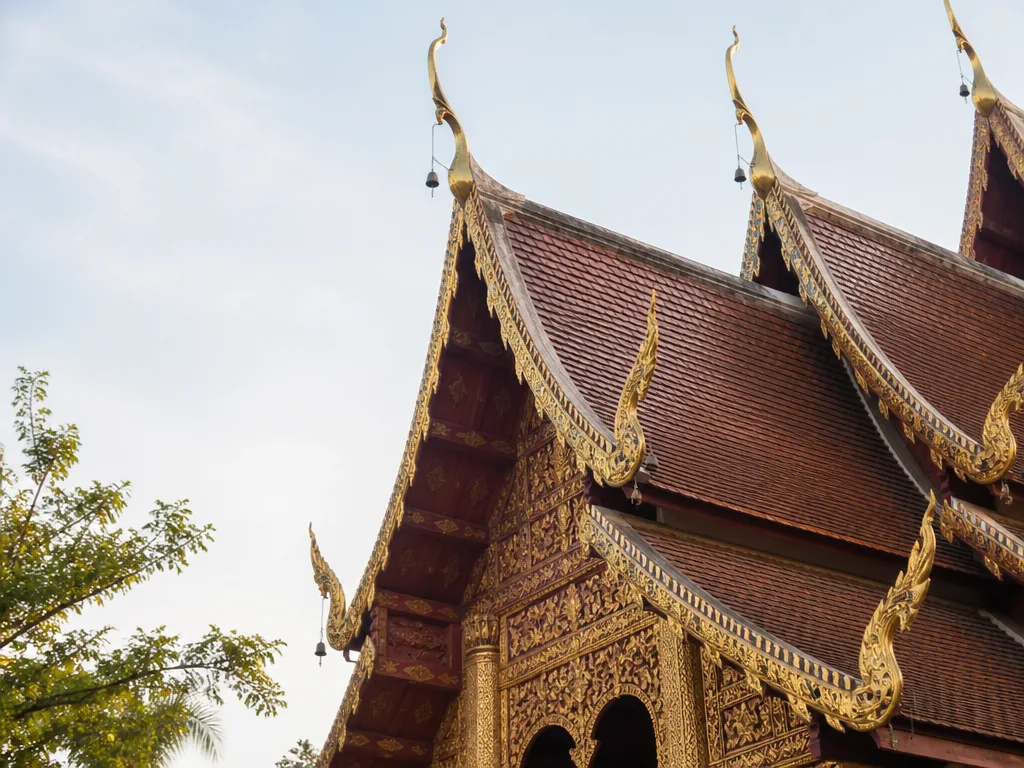
The most revered temple in the Old City and the home of Chiang Mai’s most important Buddha image, Phra Buddha Sihing. The Lanna-style architecture here is some of the finest in northern Thailand: multi-tiered roofs, intricate woodcarving, and gilded naga finials.
Why it’s worth it: Lai Kham chapel (the small building behind the main viharn) contains the most beautiful murals in Chiang Mai. 19th-century paintings depicting northern Thai life, now protected but still visible.
When to go: Morning. The compound is peaceful before tour groups. Location: Western end of Ratchadamnoen Road, Old City. Admission: ฿40. Time needed: 30 to 45 minutes.
4. Wat Suan Dok, The Royal Cemetery
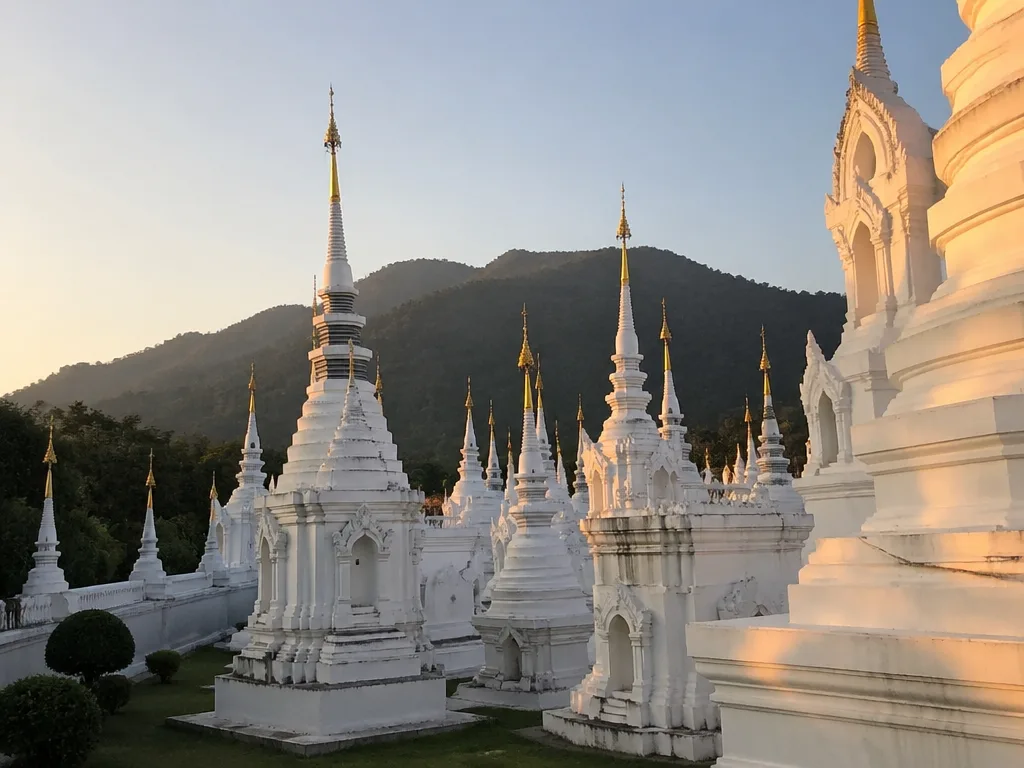
A 14th-century temple west of the Old City moat, notable for its cluster of white chedis containing the ashes of Chiang Mai’s royal family. The contrast of bright white stupas against Doi Suthep mountain behind them is one of the most photogenic scenes in the city.
Why it’s worth it: The royal cemetery, the massive open-air viharn (unusual design), and a calmer atmosphere than the Old City temples. Monk Chat is also available here.
When to go: Late afternoon for golden light on the white chedis. Location: Suthep Road, west of Old City. Admission: Free. Time needed: 20 to 40 minutes.
5. Wat Umong, The Tunnel Temple
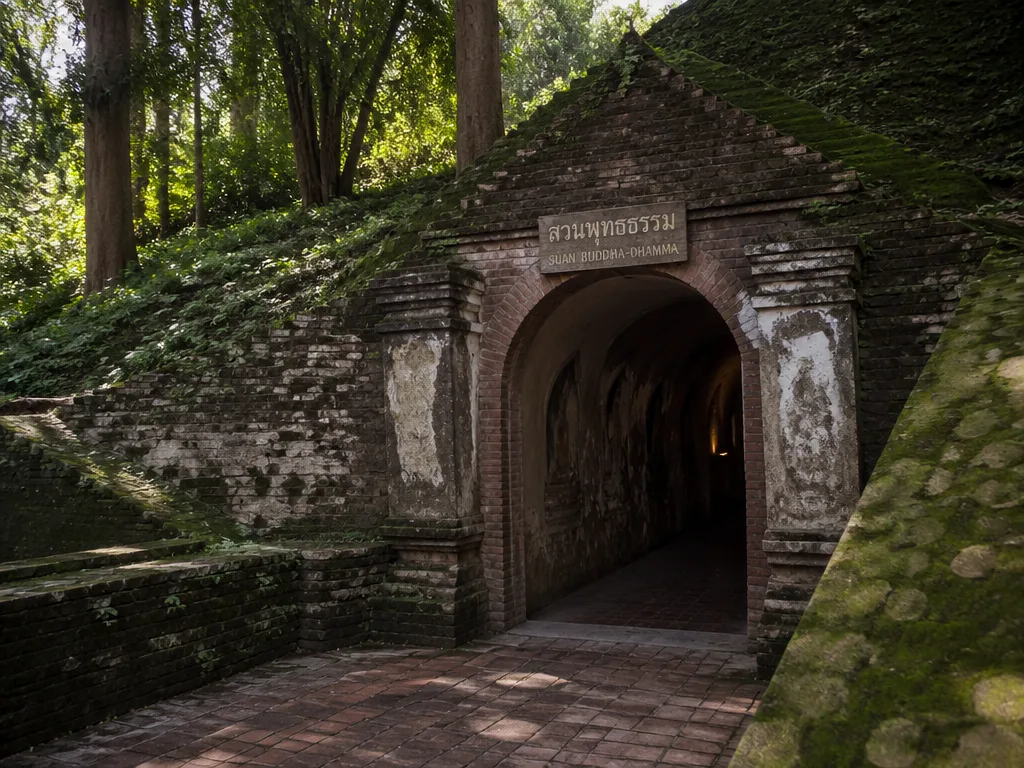
A forest temple at the base of Doi Suthep, built in the 14th century. Underground tunnels with ancient faded murals lead to meditation chambers. Above ground, the forested compound has walking paths, a lake, and a distinctly different atmosphere from any other Chiang Mai temple. More contemplative monastery than tourist attraction.
Why it’s worth it: The tunnels are unique in Thai temple architecture. The forest setting is a welcome change from the concrete Old City. Actual monks meditate here, giving it a spiritual weight that some popular temples lack.
When to go: Morning for the forest atmosphere. Location: West of Old City, near CMU campus. Songthaew or Grab (฿100 to 150). Admission: Free. Time needed: 45 to 75 minutes.
6. Wat Sri Suphan, The Silver Temple
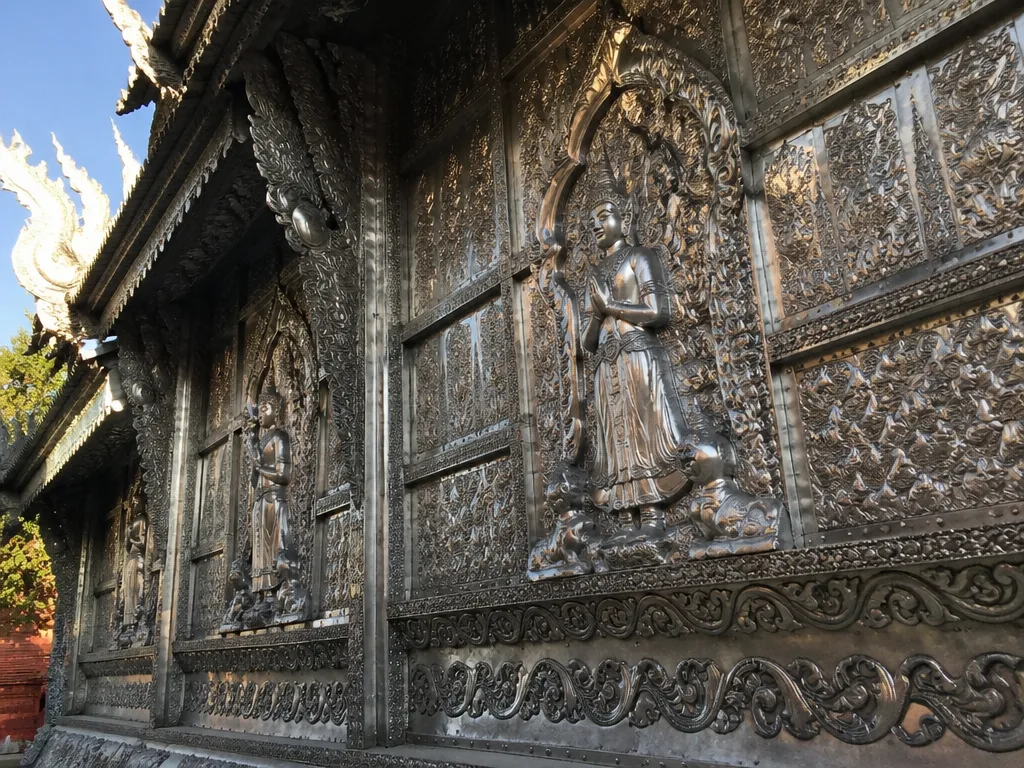
A working temple in the Wualai silver-smithing district. The ordination hall is covered entirely in hammered silver and aluminum: walls, ceiling, decorative panels. Artisans from the surrounding silversmith community built it by hand.
Why it’s worth it: Visually unlike any other temple in Thailand. The silver work catches light in ways that gold doesn’t. Saturday night, the temple is part of the Wualai Walking Street night market.
Note: Women cannot enter the silver ubosot (ordination hall). This is a traditional Thai Buddhist restriction that applies at some temples.
When to go: Saturday evening (combine with Walking Street market). Location: Wualai Road, south of Old City. Admission: Free (donation encouraged). Time needed: 20 to 30 minutes.
7. Wat Pha Lat, The Jungle Temple
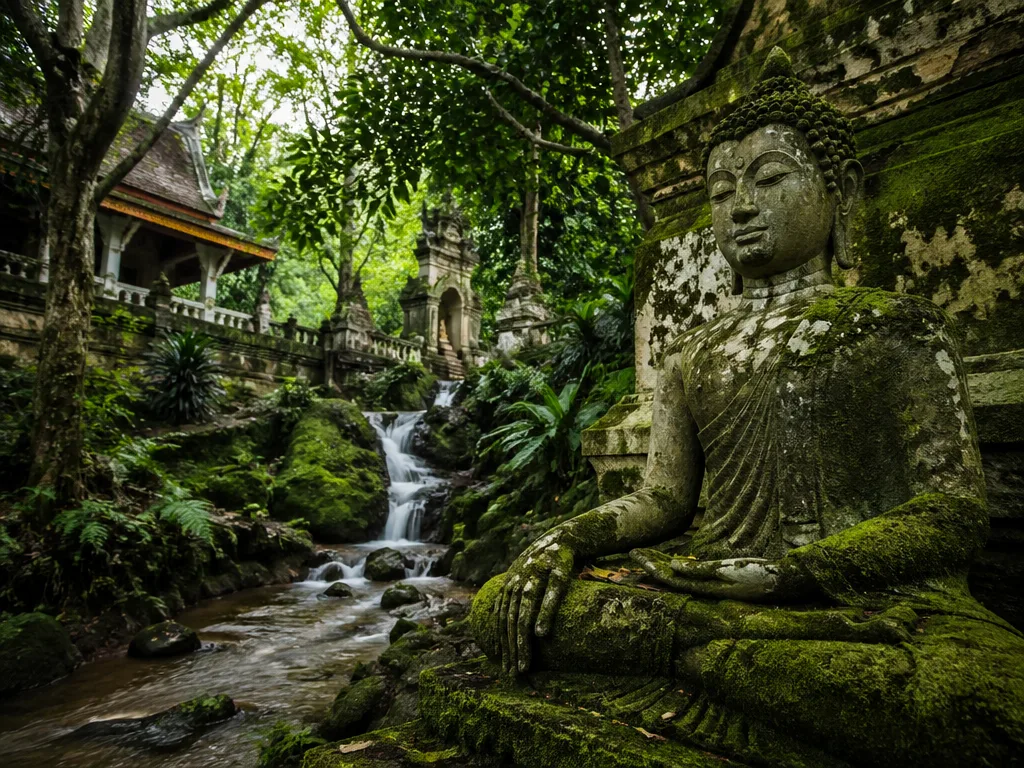
A hidden temple on the road up to Doi Suthep, set into the mountainside with a waterfall, moss-covered statues, and a forest canopy overhead. Most visitors drive past it on the way to Doi Suthep without knowing it’s there. A short trail from the Monk’s Trail hiking path leads directly to it.
Why it’s worth it: The atmosphere. This is a functioning monastery with monks in residence, waterfalls flowing through the grounds, and zero tour buses. Photographers love it. The combination of jungle, water, and ancient stone is uniquely photogenic.
Getting there: Monk’s Trail (1 km hike from Suthep Road trailhead) or Grab to the temple gate. Admission: Free. Time needed: 30 to 60 minutes.
8. Wat Lok Molee, The Quiet Heavyweight
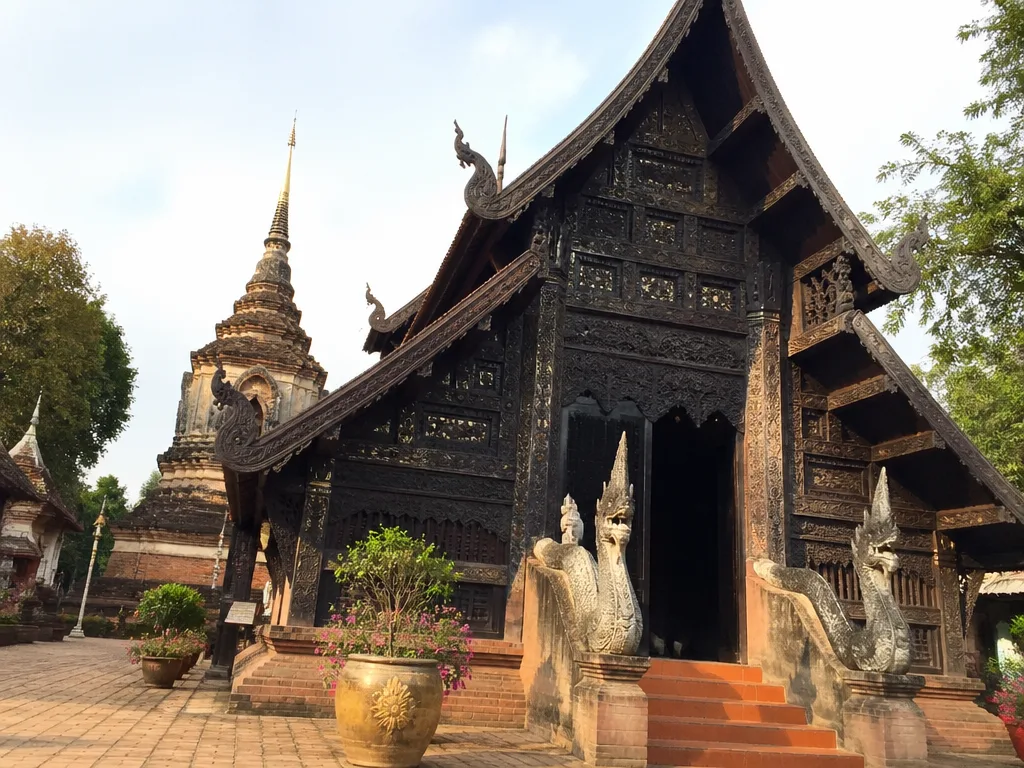
A small, ancient temple on the north side of the Old City moat that most tourists walk past. The wooden viharn is considered one of the finest examples of Lanna architecture in existence. The massive brick chedi behind it dates to the 15th century. And yet, you’ll often be the only visitor.
Why it’s worth it: Genuine Lanna craftsmanship without the crowds. The carved wooden gables, the quiet compound, the sense of stumbling onto something real.
Location: Manee Nopparat Road, north of Old City moat. Admission: Free. Time needed: 15 to 25 minutes.
The 3 Tourist Traps
Wat Rong Khun (White Temple, Chiang Rai)
Technically in Chiang Rai (3 hours away), but every Chiang Mai tour operator sells day trips here. It’s a modern art installation by Chalermchai Kositpipat, not a functioning temple. Visually striking in photos, and that’s the problem. In person, the grounds are crowded, the visit takes 30 minutes, and you’ve spent 6 hours in a van for it. Go to Chiang Rai for 2+ days or skip.
The “Tiger Temple” Experience
Various “tiger kingdom” attractions near Chiang Mai charge ฿800 to 1,500 to pose with sedated tigers. These are not temples. They’re commercial animal attractions with questionable animal welfare. Avoid.
Doi Suthep at Peak Hours (10 AM to 2 PM)
Doi Suthep itself isn’t a trap, but visiting during peak hours turns a sacred mountain temple into a crowded souvenir gauntlet. Go at 6:30 AM or after 4:00 PM.
The Ideal Temple Route
Half-Day Old City (3 to 4 hours)
Morning: Wat Chedi Luang → Wat Phra Singh → Wat Lok Molee → coffee at one of the Old City cafés.
Full Day with Doi Suthep (6 to 7 hours)
Early morning: Doi Suthep (6:30 AM) → Wat Pha Lat (hike down or Grab) → Wat Suan Dok → lunch → Wat Chedi Luang → Wat Phra Singh.
Culture Day (combine with activities)
Morning: Wat Umong → lunch at Khao Soi Khun Yai → afternoon cooking class. See our Chiang Mai food guide for restaurant picks.
Practical Notes
Dress code: Same as Bangkok. Shoulders and knees covered at all temples. Chiang Mai is more relaxed than the Grand Palace, but still enforced at major temples.
Shoes off: Always, when entering any building.
Donations: Most small temples survive on donations. ฿20 to 50 per temple is appropriate if you value the experience.
Monk etiquette: Don’t touch monks (especially women). Don’t point feet at Buddha images. Don’t sit higher than monks.
Temple hours: Most open 6:00 to 17:00 or 18:00. Doi Suthep is 6:00 to 18:00. Night visits are generally not possible except during festivals (Yi Peng / Loi Krathong).
For Old City orientation and logistics, see our Chiang Mai Old City guide. Nightlife after temples: Chiang Mai nightlife. Massage: Chiang Mai massage.
Further Reading
- Chiang Mai Old City guide, getting around the moat
- Chiang Mai food guide, khao soi and beyond
- Chiang Mai nightlife, after dark in the north
- Chiang Mai massage, Lanna-style spa
- Chiang Mai digital nomad, long-term living
- Bangkok temple tour, the capital comparison
- Thailand 7-day itinerary, full trip planning