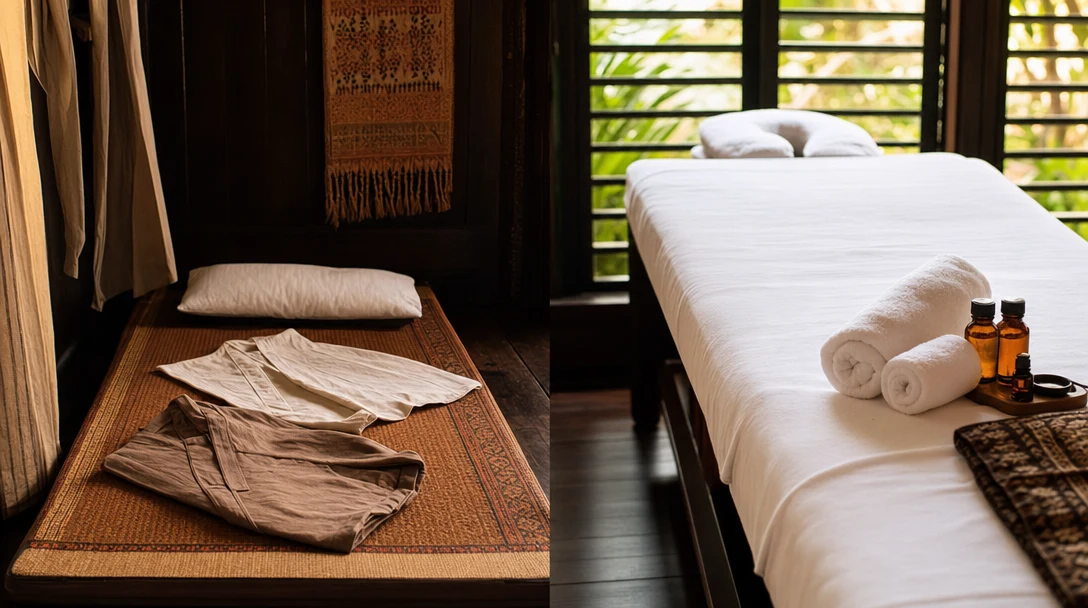
Chiang Mai does massage differently. The techniques draw from a separate lineage, Lanna massage, with influences from Burmese, Shan, and highland healing practices. The most famous massage school in the country operates out of a former women’s prison and it’s genuinely one of the best massages you can get in Thailand. And the city’s herbal sauna culture, built around mountain-grown herbs, is a scene in itself.
After several years of getting massages across Thailand, and writing our Thai massage guide as the reference frame, I can tell you that Chiang Mai is the one city where I’d extend a trip specifically for the spa experiences. Here’s what’s actually worth your time.
Lanna vs Central Thai Massage, The Real Difference
Most tourists assume “Thai massage is Thai massage.” It isn’t. Lanna-style massage, the northern tradition, uses different techniques, pressure patterns, and herbal applications than the central Thai (Bangkok) style.
Central Thai (Bangkok-style) massage: More assertive stretching, acupressure point work, the famous “Thai yoga” stretches where the therapist uses their body weight against yours. Broadly the style you’ll find at Wat Pho and most Bangkok shops, see our Wat Pho massage guide for the lineage.
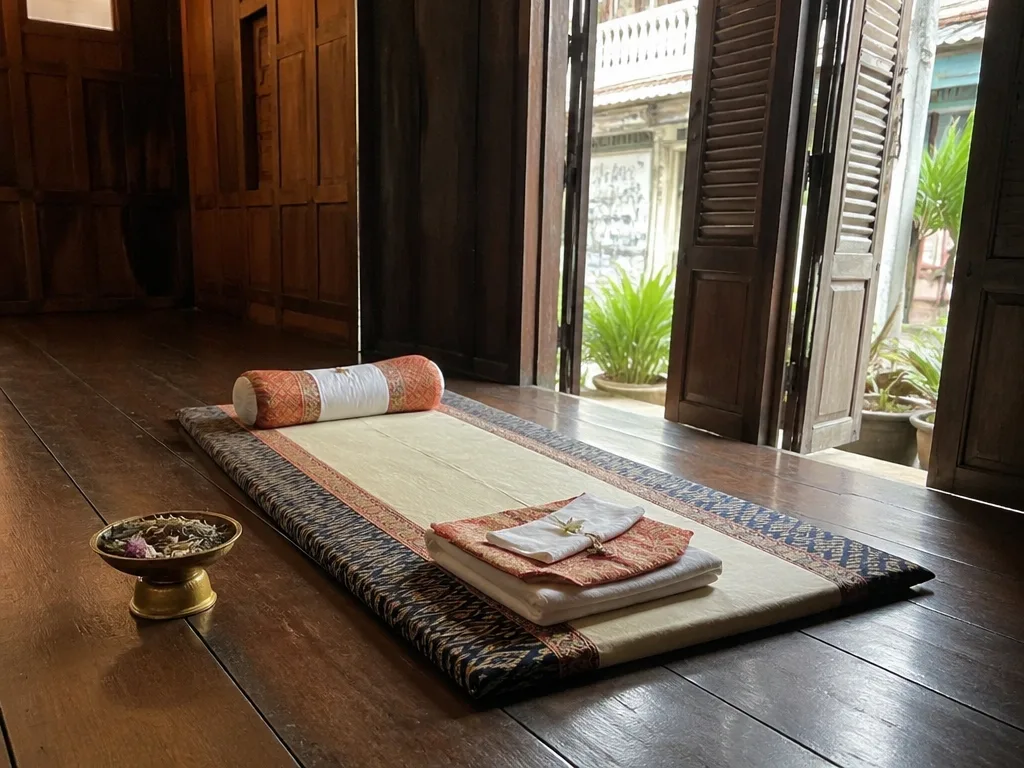
Lanna (Chiang Mai-style) massage: Slower, more rhythmic, heavier emphasis on specific meridian lines (called “sen” in Thai, similar to the concept of chakras or Chinese meridians). Less aggressive stretching, more sustained pressure. Often includes herbal hot compress (luk pra kop) as a standard part of the session rather than a paid add-on.
In practice: if Bangkok Thai massage sometimes leaves you sore or over-stretched, Lanna style tends to leave you feeling like you slept 10 hours.
Both are “Thai massage.” Both are legitimate lineages. Lanna is rarer outside the north, which is why Chiang Mai is the place to experience it.
The Women’s Correctional Institution Massage Center
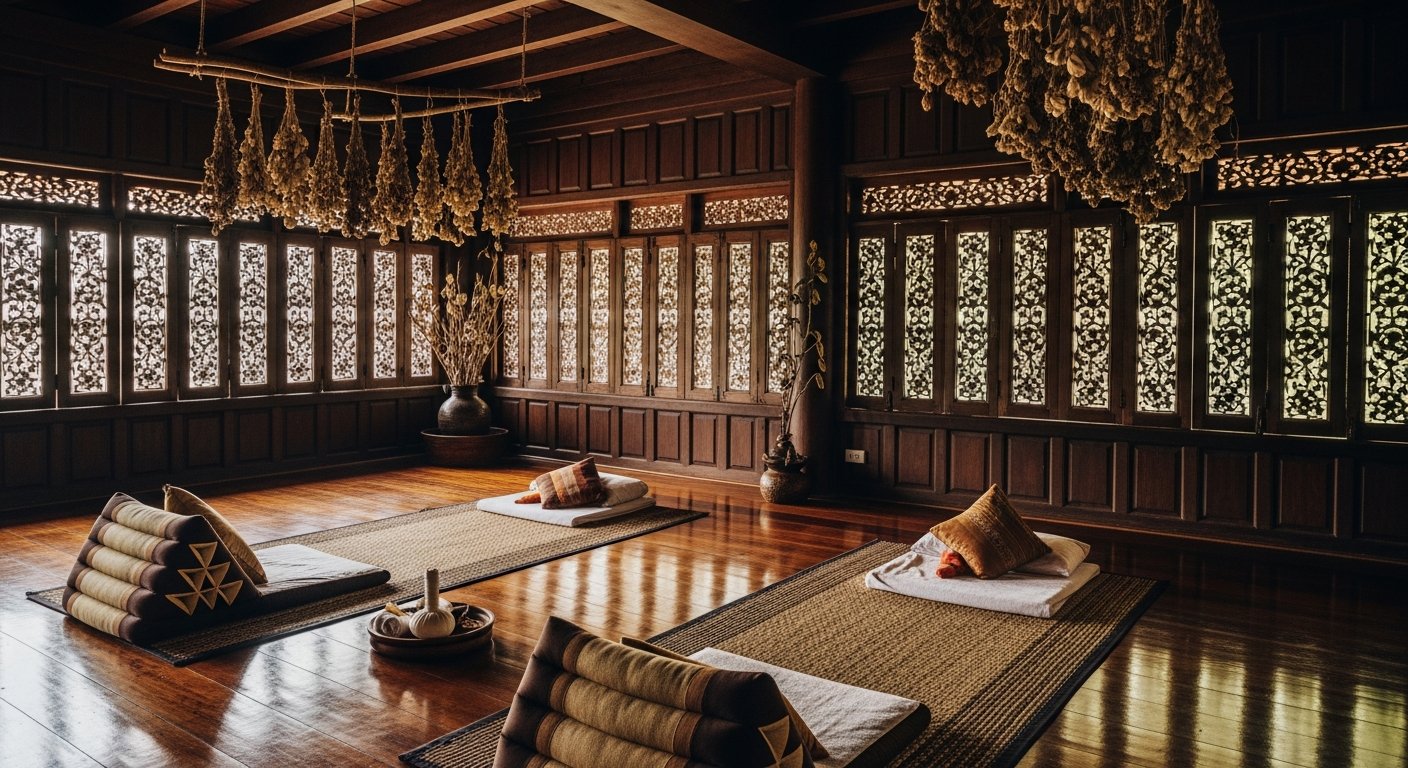
This is the famous one. The Chiang Mai Women’s Correctional Institution runs a vocational rehabilitation program where female inmates nearing release are trained in traditional Thai massage over months of full-time instruction. When they graduate, they work at a public massage shop run by the prison, Women’s Massage Center by Ex-Prisoners: where they earn income and build professional hours before re-entering society.
The massage quality is excellent. These women practiced for hundreds of hours on each other before ever touching a paying customer, and the program has a strict quality standard because it’s a public-facing vocational credential. Most customers who try it rate it among their best Thailand massages.
The basics:
- Location: 100 Rachawithi Road, Old City (near the government complex on the Old City’s west side)
- Price: ฿250 for a 1-hour Thai massage (roughly half the price of tourist-district shops)
- Booking: Walk-in only. No phone bookings, no online booking. Arrive before 11 AM for a same-day slot, or accept a 1–2 hour wait.
- Hours: Daily 8 AM – 4:30 PM. Last massage typically starts 3:30 PM.
- What to expect: Clean facility, simple changing rooms, Thai-style pants and shirt provided. Shared massage hall with curtain partitions (not private rooms). Standard Thai massage, oil massage, foot reflexology available.
Tipping: ฿50–100 is standard and goes directly to the therapist. The program is explicit that tips don’t reduce the massage fee split, the therapist keeps 100% of tip income. For the broader context on tipping in Thailand, see our tipping guide.
IMPORTANT
A second similar program, Lila Thai Massage, was founded by a former director of the Women’s Correctional program and hires its graduates. Several locations around the Old City. Same quality, more availability, slightly higher prices (฿300–400 per hour). A good backup if the main Women’s Massage Center has a long wait.
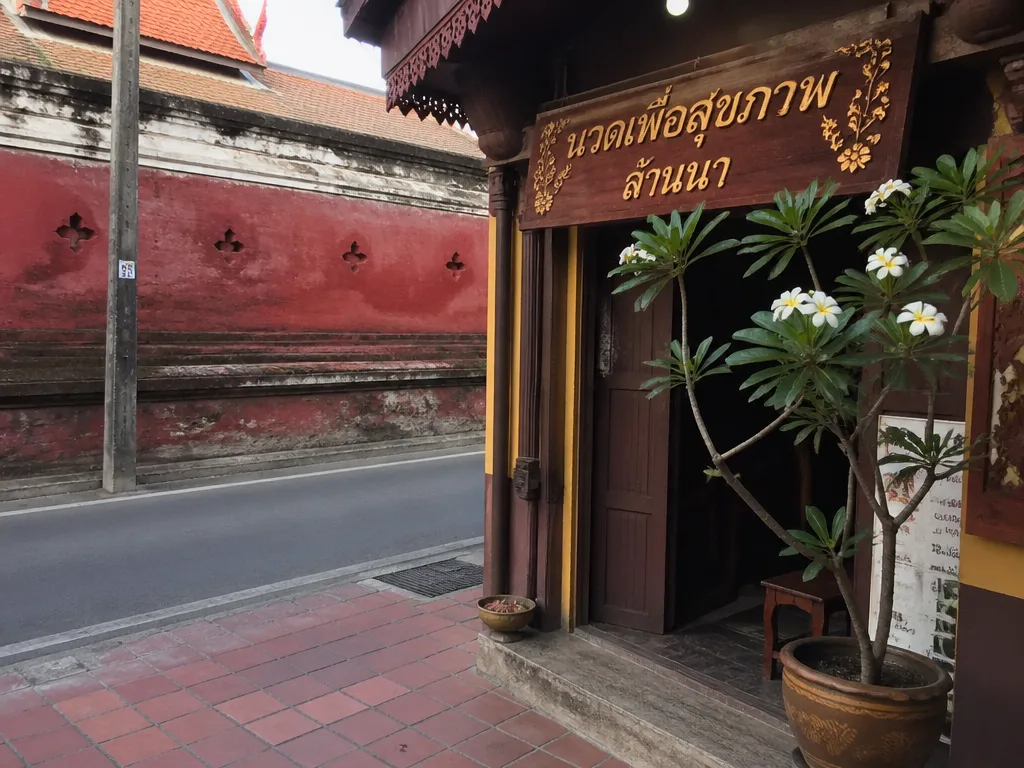
Mid-Tier Local Shops (฿250–500 range)
Outside the prison program, Chiang Mai has dozens of ฿250–500 shops serving a mix of locals and tourists. Quality varies, but a few consistently deliver:
Fah Lanna Spa
The “nice middle” of Chiang Mai spas. Multiple locations, consistent quality, atmospheric converted-shophouse buildings, traditional techniques. ฿900 for a 2-hour Lanna massage is one of the better value propositions in the city.
Ban Sabai Village
Garden-setting spa just outside the Old City. Northeast-facing bungalows, full bar service, Lanna-specific treatments. ฿1,200–1,800 for 2-hour packages. Good for couples’ trips.
Khomapastr / Oasis Spa (old town branch)
Chiang Mai’s local high-end option. Not as famous as the Bangkok luxury spas we covered in our Bangkok luxury spas guide, but half the price with comparable quality. ฿2,500–3,500 for signature packages.
Let’s Relax (Nimman branch)
Thailand’s mid-premium chain. Reliable, corporate, no surprises. ฿800–1,400 for standard packages. Safe choice for first-timers who want a professional environment.
How to tell a shop is legitimate: Menu lists specific treatments with minute counts. Prices are posted visibly. The shop accepts walk-ins and offers oil massage. Therapists wear uniforms. If any of these are missing, walk to the next shop, in Chiang Mai there’s always a next shop within 100 meters.
Street Massage, The ฿200 Level
Chiang Mai has street-level massage shops at every Old City gate and along Nimman’s main drag. ฿200–250 for a 1-hour Thai massage, ฿300–400 for an hour of foot reflexology with Thai massage added.
Our street massage guide covers how to evaluate these shops, the logic is identical in Chiang Mai. The short version: well-lit, multiple chairs visible, no aggressive street pullers, therapists not on their phones. That’s 90% of the quality check.
Street massage hot zones in Chiang Mai:
- Tha Phae Gate area, lots of options, tourist-priced
- Nimman Soi 3 and Soi 11, mid-tier, cleaner
- Chang Khlan Road (Night Bazaar area), dense concentration, quality varies
Street massage in Chiang Mai runs slightly cheaper than Bangkok equivalents. It’s a legitimate option for quick treatments after a long walk, don’t look for therapeutic depth, look for decent hands and a comfortable chair.
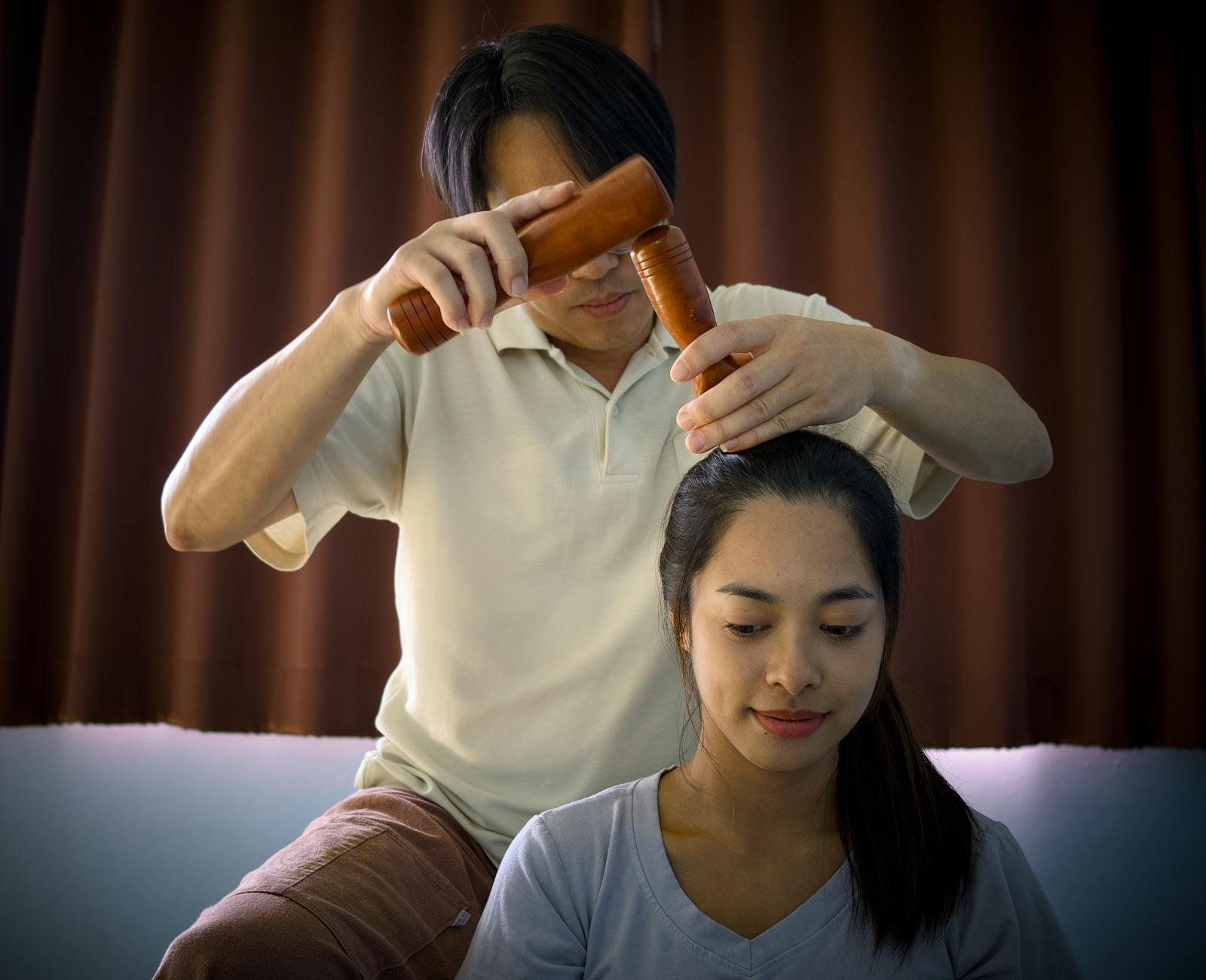
Herbal Compress and Herbal Sauna (Sawana)
Chiang Mai’s herbal treatments are where the northern tradition really differentiates itself. Most tourists skip these because they don’t know what to ask for. Don’t make that mistake.
Luk Pra Kop (Herbal Hot Compress)
A cloth-wrapped bundle of steamed herbs, kaffir lime, lemongrass, turmeric, tamarind leaves, camphor, pressed against the body in rhythmic strokes. Used during or after a Thai massage. The hot compress opens pores, releases herbal oils, and warms muscle tissue before deeper work.
What to ask for: “Lanna massage with herbal compress” or “luk pra kop”. Fah Lanna Spa and Ban Sabai Village include it as part of their 2-hour packages. Most mid-tier shops offer it for ฿150–300 as an add-on.
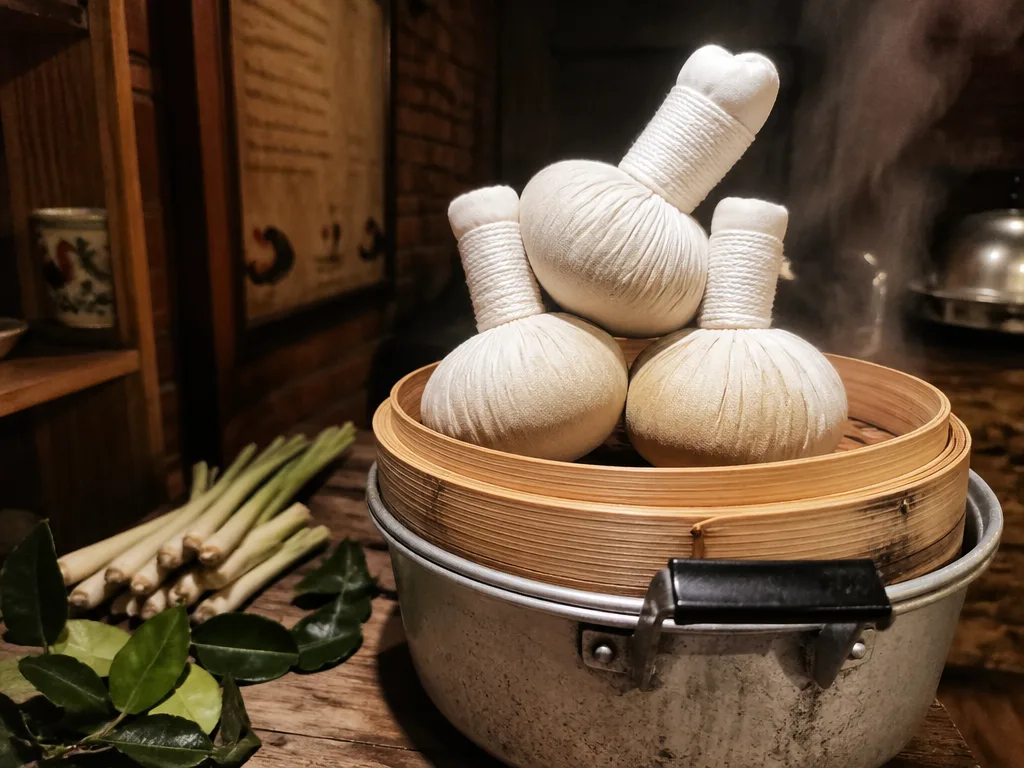
Herbal Sauna (Sawana)
A small wooden sauna infused with fresh steamed Thai herbs. You sit in aromatic steam for 15–20 minutes, cool off, repeat for 2–3 cycles. Traditionally used for postpartum recovery and now part of many Chiang Mai spa protocols.
Where to try it:
- Oasis Spa (luxury version, ฿500 for 30 minutes access)
- Wat Suan Dok’s Monk Chat & Sauna program (community-run, donation-based, roughly ฿100)
- Green Bamboo Organic Farm Spa (countryside, full day package ฿2,500 includes lunch, massage, sauna)
The Wat Suan Dok program is the hidden gem, it’s run as a community wellness program and the donation is suggested at ฿100. You get a basic wooden sauna with fresh herbs, simple changing rooms, and the atmospheric backdrop of an active temple. Very different from the commercial spa experience.
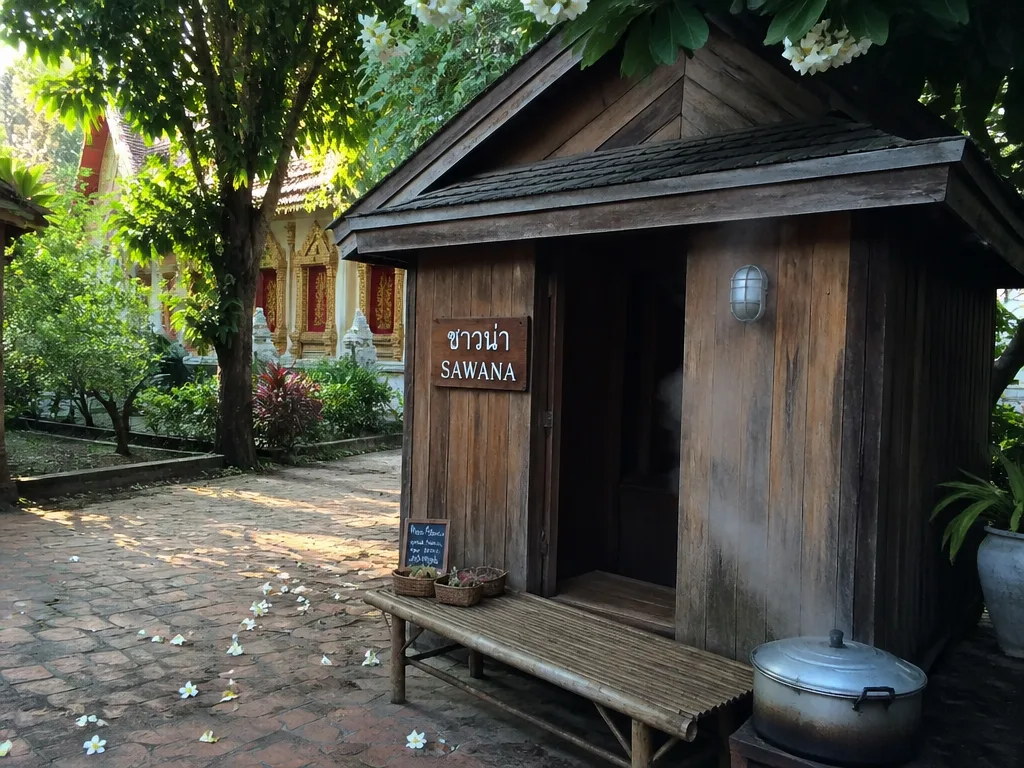
Traditional Massage Schools, For Serious Interest
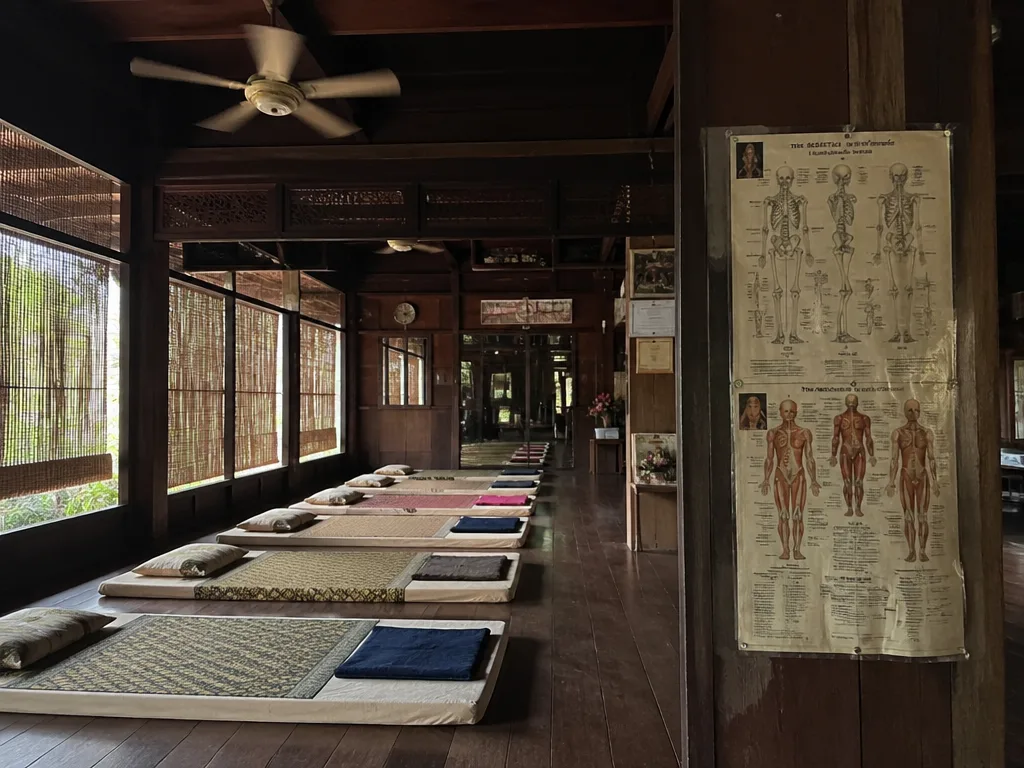
If you want to learn Thai massage (or just experience the teaching-clinic model), Chiang Mai has Thailand’s best schools.
| School | Style | Price | Duration |
|---|---|---|---|
| ITM (International Training Massage) | Central Thai | ฿9,500 | 5-day foundation |
| Old Medicine Hospital (OMH) | Lanna traditional | ฿8,000 | 5-day Level 1 |
| Nerve Touch | Nerve-line specialist | ฿6,500 | 3-day |
| Lek Chaiya (Jap Sen) | Nerve-line reformer style | ฿15,000 | 5-day intensive |
These schools also run teaching clinics where students practice on paying customers at heavily discounted rates (฿150–250 per hour). If you want to try Thai massage at different skill levels for research purposes, booking at a school clinic is an interesting way to do it, the massage is longer, slower, and often better-supervised than a tourist shop.
Luxury Resort Spas
Chiang Mai’s mountain resort spas are a distinct category. These are the spas at boutique resorts in the foothills or along the Ping River, destinations in themselves, not drop-in shops.
- Four Seasons Chiang Mai Spa (rice-paddy resort, Mae Rim), Northern Thailand’s signature luxury spa. 3-hour treatments ฿6,500–9,500. Full-day retreat packages ฿12,000+.
- Dhara Dhevi Spa (Mandarin Oriental Dhara Dhevi), Thailand’s most awarded spa repeatedly. 2–4 hour treatments ฿5,000–8,500. Colonial-Lanna aesthetic, cavernous treatment suites.
- Anantara Spa at Anantara Chiang Mai: riverside location, smaller scale than the Mae Rim resorts, ฿3,500–6,000 signature packages.
- Rarinjinda Wellness Spa: boutique spa (not attached to a hotel), strong Lanna-focused treatment menu, ฿3,500–5,500.
For comparison points to the Bangkok equivalent spas, see our Bangkok luxury spas guide. Chiang Mai’s luxury tier is generally 20–30% cheaper than Bangkok’s for equivalent treatments.
What Chiang Mai Doesn’t Do
Chiang Mai’s massage scene does not include the “premium adult massage” category that exists in Bangkok, soapy massage parlors, nuru venues, and other adult-oriented establishments we cover in our premium massage guide. That scene is concentrated in Bangkok and Pattaya, not here. Chiang Mai is a family-and-couples massage destination.
If you’re traveling with someone who’s curious about Thai massage culture, Chiang Mai is genuinely a better starter city than Bangkok for first-time massage-goers, the emphasis on traditional technique, the lower-pressure commercial environment, and the lack of the adult-industry overlap make it easier to navigate.
Timing Your Massages
A rhythm that works well for a 4-day Chiang Mai trip:
- Day 1 arrival: Street-level 1-hour foot reflexology at your hotel area (฿250, 60 min, recovery from travel)
- Day 2 afternoon: Women’s Correctional Massage Center, 2-hour Thai massage (฿500, proper Lanna technique)
- Day 3 after temples: Fah Lanna Spa or similar mid-tier, 2-hour Lanna + herbal compress (฿900)
- Day 4 farewell: Luxury resort half-day spa package at Four Seasons or Dhara Dhevi (฿4,500–6,500, memorable send-off)
Total spa budget: roughly ฿6,000–8,500 for four high-quality sessions across the tier range. That’s about one evening at a Bangkok luxury spa. Chiang Mai’s value equation on wellness is hard to beat.
FAQ
Is the Women’s Prison Massage Center ethically okay to visit?
The program is widely considered a positive example of vocational rehabilitation, women approaching release get real skills, professional hours, and income to rebuild with. Payment goes toward program operation and the therapists. It’s been running since 2001 and has training partnerships with the Thai Ministry of Justice. Most observers and human rights groups consider it a model program.
Can I book a massage in advance?
Most mid-tier and luxury spas take online bookings through their websites or Agoda. Women’s Correctional Massage Center does not take bookings, walk-in only. If you want a specific time slot at a busy luxury spa during peak season (November–February), book 2–3 days ahead.
What should I wear for Thai massage?
Loose, comfortable clothes, you’ll change into provided cotton Thai pants and shirt regardless. Skip rings, necklaces, and watches. For oil massage treatments, you’ll undress to underwear under a sheet.
Is tipping required?
Not required, but strongly normative. ฿50–100 per hour of massage is standard at mid-tier shops. Luxury spas include service charge in the bill, additional tipping is welcome but optional. For the full tipping context, see our tipping guide.
How does Chiang Mai massage pricing compare to Bangkok?
Roughly 20–30% cheaper across all tiers. Street-level ฿200–250 in Chiang Mai vs ฿250–350 in Bangkok. Luxury ฿3,000–5,000 in Chiang Mai vs ฿4,500–8,000 in Bangkok. Quality at the mid-tier and luxury tiers is comparable.
Are there LGBTQ+ friendly spas in Chiang Mai?
Essentially all spas in Chiang Mai are LGBTQ+ friendly in practice, Thai massage culture doesn’t differentiate based on sexual orientation, and couples of any configuration can book together at all mid-tier and luxury spas without comment.
For the complete framework on Thai massage types, pricing, and etiquette, see our Thai massage guide, it covers the basics that apply across Thailand. This Chiang Mai guide is the regional deep-dive. If you’re continuing your trip, our Chiang Mai food guide covers Lanna cuisine, and the Chiang Mai nightlife guide covers the evening scene.