I used to make the wrong call almost every time. Long-haul flight, stiff back, neck locked up from the seat, and I would walk into a Sukhumvit shop and ask for an oil massage because it sounded gentler. An hour later I would walk out smelling like lemongrass and feeling exactly as compressed as when I sat down. Then a Thai friend told me the rule: oil is for after the day, Thai is for before the day. I haven’t picked wrong since. I’ve been getting massages in this city since 2023, two or three a week most months, and the Thai-or-oil question is still the most common one I get from first-timers in 2026.
The short answer is below, then everything you need to confirm the call: real 2026 prices from four verified spa chains, the actual mechanical differences between the two styles, and the situations where each one wins.
Quick Answer: Thai or Oil in 30 Seconds
Pick Thai if: your body feels stiff, compressed, or locked up. Long flight, gym day, desk-work shoulders, walking with bad posture. Thai uses no oil, you stay fully clothed, and a therapist works your muscles with stretches, joint mobilization, and acupressure on a floor mat. You’ll walk out energized.
Pick oil if: you’ve already walked all day, you want to nap, or you’re sensitive to deep pressure. Oil is gentler, on a table or padded bed, with scented or unscented oil and long gliding strokes. You’ll walk out sleepy with hydrated skin.
Can’t decide? Get a Thai-with-herbal-ball combo (90–120 minutes, ฿800–1,800 at most spas). It splits the difference: stretches first, warm steamed herb balls pressed in second.
If you only remember one rule from this whole article: oil is for after the day, Thai is for before the day.
Key Differences at a Glance
The single most useful table you’ll see on this topic. Bookmark it.
| Factor | Thai Massage | Oil / Aroma Massage |
|---|---|---|
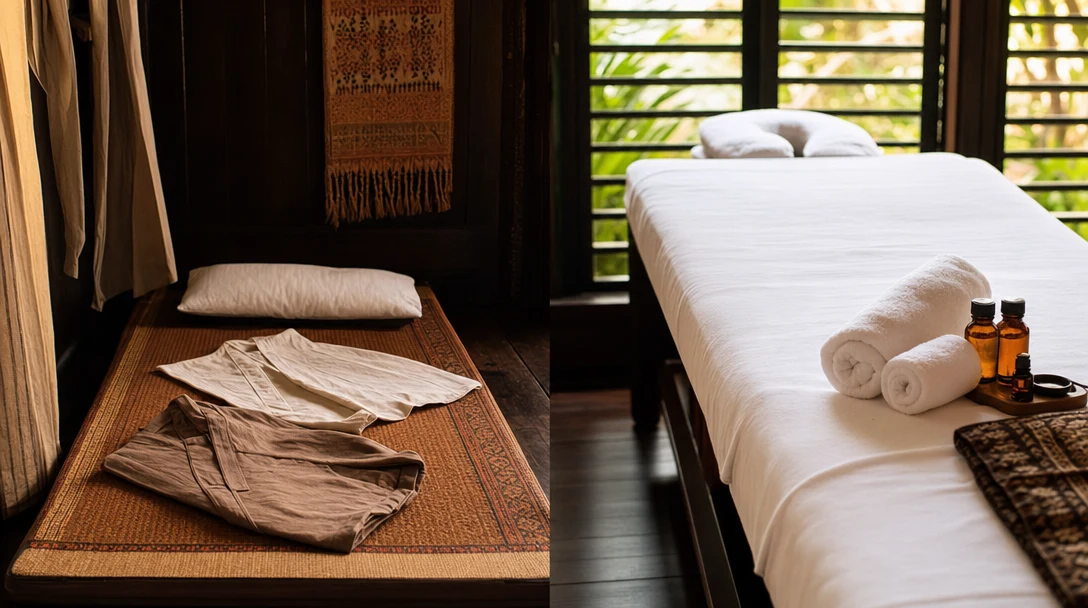
| Clothing | Fully clothed, loose cotton pants and shirt provided | Undress to underwear, draped towel covers you |
| Surface | Low padded floor mat | Massage table or padded bed |
| Oil | None on the body (balm may be spot-applied) | Yes, full body, scented or unscented |
| Pressure | Firm to deep, “hurts so good” | Light to medium, soothing |
| Movements | Stretches, joint pulls, acupressure on energy lines | Long gliding strokes, kneading, circular work |
| Best after | Long flight, stiff shoulders, gym day | Long walking day, jet lag insomnia, dry skin |
| Avoid if | Pregnant (default Thai unsafe), recent surgery, herniated disc | Skin allergies, oil sensitivity, you prefer dry contact |
| After-effect | Energized, looser, “lighter” body | Sleepy, calm, glossy skin |
| Need a shower after? | No | Yes (most spas have one; confirm at small shops) |
| Typical 60-min Bangkok price | ฿300–700 | ฿500–1,300 |
The price spread is the part most blogs gloss. Oil costs more per hour everywhere in Bangkok, by a factor of roughly 1.5 to 2 at the same spa. That’s not markup; oil sessions consume product, require table laundry, and need longer prep and cleanup time. We’ll see this confirmed in the verified spa table below.
Thai Massage Explained
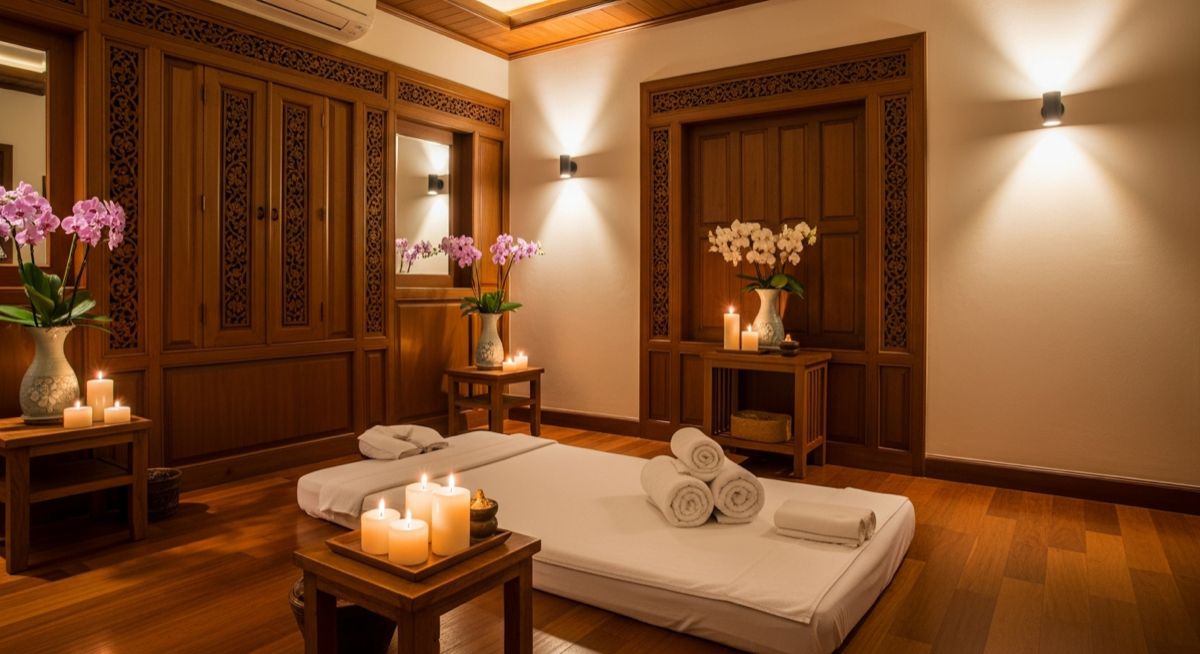
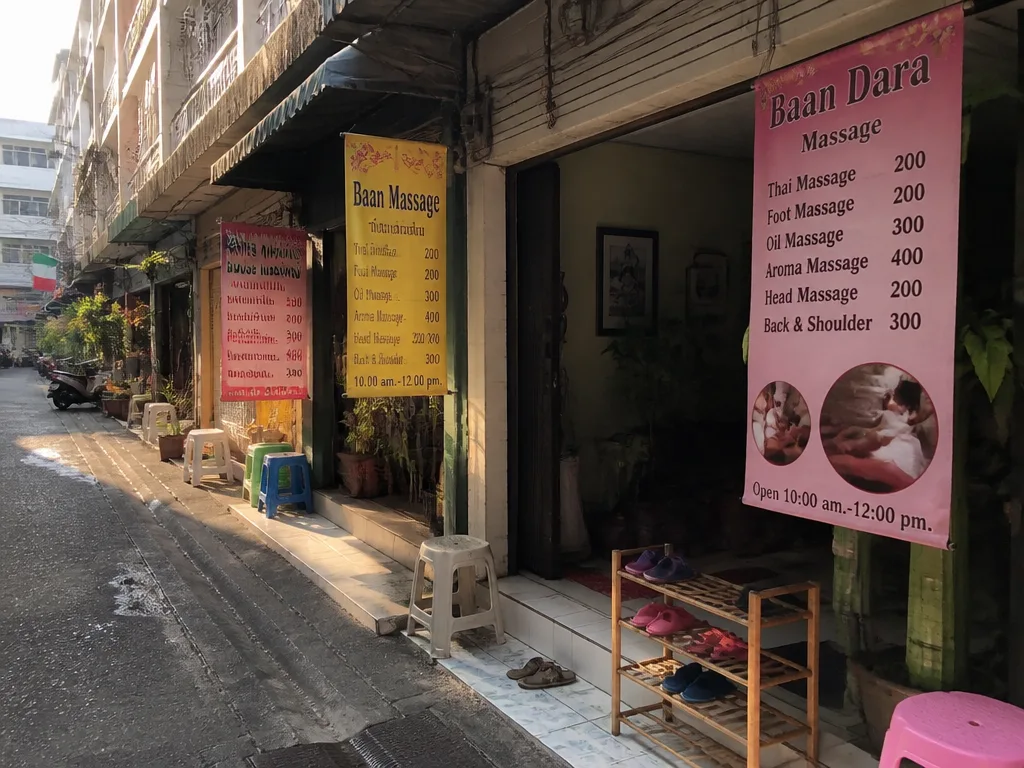
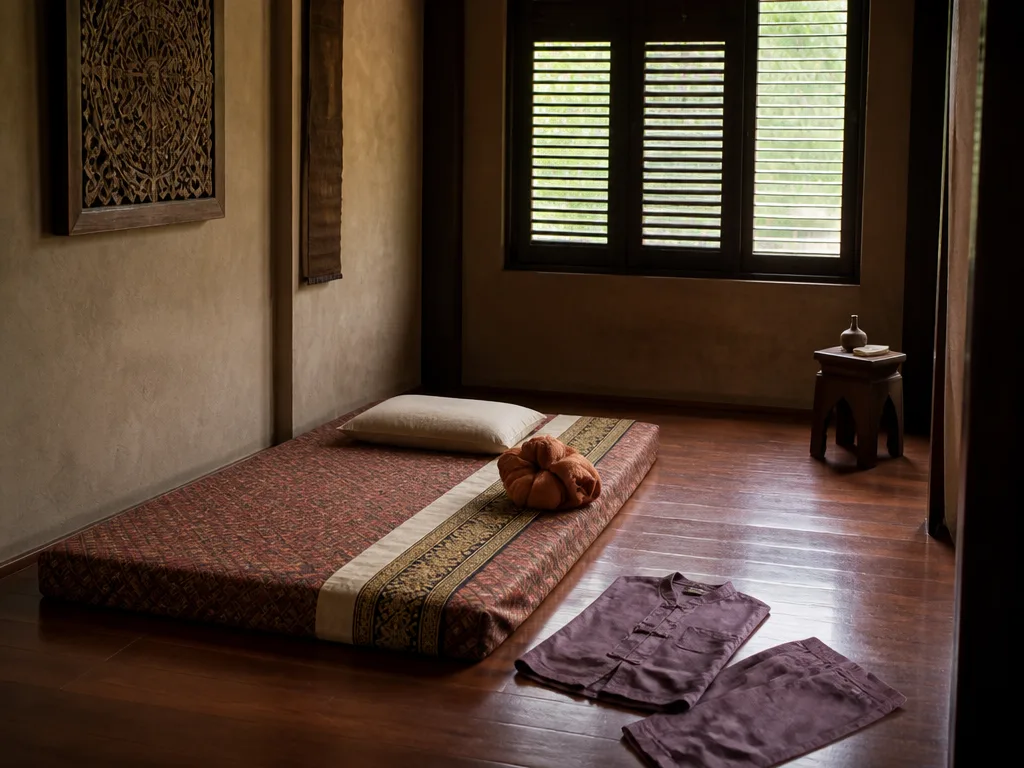
Traditional Thai massage, nuad phaen thai (นวดแผนไทย), is closer to assisted yoga than to anything Westerners think of when they hear “massage.” There’s no oil. You stay fully clothed in loose cotton pants and a shirt the spa provides. You lie on a low floor mat, not a table. The therapist works the body using their thumbs, palms, elbows, knees, and even feet, pressing along sen energy lines and moving you through stretches you couldn’t do on your own.
The classical technique traces back to Wat Pho, Bangkok’s oldest temple and home to Thailand’s national massage school. The school still trains and certifies therapists in 2026, and a session at the Wat Pho-affiliated school is the closest you’ll get to the textbook style (Wat Pho Official).
What it feels like: a competent Thai therapist will find tension you didn’t know you had. Shoulders, hip flexors, the band of muscle along the spine, the soles of the feet. The first session usually involves involuntary groans and the occasional “bao bao” (เบาๆ, “softer”) request. By the second visit you stop flinching and start dozing through the stretches.
What it’s good for:
- Long-haul flight recovery (the single best argument for booking one within an hour of landing)
- Desk-work shoulder and neck tension
- Tight hips from running or cycling
- General body stiffness and posture work
- People who don’t want to undress
What it’s not for: skin contact pleasure, romantic ambiance, or pure relaxation. If your body doesn’t have specific knots to release, Thai can feel like a full-body workout you didn’t ask for.
CAUTION
Thai massage is contraindicated for: first-trimester pregnancy (entirely), herniated discs, recent surgery, severe osteoporosis, and uncontrolled high blood pressure. The deep stretching and abdominal pressure can aggravate existing conditions. If pregnant in the second or third trimester, see the Common Misconceptions section below: only a prenatal-certified therapist should touch you, never default Thai.
Oil Massage Explained
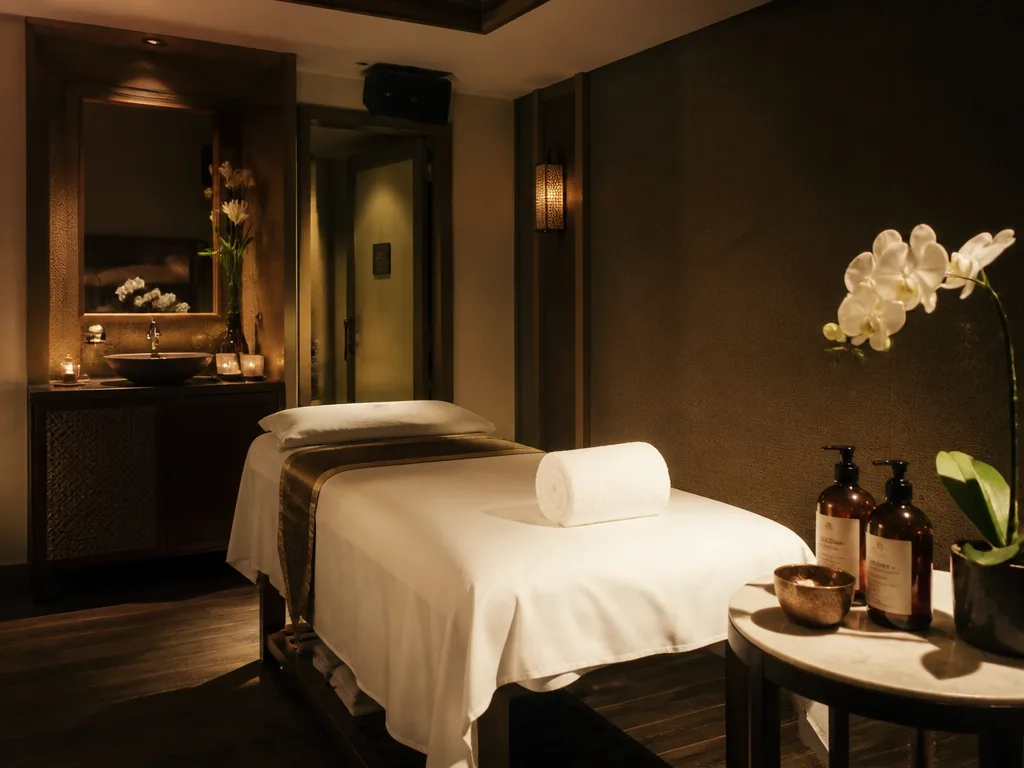
Oil massage in Bangkok is not the traditional Thai style. It’s a hybrid that fuses Western Swedish technique (long gliding strokes, kneading, circular work) with the Thai spa industry’s house preferences. You undress to your underwear, lie face-down on a padded table, and a therapist drapes a sheet over the parts they’re not currently working on. Scented oil or unscented base oil is applied as they go.
The pressure is lighter than Thai by a wide margin. Where Thai might press an elbow into a glute until you breathe through it, oil massage glides over the same muscle with palm pressure and friction. The intent is muscle relaxation and circulation, not structural release.
The spa-menu vocabulary in Thailand splits oil into two related categories that confuse first-timers:
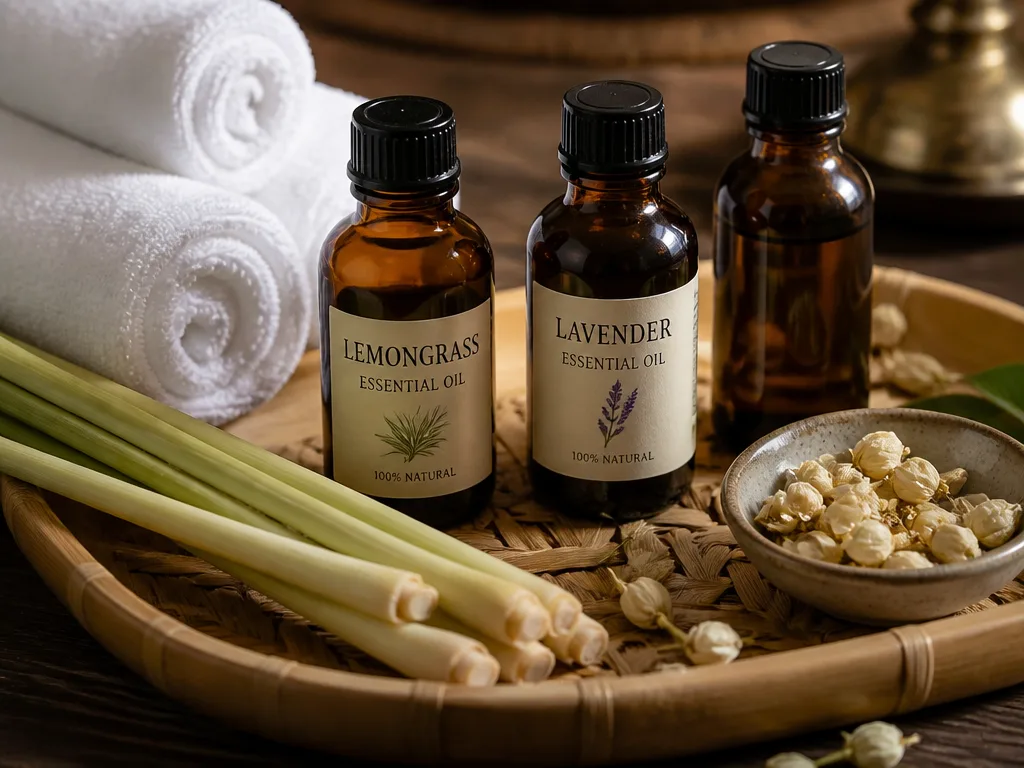
- Aromatherapy massage — oil massage with scented essential oils blended in (lavender, lemongrass, ylang-ylang, sweet orange). The branding is “aroma,” the technique is the same.
- Oil massage (without “aroma”) — same technique, often with unscented base oil. Some spas use this label interchangeably with aromatherapy; others differentiate.
Treat them as the same product unless the menu explicitly distinguishes. (Health Land’s own comparison article confirms the categories overlap in practice.)
What it’s good for:
- Recovery from long walking days (temple tours, market crawls, all-day shopping)
- Jet lag insomnia (the post-session sleep is genuinely deeper)
- Skin hydration in dry weather or after long flights
- First-time visitors nervous about pressure
- Couples sharing a private room
What it’s not for: deep tissue release, structural body work, tight muscles that need to be physically pulled. If you have specific knots, oil will feel pleasant but not curative.
A logistical note most blogs skip: you will need a shower afterward. Most established spas have one. Smaller neighborhood shops may not. If you’re walking into an unfamiliar street-side place, ask before you commit, especially if you have evening plans.
Aroma vs Oil vs Foot — The Three-Way Confusion
The actual question on Reddit and Quora isn’t Thai vs oil. It’s “which one is aroma and is foot the same as Thai?” Let’s settle it.
- Aroma massage = oil massage with scented essential oils (lavender, lemongrass, rose, sweet orange, ylang-ylang). On the body. Uses Swedish-influenced gliding strokes.
- Oil massage = same technique, may use unscented base oil. In Bangkok spa menus, often used as a synonym for aroma. Where the menu separates them, “oil” is the cheaper unscented option.
- Foot massage = lower legs and feet only, you’re dressed in shorts or your own clothes, the therapist uses reflexology and Chinese-influenced pressure points. Not Swedish-derived. Not oil-based on the body. Some spas spot-apply lotion or balm to the feet.
Foot massage is its own discipline. It’s the budget pick on a long walking day and the entry-level option for kids ten and up or elderly relatives nervous about full-body work. The price is the lowest of any massage type in Bangkok, typically ฿200–500 for sixty minutes at neighborhood shops.
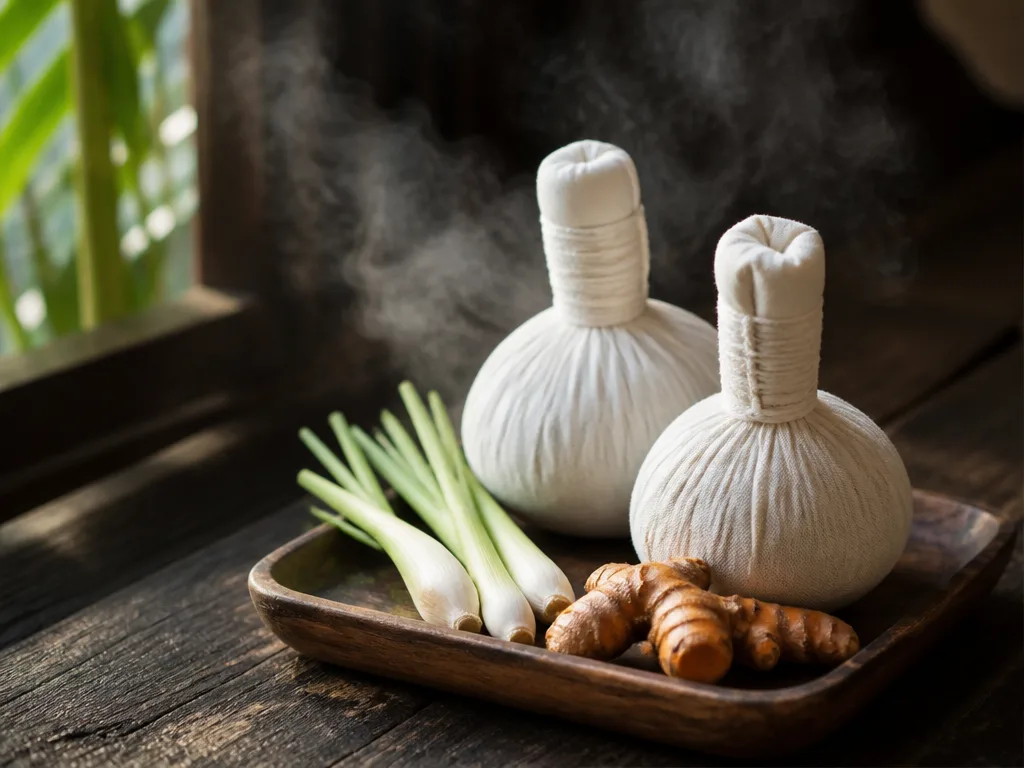
The herbal compress add-on is worth knowing about: a steamed muslin ball stuffed with lemongrass, turmeric, kaffir lime, and other herbs, pressed into the muscles after the main session. Heat plus the herbs adds a soothing layer. Costs an extra ฿200–500 on top of the base massage. Most upscale spas offer it as a 90- or 120-minute combo. If you’re stuck between Thai and oil, this is the bridge.
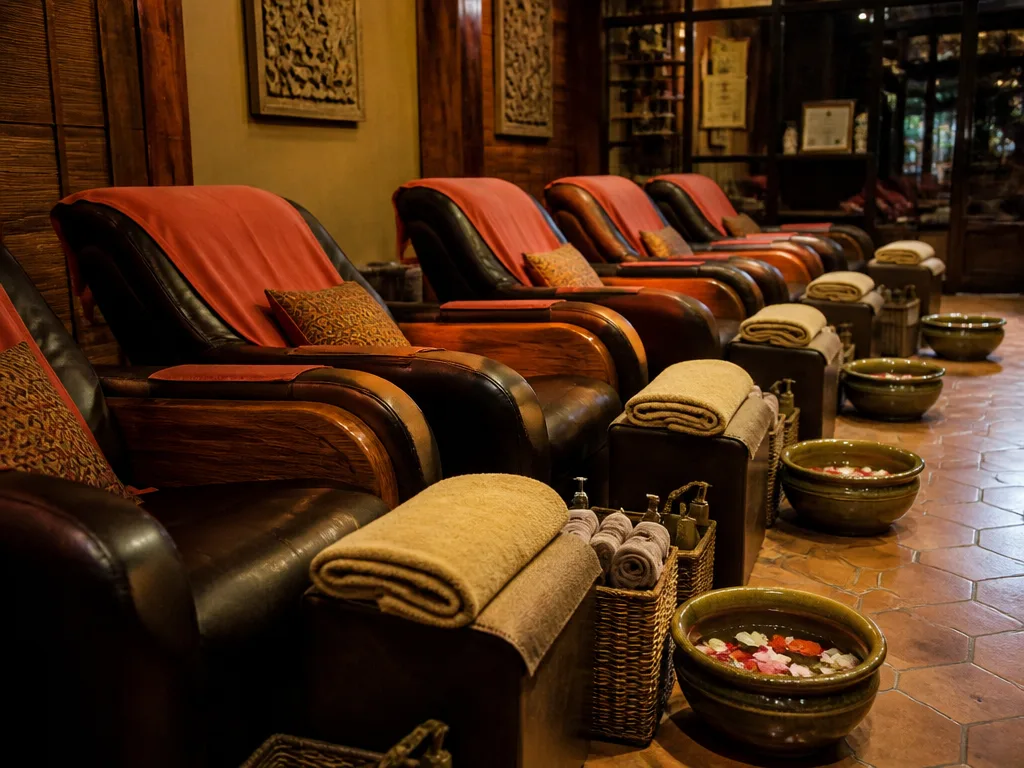
Verified 2026 Prices: Four Spa Chains Compared
Most blogs cite one chain. We’re going to look at four, all verified against official menus or recent visitor reports as of May 2026. Pay attention to the per-hour ratio between Thai and oil at each tier. That’s the pattern.
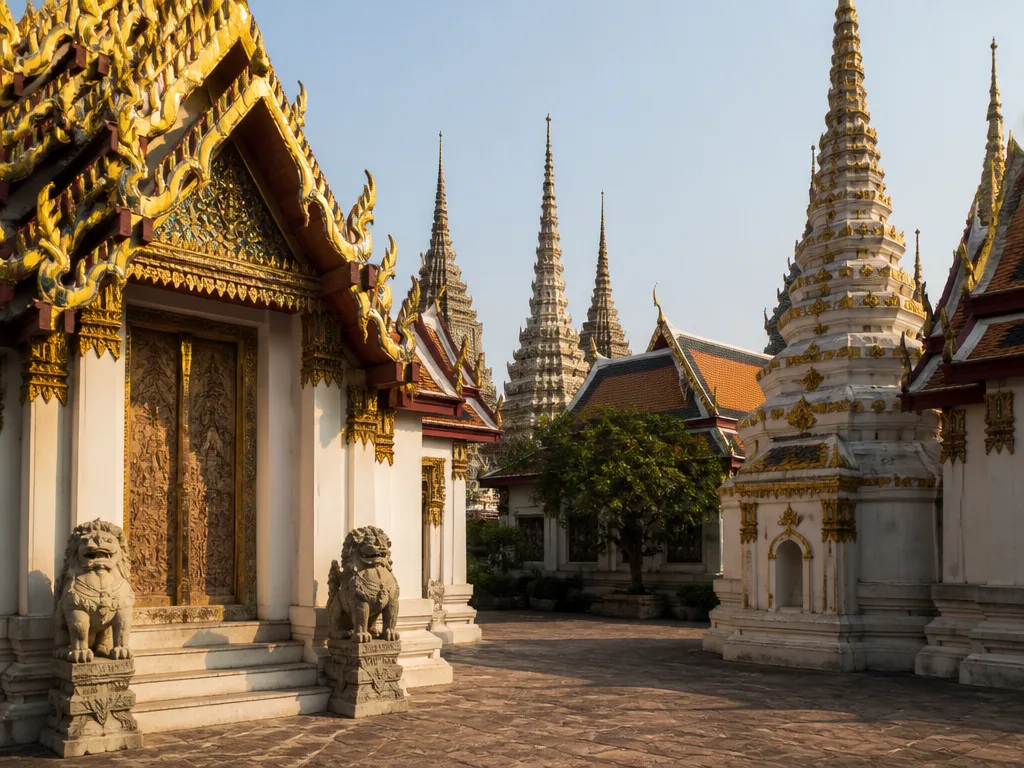
Wat Pho — The Traditional Reference
Wat Pho is the home of the national Thai massage school and the price reference point for the traditional style. The catch most first-timers don’t know: Wat Pho does not offer a Western-style oil massage. Their menu has Thai massage, foot massage, Thai-with-balm, and Thai-with-plai-oil. Even the “oil” options use Thai technique (acupressure plus stretches) with herbal additives, not Swedish gliding strokes.
| Service | 30 min | 60 min | 120 min |
|---|---|---|---|
| Thai massage | ฿340 | ฿520 | ฿1,040 |
| Foot massage | ฿340 | ฿520 | ฿1,040 |
| Thai + herbal balm | — | ฿680 | ฿1,360 |
| Thai + plai oil | — | ฿620 | ฿1,240 |
Open 08:00–19:30. Located inside Wat Pho temple complex, so the price includes the experience of walking through the temple grounds before your session. The therapists are graduates of the affiliated school. Quality is consistent; pressure is firm; the rooms are basic but clean.
If you want a Western-style oil massage, this is not your spa. Read the next three.
Source: Wat Pho Official Price Plan (May 2026, verify on day as hours occasionally vary).
Health Land — The Local Workhorse
Health Land is the mid-tier chain Bangkok residents actually use. Multiple branches across the city (Asoke, Sathorn, Ekkamai, Ploenchit, more), consistent quality, transparent pricing, no upsell theater. The standard format is two-hour sessions, which is part of why local clients prefer it: ฿700 for two hours of Thai massage is the best price-per-hour at this quality tier in central Bangkok.
| Service | Duration | Price |
|---|---|---|
| Traditional Thai Massage | 120 min | ฿700 |
| Thai + Herbal Compress | 120 min | ฿1,050 |
| Aromatherapy Body Massage (Program B) | 90 min | ฿1,200 |
| Aromatherapy Body Massage (Program A) | 120 min | ฿1,500 |
| Aromatherapy + Herbal Compress | 120 min | ฿1,850 |
| Foot Massage | 60 min | ฿400 |
| Abhyanga (Indian-style oil) | 90 / 120 min | ฿1,700 / ฿2,000 |
| Cannabis Deep Relaxation Oil | 120 min | ฿2,200 |
Two things to flag. First, Health Land does not sell a 60-minute Thai massage. 120 minutes is the minimum. Older blogs still cite a “1-hour ฿350 Thai” rate; that’s outdated. Second, the cannabis CBD oil massage launched in 2023 and is still on the menu in 2026 at licensed branches. Thailand’s cannabis regulations have shifted in recent years and may shift again. The cannabis option is currently legal at licensed spas, but verify on the day if it matters to you.
The per-hour ratio at Health Land: Thai works out to ฿350/hour, aromatherapy to ฿750/hour. Roughly 2× for oil over Thai. Confirms the pattern.
Source: Health Land Spa Official (May 2026, prices subject to change).
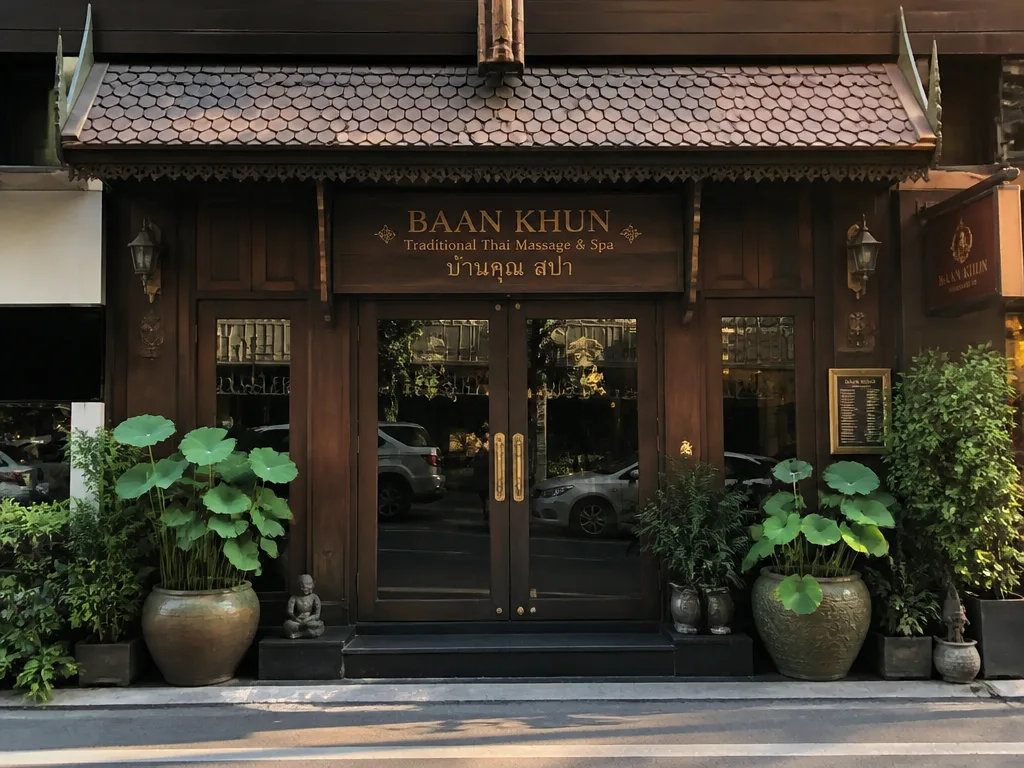
Let’s Relax — The Tourist-Friendly Premium
Let’s Relax sits one tier above Health Land and below the five-star hotel spas. Branches in tourist hubs (Sukhumvit, Silom, Chinatown, malls), English-fluent reception, online booking, and a willingness to accommodate Klook vouchers. The atmosphere is closer to a hotel spa than to Health Land’s clinical efficiency.
| Service | Duration | Price |
|---|---|---|
| Traditional Thai Massage | 120 min | ฿1,200 |
| Aromatherapy Oil Massage | 60 min | ฿1,300 |
| Aromatherapy Oil Massage | 120 min | ฿2,600 |
| Foot Massage | 45 min | ฿600 |
| Foot Massage | 60 min | ฿800 |
The aromatherapy at Let’s Relax illustrates the per-hour gap clearly: 60 minutes of oil costs more (฿1,300) than 120 minutes of Thai (฿1,200). Per hour, oil is roughly 2.2× the price. That’s the steepest ratio of any spa in this comparison. You’re paying for the room, the table service, and the scented oil program.
The Klook voucher route is worth knowing about. Let’s Relax is one of the few major chains that accepts open-date Klook vouchers, and the Let’s Relax voucher on Klook typically lands 30–50% under the walk-in price. The catch: you book the branch on the voucher (not transferable) and need at least one day’s advance booking per Klook’s terms.
Source: Let’s Relax Spa Menus (May 2026, prices subject to change).
Asia Herb Association — The Traditionalist Specialist
Asia Herb is the spa for people who want serious herbal-ball work in a calmer, less commercial setting than Let’s Relax. Multiple branches on Sukhumvit (Soi 24 is the flagship). The catch for an article like this: Asia Herb does not publish prices on their official site (asiaherb.asia confirmed). Everything below is from third-party sources (recent visitor reviews, the JCB partner page) and should be treated as approximate.
| Service | Duration | Price (approx.) |
|---|---|---|
| Traditional Thai (Sukhumvit 24 branch) | 60 min | ~฿700 (per recent reviews) |
| Thai + raw herbal ball | 90 min | ~฿1,450 (per recent reviews) |
| Triple-combo package (60 Thai + 60 oil + 30 herbal) | 150 min | ~฿2,200 incl. tax (per JCB partner page) |
Treat these as ballpark figures and confirm at reception when you walk in. The triple-combo at 150 minutes is the spa’s distinctive offer and the closest thing in Bangkok to a “have everything” session, if you want the full Thai-oil-herbal experience without booking two separate appointments.
Source: third-party visitor reports and the JCB partner page (May 2026, unverified on official menu; prices subject to change, confirm on arrival).
Street and Neighborhood Shops
For comparison, the budget end. Khao San and Rambuttri are tourist-priced; side-streets off Sukhumvit Soi 33, Soi 11, and lower Sukhumvit numbers are local-priced.
| Area | Thai (60 min) | Oil / Aroma (60 min) | Foot (60 min) |
|---|---|---|---|
| Khao San street-side | ฿300–450 | ฿450–650 | ฿200–300 |
| Rambuttri (parallel road, indoor) | ฿300–450 | ฿450–650 | ฿350–500 |
| Sukhumvit tourist zones | ฿400–600 | ฿500–800 | ฿250–400 |
| Side-street local (off main road) | ฿250–350 | ฿350–500 | ฿150–250 |
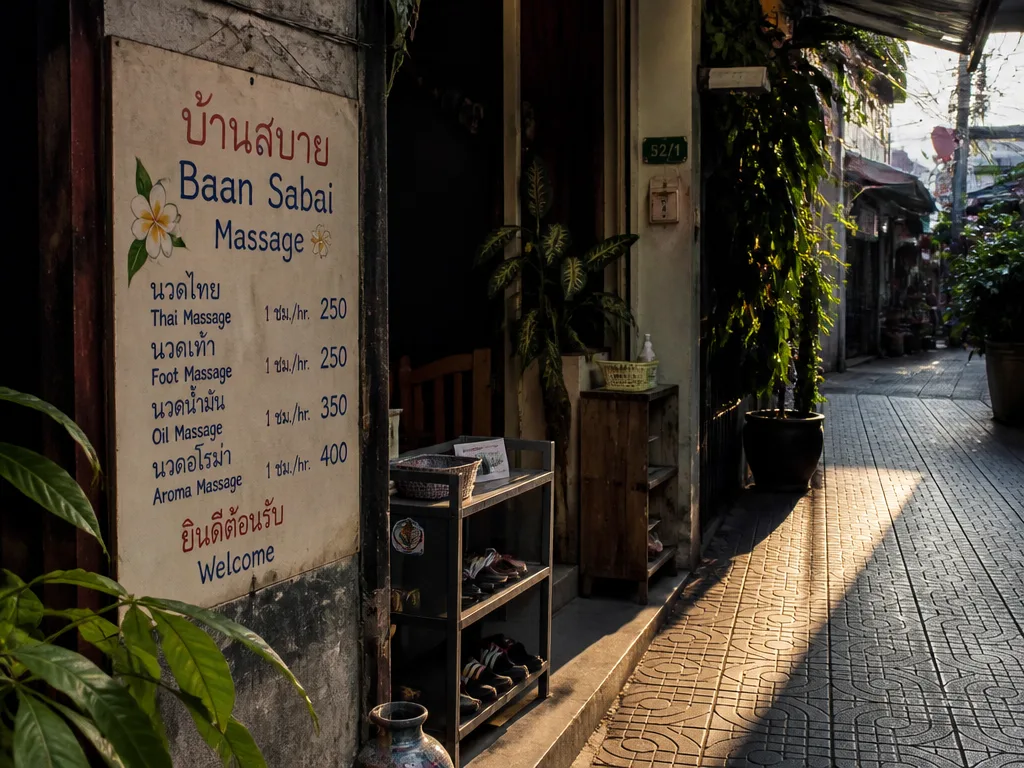
Cheaper does not mean worse. The best Thai massage I’ve had in 2026 was at a side-street shop near Phrom Phong with twenty-year regulars and a hand-painted price board. ฿300 for an hour. The signs of a good neighborhood shop: a posted price board outside, customer slippers in the rack (means people are inside right now), 4.0+ Google rating with 50+ reviews, and certifications on the wall.
Source: Khaosanroad.com massage guide and TripAdvisor Bangkok massage forum (May 2026, prices subject to change). For a deeper street-massage breakdown, see the street massage guide.
When to Pick Thai
The decision tree most blogs don’t bother writing. Match your situation to the column.
- You just landed at Suvarnabhumi or Don Mueang. Thai. Single best post-flight intervention you can buy. Sixty to ninety minutes inside the first three hours of arrival cuts jet lag noticeably. The body has been compressed for ten-plus hours; Thai pulls it back open.
- You worked at a desk all week and your shoulders feel locked. Thai. The acupressure on the upper trapezius and the assisted shoulder-blade pulls release exactly the kind of tension that desk work creates.
- You ran a long distance, lifted weights, or did a long bike ride yesterday. Thai. The deep stretches and energy-line work clear lactic acid faster than oil’s surface massage.
- You don’t want to undress. Thai. You stay fully clothed in the spa-provided cotton suit. Useful for travelers who are nervous about modesty, traveling with conservative family, or simply prefer not to disrobe.
- You have skin sensitivity, acne flare-ups, or oil allergies. Thai. No skin contact with oils, no scented products on your body.
- You’re on a tight budget. Thai. At every spa tier, Thai costs less per hour than oil.
- You want to be energized, not sleepy, after the session. Thai. The post-session feeling is “looser and more alert.” Oil leaves you wanting a nap.
If two or more of these apply, default to Thai. Don’t overthink it.
When to Pick Oil
- You walked twenty thousand steps yesterday. Oil. The full-body soothing strokes work on legs and feet that have done structural work. Thai’s deeper pressure on already-fatigued muscles can feel like more punishment.
- You can’t sleep, whether from jet lag, anxiety, or just a busy mind. Oil. The sleepy-after effect is real and the post-session sleep is deeper than after Thai.
- You’re nervous about pressure or it’s your first ever massage. Oil. The intensity ramps slowly; you can ask for less pressure without affecting the technique.
- You’re sharing a room with a partner for a couples session. Oil. Couples massage rooms in Bangkok are designed for oil work: two tables, dim lighting, conversational volume that wouldn’t work on a Thai floor mat.
- Your skin is dry from the flight or air conditioning. Oil. The hydration benefit is real and lasts a day or two.
- You’re elderly or have joint sensitivity that makes the floor mat uncomfortable. Oil. The padded table is significantly easier on hips and knees than a low mat.
- You want a calmer, quieter, more meditative session. Oil. The atmosphere is softer; the music is slower; the lights are dimmer.
If two or more apply, default to oil.
The decision tree by traveler type:
- First-time Bangkok visitor, just landed: Thai 60–90 min within three hours of hotel check-in.
- Couples on a romantic trip: Oil for both at a premium spa with a couples room.
- Pregnant traveler (2nd or 3rd trimester only, with doctor approval): Oil with a prenatal-certified therapist. Never default Thai. Ask specifically for “prenatal massage” or “นวดคนท้อง” (nuad kon thong).
- Family with kids (10+): Foot massage for the whole group at a neighborhood shop. Lowest intensity, lowest price, kids stay engaged for an hour.
- Solo traveler on a 7-day itinerary: Mix it up. Thai on arrival day, oil on day three after temple-walking, foot massage on a tired evening.
- Bangkok resident with chronic neck or back pain: Thai every two weeks at Health Land or a trusted neighborhood shop. The maintenance schedule beats single splurges.
Manners and Tipping in 2026
Bangkok massage etiquette is mostly common sense plus three or four specifics that travelers regularly miss.
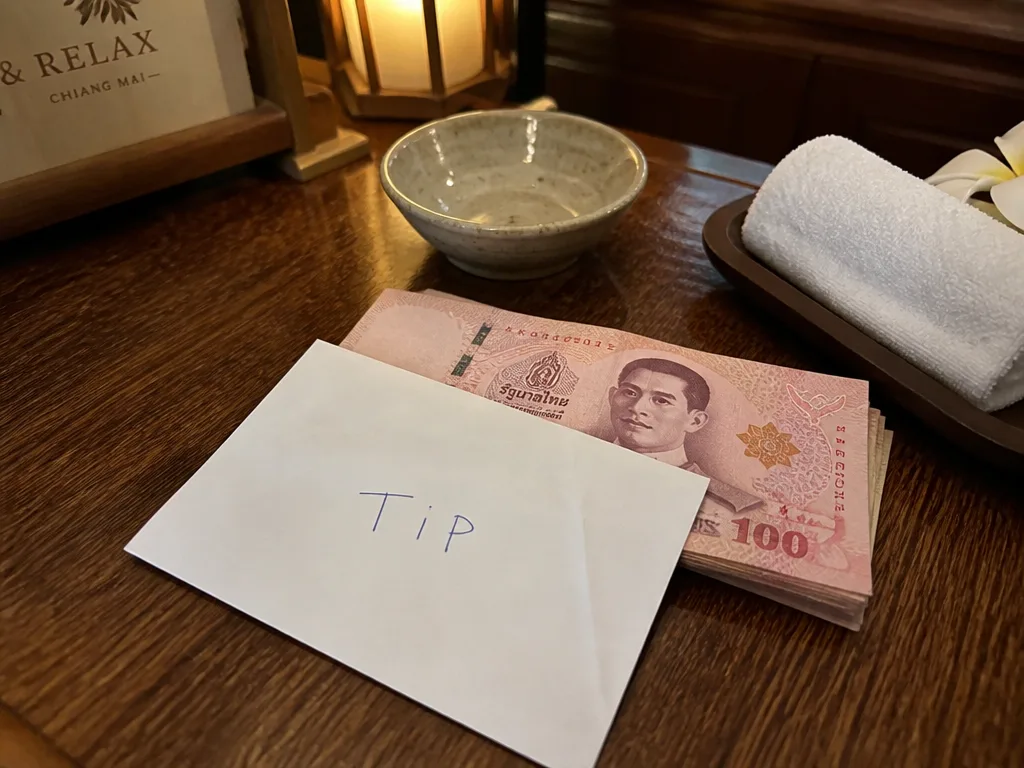
Tipping. ฿50–100 for a one-hour session, ฿100–200 for a two-hour session or premium spa, ฿200+ for a luxury spa or exceptional therapist. Hand the tip directly to the therapist, not to the front desk. At many shops the front desk takes a cut if you tip there; the direct hand-off ensures the therapist receives the full amount. (Wise Thailand tipping calculator confirms the ฿50–100 baseline.)
If there’s a service charge on the bill, do you still tip? Yes, smaller. ฿30–50 still goes hand-to-hand to the therapist. The service charge goes to the house.
Arrive 10–15 minutes early. Paperwork (medical conditions, pressure preference), feet washed at reception, change into spa clothes if Thai. Arriving on time means you start your session late.
Don’t eat a full meal an hour before Thai. The abdominal pressure and inverted stretches are uncomfortable on a full stomach. Light snack is fine.
Shower before oil. Basic courtesy. If you’ve been walking all day in Bangkok heat, the spa is going to appreciate the rinse. Most spas have a shower available before your session if asked.
Phrases worth knowing. Three Thai words that pay off:
- เบาๆ (bao bao) — “softer” / “lighter pressure”
- แรงๆ (raeng raeng) — “stronger” / “firmer pressure”
- เจ็บ (jep) — “it hurts” (use to flag a specific spot, not as a complaint)
A note on “happy ending” expectations. Legitimate Bangkok spas — every chain mentioned in this article, every neighborhood shop with a posted price board, every hotel spa — do not offer that service. Red-light venues operate as a separate industry with separate signage, separate pricing, and separate locations (Soi Cowboy, Nana Plaza, parts of Patpong). If you want to understand that side of the city, see our premium massage guide, but don’t conflate the two. Walking into a Health Land branch with that expectation is going to embarrass you and waste your appointment.
For broader tipping norms across Thailand (restaurants, taxis, hotels), see our Bangkok tipping guide. For the cash logistics of paying in baht, see Bangkok currency exchange.
Common Misconceptions
Five myths that show up repeatedly. Worth correcting before you book.
Myth 1: “Thai massage uses oil.” False. Traditional Thai massage uses zero oil on the body. If a place advertises “Thai oil massage,” it’s a hybrid: Thai stretches plus oil application, a modern spa-Western format. The classical technique stays oil-free. (Wikipedia on Traditional Thai massage confirms this.)
Myth 2: “Wat Pho is the place for an oil massage.” False, in the way that matters. Wat Pho’s menu has Thai-with-balm and Thai-with-plai-oil, but both use Thai technique with herbal additives. There is no Western-style Swedish oil massage at Wat Pho. If you want oil massage in the Swedish-influenced format, go to Health Land, Let’s Relax, Asia Herb, or any standard Bangkok spa.
Myth 3: “Oil is always more expensive than Thai everywhere.” True on average, but Wat Pho’s “Thai with plai oil” at ฿620 for 60 minutes is actually cheaper than Let’s Relax’s aromatherapy at ฿1,300 for 60 minutes. The brand and tier of spa matter as much as the technique. The pattern is “oil costs more than Thai at the same spa,” not “oil costs more than Thai across the city.”
Myth 4: “Pregnant travelers can get Thai massage normally.” Dangerous if uncorrected. First trimester: avoid massage entirely. Second and third trimester: only with a prenatal-certified therapist who has been trained for pregnancy work. Default Thai massage involves abdominal pressure, deep stretches, and inversions that are unsafe during pregnancy. Oil massage with a prenatal therapist is the safer route after the first trimester. Always tell the spa upfront if you’re pregnant; legitimate spas will refuse to perform a regular session and route you to a prenatal-trained therapist or decline the booking. (Nuad Thai School pregnancy massage notes detail the specific contraindications.)
Myth 5: “Cheaper means worse quality.” False. Bangkok’s neighborhood shops with twenty-year regulars frequently outperform hotel chains on technical quality. The hotel premium pays for the room, the soundproofing, and the post-session amenities — not necessarily for better hands. Look for: posted price board outside, certifications on the wall (Wat Pho graduates, Ministry of Public Health certifications), 4.0+ Google rating with 50+ recent reviews, and customers actually inside when you walk past.
How to Book the Cheapest Way
Three routes, ranked by price-per-quality.
1. Klook vouchers (cheapest for Health Land and Let’s Relax). Klook runs open-date vouchers for both chains at typically 30–50% under the walk-in price. The trade-off: you book the specific branch on the voucher (not transferable between branches), need at least one day’s advance booking, and the slot is yours only at the time you reserved. For a planned trip, this is the lowest-friction discount route. Search Bangkok massage on Klook for current vouchers — pricing rotates seasonally.
2. Walk-in to a neighborhood Sukhumvit shop. Lowest absolute prices, no advance commitment, and the quality at a 4.0+ Google-rated side-street shop is genuinely competitive with the chains. Best for spontaneous days. The catch: no English at some shops, no online booking, and your preferred therapist may be busy when you walk in.
3. Direct booking at the spa. Standard rate, no discount, but you get the full menu and any current spa promotions. Best for Asia Herb (no Klook presence) and Wat Pho (walk-in only, no advance booking system at all).
The Klook voucher route is also the cleanest way to handle the language barrier. The voucher confirms the time, branch, and service in writing, which you can show at reception.
If you’re staying near Sukhumvit and want to walk to your massage, Health Land Asoke and Let’s Relax Sukhumvit Soi 31 are the two closest premium options. For hotel recommendations within walking distance of either, see our Bangkok luxury hotels guide or browse the Sukhumvit area on Agoda.
For the comprehensive massage type encyclopedia (five styles, by-area picks, beyond Thai-vs-oil), see our Thai massage guide. For Wat Pho’s full menu and the temple visit logistics, the Wat Pho massage guide goes deeper. For luxury hotel spa picks, see Bangkok luxury spas.
FAQ
Can I get Thai and oil in one session?
Yes. Combo packages run 90–120 minutes at most premium spas, typically ฿800–1,800. Asia Herb’s 150-minute triple-combo (Thai + oil + herbal ball) is the most ambitious version of this format, around ~฿2,200 per recent visitor reports. The structure is usually Thai stretches first, then oil work, then a hot herbal ball finish.
Do I need to tip if there’s a service charge on the bill?
Yes, but smaller. Hand ฿30–50 directly to the therapist for a one-hour session even when service charge is included. The service charge on your bill goes to the house, not to the therapist’s pocket.
Will my oil massage make me smell oily all day?
No, if the spa has a shower. Most established Bangkok spas (Health Land, Let’s Relax, Asia Herb, all luxury hotel spas) have showers available after your session. Smaller neighborhood shops sometimes don’t. Confirm at booking if it matters for your evening plans.
Is Thai massage safe with high blood pressure?
With caveats. Tell the therapist before you start. They’ll dial down the pressure, avoid deep work on the head and neck, and skip inversions. Uncontrolled high blood pressure (over 160/100) is a contraindication; controlled hypertension on medication is generally fine with a modified session. (Traditional Bodywork’s contraindications page covers the medical-condition list in detail.)
Can I sleep during the massage?
Yes, especially during oil. Therapists prefer sleeping clients. It means the body is fully relaxed and the technique is working. Don’t apologize if you doze off; it’s a compliment to the therapist.
Should I pick a male or female therapist?
Both are common in Bangkok. Some clients prefer male therapists for Thai because of the strength required for the stretches. Some prefer female therapists for oil for comfort reasons. Ask at booking. Most spas accommodate the request without a fee. Wat Pho assigns based on availability; you can request a switch at reception.
What if I genuinely don’t want to undress?
Stick with Thai or foot massage. Both are done fully clothed (Thai in spa-provided cotton, foot in your own clothes or shorts). Oil requires undressing to underwear and isn’t a fit if modesty is a hard preference.
What’s the best time of day to book?
Two to four PM is the golden window for walk-ins. Fewer tourists, therapists are warmed up, and the post-lunch slot is naturally less rushed than morning openings or evening rush. Saturday and Sunday afternoons are the busiest at premium spas, so book ahead or aim for a weekday.
Can I get a massage right after eating?
Avoid Thai for at least an hour after a full meal: abdominal pressure on a full stomach is uncomfortable. Oil is fine sooner since there’s no inverted positioning.
Is the cannabis CBD oil massage at Health Land safe and legal in 2026?
Yes, at licensed branches as of May 2026. Thailand’s cannabis regulations have shifted in recent years; the consumer-spa version is currently a CBD-based oil offered as a 120-minute treatment at ฿2,200. The legal status could shift again, so verify on the day if it matters to you, and check Health Land’s current menu before booking. (Health Land Spa Official lists the current treatment status.)
The Thai-or-oil question isn’t actually that hard once you frame it right. Oil is for after the day. Thai is for before the day. If you remember nothing else from the next two minutes of your trip planning, remember that. Everything else — the spa chains, the prices, the per-hour ratios, the tipping etiquette — is just the supporting evidence. Get a Thai massage on your arrival day in Bangkok 2026. Get an oil massage on your most exhausted evening. Mix them across the week. You’ll come home looser than you left.