Wat Arun is the temple on the 10 baht coin. The one with the porcelain-tiled spire that turns amber at sunset. The one every travel magazine puts on its Bangkok cover. It’s the single most photographed temple in the city, and it deserves the reputation — there’s nothing else in Southeast Asia that looks quite like it.
But it’s also one of Bangkok’s most crowded attractions, and getting the experience the photos promise takes a bit of planning. Go at the wrong time and you’ll spend twenty minutes shuffling through crowds for a ten-second photo. Go at the right time and you’ll get a temple that looks like a personal discovery.
What Wat Arun Actually Is
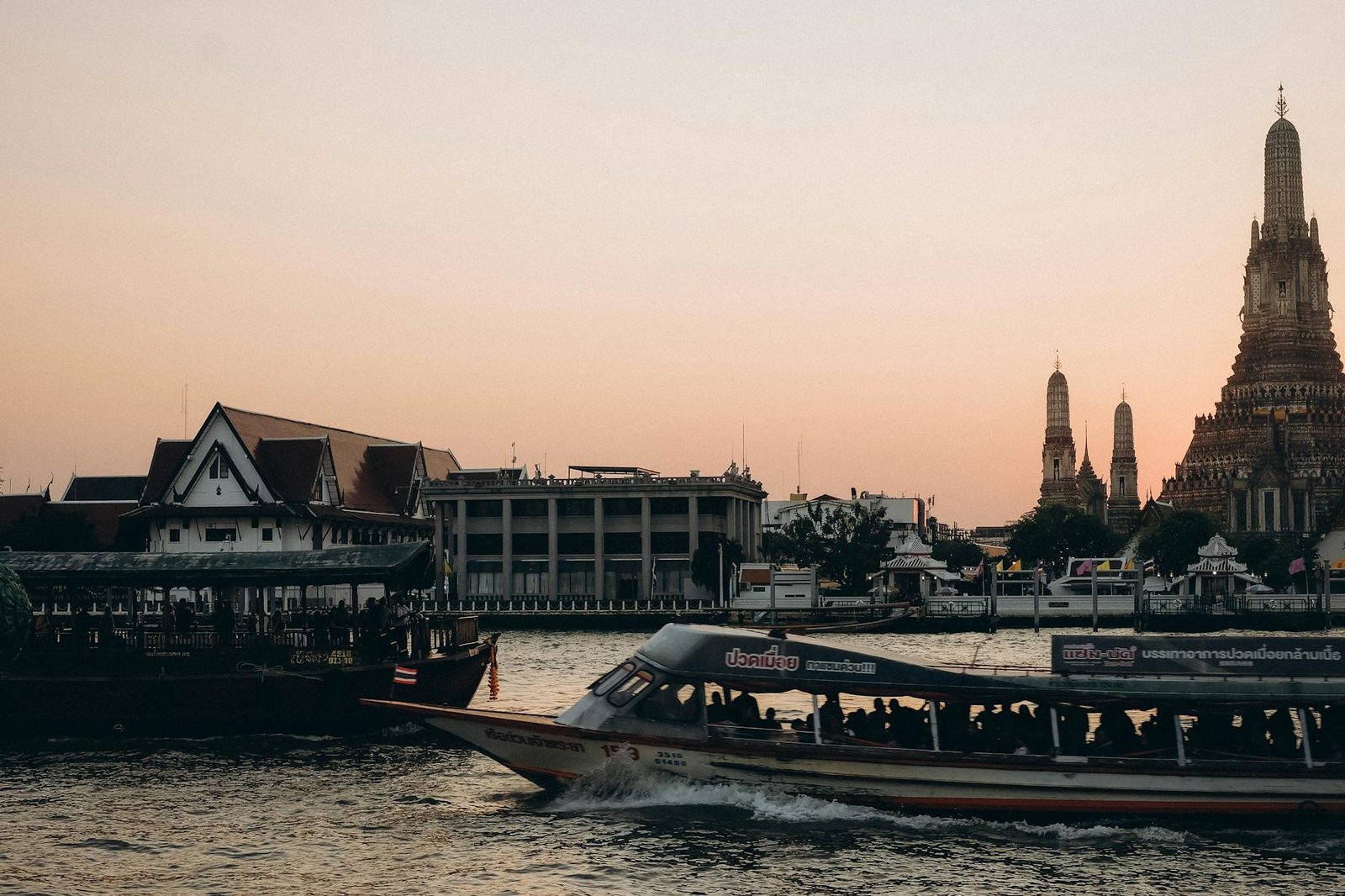
Wat Arun Ratchawararam — the Temple of Dawn — sits on the Thonburi side of the Chao Phraya River, directly across from the Grand Palace and Wat Pho. The name “Temple of Dawn” refers to the Hindu god Aruna, personification of the rising sun, not the time of day you should visit (though sunset is actually when it looks best).
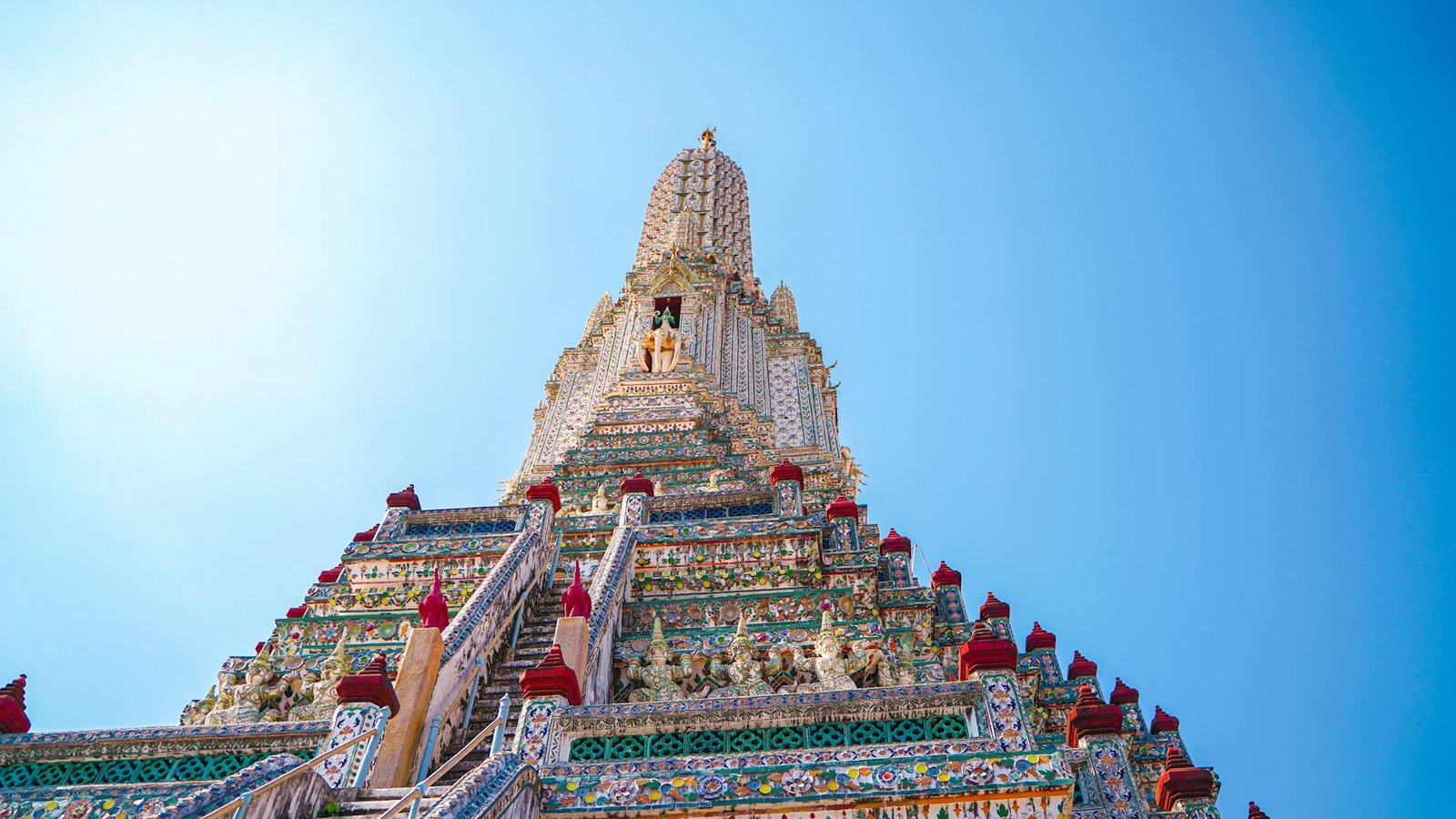
The central spire — the prang — rises 82 meters and is covered in millions of pieces of Chinese porcelain and seashells, creating an intricate mosaic that glitters in the light. The current structure dates mostly to the early 1800s, built during the reign of King Rama II and completed under Rama III. The porcelain was ballast from Chinese trading ships that reached Bangkok in that era — elegant reuse, still visible up close.
It’s an active temple, not just a monument. Monks live and pray here. Early mornings, you’ll hear chanting. Dress codes are enforced.
When to Go (The Only Question That Matters)
Best overall: 4:30 PM – sunset (around 6:30 PM depending on season).
The late afternoon light makes the porcelain glow. The crowds have thinned from the noon peak. And if you stay past sunset, you can cross the river to a riverside bar and watch the prang light up after dark.
Best for photos with no one in them: 8:00 AM – 8:30 AM.
The temple opens at 8 AM. For the first 30 minutes, you can genuinely be nearly alone on the grounds. Tourist buses haven’t arrived yet. The light is softer and a bit flatter than sunset, but if you want the “discovered a hidden temple” photo, this is the window.
Worst time: 10 AM – 2 PM.
The combination of midday heat (35°C+ in hot season) and tour bus arrivals makes this the least pleasant window. Every path around the central prang will have people posing for photos. The climb feels like a queue. Skip it.
Sunset itself: Beautiful, crowded.
The actual sunset moment (5:45–6:45 PM depending on season) draws photographers and romantic travelers. It’s still worth experiencing, but plan to be in position 20–30 minutes early to claim a spot.
How to Get There
By river boat (the best way):
The most photogenic arrival is by cross-river ferry from Tha Tien pier, next to Wat Pho. The shuttle runs every 5–10 minutes, costs 5 baht, and takes less than three minutes to cross. You see the temple grow across the water as you approach — the way Bangkok was meant to be seen.
For longer routes, the Chao Phraya Express Boat stops at Tha Tien from multiple upstream piers. This is a better way to reach Wat Arun than taxi if you’re coming from Sathorn or Silom.
By BTS + taxi:
Take BTS to Saphan Taksin, then taxi to Wat Arun directly (about 25 minutes in traffic, ฿120–150). Or take the Express Boat from Sathorn Pier (Central Pier) to Tha Tien, then the cross-river ferry.
By MRT:
MRT Sanam Chai station is about 10 minutes’ walk from Tha Tien pier. If you’re coming from Sukhumvit this is the cleanest route — MRT Sukhumvit to MRT Sanam Chai, walk to Tha Tien, ferry across.
Don’t rely on Grab:
Traffic around the temple district is brutal. What looks like a 15-minute drive often takes 45 minutes in afternoon congestion. The river is faster and cheaper, and it’s more interesting.
The Climb (Worth Doing, With Caveats)
The central prang has two levels you can climb. The lower terrace is accessible by relatively easy stairs. The upper level requires climbing extremely steep stone steps — closer to a ladder than a staircase.
Lower terrace: Almost everyone does this. Panoramic view of the river and the Grand Palace complex on the opposite bank. Easy access.
Upper level (closed to visitors most of the time): As of recent updates, the upper levels are typically off-limits for safety and preservation. Don’t assume you can climb to the top — it was allowed for decades but has been restricted for several years. Check at the ticket office when you arrive.
Dress code for the climb:
The climb requires you to have legs covered below the knee. If you’re wearing shorts, they offer sarongs at the entrance for rent (฿30) or to borrow with a deposit (฿100 refundable). Shoulders should also be covered.
What to Photograph
The classic shot: From across the river at Tha Tien pier area, facing west, at sunset. The prang is silhouetted against the colored sky. Several riverside bars and restaurants have purpose-built photo decks for this exact view. Eagle Nest at Sala Rattanakosin, Sala Arun rooftop, and The Deck at Arun Residence are the best-known spots. Expect ฿300–500 for a drink.
The porcelain detail: Up close, the porcelain mosaic is extraordinary. Macro shots of the floral patterns and deity figures make for much more interesting photos than wide-angle temple shots that thousands of visitors take daily.
The river approach: From the cross-river ferry, the temple looms as you approach. Shoot just before you dock.
The garden side: Most visitors focus on the prang and ignore the rest of the compound. The smaller chedis at the back, the ordination hall with its buddha figures, and the riverside walkway all offer quieter photo opportunities.
Practical Details
Admission: ฿100 for foreigners. Pay in cash at the entrance. Hours: 8:00 AM – 6:00 PM daily. Dress code: Covered shoulders and legs below knee. Strictly enforced at the prang climb; more lax elsewhere but still expected. Shoes off at the ordination hall: Standard for any working Thai temple. Easy-off sandals save time. Bathrooms: Available near the main entrance and near the ticket office. Not great. Plan your river-crossing accordingly. Cash only: No cards at ticket booth or vendors.
The Half-Day Itinerary (Temple District + Wat Arun)
If Wat Arun is your main target, pair it with the nearby temples for a half-day plan:
8:00 AM — Arrive at Wat Arun as it opens. Explore for 45 minutes nearly alone. 9:00 AM — Cross-river ferry to Tha Tien (฿5). 9:15 AM — Wat Pho next door. See the Reclining Buddha. Optional: traditional massage at the Wat Pho school. 11:30 AM — Walk 10 minutes to the Grand Palace. (Check dress code before going; same rules as Wat Arun.) 2:00 PM — Lunch break. Best options: Tha Tien Market food stalls or any restaurant along the river walkway. 4:30 PM — Return to Tha Tien pier. Cross back to Wat Arun for sunset. 5:45 PM — Sunset at Wat Arun or from a riverside bar on the Bangkok side.
This sequence front-loads Wat Arun at the best early-morning window and ends with the sunset view. You see the temple twice — once inside, once in its best light from across the water.
What to Avoid
Tuk-tuk scams near the Grand Palace. Drivers may tell you “Wat Arun is closed today, come to [some tailor shop] instead.” It’s a common scam. Walk to the river and take the ferry. Never follow a tuk-tuk driver away from the temple district.
Overpriced river tours. Sales people at the Grand Palace side will try to sell “Chao Phraya tours” for ฿500–800 per person. The cross-river ferry (฿5) does the same job for the Wat Arun crossing. See our Chao Phraya River guide for proper river options.
Buying “blessed amulets” from monks inside the temple. Actual monks don’t sell anything. Anyone approaching you with merchandise is not a monk.
Skipping sunscreen. The grounds are exposed and there’s limited shade. In hot season, you’ll burn in 30 minutes without protection.
Sunset Viewing Spots (From the Bangkok Side)
For the iconic photo of Wat Arun silhouetted against the sunset, you want to be across the river looking west. Options, from most affordable to most photogenic:
- Tha Tien pier itself — Free. Functional. Expect other photographers and ferry traffic.
- The Deck at Arun Residence — Restaurant with a platform directly facing the temple. Upscale menu (฿800–1,500 per person). Book ahead for sunset.
- Sala Rattanakosin rooftop — Boutique hotel with an Eagle Nest bar. ฿400+ cocktails. The view is immaculate.
- Sala Arun rooftop — Slightly less well-known than its sister Sala Rattanakosin. Same river, same temple view.
Combining With Other Bangkok Attractions
A half-day at Wat Arun + Wat Pho + the Grand Palace is the standard Bangkok first-timer temple tour. After, options:
- Continue with a river cruise — Chao Phraya River guide covers the best routes.
- Chinatown dinner — Take a river taxi or MRT to Yaowarat for a street food dinner.
- Rooftop cocktails with a view — The Bangkok rooftop bar scene has several bars with river-and-temple sunset views.
Final Thoughts
Wat Arun deserves every bit of its cover-page reputation. The trick is timing — early morning for solitude, late afternoon for the golden hour, sunset from across the river for the postcard. Show up at noon with the tour buses and you’ll leave wondering what the fuss was about.
The temple is also a useful anchor for a larger Bangkok day. Paired with Wat Pho’s reclining Buddha, the Grand Palace, and a Chao Phraya River cruise, you get one of the most memorable days in Southeast Asia for under ฿1,000 in admission fees. For transit planning, see our Bangkok transportation guide. For a proper first-timer framework, start with the Bangkok currency exchange guide and the tipping guide before you arrive.