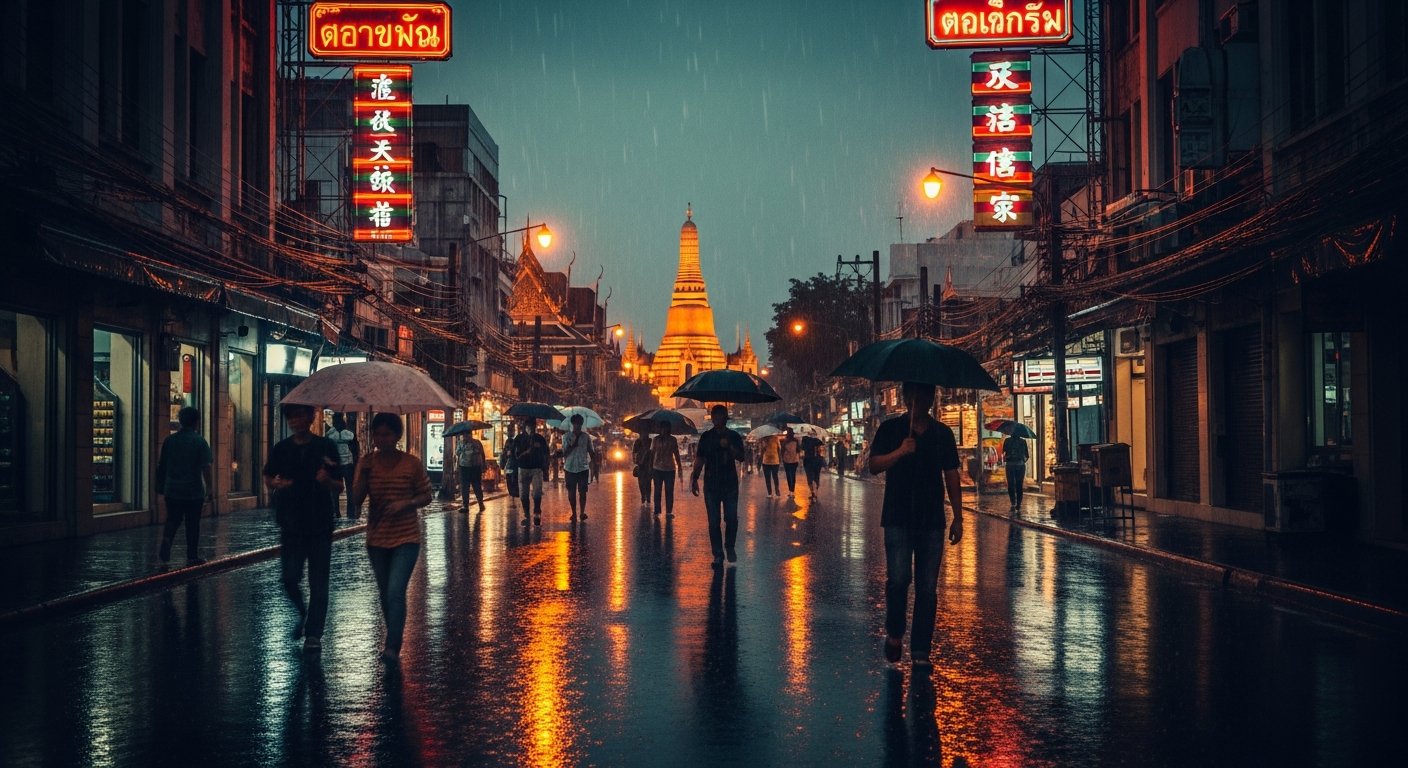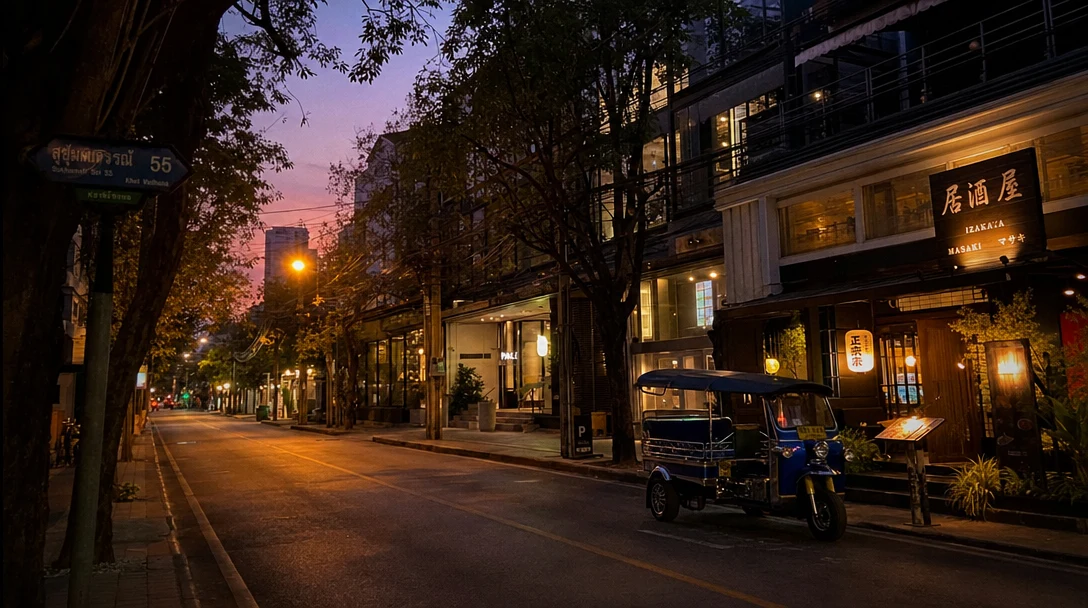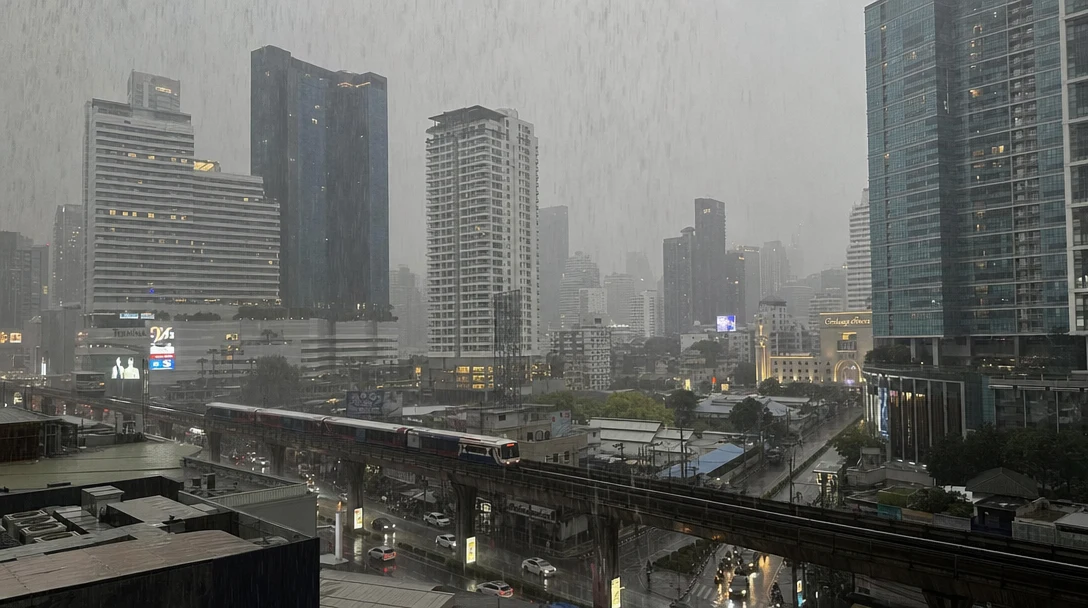
The sky over Sukhumvit goes from blue to bruise-purple in about twenty minutes. By the time you’ve paid the bill at the cafe, it’s already coming sideways. Your plan for the Grand Palace is dead. Your plan for the riverboat is dead. You’re standing under an awning watching a tuk-tuk driver bail water out of his footwell with a Styrofoam cup. It is 2:47 PM in August in Bangkok and you have six hours to fill.
This is the article I wish someone had handed me my first rainy season here in 2023. The general Thailand rainy season guide covers when to come and what the weather actually does. Short version: it’s not as bad as your guidebook claims. This guide is the next step. Once you’re already here, already wet, already watching the radar turn red on your phone, what do you actually do with the afternoon?
The good news: Bangkok is one of the easiest big cities on earth to spend a rainy day in. The BTS and MRT are elevated and covered. The malls are city-sized and connected to the trains by air-conditioned skybridges. The spa scene is one of the densest in the world. You can build a full day, breakfast to last call, without ever taking the umbrella out of your bag.
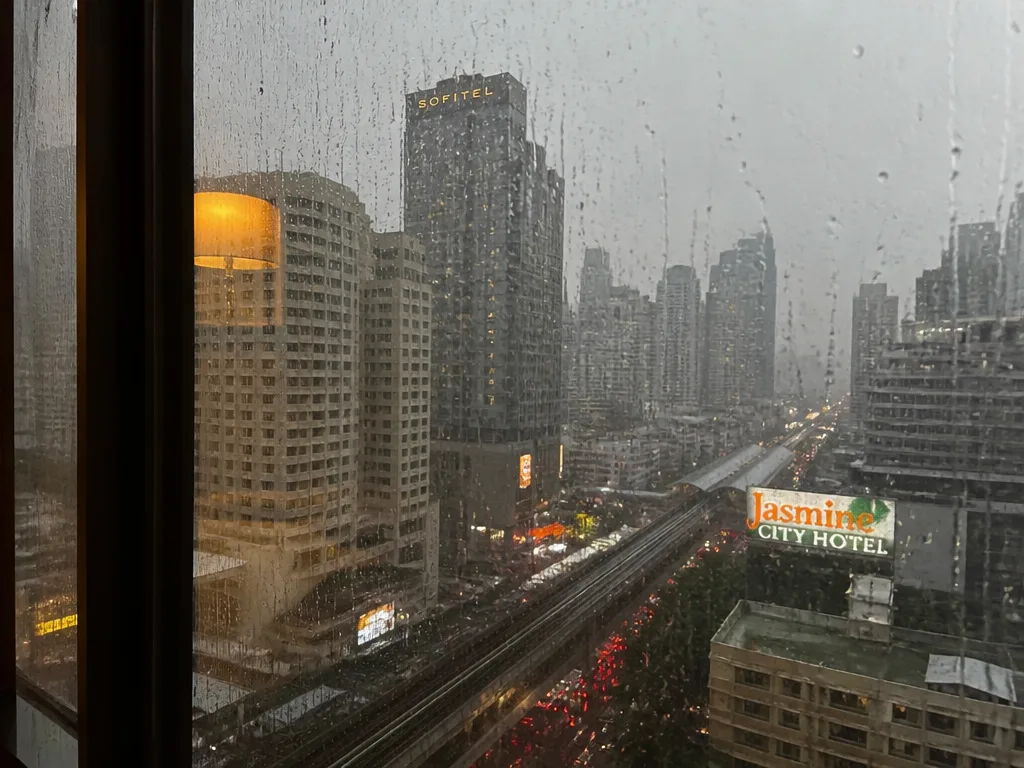
Bangkok Rain Reality 2026
Bangkok’s rainy season runs roughly mid-May through October. The pattern is far more predictable than the word “monsoon” implies. Mornings are almost always clear and dry. Clouds start building around noon. The storm hits sometime between 1 PM and 5 PM, drops 30 to 90 minutes of heavy rain, and is gone by sunset. Evening is usually fine again.
August averages around 219 mm of rain across roughly twenty rainy days. September is the wettest month, with about 333 mm spread across another twenty days. The numbers sound brutal but the lived experience is one short hard storm per afternoon, not all-day drizzle.
| What | Reality on the ground |
|---|---|
| Peak months | August and September |
| Daily pattern | Clear morning, storm 1–5 PM, clear evening |
| Storm length | Usually 30–90 minutes, occasionally longer |
| BTS/MRT during rain | Runs normally, fully covered |
| Grab/Bolt during heavy rain | 20–40 minute waits, surge pricing common |
| Street flooding | Asok, Silom, Sukhumvit Soi 11/22/49 are repeat offenders |
The strategic move is simple: load outdoor plans (temples, markets, parks) into mornings, treat the 1–5 PM window as guaranteed indoor time, then come back out for street food and bars after dark. If you fight the pattern you lose. If you plan around it the rain stops being a problem and becomes a built-in nap window.
Mega Malls That Eat a Whole Day
If you have only one indoor card to play, play this one. Bangkok mall culture is its own subculture, and the top tier of malls are basically self-contained cities. We covered the full breakdown in the Bangkok shopping mall guide, so here’s the rainy-day-specific shortlist.
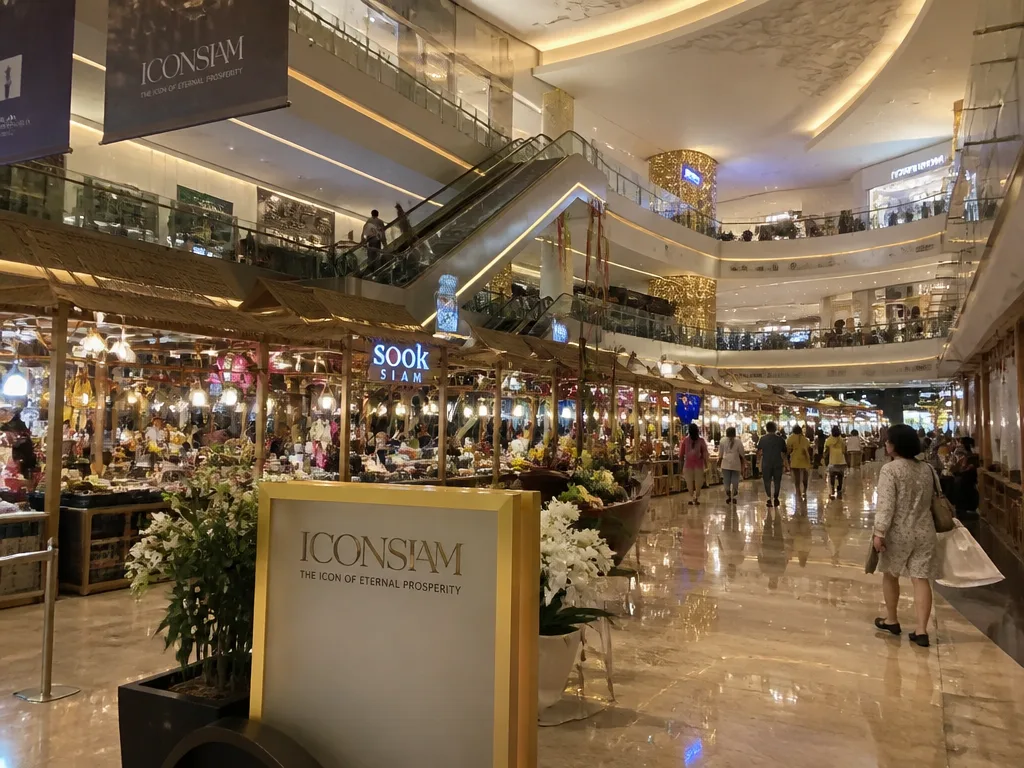
ICONSIAM (Charoen Nakhon). The newest mega-mall on the river side. Ground-floor SookSiam is an indoor floating market with food, crafts and snacks from all 77 Thai provinces, basically a covered food court the size of a city block. Easy three to four hours. Free shuttle boat from Sathorn Pier covers the river crossing.
Siam Paragon + Siam Center + Siam Discovery (Siam). Three connected malls plus the BTS Siam interchange skybridge. SEA LIFE Bangkok Ocean World is in the Paragon basement and buys you two or three hours with kids. The Paragon Gourmet Market on B1 is the best supermarket in central Bangkok, fun even if you’re not buying.
EmSphere + EmQuartier + Emporium (Phrom Phong). Connected by skywalks above Sukhumvit Road. The full IKEA on EmSphere floors 3-4 is a legitimate rainy-day attraction in its own right. Swedish meatballs while it pours outside is a stronger plan than it sounds.
CentralWorld (Ratchaprasong). Volume play. Connected to BTS Chit Lom and Siam by skybridge. The downside is the scale: you’ll walk forty minutes and still not find the shop you Google-mapped. Go with a target list, not for browsing.
Practical rainy-day mall tactic. Plan one mall as the anchor, not two or three. The walk between malls is where you get drenched. Pick one, eat inside, see a film inside, get a massage inside, and you’ll burn five hours without noticing.
Museums and Galleries Worth the Trip
Bangkok’s museum scene punches below its weight in tourist reputation but is genuinely good once you start looking. Most are walkable from BTS/MRT and almost all have covered approaches.
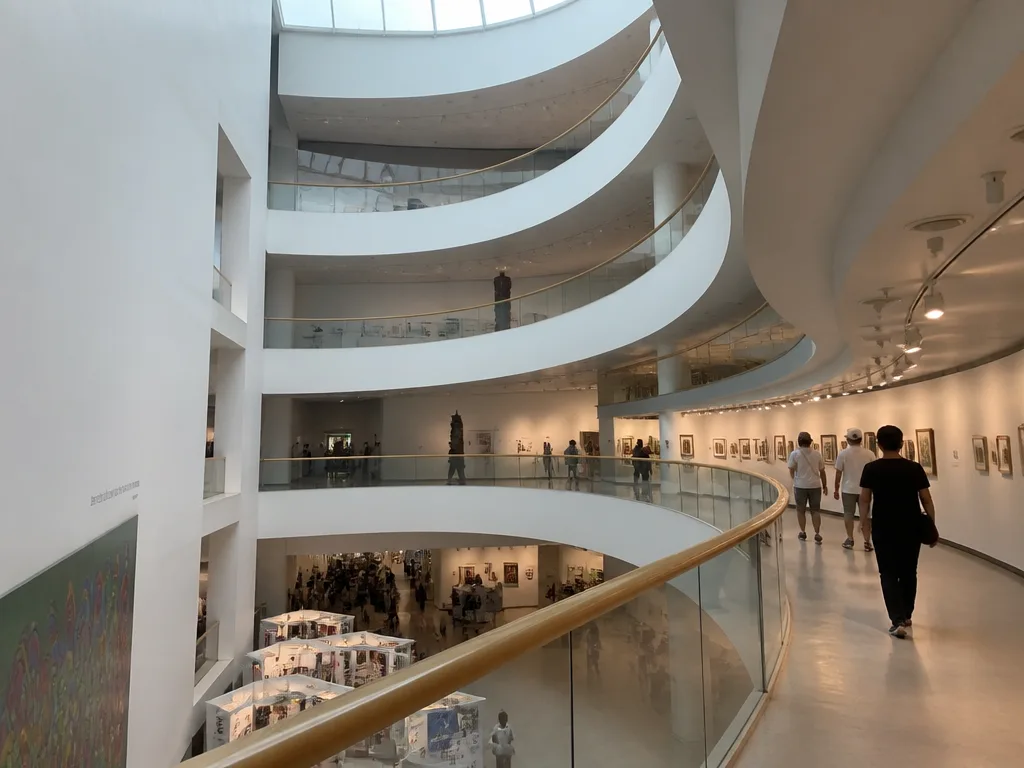
Bangkok Art and Culture Centre (BACC). Free admission, directly attached to BTS National Stadium by skybridge, so you can arrive without your shoes touching pavement. The white spiral atrium is the city’s best modern interior, and the rotating exhibitions hit a lot harder than the “free thing nearby the mall” framing suggests. Open Tuesday to Sunday, 10:00 to 20:00. Easy two hours, can stretch to four if there’s a strong show on.
Jim Thompson House Museum. The teak-house compound of the American silk businessman who vanished in Malaysia in 1967. The walkways between the houses are covered, so even in moderate rain the tour works. Adult ticket is 250 THB, under-22 is 150 THB, kids under 10 free. The garden is small but lush, actually nicer in light rain. Open daily 10:00 to 18:00, last entry 17:00.
MOCA Bangkok (Museum of Contemporary Art). The serious Thai contemporary collection lives here, on Vibhavadi Rangsit Road north of the center. Adult 300 THB, students 120 THB. Five floors, all indoor. The trade-off is location: it’s a 250–350 THB Grab ride from Sukhumvit, so commit to half a day if you go.
Museum Siam. Interactive history museum near the Grand Palace, in a beautifully restored former Ministry of Commerce building. 100 THB adults, 50 THB children, free under 15 and over 60. Easy 90 minutes, more if you actually read everything. If you were headed to the Grand Palace before the storm hit, this is the natural pivot. It’s a five-minute walk and entirely indoor.
National Museum Bangkok. Massive collection, mostly indoor pavilions connected by covered walks. Best for serious history nerds. The free English guided tours (Wednesdays and Thursdays at 09:30) are excellent and worth planning the day around.
Spas and Massage Marathons
If there is one rainy-day move I will defend to the death, it is this: book a long spa session in the worst part of the afternoon. A two-hour Thai massage from 14:00 to 16:00 is the cheat code for Bangkok in August. You walk in dripping, walk out dry, the storm has passed, and you’ve been horizontal for 120 baht-equivalent minutes.
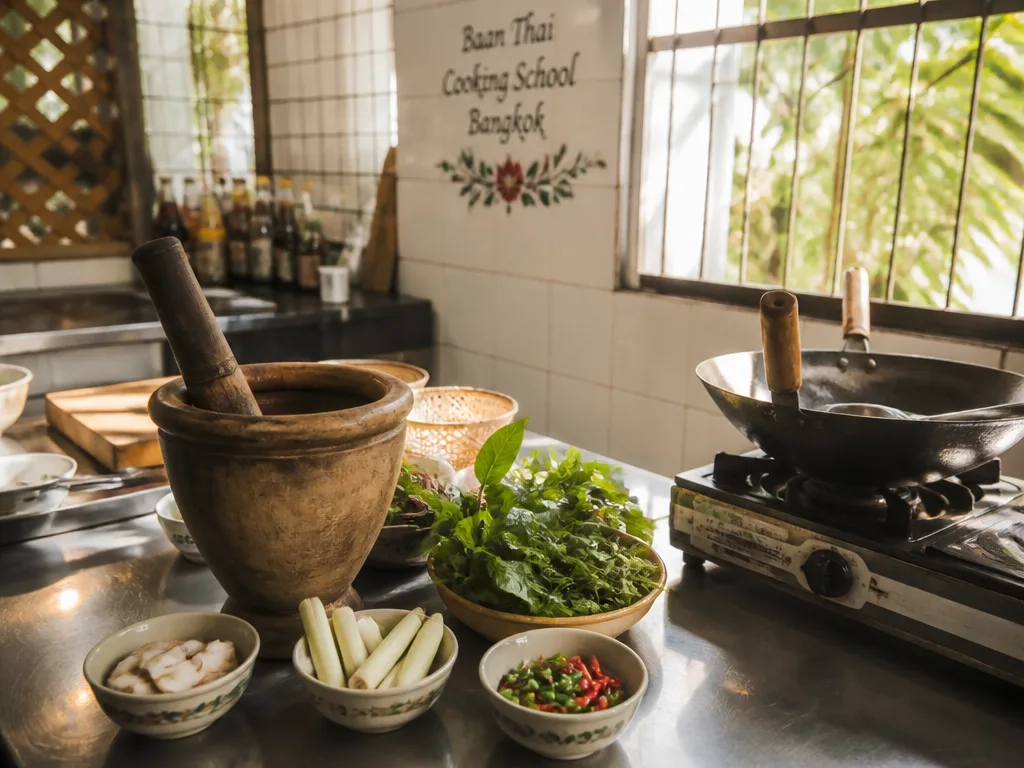
The full breakdown lives in the Bangkok Thai massage guide and the premium massage guide, but the rainy-day shortlist:
Health Land (chain, multiple branches including Asok, Sathorn, Ekkamai). Mid-tier. Two-hour traditional Thai massage runs 650–700 THB. Clean, professional, easy to walk in to. Sathorn and Asok branches are the easiest from BTS.
Let’s Relax (chain, Siam, Sukhumvit, Terminal 21, EmQuartier, ICONSIAM and more). Slightly more touristy and more polished than Health Land. Sixty-minute Thai massage around 800–1,000 THB, packages 1,500–2,500 THB. The advantage during a storm: most branches are inside or directly connected to malls, so you don’t have to step outside.
Divana (Sukhumvit 11, Thonglor, Siam Discovery). The top tier of the chain spas. Treatments 2,500–5,500 THB for packages running 90 minutes to three hours. The Sukhumvit 11 garden villa branch is worth the splurge once per trip; the building is its own escape.
Strategic rainy-day move. Book a 2- or 3-hour package. The longer treatments are not just “more massage.” They layer steam, scrub, compress, and oil work, and they reliably outlast a single rain cell.
Cooking Classes
This is the most upside-per-baht indoor activity in Bangkok. You arrive at 09:00, do a market walk in the morning before the rain, cook four to six dishes in a covered kitchen during the worst hours, eat your own lunch, and walk out at 14:00 with the skill to actually make pad krapow at home. The whole rainy-afternoon problem is solved by lunch.
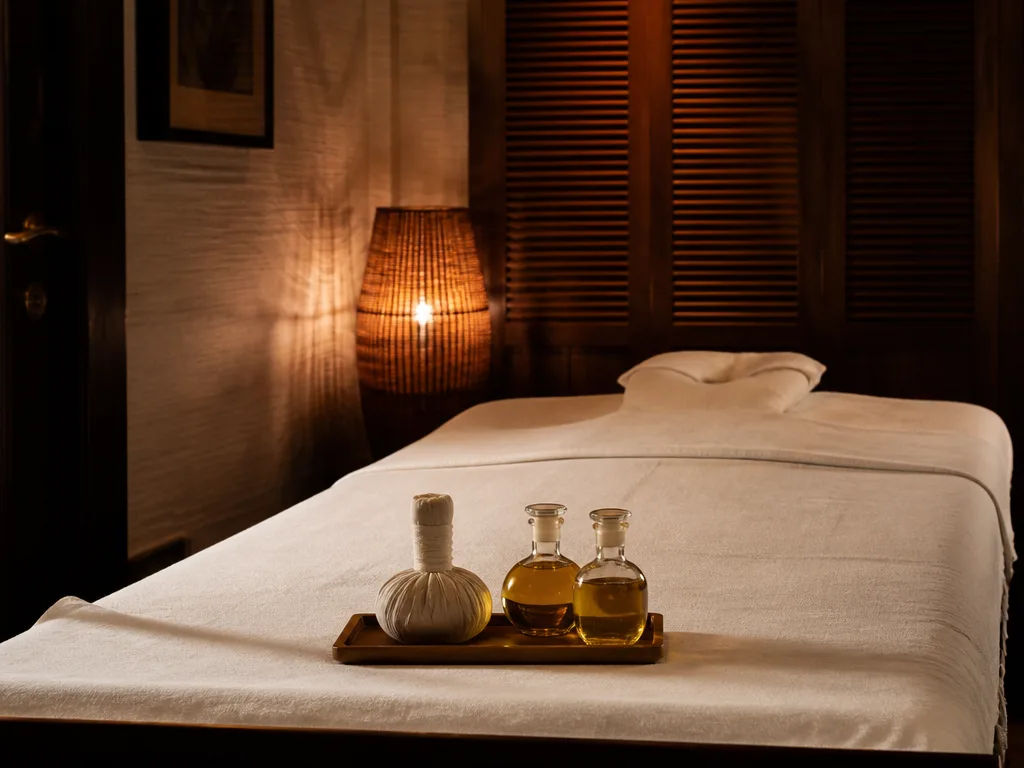
Silom Thai Cooking School. The volume favorite. Around 1,500 THB per person for a 4–5 hour class with market visit, four to five dishes, and recipe book to take home. Multiple sessions daily, easy to book day-of in low season. BTS Chong Nonsi, 10-minute walk.
Blue Elephant Cooking School. The upmarket option, in a beautiful 100-year-old colonial mansion right next to BTS Surasak. Half-day class around 2,800–3,200 THB. Smaller groups, more polished kitchen, royal Thai cuisine angle.
Bangkok Bold Cooking Studio. Old Town location near Chinatown. More contemporary, design-forward studio. Around 2,500–3,000 THB. Best for travelers who want photogenic kitchen plus modern technique alongside traditional recipes.
Sompong Thai Cooking School. Silom area, similar price band to Silom Thai (around 1,400–1,700 THB), strong reviews for the teaching style. Good backup if Silom Thai is booked.
Pre-book a day or two ahead in peak rainy season (August–September). The classes are the first thing tourists pivot to when their morning plans get rained out.
Hotel Staycations
This is the move you don’t think about until you’ve tried it once. Bangkok five-star hotels are some of the best value on earth, and during low season (which is also rainy season) the rates collapse another 30–50%. If you’re already paying for a basic hotel, the upgrade math gets interesting.
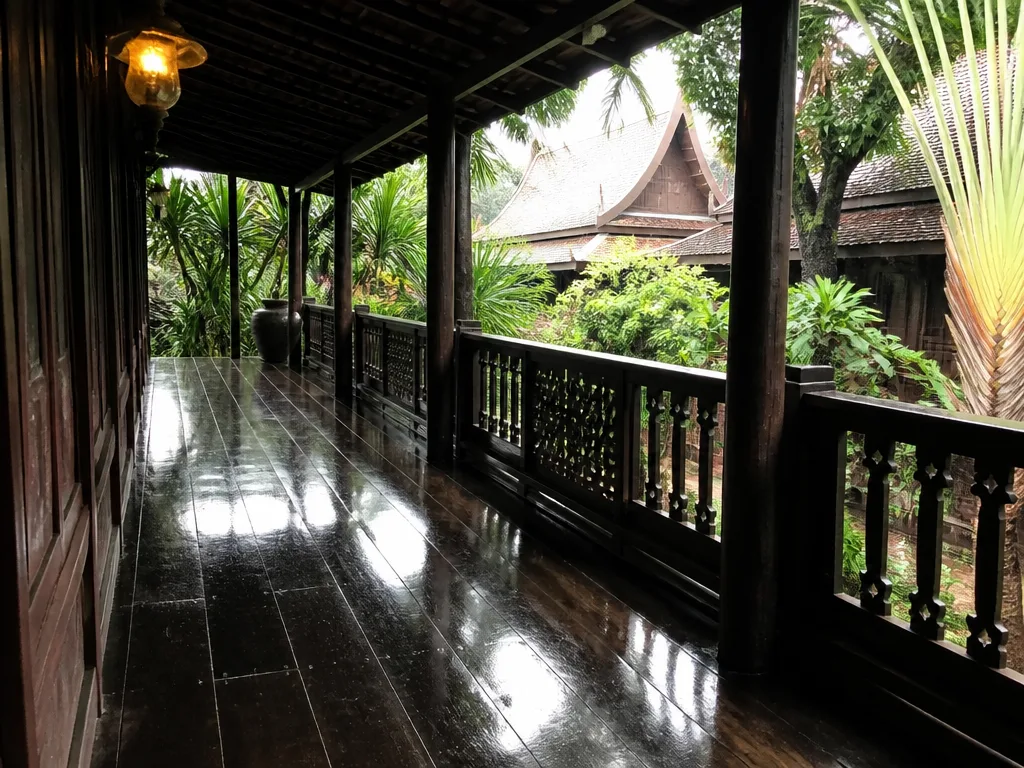
Full breakdown in the Bangkok luxury hotels guide. Here’s the rainy-season-specific play.
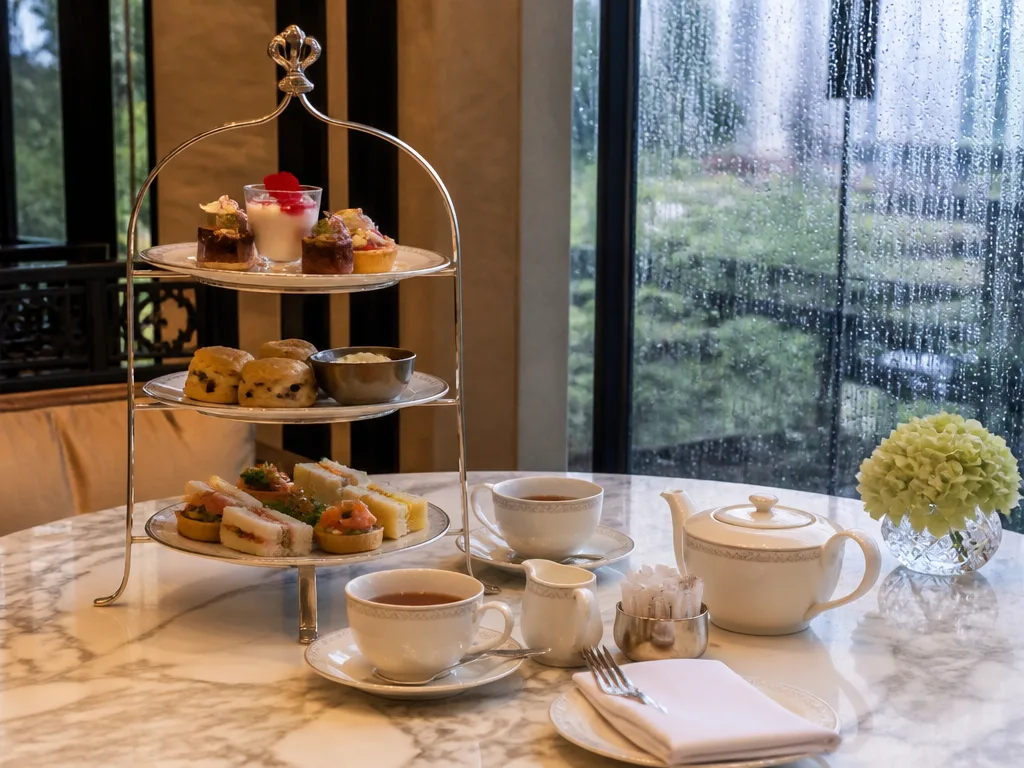
Afternoon tea. Most five-star hotels run a high-tea service from roughly 14:00 to 17:00, in lobby lounges or dedicated tea salons. Price range is 1,200–2,800 THB per person depending on the property. The Mandarin Oriental Authors’ Lounge is the famous one. The Peninsula’s Lobby tea on the river is the photogenic one. Sindhorn Kempinski and The Siam are quieter, more local picks. Two hours indoors, dressed up, listening to a string quartet while it rains is a stronger afternoon than scrolling Reels under a 7-Eleven awning.
Pool day pass. A handful of city hotels sell day passes that include pool access, towels, and a food and beverage credit. Carlton Hotel, Pullman Bangkok King Power, and So Bangkok are the regular operators. Prices run 800–2,000 THB. Most have covered or heated pools that work fine during storms.
Actual staycation. Worth doing once if you’re in town more than a week. Book one night at a mid-luxury property (Park Hyatt, The Athenee, COMO Metropolitan, Sindhorn Midtown) on a weekday in September and the price comes in 30–45% below brochure rate. Check in at 14:00, eat in, swim in, sleep in, leave at noon the next day. Pretty much the platonic ideal of a “the rain doesn’t matter” day.
Book through Agoda below. The city link covers all districts, and during low season the city-wide search will surface deeper discounts than going hotel-by-hotel.
Covered Markets and Indoor Food Scenes
The stereotypical Thai markets (Damnoen Saduak, Maeklong railway market) are mostly outdoor and mostly miserable in a downpour. But Bangkok has a parallel covered-market layer that works just as well in the rain.
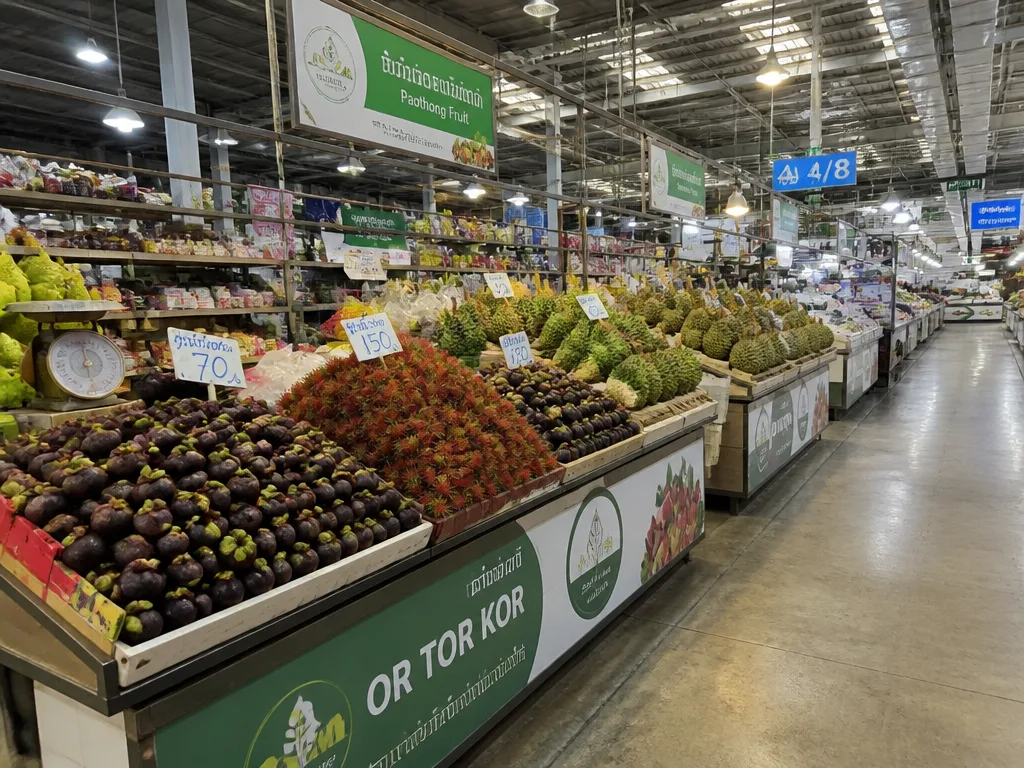
Or Tor Kor Market. Fully covered, fully air-conditioned, considered one of the world’s best fresh markets by CNN’s old rankings and still living up to it. MRT Kamphaeng Phet, right next to Chatuchak. This is where Bangkok chefs and rich grandmothers do their shopping — the produce, fish, and prepared-food sections are next-level. Skip Chatuchak proper in rainy season (mostly open-air, miserable when wet) and shift the whole afternoon to Or Tor Kor instead.
Pak Khlong Talat (flower market). Partially covered, with arcades along the main street. Best at night (it really wakes up after 22:00) when the rain has usually passed but the floor is still wet and the air smells like jasmine and marigold. Free, walkable, photogenic.
MBK Center. Less a mall than an indoor market with a roof. The clothing and accessory floors are essentially Chatuchak with air-conditioning and worse prices, but the food court on Floor 6 is one of the best-value sit-down meals in central Bangkok (most dishes 60–100 THB). Connected to BTS National Stadium and to BACC by skybridge: chain the two in one afternoon.
Terminal 21 Pier 21 (Asok). Top-floor food court done up as an airport terminal. Most plates 60–90 THB. Strong rainy-afternoon move when you’re already on Sukhumvit and don’t want to leave the BTS line.
Cinemas and Entertainment
English-language films are subtitled and screen at all the major mall cineplexes. Tickets are absurdly cheap by US/EU standards: 220–280 THB for a standard seat, 350–450 THB for premium recliners.
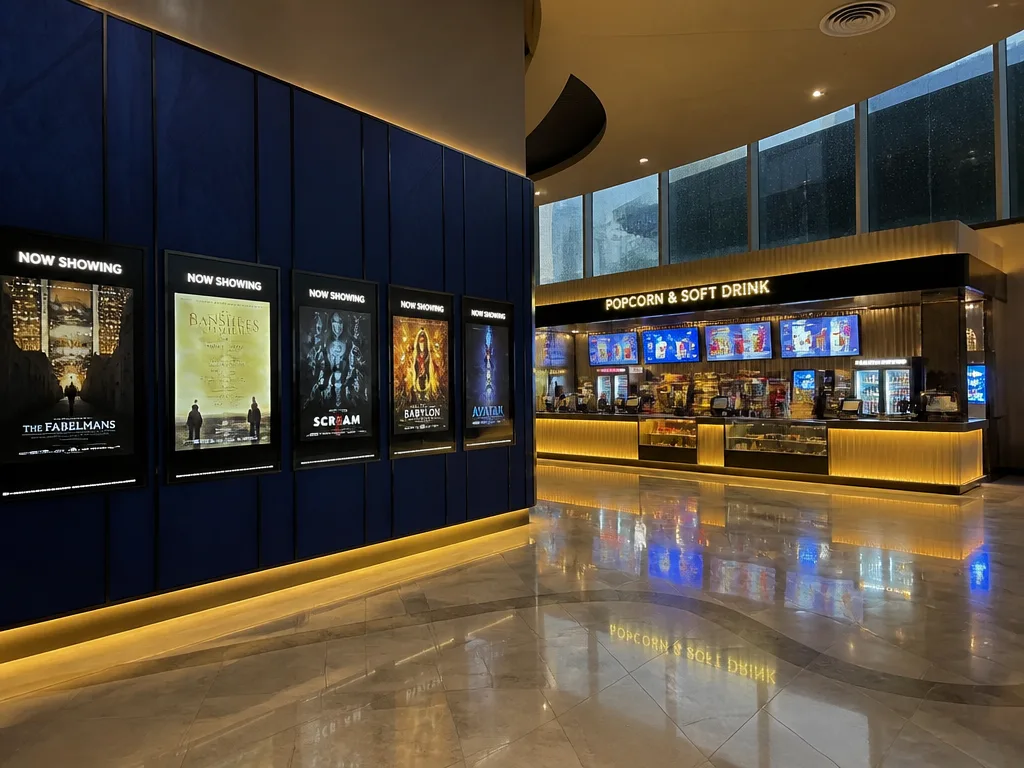
Paragon Cineplex (BTS Siam). The flagship. IMAX, 4DX, and the Enigma luxury hall with full reclining beds and table service. Enigma seats run around 1,500–3,000 THB depending on the film. Yes, it’s wild, but the whole “dinner in a movie bed” thing is its own bucket-list item.
SF World Cinema (CentralWorld). Bigger screens than Paragon on average, slightly cheaper. Same range of IMAX/premium options.
Major Cineplex EmSphere (Phrom Phong). Cleanest, newest of the Sukhumvit-side options. ScreenX wraparound format available.
Escape rooms. Bangkok has a small but solid escape-room scene. Most rooms run 500–700 THB per person depending on group size. Escape Hunt Bangkok (at MBK), Puzzle Room Bangkok, and Xscape are the main operators. English-language hosting is the norm in the tourist-area branches.
Bowling, karaoke, arcades. Most major malls run an entertainment floor. The Major Bowl Hit chain (CentralWorld, EmSphere) does bowling plus karaoke plus an arcade in one space. Pay-per-hour pricing means a group of four can fill three hours for under 2,000 THB total.
Bars and Cafes for All-Day Reading Weather
Sometimes you don’t want to do anything. You want a chair, a window, a coffee, and four hours of staring at the rain. Bangkok is good at this.
Specialty coffee. Bangkok’s third-wave coffee scene is genuinely one of the best in Southeast Asia. Roots Coffee (Thonglor and Sathorn branches), Brave Roasters, and One Ounce for Onion are the workhorse picks. Filter coffee 120–180 THB, decent pastries 80–150 THB.
Bookstore cafes. Open House at Central Embassy (Floor 6) is the photogenic one: full bookstore plus co-working tables plus a cafe under a glass roof. Casa Lapin and Hands and Heart also do the “stay all afternoon” thing well.
Jazz bars (covered). A note on rooftops first: every open-air rooftop in this city closes during rain, no exceptions. The hidden rooftop bars guide covers which ones have covered sections (Hotel Muse’s Speakeasy, parts of HI-SO). For a guaranteed rainy-evening drink, go indoor and go jazz. Saxophone Pub (Victory Monument, three or four live bands per night, 25+ years running) is the institution. Smalls in Suan Phlu is the intimate, multi-story option. Maggie Choo’s on Silom is the 1930s Shanghai cabaret cosplay: kitschy on paper, genuinely fun in person, hidden under a Novotel.
Practical Rain Survival Tips
Small choices that turn a wet day from miserable to fine.
Umbrella, not poncho. Bangkok rain is warm. A poncho traps body heat and you sweat through your shirt before you’ve walked a block. A compact 100–200 THB umbrella from any 7-Eleven handles 90% of situations. Buy two; you will leave one in a cab.
Waterproof phone pouch. Same 7-Eleven shelf. THB 100–200. Buy on day one even if it’s sunny. A 20-second downpour can drown an unprotected phone if you’re caught mid-walk.
Quick-dry clothing. Cotton is the enemy. Synthetic or linen dries in an hour; wet cotton stays cold and clingy for half a day. Wear sport sandals or quick-dry sneakers, not flip-flops (wet marble temple floors are ice rinks) and not leather shoes (they’re done).
BTS skybridges are everything. The Asok–Chit Lom skybridge system, the Siam interchange, and the Phrom Phong–Asok skywalk let you cross half of central Bangkok without touching street level. Plan routes around the skybridge map. The full transport breakdown is in the Bangkok transportation guide.
Grab and Bolt during heavy rain. Wait times jump to 20–40 minutes and surge pricing kicks in. If you can wait out the worst 30 minutes of a storm in a cafe, do that. The surge usually drops with the rain.
Don’t fight street flooding. Asok, Silom, Sukhumvit Soi 11/22/49, and parts of the Old City flood ankle-deep after big September storms. The BTS and MRT keep running. If your route has a flooded ground-level segment, switch to elevated transit and accept a longer walk to the destination station. Don’t wade. Bangkok storm runoff is genuinely nasty.
Carry a thin layer. Mall and cinema AC is set to “industrial freezer” and you will need long sleeves the moment your shirt is damp.
FAQ
How much does it actually rain in Bangkok in August and September?
About 219 mm across 20 days in August, and around 333 mm across 20 days in September. In practice that’s one short heavy storm most afternoons rather than continuous rain. Mornings are almost always clear and evenings are usually fine again.
Does the BTS or MRT stop during heavy rain or flooding?
Almost never. Both are elevated (BTS) or underground (MRT) and engineered to handle Bangkok’s worst monsoon storms. Street-level traffic snarls and Grab wait times explode, but the trains keep running on schedule. Stick to BTS/MRT whenever the radar looks bad.
Is it safe to walk through flooded Bangkok streets?
No. Bangkok storm-drain runoff is a mix of street grime, rat habitat, and overflow from canals. Even ankle-deep water hides curbs, manhole covers, and the occasional broken tile. Stay on elevated transit or wait it out. The famous flood streets (Asok, Silom, parts of Sukhumvit) can hit knee-deep in serious September storms.
Can I still do food delivery in heavy rain?
Yes, but expect 30–60 minute waits during the worst of a storm and surge pricing on delivery fees. GrabFood, LINE MAN, and Foodpanda all keep running. Riders use plastic poncho-and-helmet combos and are the unsung heroes of the rainy season. Tip 20–40 THB if they bring your dinner soaked.
Are there walking rain-proof routes I can actually use?
Yes, three main ones. The Siam–Chit Lom–Ploenchit skybridge connects MBK, BACC, Siam Square, Siam Paragon, CentralWorld, and Central Embassy. The Asok skywalk connects Terminal 21 to the EM District (Phrom Phong) via covered BTS walkways. The Sathorn Pier skywalk feeds you onto BTS Saphan Taksin under cover. Together these three corridors keep you indoor for most of central Bangkok.
What’s the worst rainy-season day-trip mistake?
Booking a non-refundable boat tour out of Phuket or Krabi during August or September. The Andaman seas are genuinely rough and tours cancel without refund. If islands are essential, go to the Gulf side (Koh Samui, Koh Phangan): opposite monsoon timing, much better weather May through September. Full breakdown in the Thailand rainy season guide.
Should I just leave Bangkok in September?
Only if you’re chasing beaches. The city itself is excellent in September: hotels are 30–50% cheaper, the temple circuit (the Bangkok temple tour lineup) has a fraction of the crowds, and the indoor scene this article covers is exactly the same as in December. Some of my best Bangkok days have been deep September staycations.
Bottom Line
Bangkok rainy season is a tooling problem, not a trip-ruining problem. The afternoon storm window is reliable, the BTS/MRT/skybridge network ignores the rain, and the city’s indoor scene (malls, museums, spas, cooking schools, cinemas, hotel lounges) is one of the deepest in Asia.
The plan that works: outdoor stuff before noon, indoor anchor activity from roughly 13:00 to 17:00 (cooking class, spa marathon, museum + mall combo, or staycation check-in), then back outside for street food and bars after dark. Do that once and you stop tracking the radar. You also stop paying high-season prices.
If you’re booking a hotel for the rainy months and want to maximize the indoor-scene advantage, the affiliate Agoda link below covers all districts and surfaces deeper low-season discounts than searching hotel-by-hotel. The Klook cooking-class link will get you into one of the schools above by tomorrow afternoon if you need a Plan B fast.