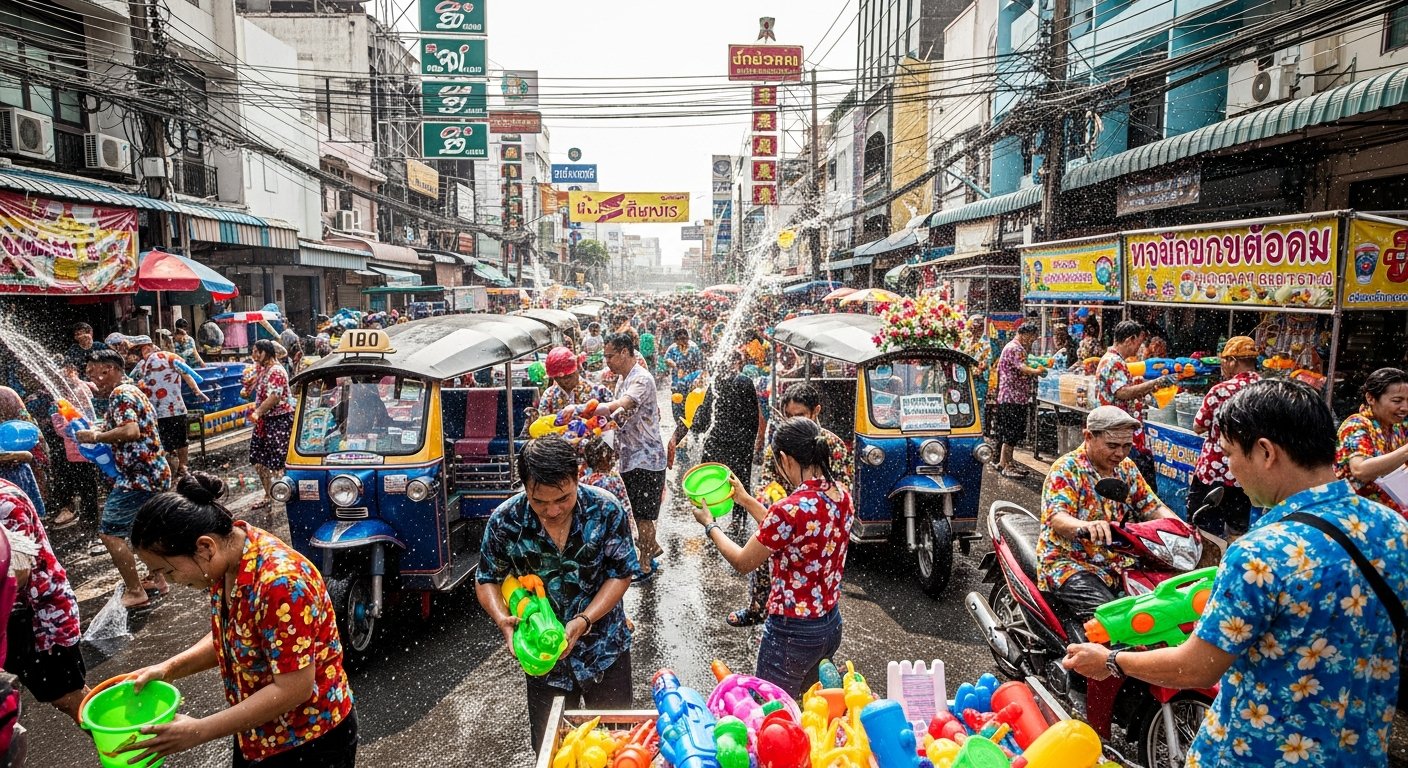
Songkran is three days of citywide water warfare, and if you happen to be in Bangkok between April 13 and 15, you are participating whether you like it or not. There is no neutral zone. There is no “just walking to 7-Eleven.” The moment you step outside, you are a target.
After a decade of surviving (and occasionally winning) this thing, I can tell you: Songkran is the most fun you’ll have in Thailand if you prepare for it, and the most miserable experience imaginable if you don’t. A dead phone, a soaked passport, and a sunburn that turns your shoulders into jerky are all preventable.
Here’s everything you actually need to know.
What Is Songkran, Really?
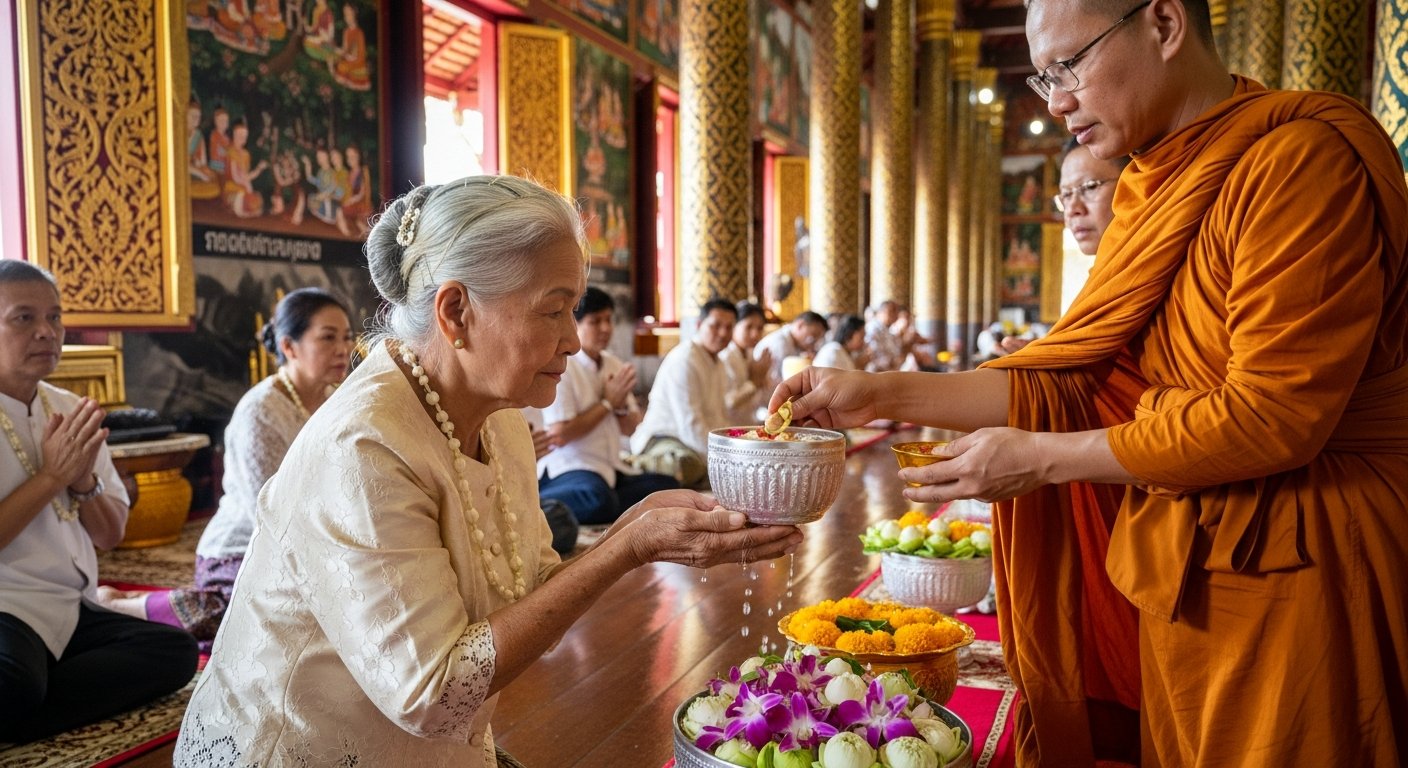
Songkran is the Thai New Year, celebrated annually from April 13 to 15. It marks the beginning of the traditional Thai calendar and falls during the hottest stretch of the year, when Bangkok regularly hits 38-40 degrees Celsius. The water element isn’t random party behavior. It evolved from the tradition of gently pouring water over Buddha statues and the hands of elders as a gesture of cleansing and respect.
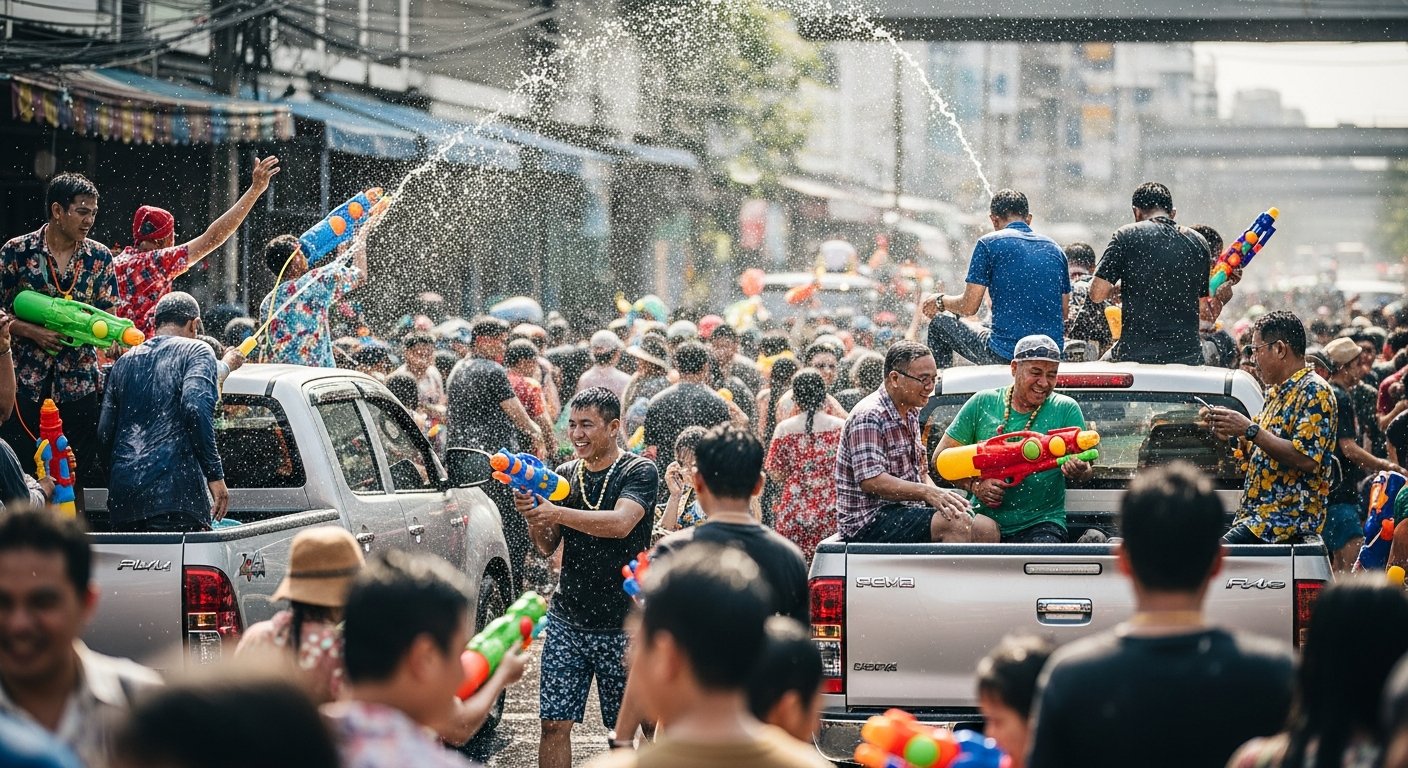
Over the decades, that gentle pouring turned into buckets. Then hoses. Then pickup trucks mounted with 500-liter tanks cruising Silom Road, hosing down everyone in sight. Modern Songkran is one of the biggest street festivals on the planet, and for most visitors, the water fight is the entire experience.
But the cultural side runs deep, and understanding it makes the whole thing better. More on that below.
Where Should You Go? The Best Songkran Spots in Bangkok
Not all Songkran zones are created equal. Each major area has its own energy, crowd, and intensity level. Here’s an honest breakdown.
| Spot | Vibe | Crowd Level | Water Intensity | Best For |
|---|---|---|---|---|
| Silom Road | Full-scale water war, DJ stages, party atmosphere | Extreme | Maximum — hoses, trucks, buckets | The ultimate Songkran experience |
| Khao San Road | Backpacker party, younger international crowd | Very High | High — mostly buckets and water guns | Budget travelers, solo backpackers |
| Siam Square / CentralWorld | Family-friendly, organized events, live music | High | Moderate — water guns, light splashing | Families, couples, Instagram |
| Chatuchak area | Local neighborhood celebrations | Moderate | Moderate | Seeing how locals actually celebrate |
| Riverside (Phra Athit) | Chill, artistic, more cultural | Low-Moderate | Light | People who want fun without chaos |
Silom Road — The Main Event
Silom during Songkran is essentially a 2-kilometer open-air rave with water instead of fog machines. The street shuts down to traffic and fills with hundreds of thousands of people, stages, foam machines, DJs, and pickup trucks turned into mobile water cannons. You will be drenched within 30 seconds of arriving.
Get there via BTS Sala Daeng or MRT Silom station — both drop you right at the edge of the action. Most of the heavy action runs from Silom Soi 2 to Silom Soi 8. If you want to know the area better before Songkran, check out our complete Silom guide.
Peak hours: 1 PM to 6 PM. Things wind down after dark, though the bars and clubs take over from there.
Khao San Road — The Backpacker Edition
Khao San is a tighter, more compressed version of the chaos. The road is narrow, so the density of water hits per second is actually higher than Silom. The crowd skews younger and more international, with cheaper drinks and a stronger party-over-culture ratio.
The trade-off: it’s harder to escape when you need a break, and the nearby side streets turn into ankle-deep rivers by mid-afternoon.
Siam Square — The Polished Version
CentralWorld and the area around Siam host organized Songkran events with stages, sponsors, and actual security. The water fights here are more “water gun shootout” than “bucket ambush.” It’s genuinely fun, especially if you’re not looking to get absolutely destroyed. Good option for couples or anyone who wants the experience with slightly less chaos.
What to Wear (and What to Leave at the Hotel)
Wear:
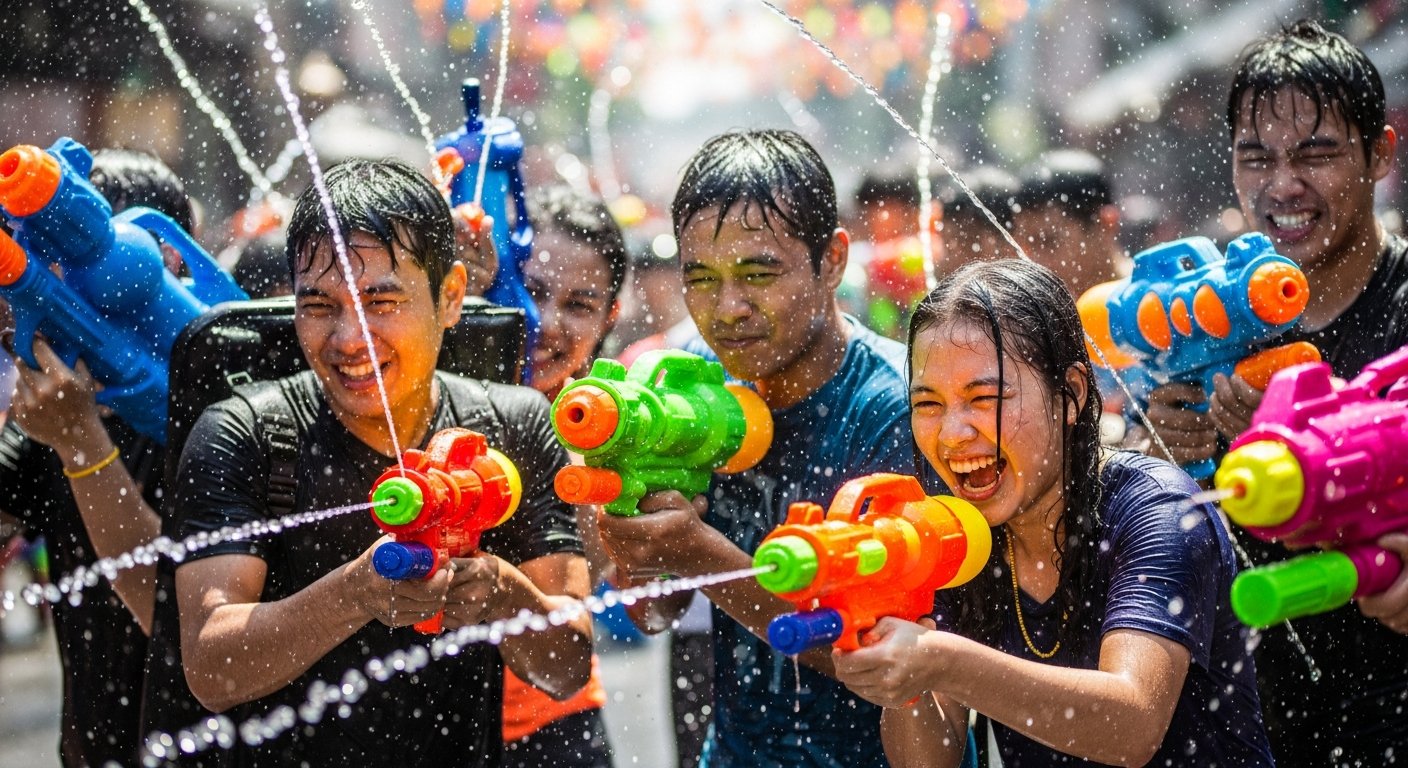
- Quick-dry shorts and a lightweight shirt you don’t care about (it will get stretched, stained, and possibly ripped)
- Sandals or old sneakers with grip. The streets get incredibly slippery. Flip-flops are a broken-toe waiting to happen
- Sunscreen. SPF 50, reapply every two hours. You’ll think the water keeps you cool. It doesn’t prevent the burn
- A waterproof phone pouch (more on this below)
- A small waterproof bag or dry bag for essentials
Leave at the hotel:
- Anything leather
- Your good watch
- Expensive sunglasses
- Jewelry
- Any bag you’d be upset about ruining
- White clothing (it goes transparent immediately)
How to Protect Your Phone, Wallet, and Passport
This is the section that will save you the most money. Every Songkran, I watch tourists learn these lessons the hard way.
Phone: Buy a waterproof phone pouch. They sell them at every 7-Eleven, street vendor, and mall for 50-150 THB during the weeks before Songkran. The ones with the lanyard neck strap are best. You can still use the touchscreen through the plastic. Test it in the sink before you go out. Some of the 50-baht ones leak. The 100-baht pouches from 7-Eleven are usually reliable enough.
Wallet: Leave it in the hotel safe. Carry only the cash you need for the day (1,000-2,000 THB is plenty) in a zip-lock bag inside your pocket. If your SIM card and payment apps are set up properly, you can use QR code payments at many spots, even during Songkran.
Passport: Never bring your passport. Keep a photo of it on your phone (inside the waterproof pouch). If you’re concerned about ID, carry a laminated photocopy.
Hotel key card: Most hotel key cards survive water, but put it in the zip-lock with your cash anyway.
The Songkran Packing Checklist
Everything you should have ready the night before:
- Waterproof phone pouch (tested)
- Zip-lock bags (2-3, for cash and small items)
- Sunscreen SPF 50+
- Quick-dry clothes
- Sandals with grip or old sneakers
- Small towel or bandana
- Cash only, 1,000-2,000 THB
- Water gun (optional — vendors sell them everywhere for 100-500 THB)
- Dry bag or waterproof backpack
- Wet wipes for post-battle cleanup
- Change of dry clothes packed in a plastic bag (for the trip home)
The Cultural Side Most Tourists Miss
Here’s what separates a good Songkran experience from a great one: understanding that this is Thai New Year, not just a water fight.
Temple Visits (Tam Bun)
On the morning of April 13, many Thais visit their local temple to make merit. They offer food to monks, pray, and pour water over Buddha statues — the original form of Songkran. If you visit a temple during these morning hours (7-10 AM), you’ll see a completely different side of the holiday. Respectful visitors are welcome. Wear appropriate clothing that covers shoulders and knees.
Rod Nam Dam Hua — The Blessing Ceremony
This is the tradition that means the most to Thai families. Younger people visit their elders — parents, grandparents, teachers — and gently pour scented water over their hands while asking for blessings for the new year. The elders then offer words of wisdom and blessings in return.
You’ll see this happening in homes, offices, and temples. If a Thai friend invites you to participate, say yes. It’s a genuinely moving experience, and you’ll understand the holiday on a level that the water fight alone can never reach.
Sand Pagodas (Phra Chedi Sai)
Thais build small sand pagodas at temples during Songkran. The tradition holds that throughout the year, sand sticks to your shoes when you leave the temple grounds, so you return it during the new year. It’s a beautiful, quiet tradition that barely registers amid the water cannons, but it’s worth seeing.
What NOT to Do During Songkran
Don’t throw water at monks. Ever. This should be obvious, but every year someone does it. Monks are deeply respected in Thai culture and are not participants in the water fight. If you see monks walking with their alms bowls, give them space and respect. The same goes for people who are clearly not participating — the elderly, people carrying babies, food vendors actively cooking.
Don’t use ice water. This is increasingly frowned upon and in some areas banned. Dumping ice-cold water on someone in 39-degree heat causes genuine shock and can trigger heart problems, especially in older people. Regular water is fine.
Don’t use dirty water. Some people fill buckets from storm drains or canals. This water can cause serious eye and skin infections. Use clean water only.
Don’t drink and drive. Songkran has the highest traffic fatality rate of any holiday period in Thailand. The government calls it the “Seven Dangerous Days” for a reason. If you’re drinking, use BTS/MRT or Grab to get home.
Don’t spray water at motorbike riders. A blast of water to the face at 60 km/h is not a fun surprise. It’s genuinely dangerous and one of the leading causes of Songkran accidents.
Don’t disrespect the cultural ceremonies. If you visit a temple, behave like you’re at a temple. The water fight and the spiritual side of Songkran coexist, but they don’t overlap.
Safety Tips from Someone Who Learned the Hard Way
Hydrate aggressively. You’re running around in 38-degree heat, getting sprayed with water that makes you feel cooler than you actually are. Heatstroke during Songkran is common. Drink water constantly, even when you don’t feel thirsty. 7-Eleven and street vendors sell water everywhere.
Wear sunscreen before you leave. Once you’re soaked, applying sunscreen is pointless — it won’t stick. Put it on 30 minutes before heading out, and ideally use a water-resistant formula.
Watch your footing. The streets become ice rinks. Between the water, soap, and foam, the pavement is treacherous. Walk carefully, especially on sidewalk edges and stairs.
Know your exits. Before diving into Silom or Khao San, identify the nearest BTS station, side street, or 7-Eleven where you can take shelter. When you need a break, you need it fast.
Protect your eyes. If you wear contact lenses, consider switching to glasses (inside a waterproof strap) or going without for the day. Dirty water plus contacts equals an eye infection. If water gets in your eyes, rinse with clean water or saline as soon as possible.
Keep some Thai phrases ready. “Sawasdee pee mai” (Happy New Year) goes a long way. Most Thais will beam when a foreigner says it.
Is Songkran Worth Planning a Trip Around?
Absolutely. There’s nothing else like it in the world. Holi in India is the closest comparison, but Songkran has its own energy — the combination of tropical heat, the scale of participation (literally the entire city), and the genuine warmth of Thai hospitality makes it singular.
Book your hotel at least two months in advance. Prices near Silom and Khao San spike significantly during Songkran week, and the good spots sell out. Midrange hotels in the Sukhumvit area (BTS accessible) are your best value — you can train to the action and retreat to a dry, air-conditioned room when you’ve had enough.
One final note: if this is your first time in Bangkok, consider arriving a day or two early to get your bearings before the chaos begins. Everything closes or operates on reduced hours during Songkran, so handle your SIM card, cash exchange, and logistics before April 13.
Frequently Asked Questions
When exactly is Songkran 2026?
Songkran officially runs from April 13 to 15, with April 13 being the main day (Wan Songkran). However, in practice, water fights start on April 12 in some areas and continue through April 16, especially if the dates fall near a weekend. Government offices and banks are closed April 13-15.
Can I opt out of getting wet?
Technically, you can try. Practically, no. If you’re walking on any major road in Bangkok during Songkran daytime hours, you will get wet. If you genuinely need to stay dry (medical reasons, important appointment), use the BTS/MRT — trains are dry inside — and take a Grab directly to and from the station.
Is Songkran safe for solo female travelers?
Songkran is generally safe, but the massive crowds and party atmosphere do require extra awareness. Stick to well-known spots like Silom’s main stretch and Siam Square, go with a group if possible, and trust your instincts if a situation feels off. Groping incidents have been reported in the most crowded areas, and Thai authorities have increased enforcement against this in recent years.
How much money should I bring for a day of Songkran?
Budget 1,000-2,000 THB in cash. Water guns cost 100-500 THB, street food runs 40-100 THB per dish, and drinks are 60-150 THB. You won’t need much else. Leave cards and excess cash at the hotel.
Is Songkran only in Bangkok?
Songkran is celebrated across all of Thailand, and some of the best celebrations happen outside Bangkok. Chiang Mai’s moat area is legendary — the old city essentially becomes a circular water fight loop. Pattaya extends its celebrations to a full week. Phuket’s Patong Beach goes hard. But for first-timers, Bangkok gives you the widest range of experiences, from Silom’s mega-party to quiet temple ceremonies, all accessible by public transit.