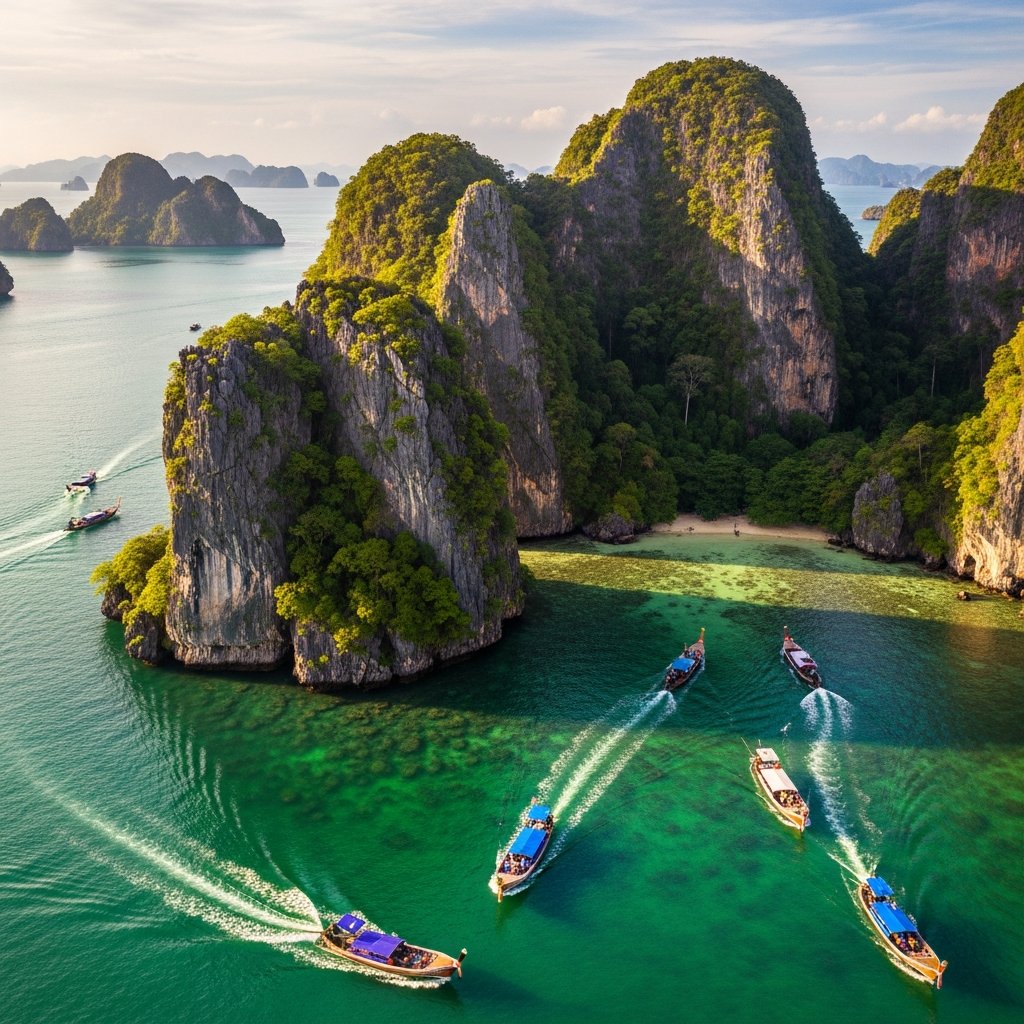
Every year, roughly two million people visit Phi Phi. Most of them do it wrong. They buy a day-trip package from Phuket, spend six hours on a boat with 40 strangers, get 45 minutes at Maya Bay shoulder-to-shoulder with a thousand other tourists, and return sunburned and underwhelmed. Then they post on Reddit asking if Phi Phi is overrated.
It’s not. Phi Phi is genuinely one of the most beautiful places in Thailand, probably in all of Southeast Asia. But the way most people experience it strips out everything that makes it special. The fix is simple: stay overnight, time your visits right, and know which beaches belong to the day-trippers and which belong to you.
Getting to Phi Phi
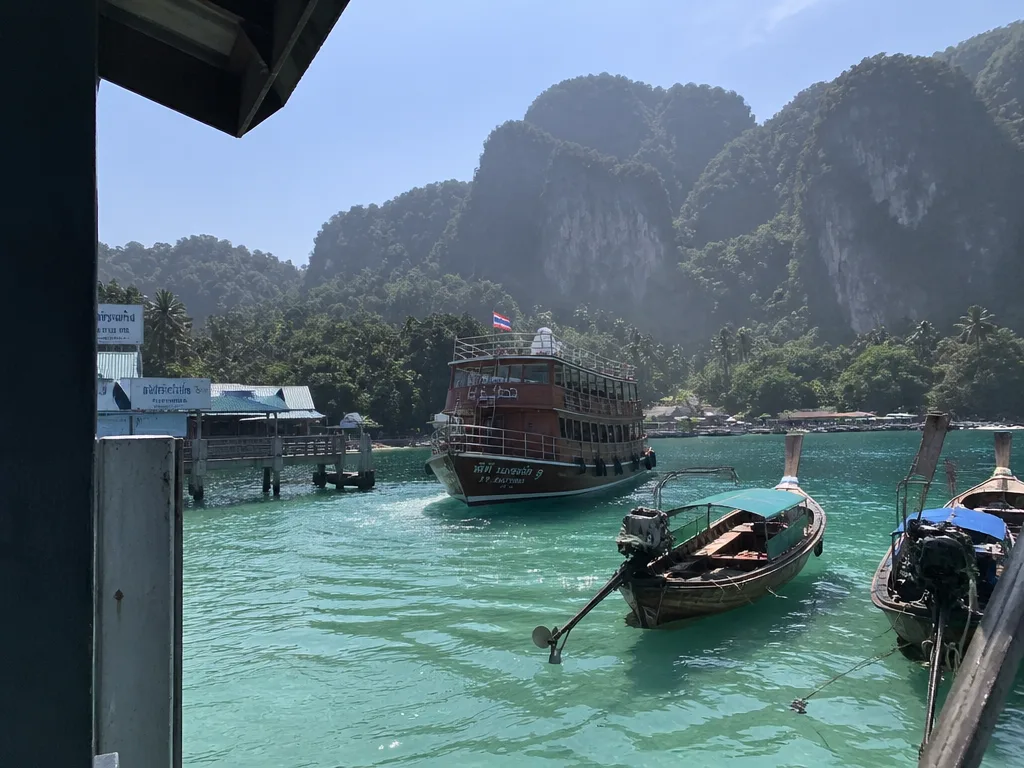
Phi Phi has no airport. You’re getting there by boat no matter what. The question is which port you leave from.
From Krabi (Ao Nang / Klong Jilad Pier):
- 1.5-hour ferry, departures at 9 AM and 1:30 PM
- Price: ฿450-600 one way
- The shorter, calmer crossing, recommended if you’re coming from Krabi
From Phuket (Rassada Pier):
- 2-hour ferry, multiple departures between 8:30 AM and 3 PM
- Price: ฿600-800 one way
- More departures but longer crossing, rougher seas during monsoon months
From Bangkok:
- Fly to Krabi Airport (1.5 hours, ฿1,500-4,000 depending on season), then shuttle to pier + ferry. Door-to-door takes about 5-6 hours.
- Alternatively fly to Phuket, but the ferry from Phuket is longer and more expensive. Krabi is the better gateway.
TIP
Book ferry tickets at the pier or through your hotel. Online platforms like 12go.asia charge a markup. If you’re visiting during Christmas-New Year, book 2-3 days ahead, ferries do sell out.
Speedboat transfers run ฿1,200-2,000 and cut transit time in half. Worth it if your budget allows, the smaller boats actually handle rough seas better than the big ferries.
Day Trip vs. Overnight: This Is the Whole Article
If you take one thing from this guide: stay at least one night on Phi Phi Don.
Day-trip boats arrive between 10 AM and noon, leave between 2 and 4 PM. During those hours, every beach, viewpoint, and snorkeling spot is packed. Longtail boats stack three deep. Maya Bay hits its daily cap. Restaurant prices double.
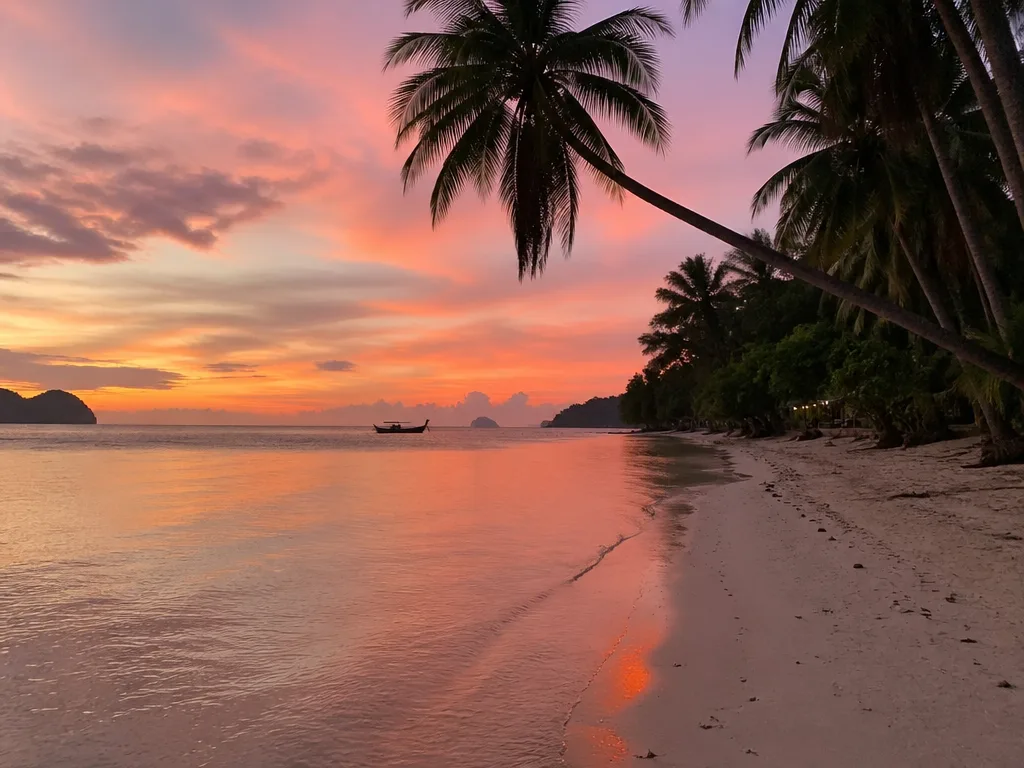
Then around 4 PM, it empties out. The beaches go quiet. The sunset turns the limestone cliffs gold and you can actually hear the water. Mornings before 9 AM are even better, Tonsai Bay is practically empty, and the water is at its clearest before the boats churn it up.
The Phi Phi you see between 5 PM and 9 AM is a completely different island from the one day-trippers see.
Phi Phi Don, The Main Island
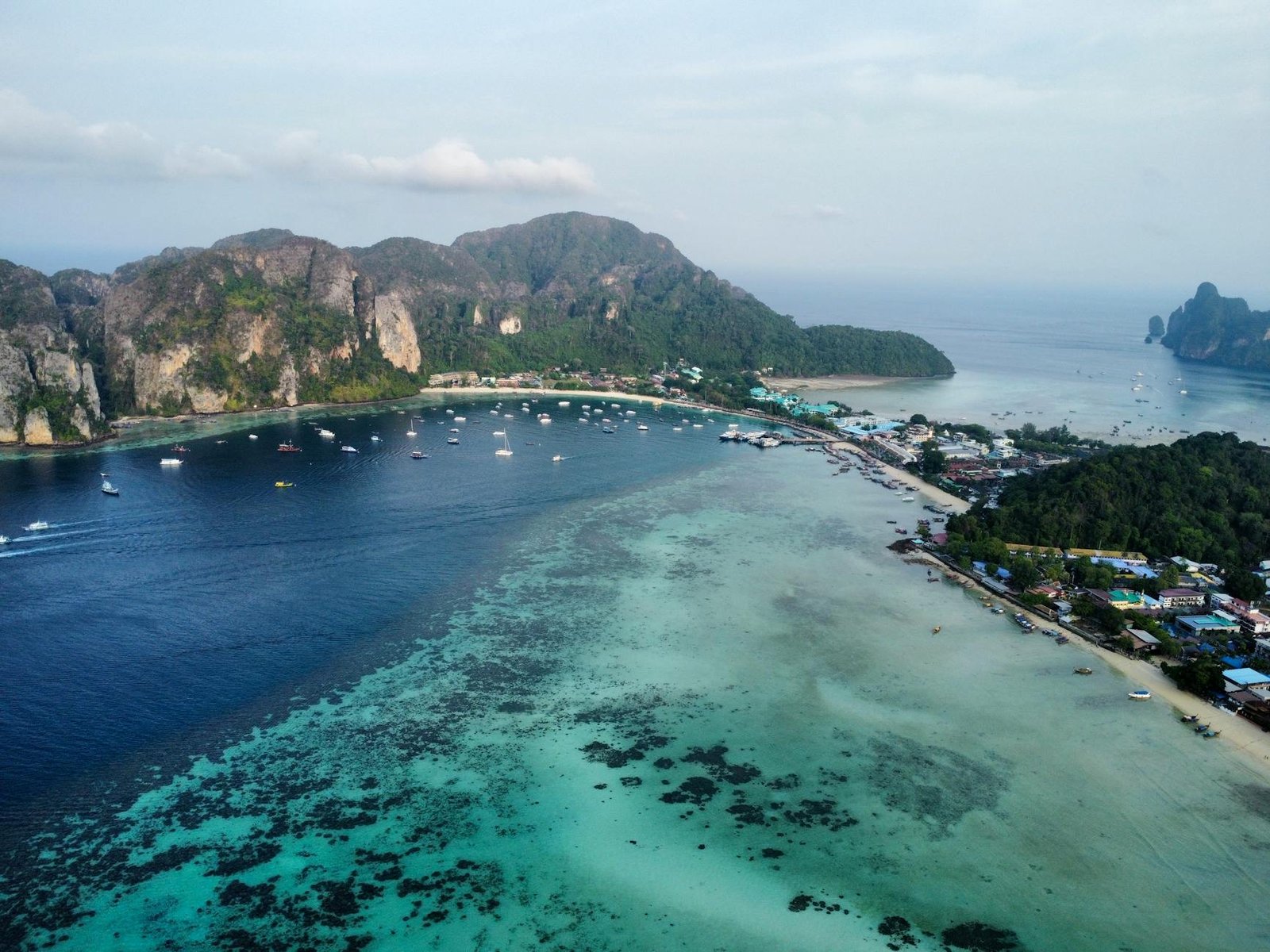
Phi Phi Don is where you stay. It’s the only inhabited island in the archipelago, and all the accommodation, restaurants, and dive shops are here. There are no cars and no roads, just concrete paths connecting the different beaches. You walk everywhere, and it takes 20 minutes to cross the whole island at its narrowest point.
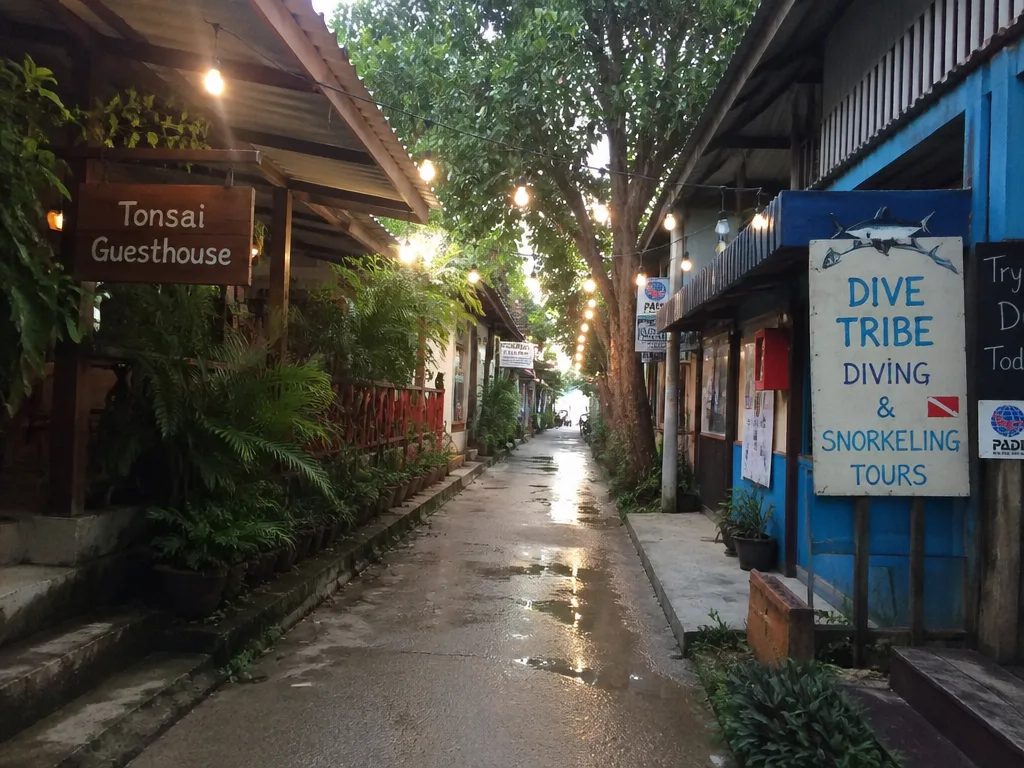
Tonsai Village is the hub. Both ferry piers land here. It’s a dense cluster of guesthouses, restaurants, bars, dive shops, tattoo parlors, and 7-Elevens compressed into a few narrow alleys between Tonsai Bay and Loh Dalum Bay. The vibe is backpacker-party-town, fire shows on the beach at night, bucket cocktails for ฿150, bass-heavy music until 2 AM. If that sounds fun, stay here. If it sounds exhausting, you have options.
Loh Dalum Bay is a 2-minute walk north from Tonsai. Stunning crescent bay, shallow turquoise water, beach bars and fire shows at night. Gets shallow at low tide.
Long Beach is 20 minutes by foot (or ฿100 by longtail) southeast of Tonsai. Quieter, cleaner water, better snorkeling right off the beach. This is the sweet spot for travelers who want beauty without the party noise.
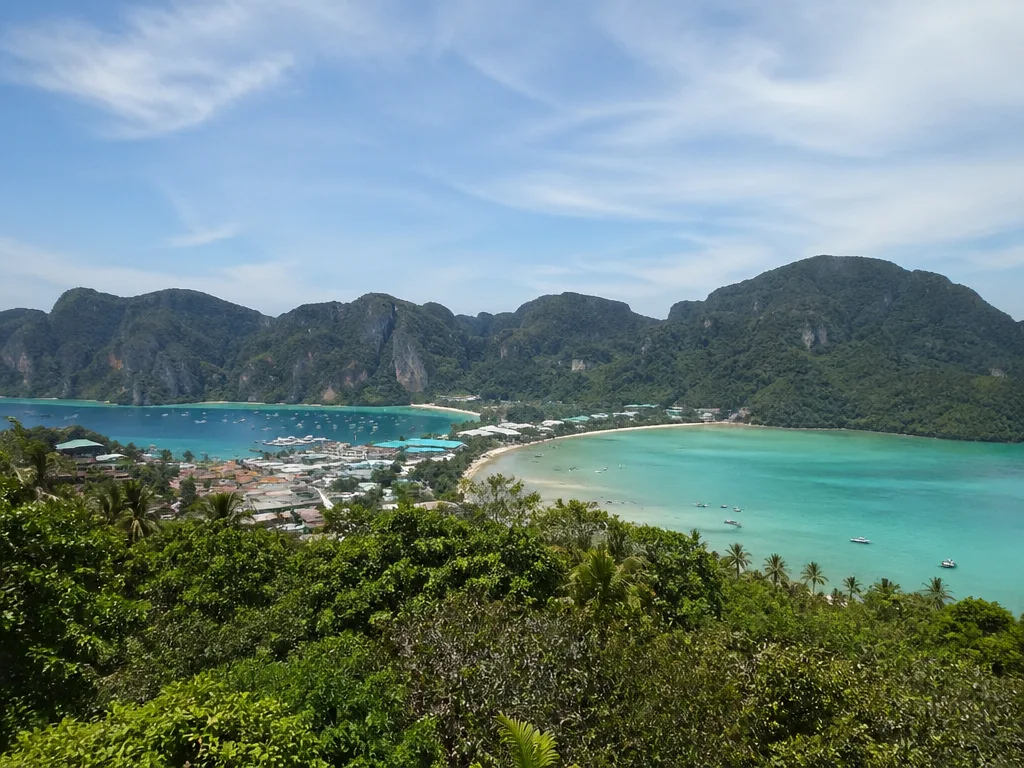
Phi Phi Viewpoint is the must-do hike. The trail starts behind Tonsai Village and climbs 186 meters in about 30 minutes. It’s steep, hot, and you’ll sweat through your shirt, but the view from the top, twin bays separated by the narrow isthmus of Tonsai, turquoise water on both sides, limestone cliffs in the distance, is one of the most photographed scenes in Thailand. Go at sunrise or in the late afternoon. Midday is brutal. Entry fee: ฿30.
Monkey Beach is a small cove on the west coast, reachable by longtail (฿200 round trip) or kayak. Wild macaques live here, entertaining from a distance, aggressive up close. Don’t feed them, keep bags zipped. They will grab sunglasses, phones, anything shiny. A quick stop on the way to other beaches is enough.
Phi Phi Leh and Maya Bay, The Reality
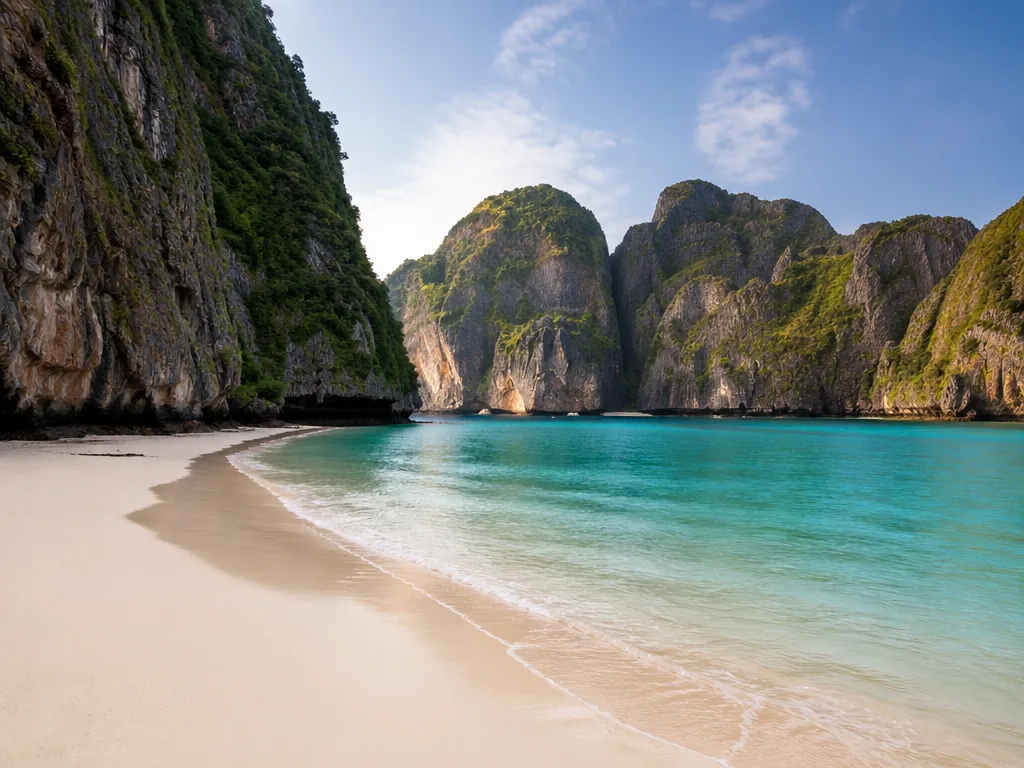
Phi Phi Leh is the uninhabited island south of Phi Phi Don. It’s where Maya Bay is, the beach from “The Beach” (the Leonardo DiCaprio movie that put Phi Phi on the map and, depending on who you ask, ruined it).
Maya Bay was closed from 2018 to 2022 to let the ecosystem recover after decades of uncontrolled tourism destroyed the coral and drove out the sharks. It reopened with a reservation system and strict visitor limits.
How it works now:
- Daily visitor cap (currently around 4,000 per day, subject to change)
- No swimming in the bay, you can walk on the beach and wade to your knees, but the water is off-limits to protect the recovering coral
- Most visitors arrive via tour boats between 10 AM and 2 PM
- National park fee: ฿400 for foreigners
Best time to visit Maya Bay: Early morning. If you’re staying on Phi Phi Don, you can hire a longtail for a sunrise trip (depart 6 AM, ฿1,500-2,500 for the boat). You’ll arrive before the tour boats and have the bay in relative peace for an hour. Afternoon visits (after 2 PM) are the second-best option as the crowds thin.
Is Maya Bay worth it? Yes, but manage expectations. The bay is stunning, a near-perfect semicircle enclosed by 100-meter limestone walls. But you can’t swim, you’re sharing it with hundreds of people even with the cap, and visits last about an hour. Beautiful, not life-changing. Skip it if it means rushing the rest of Phi Phi.
Where to Stay
Budget, Tonsai Village (฿400-1,200/night): Backpacker guesthouses and basic fan rooms line the alleys. You’re in the center of everything, food, nightlife, ferry piers. The trade-off is noise (music until 2 AM) and basic facilities (shared bathrooms in the cheapest spots). PP Casita, PP Hostel, and Blanco Beach Bar have consistently decent reviews for the price.
Mid-Range, Long Beach (฿1,500-4,000/night): The best balance of beauty and comfort. Phi Phi The Beach Resort and Paradise Pearl Bungalow sit directly on the sand. Rooms are air-conditioned, have private bathrooms, and you wake up to a view that belongs on a screensaver. Long Beach has a few good restaurants, a dive shop, and blessed quiet at night.
Splurge, Zeavola Resort (฿6,000-15,000/night): On Laem Tong Beach at the quiet northern tip. Teak villas, private beach, proper spa, absolute silence. You’ll need a longtail to get anywhere else (the resort arranges transfers). For couples or anyone who wants Phi Phi’s beauty without its chaos.
| Tier | Area | Price/Night | Vibe |
|---|---|---|---|
| Budget | Tonsai Village | ฿400-1,200 | Party central, walkable |
| Mid-range | Long Beach | ฿1,500-4,000 | Beach beauty, quieter |
| Splurge | Laem Tong (Zeavola) | ฿6,000-15,000 | Secluded luxury |
Snorkeling Spots Worth Your Time
Phi Phi has some of the best snorkeling in the Andaman Sea, but quality varies wildly depending on where you go and when.
Shark Point: Yes, there are actual sharks. Blacktip reef sharks, about a meter long, completely harmless. They cruise the shallow reef on the southern tip of Phi Phi Leh. Seeing them is not guaranteed but common. The coral here has recovered well since the closures. Best visited in the morning when water is calmest.
Pileh Lagoon: An enclosed lagoon on Phi Phi Leh with towering cliff walls. The water glows neon green-blue, almost unreal. Snorkeling is decent but the scenery is the real draw. Tour boats congregate midday, so go early or late.
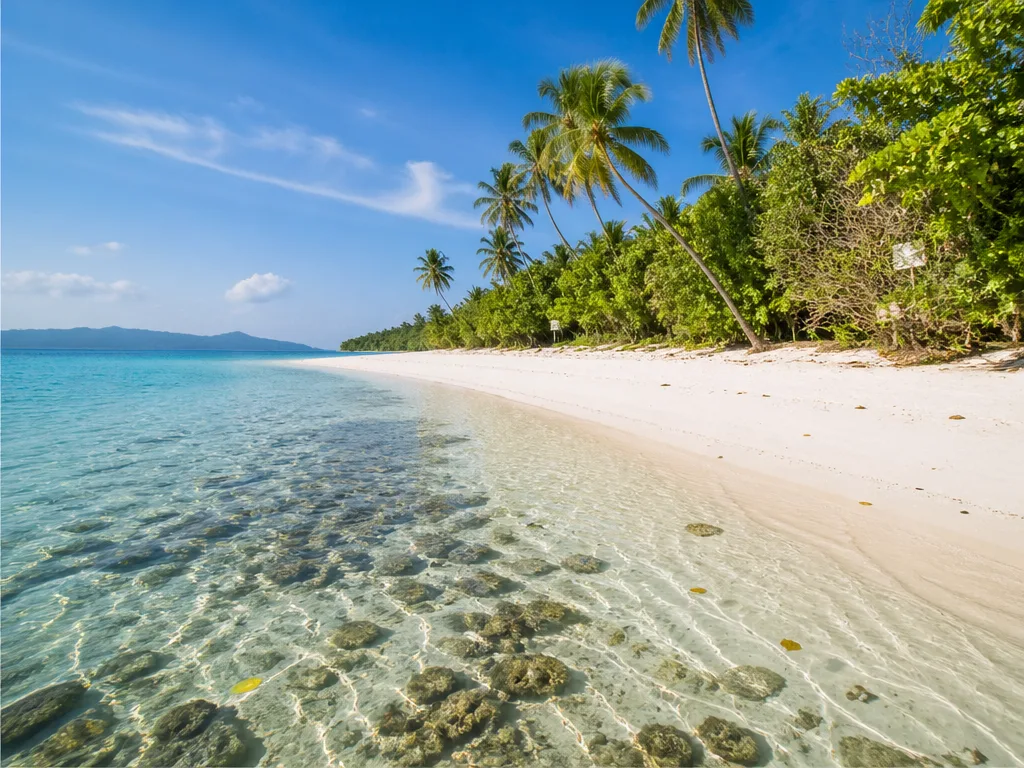
Bamboo Island (Koh Mai Phai): The underrated gem. A flat island 5 km north of Phi Phi Don with a wide white sand beach and excellent snorkeling on the eastern reef. Fewer boats come here because it’s off the standard routes, healthier coral, more fish, genuinely uncrowded even at peak season. National park fee: ฿400.
NOTE
Reef shoes and reef-safe sunscreen are non-negotiable. The coral at Phi Phi is still recovering from decades of damage. Don’t touch it, don’t stand on it, and don’t use sunscreen containing oxybenzone.

Where to Eat
Tonsai Village’s main drag is a tourist trap, identical photo-menu restaurants charging ฿200-350 for mediocre pad thai that costs ฿50 anywhere else in Thailand.
Local spots: Walk past the dive shops toward the eastern alleys behind the main strip. Small Thai-run places with handwritten menus serve real food at ฿80-150 per dish. Follow the dive instructors, they live here and know the value spots. Papaya on Phi Phi and Aroy Kaffé are consistent.
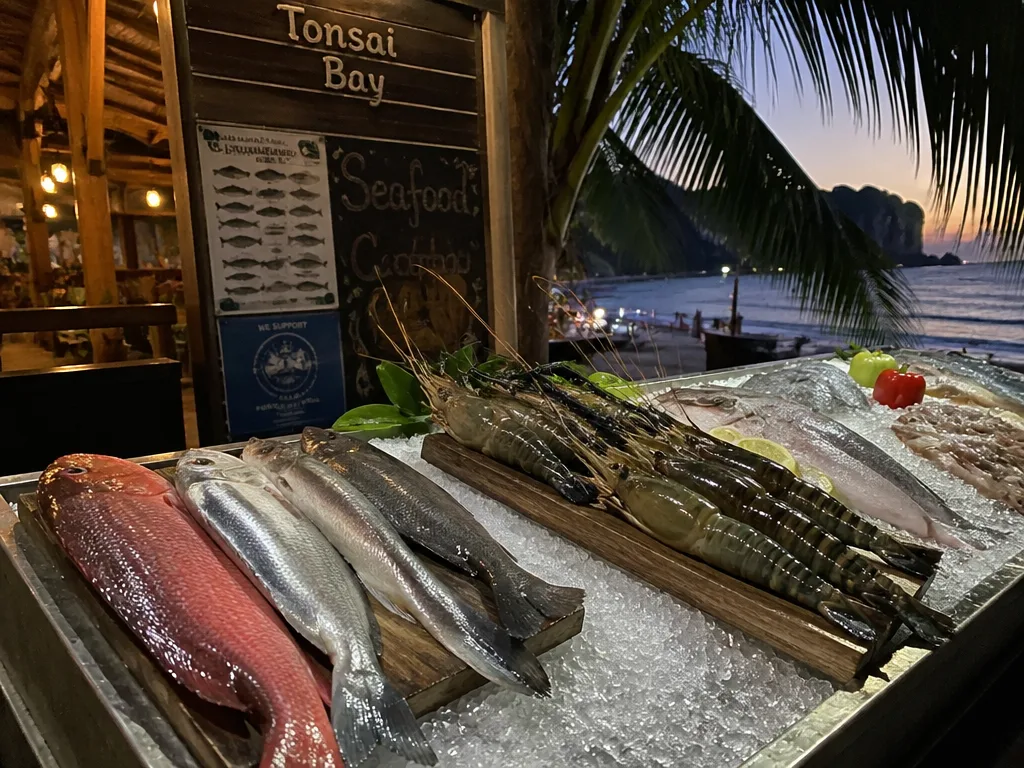
Seafood: The beachfront restaurants on Tonsai Bay do fresh-catch displays, pick your fish, they grill it. Tourist pricing (฿300-600 for a whole fish) but good quality and you’re eating on the beach. Worth it once.
Long Beach restaurants generally offer better value than Tonsai. Resort restaurants serve walk-ins.
7-Eleven survival: Water is ฿10-20 per bottle at 7-Eleven versus ฿40-60 from beach vendors. Stock up here.
Scams and Rip-Offs to Watch For
The island’s isolation means fewer alternatives, and scammers know it.
Longtail boat overcharging: A private boat to Maya Bay should cost ฿1,500-2,500 for the whole boat (4-6 people), not per person. If someone quotes per-person pricing, walk away and ask the next boatman.
Bar bill padding: Some Tonsai party bars add phantom drinks to your tab, especially when you’re several buckets deep. Check your bill before paying. Pay as you go if bar-hopping.
Maya Bay “VIP” tours: Operators sell “exclusive” Maya Bay packages for 2-3x the normal price. You arrive on the same beach at the same time as everyone else. The “VIP” part is a cushion on your boat seat. Skip it.
Dive shop bait-and-switch: Some operators advertise low prices then tack on “equipment rental” and “insurance” fees. Get the all-in price in writing. Reputable shops (Adventure Club, Viking Divers, Blue View Divers) are transparent.
For more on common Thailand tourist scams, read our Thailand scams guide.
When to Go
| Season | Months | Weather | Crowds | Verdict |
|---|---|---|---|---|
| High season | Nov-Apr | Dry, calm seas | Peak | Best conditions, highest prices |
| Shoulder | May, Oct | Variable, some rain | Moderate | Good value, acceptable weather |
| Monsoon | Jun-Sep | Heavy rain, rough seas | Low | Some ferries cancel, not recommended |
November through April is when you should go. Calm seas, 10-20 meter visibility, all tours running. February through March is the sweet spot, perfect weather, slightly thinner crowds than the January peak.
Avoid July through October. The southwest monsoon makes seas rough, ferries cancel, visibility drops to near-zero, and some accommodation closes. Not dangerous, but a waste of limited vacation days. For a detailed season breakdown, check best time to visit Thailand.
Practical Tips
Cash: There are a few ATMs in Tonsai Village, but they charge ฿220 per foreign withdrawal and sometimes run out of cash on busy weekends. Bring enough from the mainland. Many restaurants and all tour operators accept cash only.
Travel insurance: Phi Phi has a small medical clinic for basics, but anything serious means a speedboat evacuation to Krabi or Phuket Hospital. This is exactly the scenario where travel insurance earns its cost. Make sure your policy covers water sports if you’re diving or snorkeling.
Mosquitoes: They’re aggressive at sunset, especially around Tonsai and Loh Dalum. Bring repellent from the mainland, the stuff sold on the island is overpriced and often weak.
Island hopping from Phi Phi: Phi Phi is a great base for exploring the broader region. The Krabi island hopping routes are accessible via day trips from the island. Bamboo Island and Mosquito Island are the easiest additions to a Phi Phi stay.
The Bottom Line
“Stay overnight. That’s the entire strategy. The Phi Phi you see at 6 AM and 6 PM is an island that earns its reputation as one of the most beautiful places in Thailand.”
Phi Phi’s “overrated” reputation comes from people who only see the 10 AM-to-3 PM day-trip window. Stay overnight, hit Maya Bay at sunrise, base yourself on Long Beach, and charter a longtail to Bamboo Island for the Andaman’s best snorkeling.
Budget ฿2,000-4,000 per day for a comfortable stay. The biggest expense is the private longtail, split with other travelers at your hotel to cut costs in half.
Before you book, read the Krabi first visit guide for getting to the region. If you’re combining with Phuket, the Phuket beach guide helps plan the other half. And for more islands, the Krabi island hopping guide covers every tour worth taking on the Andaman coast.