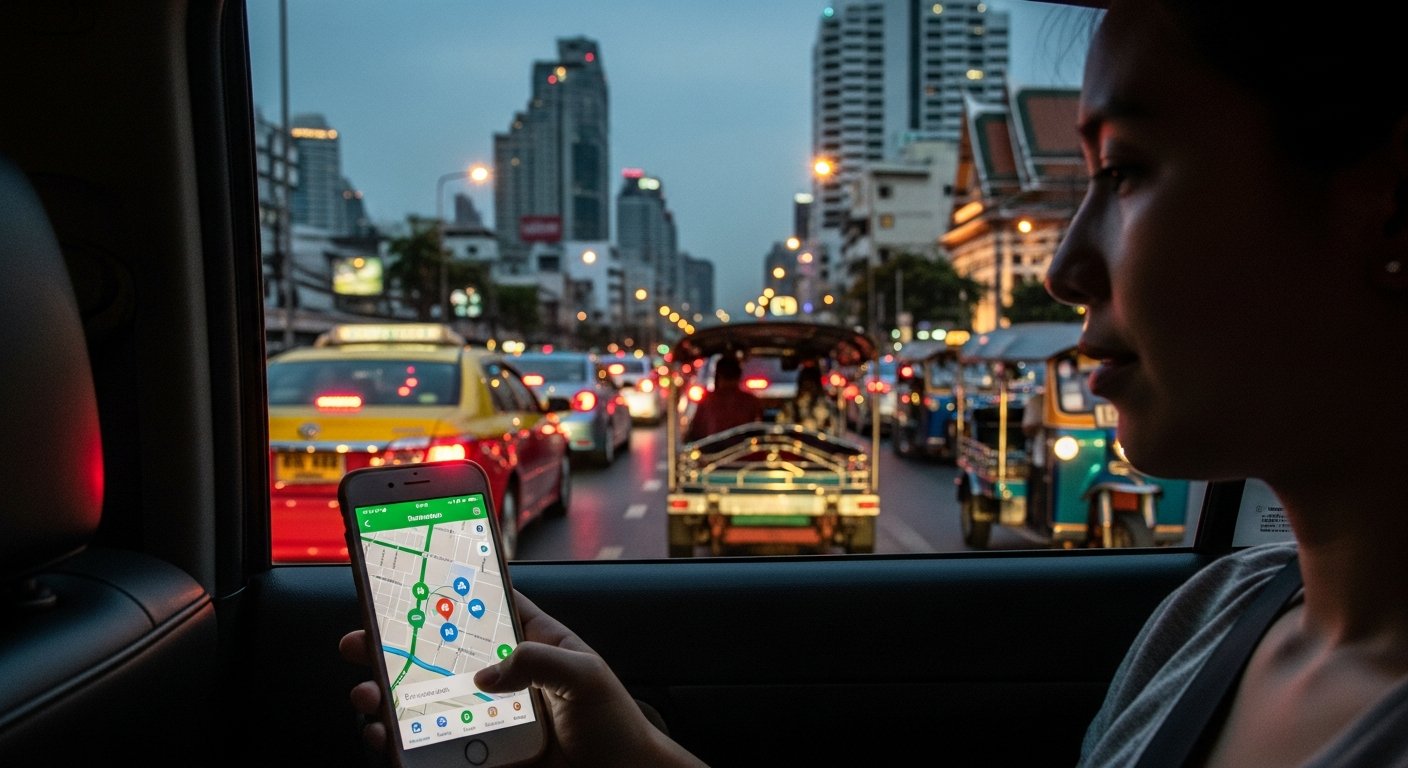
If you have a Bangkok trip booked anytime between now and the rest of 2026, the ride-hailing app you’ve been planning around might not exist on Tuesday. Bolt’s Thailand operating license expires on May 11, 2026 — two days from publishing this — and the Department of Land Transport (DLT) is openly considering refusing the renewal after logging 2,193 Bolt-linked violation cases in Q1 2026 alone. That’s roughly one out of every three app-ride violations in the country, all tied to a single platform.
I’ve been using Bolt almost daily in Bangkok for two years. The 30 to 80 baht per-trip savings versus Grab is real. So is the chance, this week, that the app stops accepting bookings entirely. This isn’t a “how to use Bolt” piece. The full Grab vs Bolt comparison already exists for that. This is what to do now: the contingency plan for both outcomes, the payment realities nobody on the official Bolt page mentions in 2026, and which contingency moves to make today rather than after the decision lands.
IMPORTANT
Update, May 19, 2026. Bolt is still operating normally in Thailand. Three things changed since publishing:
- The actual expiry date is May 31, 2026 — not May 11. The Thaiger source we originally cited had the date wrong; the DLT’s director-general Sorapong Paitoonphong has since publicly confirmed the operating certificate runs through the last day of May. Bolt has operated without interruption through the entire May 11–19 window.
- The Ministry of Transport granted Bolt a one-month grace extension past the May 31 expiry. Per Bangkok Post coverage of the extension, Bolt now has until roughly late June 2026 to demonstrate concrete safety and compliance progress. If it fails the grace period, the ministry warned suspension or revocation can be triggered immediately.
- Bolt publicly reaffirmed continued operations on May 14, per TTR Weekly and Phuket News, citing cooperation with the ongoing ETDA certification review.
What this means for travelers booking right now: the contingency plans below are still useful, just pushed out by about five weeks. The base case (conditional renewal with stricter driver verification) looks more likely than it did on May 9, but the binary outcome now lands in late June rather than mid-May. Card payment problems, inter-city Bolt risks, and the Grab-as-primary recommendation are all unchanged.
NOTE
Original status note (May 9, 2026). Kept for context. We initially reported the license expiry as May 11 based on Thaiger’s reporting. That date turned out to be incorrect; the actual expiry is May 31, 2026, with a subsequent one-month extension. See the update above.
What’s Actually Happening: The 2,193 Violations
The number is the story. According to Thaiger reporting from April 30, 2026, the DLT has documented 2,193 legal cases tied to Bolt drivers since the start of 2026 — a third of all app-ride violations recorded in Thailand during that window. The categories are specific and not minor: driver impersonation (the person picking you up isn’t the registered driver), unlicensed drivers carrying paying passengers, and unregistered vehicles operating on the platform.
Two incidents pushed the issue into mainstream Thai news cycles in late April. On April 23, a female passenger jumped from a moving Bolt motorcycle taxi during what she described as an unsafe ride. On April 29, a separate incident involving a schoolgirl prompted the Ministry of Transport to formally raise the possibility of blocking the platform. Both incidents are documented in Bangkok Post and Pattaya News reporting from early May 2026.
Here’s why this is different from the usual “ride-hail platform faces regulator” headlines: the May 11 expiry is a scheduled renewal date, not an emergency suspension. DLT has had months to review the file. They aren’t ruling out a renewal, but they aren’t promising it either. The neutral phrasing in official statements means the door is genuinely open in both directions.
What’s not in dispute: Grab’s violation numbers for the same period are dramatically lower despite Grab having a larger fleet. The asymmetry is what’s putting Bolt’s license specifically under review.
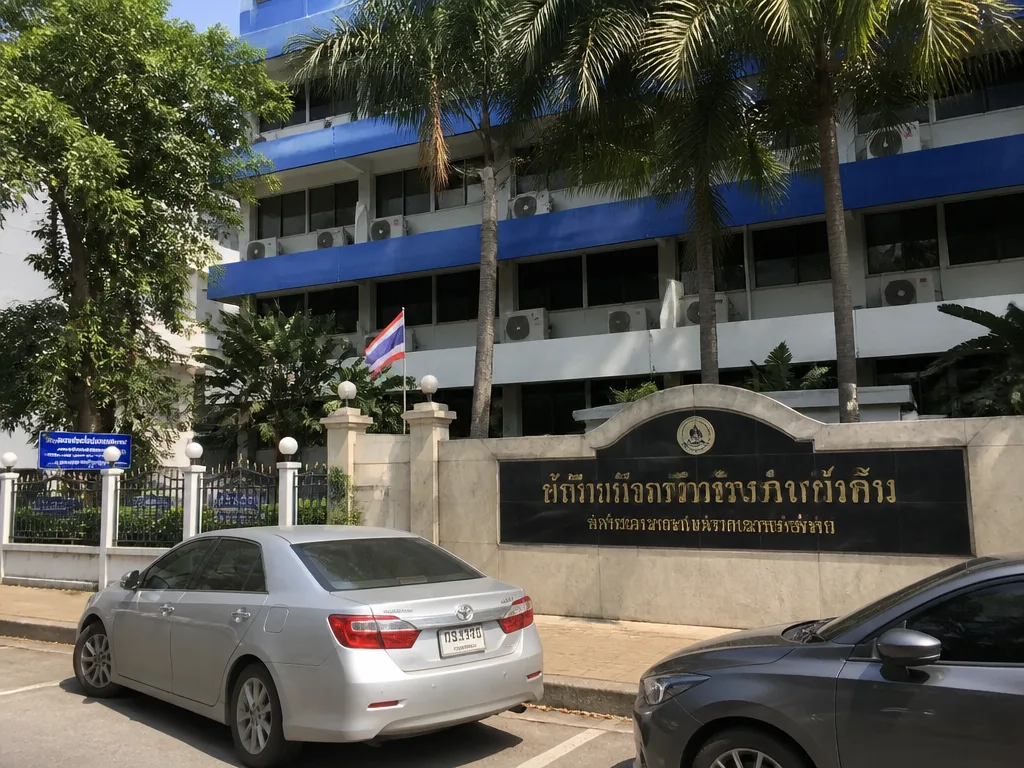
The May 7 Facial Recognition Rollout: Read It as a Signal
Four days before the license expiry, Bolt announced a sweeping safety upgrade for Thailand. Per Pattaya News on May 7, 2026, the rollout includes:
- Driver facial recognition before each shift (addressing the impersonation cases directly)
- Enhanced trip safety monitoring with auto-alerts on unusual route deviations
- Expanded cooperation with DLT on driver background checks
- A driver-incentive program tied to verification compliance
The timing is the message. Bolt has had facial recognition technology available globally for years. Rolling it out in Thailand 96 hours before a license decision is a regulatory appeasement gesture, and possibly a working one. Whether DLT views it as sincere policy reform or a last-minute publicity move is the question that determines what happens on Tuesday.
For travelers, the practical takeaway: even if the license is renewed, the operating environment in Thailand is changing. Stricter driver verification means slightly longer wait times in the immediate aftermath, and a smaller active driver pool until existing drivers complete the new checks. Plan for thinner availability during the first 2-3 weeks regardless of the renewal outcome.
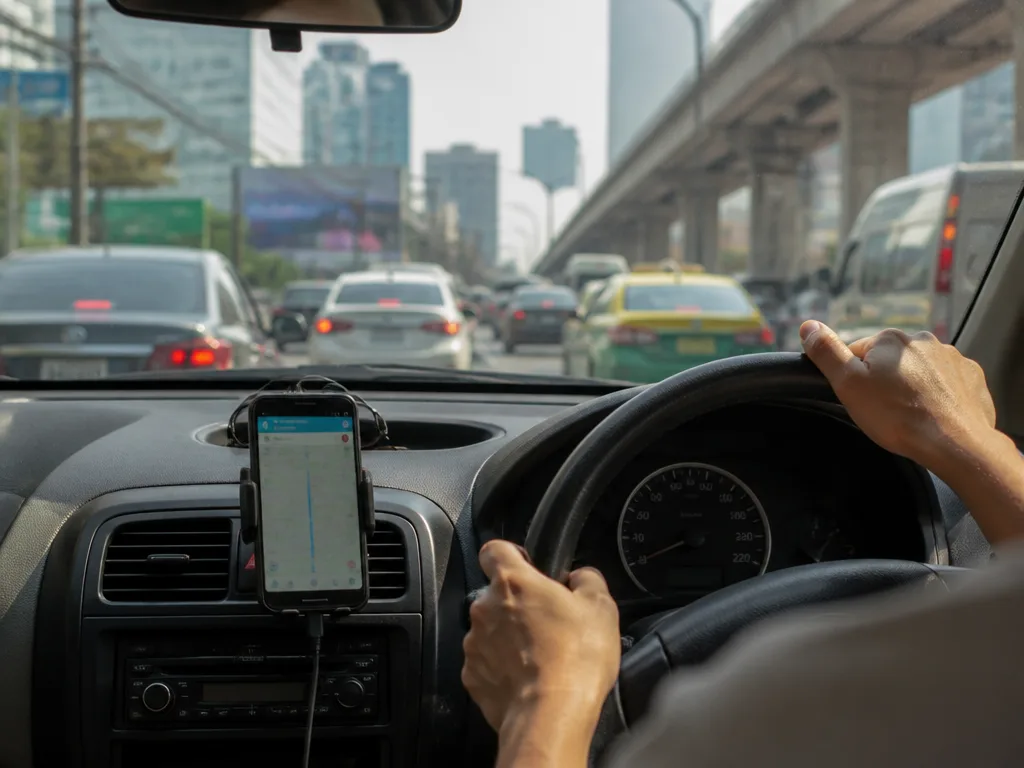
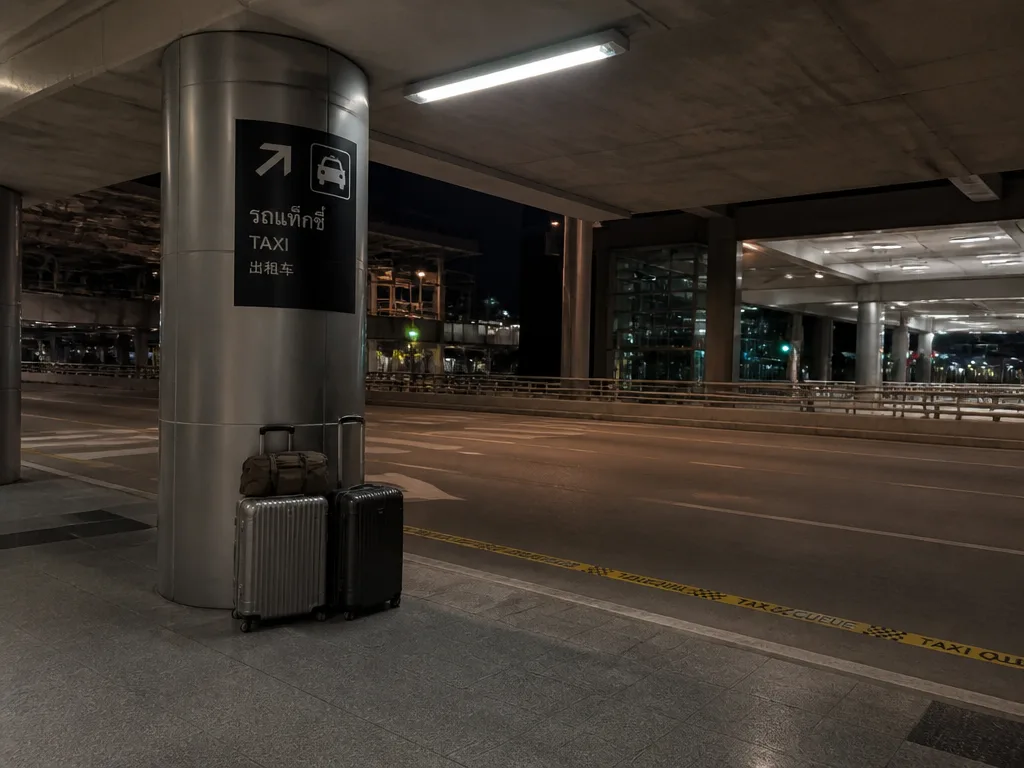
Why It Matters to You: The Three Traveler Scenarios
The license outcome hits different traveler scenarios differently. Here’s the honest breakdown.
Scenario 1: Airport pickup at Suvarnabhumi or Don Mueang. This is the lowest-risk scenario. Both airports have strong Grab presence, official airport taxi counters, and Klook private transfer services that work regardless of any app’s license status. If Bolt disappears, your airport ride is barely affected — you’d just default to Grab, which most travelers already use as a fallback. The 50-70 baht savings Bolt typically offers on this route is the single biggest cost impact for short-trip visitors.
Scenario 2: Late-night rides in Bangkok (1-3 AM). This is the medium-risk scenario. Bolt’s late-night fleet in Bangkok is already thinner than Grab’s. If you’ve been relying on Bolt as a price-check option against Grab surge during nightlife hours, that backup disappears. Grab surge during late-night Sukhumvit/Thonglor peaks can be noticeably higher than the base rate. Without Bolt as a comparison, you have less negotiating room. You either pay the surge or wait it out.
Scenario 3: Inter-city Bolt (Bangkok to Pattaya, Hua Hin, Ayutthaya). This is the highest-risk scenario, but it’s also the one you shouldn’t be doing on Bolt anyway. More on this in the dedicated section below. If you’ve planned a trip around Bolt-based intercity transfers, the contingency is mandatory regardless of the license outcome.
Bolt’s Card Payment Reality in Thailand 2026
This deserves its own section because it’s the single most underreported issue with using Bolt as a tourist in Thailand right now, and it has nothing to do with the license review.
Foreign credit and debit cards routinely fail to add or charge on Bolt Thailand in 2026. This is documented across Tripadvisor user threads, ASEANNOW forums, and multiple 2024-2026 expat blogs. The pattern is consistent: travelers add a Visa or Mastercard, the app appears to accept it, then the actual ride payment fails or the card option silently disappears at the moment of booking. Thai-issued cards work more reliably. Foreign cards, especially without 3D Secure (3DS) properly configured, frequently don’t.
The workarounds, in order of reliability:
- Cash. Always carry 200-500 baht in small denominations (20s, 50s, 100s). This works on every ride, every time, regardless of app status.
- Wise or Revolut virtual cards. Multiple user reports indicate these work more reliably than physical foreign cards. The exact reason isn’t clear, but it appears related to how the cards process 3DS verification.
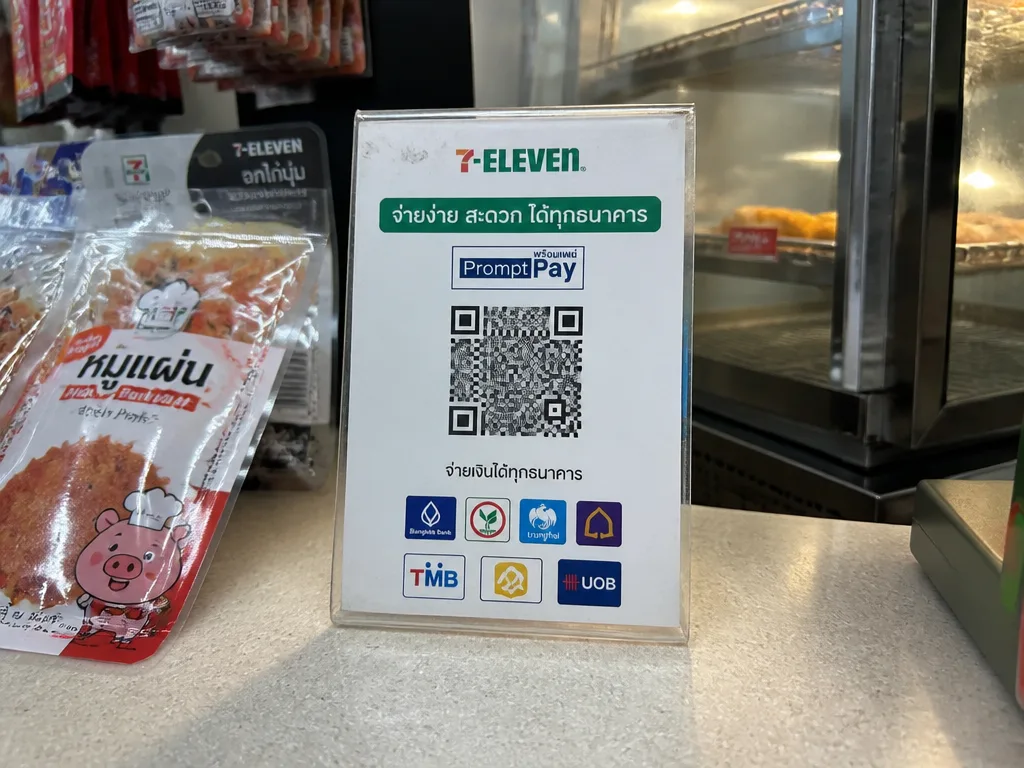
- PromptPay QR transfer. Some Bolt drivers will accept QR transfer to their personal Thai bank account. This requires you to have a Thai bank app installed (KBank, SCB, Bangkok Bank), which most tourists don’t.
- Bolt in-app wallet top-up. Available in Thailand but rarely used by tourists. Requires successful card linking, which loops back to problem #1.
WARNING
Do not assume your foreign credit card will work in the Bolt Thailand app. Even when it appears successfully linked, it can silently fail at booking. Always have cash as backup. This applies to Bolt, not Grab. Grab’s card processing is more reliable for foreign cards.
The license crisis is a separate problem. The card payment problem is right now, today, regardless of what happens Tuesday.
Inter-city Bolt: Don’t Do It (License or No License)
Even before the license review, Bolt was the wrong app for Bangkok-to-Pattaya, Bangkok-to-Hua Hin, or Bangkok-to-Ayutthaya. The license uncertainty makes this rule absolute for May 2026.
What goes wrong on long-distance Bolt rides:
- Drivers demand off-app cash. Once they realize the destination is 100+ km away, many request payment outside the app to avoid the platform fee. If you refuse, they cancel.
- Mid-trip price increases. Some drivers pull over halfway and renegotiate, citing tolls, traffic, or fuel. The app price isn’t enforceable once you’re already in the car.
- Late cancellations. Drivers accept the ride, then cancel 30 minutes later when they realize the route. You’re left without a ride and the next driver does the same.
- No reliable Hua Hin coverage. Bangkok-to-Hua Hin Bolt service is essentially nonexistent in 2026. Don’t try.
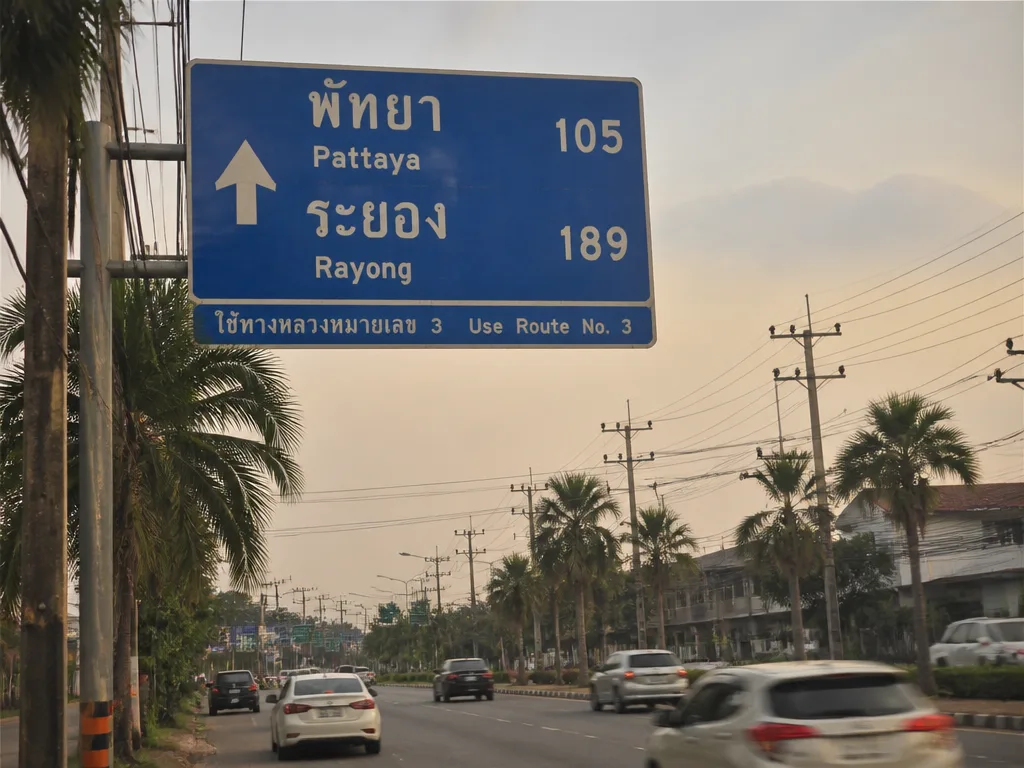
The contingency for inter-city travel from Bangkok in May 2026 is simple: skip the apps entirely for these routes. Options that work:
- Bus from Ekkamai (BTS Ekkamai) to Pattaya: 130-180 baht per person, departures every 30 minutes, 90-120 minutes total. The cheapest option for solo travelers and pairs.
- Bus from Mo Chit (BTS Mo Chit) to Hua Hin: 240-280 baht per person, 3.5-4 hours.
- Klook private driver service: A fixed-price airport transfer or private driver booking through Klook eliminates the app uncertainty entirely. Search Bangkok private driver options on Klook — typical Bangkok-Pattaya private driver fares run 1,800-2,500 baht for the vehicle (not per person), making this cost-competitive for groups of three or more.
- Hotel-arranged taxi: Most Bangkok hotels in the luxury hotel tier and many mid-range ones can arrange a metered or fixed-rate taxi to Pattaya for 1,800-2,800 baht. The reliability premium over Bolt is significant.
- Grab inter-city: Works, but expects 2,000-2,500 baht to Pattaya and similar cancellation risks (less severe than Bolt’s, more than buses).
The general rule: for any ride longer than 60 km from Bangkok, do not start the journey on Bolt regardless of license status.
Cities Where Bolt Operates in May 2026 (Verified)
If the license is renewed, here’s the current Thailand coverage. If it’s denied, this entire list goes dark on Bolt overnight.
| City | Bolt available 2026 | Reliability | Bolt-specific note |
|---|---|---|---|
| Bangkok | Yes | High | Largest fleet; license decision affects this directly |
| Chiang Mai | Yes | Medium | Daytime fleet OK; thinner late-night |
| Pattaya | Yes (intra-city) | Medium | Within Pattaya only; not Bangkok-Pattaya |
| Phuket | Yes | Medium | Intra-island; airport transfers reliable |
| Hat Yai | Yes | Lower | Added in 2025 expansion; small fleet |
| Chiang Rai | Yes | Lower | Added in 2025; 90% YoY growth zone |
| Udon Thani | Yes | Lower | Added in 2025 expansion |
| Hua Hin | Marginal/no | Avoid | No reliable 2026 confirmation |
| Krabi / Koh Samui / Koh Phangan | Not officially listed | None | Use Krabi local transport options for context |
Source: Bolt cities directory, cross-referenced with Bolt Thailand rides page as of May 9, 2026.
The expansion-stage cities (Hat Yai, Chiang Rai, Udon Thani) are particularly vulnerable to a license non-renewal. With smaller driver pools, even a partial regulatory shutdown could drop them out of operation entirely while Bangkok absorbs the disruption better.
Contingency Plan A: If the License Is Renewed (Most Likely Outcome)
The base case is renewal with conditions. DLT has historically preferred to impose stricter compliance requirements rather than fully revoke licenses for app platforms — the precedent matters because outright revocation could push 40,000+ drivers and millions of users to alternative platforms simultaneously, creating its own regulatory problem. The May 7 facial recognition rollout is the kind of concession that makes a conditional renewal politically possible.
What to do this week if you have a Thailand trip planned:
- Update the Bolt app before you arrive. Post-renewal updates often include compliance changes that trigger forced app updates. An out-of-date app can fail to book even if the platform is working.
- Pre-link your payment method at home if possible. Some travelers report that adding a foreign card to Bolt works better when initiated from a non-Thai IP, then verified once in Thailand. Anecdotal but consistent in 2024-2026 reports.
- Carry cash regardless. The card issues exist independent of the license review.
- Keep Grab as your primary, with Bolt as the price-check second app. Reverse the priority you might have used in 2024-2025.
- Don’t book Bolt in advance for inter-city trips. Schedule rides booked weeks ahead are particularly vulnerable to driver cancellations during uncertainty periods.
If renewal is announced, the market would take some time to rebalance. Driver supply will be temporarily lower as compliance reviews process. Surge pricing during this window will be more frequent than normal.

Contingency Plan B: If the License Is Denied
Less likely, but the consequences are larger. If DLT refuses renewal on May 11:
Immediate effects (24-48 hours):
- Bolt app stops accepting new bookings in Thailand. Existing scheduled rides may or may not honor — Bolt’s policy on this is not pre-announced.
- Driver-side incomes drop overnight. Many Bolt-only drivers will migrate to Grab within days, partially offsetting Grab’s surge load.
- Grab and other apps would absorb the demand, with noticeably higher rider-to-driver ratios in the short term. Expect more frequent surge multipliers while the market rebalances.
- Bolt may issue refunds for prepaid wallet balances. Users with significant balances should screenshot their wallet immediately on May 11.
Medium-term effects (2-4 weeks):
- Grab regains effective monopoly on Bangkok app rides until a new player fills the gap (DiDi Thailand, InDrive, or LINE MAN Taxi could expand).
- Metered taxi prices stabilize, but expect higher base rates on common routes due to reduced competition until the market rebalances.
- Hotel taxi services become more competitive — fixed-rate hotel transfers become better value relative to apps.
Your travel-week contingency stack:
- Grab as the new default. Make sure your card works on Grab specifically. Add a backup card if possible. Top up GrabPay wallet for cash-free rides.
- Klook fixed-price transfers for airport pickups and inter-city. The price certainty becomes worth more when the app market is in flux. Browse Bangkok airport and private driver options.
- Hotel taxi service for evening rides during your first 48 hours. This is the friction-free option that doesn’t depend on any app working.
- Cash buffer increased. Keep 1,000-2,000 baht in cash during the first week of any major app market disruption. Metered taxis will be more reliable than during normal operating periods.
- Consider a small SIM upgrade. With more app switching and price-checking, data needs go up. The basics on getting a SIM that supports app verification properly are in the Bangkok money and SIM card guide.

Bolt vs Grab Quick Reality Check (May 2026)
The price gap is real, but the operational risk profile shifted dramatically in the past 60 days. Here’s the current picture for travelers booking trips this month.
| Factor | Bolt | Grab |
|---|---|---|
| Base pricing | 10-25% cheaper typical | Higher base |
| Surge during rain/rush | Softer than Grab, dynamic | More aggressive, dynamic |
| Coverage 2026 | 7 Thai cities | All major cities + islands |
| License status May 2026 | Under DLT review, expires May 11 | Stable, no review pending |
| Foreign card payment | Often fails (documented) | Works reliably |
| Cash payment | Works | Works |
| Late-night fleet (1-3am) | Thin in Bangkok, very thin elsewhere | Thicker, more reliable |
| Inter-city to Pattaya/Hua Hin | Avoid (driver cancellations common) | Possible but expensive |
| Airport pickup at BKK/DMK/HKT | Flight tracking enabled | Flight tracking enabled |
| Driver verification (post May 7) | Facial recognition added | Existing selfie verification |
| Customer support response | Slower, basic | Faster, in-app chat |
| Tourist-day-1 setup ease | Card issues common, frustrating | Generally smooth |
The honest read: Bolt was the savings play in 2024-2025. In May 2026, with a binary license outcome 48 hours away and well-documented foreign card issues, Grab is the lower-friction primary app for travelers arriving this week. Bolt is the price-check second app — if the license renews. If it doesn’t, Bolt simply isn’t an option to discuss.
For a deeper feature-by-feature breakdown that doesn’t depend on the May 11 outcome, the full Grab vs Bolt comparison covers the steady-state picture in detail.
What We’ll Update on May 12
This is a live-updating post. Within 24 hours of the May 11 DLT announcement, we’ll add:
- The actual license decision (renewed, renewed with conditions, denied, or extended pending review).
- The Bolt corporate response and any change to operations.
- Real-time feedback from Bangkok drivers and riders during the first 48 hours.
- An updated contingency recommendation if the outcome was unexpected.
- Any change to the Bolt vs Grab table above.
Bookmark this URL or check the ThaiGuys Bangkok tips index for the post-decision update. The updatedAt field at the top of this post will reflect the revision date.
For broader context on how Thailand handles foreign-platform regulation (it’s a recurring pattern: Booking.com, Airbnb, ride-hail apps have all gone through similar review cycles), the Thailand entry guide 2026 and Thailand scams and pitfalls list are useful background reading.
Where to Stay If Your Trip Is This Week
If you’re flying in during the immediate post-decision window (May 11-18), the smartest hedge is staying somewhere with strong on-site transport options that don’t depend on apps. Hotels with their own metered or fixed-rate transport service eliminate the app-uncertainty equation entirely for the most important rides (airport, evening dinner, late-night returns).
The Sukhumvit corridor (Asoke, Phrom Phong, Thonglor) is the best zone for app-independent mobility because of direct BTS access — most short trips become walkable or BTS-accessible without needing any app. The riverside zone (Saphan Taksin, Si Phraya) has hotel boats as the alternative network, which is genuinely useful when ride-hail markets are unstable.
Browse Bangkok hotels with strong transport options on Agoda. Filter by Sukhumvit or Riverside zones for the best app-independence during this period.

FAQ
Is Bolt safe to use in Bangkok before the May 11 decision?
Yes, with the same caveats as any 2026 ride-hail platform. The 2,193 violation cases driving the license review are documented across the entire Q1 period, not concentrated in May. Day-to-day rides for tourists in Bangkok proper continue normally as of publishing. The May 7 facial recognition rollout has, if anything, made the active driver pool more verified than it was in April. The risks are operational (rides may not be available if the license is denied) rather than safety-acute.
What happens to my Bolt wallet balance if the license is denied?
Bolt has not issued a pre-announcement on this scenario. In similar precedents (other markets where Bolt or competitors lost operating licenses), platforms typically issue refunds within 30-60 days. If you have a meaningful balance (over 500 baht), screenshot the wallet on May 11 and contact Bolt support immediately if the license is denied. Refund processing is faster when initiated quickly.
Can I use Bolt that I downloaded in Europe or another country in Thailand?
Yes, the Bolt account is global. The same login works across all Bolt markets. However, payment cards added in one country may not transfer cleanly to another. Travelers from Europe report that re-adding their cards once in Thailand sometimes works when the initial transfer doesn’t. Travelers from countries where Bolt does not operate (Korea, Japan, China, Vietnam) need to create new accounts.
Does Bolt operate in Korea, Japan, or China?
No. Bolt is not available in any of those markets. Korean travelers familiar with Kakao T, Japanese travelers familiar with GO/DiDi, and Chinese travelers familiar with DiDi will be using Bolt for the first time in Thailand. Bolt’s Asian footprint as of 2026 covers Azerbaijan, Georgia, Iraq, Kazakhstan, Lebanon, Malaysia, Saudi Arabia, Taiwan (added October 2025), Thailand, and the UAE. Source: Bolt cities directory.
What’s the cancellation fee on Bolt in Thailand right now?
Cancellations within 2 minutes of driver acceptance are free. After 2 minutes, a fee applies that varies by city and vehicle category — Bolt does not publish a fixed amount. Driver-initiated cancellations don’t charge the rider. Multiple cancellations within 24 hours can trigger a temporary account block per Bolt’s terms. Source: Bolt cancellation policy.
If the license is denied, when would Bolt potentially return to Thailand?
Unclear. Regulatory reviews of foreign ride-hail platforms in Thailand have varied widely in past cases. Bolt would need to address the violation pattern (resolved in part by the facial recognition rollout) and potentially restructure its driver verification process to a level the DLT considers acceptable. A 2027 return is plausible if denied; a faster reversal is not impossible but not the base case.
Should I pre-book a Klook airport transfer instead of relying on apps?
For arrivals between May 11-18, 2026, this is a reasonable hedge. Fixed-price airport transfers eliminate app uncertainty for the most important ride of your trip (the first one). The premium over a working Bolt or Grab ride is typically 200-400 baht — small insurance for a guaranteed pickup during a market disruption. Browse Bangkok airport and private driver options on Klook.
Is this license review the first time Bolt has had regulatory issues in Thailand?
No. Bolt has been operating in Thailand for several years now and has navigated several smaller regulatory adjustments since launch. The 2026 review is the most serious because it coincides with a license expiry (rather than mid-cycle), the violation count is unusually concentrated (2,193 in one quarter), and two high-profile passenger incidents in late April put political pressure on the DLT response. Earlier reviews were administrative; this one is structural.
What’s the general rule for ride-hail apps in countries with regulatory uncertainty?
Two apps minimum, cash always, and never start an inter-city trip on the cheaper option. The 30-80 baht savings on a city ride is meaningful over a two-week trip. The 200-300 baht potential cost of a midway breakdown on a Bangkok-Pattaya trip is much larger than the savings. Apply the discount where the failure cost is low (short Bangkok rides), pay the certainty premium where the failure cost is high (long inter-city, airport timing, late-night safety).
Bottom Line
Bolt’s May 11 license decision is a real binary event with two plausible outcomes. The base case is conditional renewal with stricter driver verification — the May 7 facial recognition rollout is genuine policy and DLT has incentives to allow continued competition rather than concentrate the market with Grab. The downside case is a temporary suspension while Bolt fixes its driver compliance pipeline, with the platform returning under tighter conditions later in 2026. Any temporary suspension period would be set by DLT, not Bolt.
For your trip this week: Grab as primary, Bolt as price-check second (if it’s still operating), cash always, never inter-city on apps. The 30-80 baht savings versus Grab is real and worth claiming when Bolt is operating normally. The risk of a Tuesday morning shutdown is real and worth planning around.
For trips later in 2026, this post will update after the decision lands. The contingency plan should not require re-reading the news cycle. A quick check of the updatedAt field above before booking your airport transfer is enough.
For the steady-state Bangkok ride-hailing playbook (independent of the license drama), the full Grab vs Bolt comparison and Bangkok transportation guide cover the longer-arc picture. For getting your phone set up to verify whichever apps survive the week, the Bangkok money and SIM card guide is the right starting point.
Find Bangkok hotels in transport-strong zones on Agoda — and consider pre-booking your airport transfer through Klook for any arrival between May 11-18.