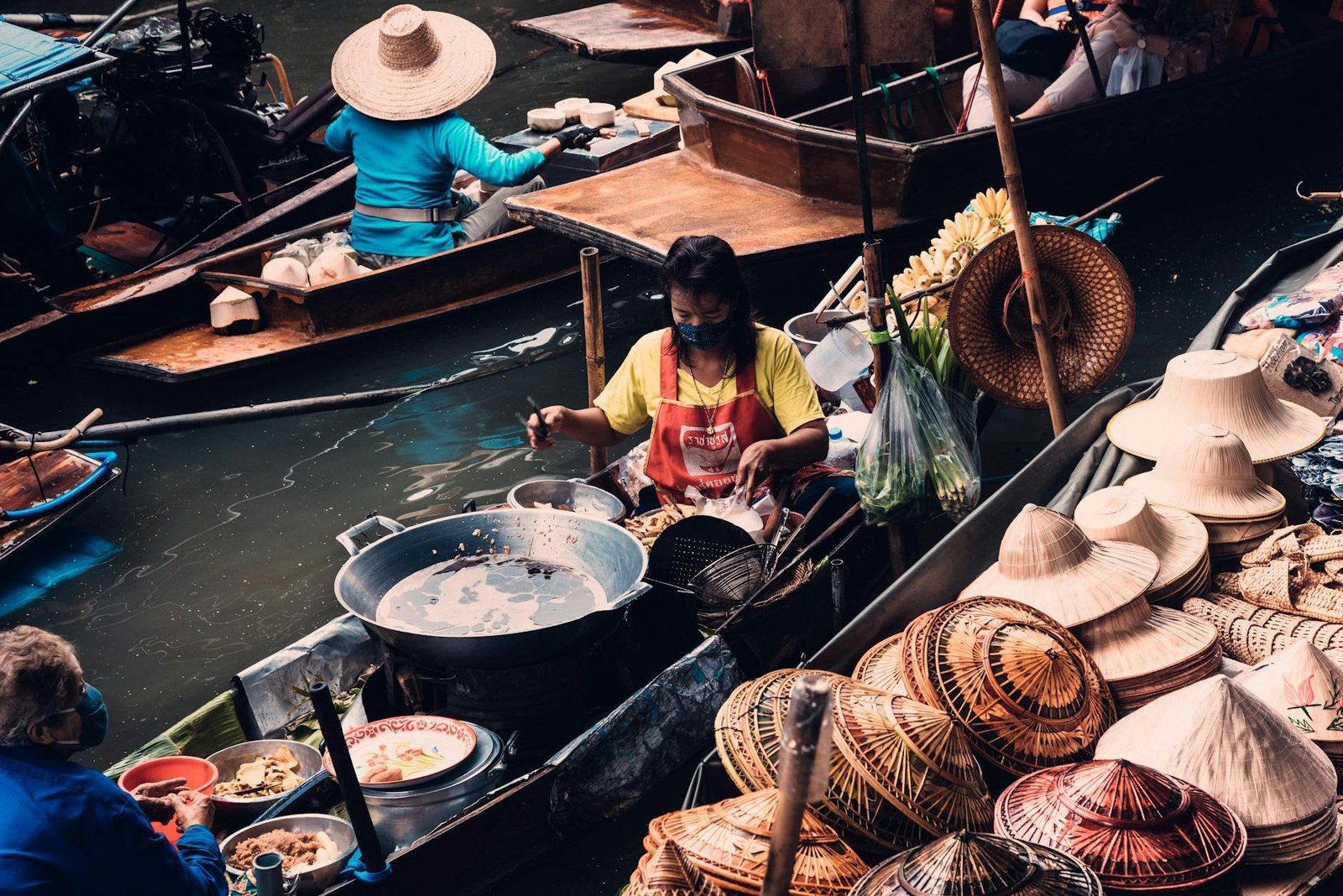
Here is the uncomfortable truth about Bangkok’s floating markets: most of them are not really floating markets anymore. They are land-based souvenir bazaars that happen to have a canal running through them, with a handful of boats stationed permanently for photo opportunities. The postcards show charming wooden boats loaded with tropical fruit and noodle pots. The reality, at most of the famous ones, is a concrete walkway lined with the same mass-produced elephant pants you can buy on Khao San Road, plus a few boats that exist exclusively so tourists can take pictures.
That does not mean floating markets are not worth visiting. It means you need to know which ones are genuine and which ones are performing a version of themselves for tour buses. After years of dragging friends and family to these places, I have a clear ranking that I update every couple of years as the markets change. The 2026 picture is more polarized than ever: the genuine ones got better, and the tourist traps got worse.
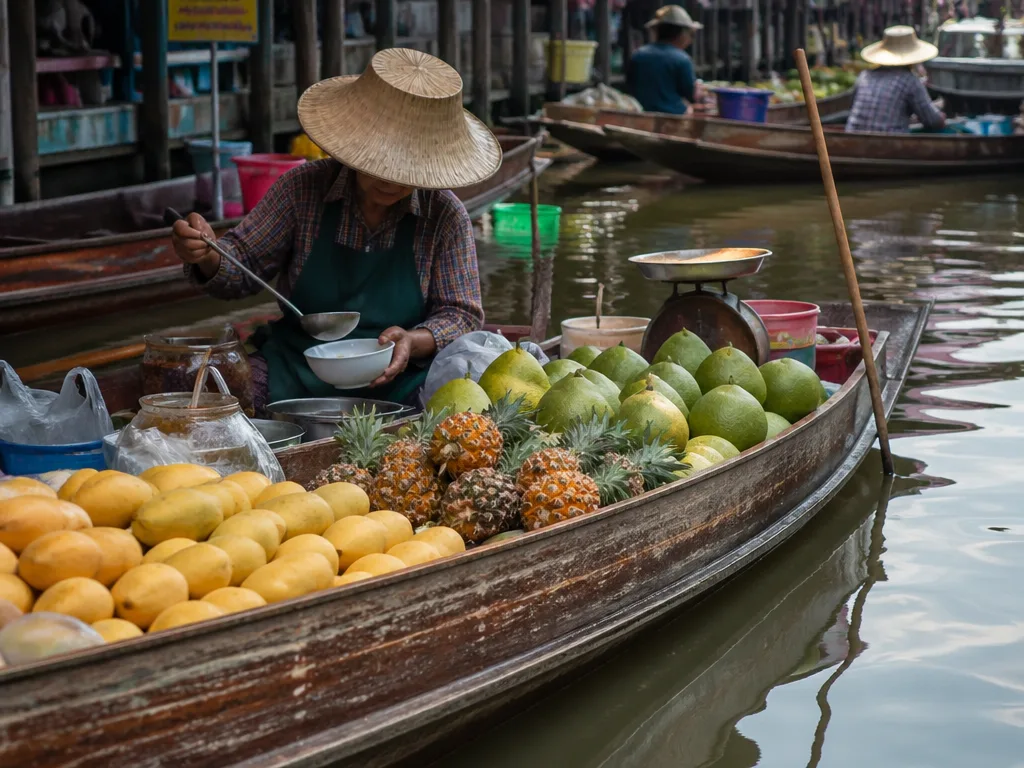
The Honest Ranking: Best to Skip
1. Amphawa Floating Market, The Best One
TIP
Amphawa is open Friday through Sunday evenings only. Plan your trip around this schedule, it is worth rearranging a day for.
Amphawa is the floating market that floating markets are supposed to be. It is 90 minutes southwest of Bangkok in Samut Songkhram province, and it operates Friday through Sunday from late afternoon into the evening. This is where Thai families come on weekends. The ratio of locals to tourists is roughly 7:3, which tells you everything you need to know about the quality.
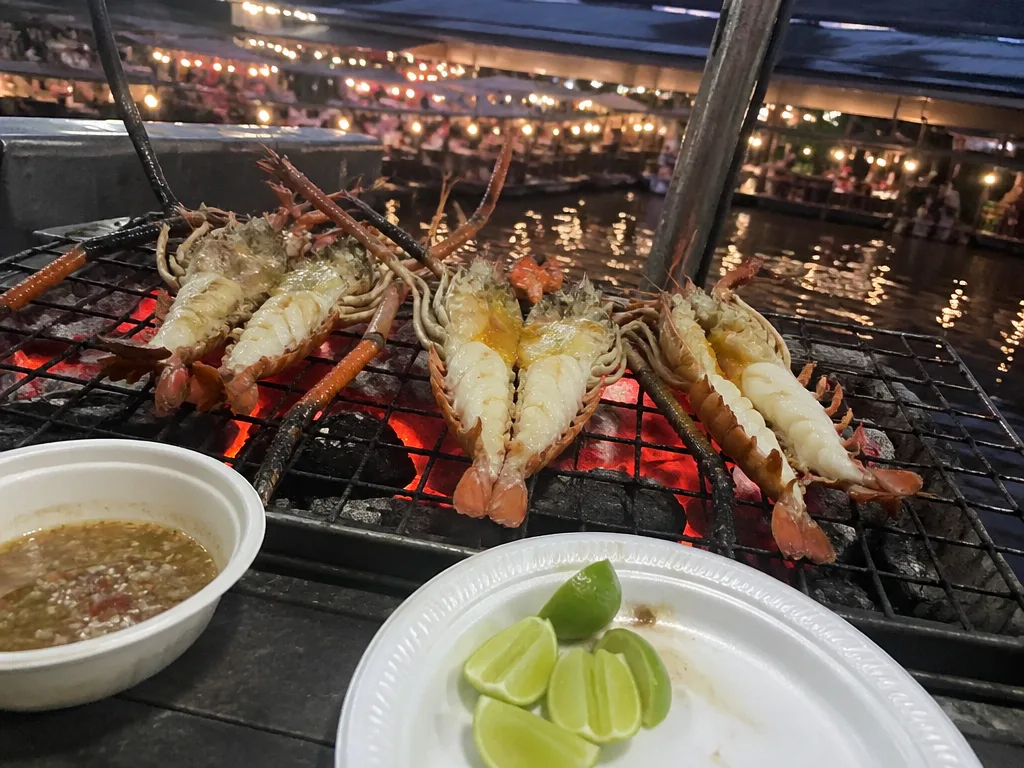
The market lines both banks of the Amphawa canal, and the food is the main draw. Vendors on boats and along the canal sell grilled seafood, river prawns the size of your hand, squid, blue crab, sea bass wrapped in banana leaf. You sit on the wooden deck of a shophouse with your legs dangling over the water and eat directly off the boat. A full seafood spread runs 150-400 baht per person depending on how ambitious you get with the prawns.
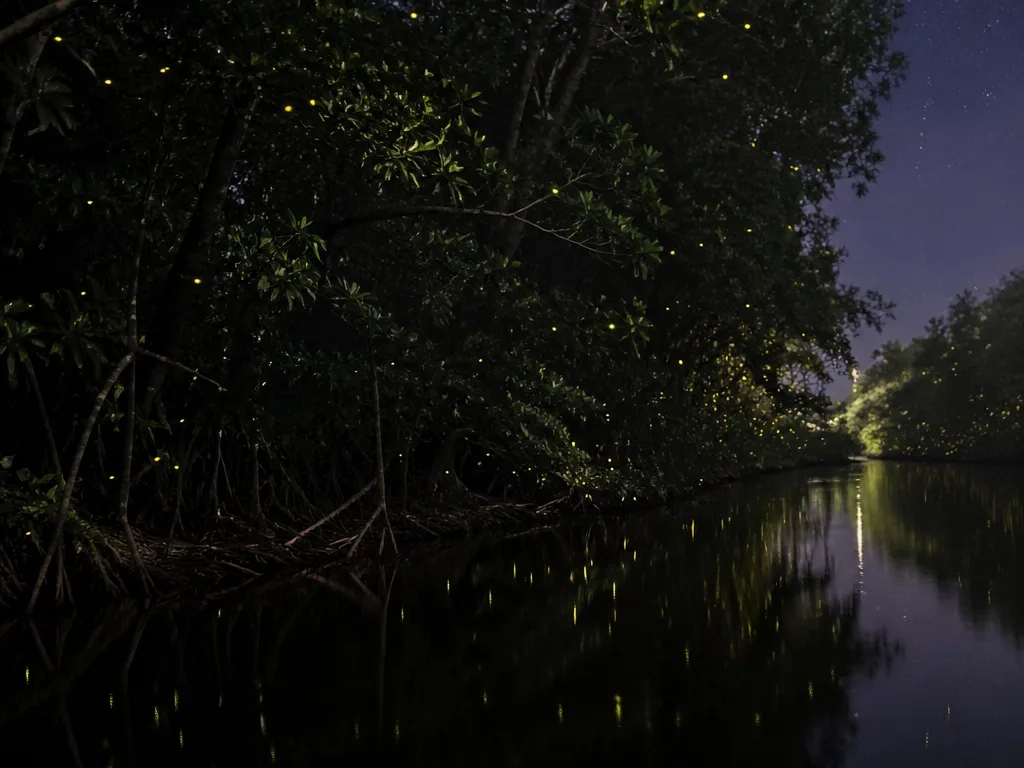
After eating, the firefly boat tour is the thing that elevates Amphawa from good to unforgettable. Starting around 7:30-8:00 PM, longtail boats take you through the surrounding mangrove canals where thousands of fireflies light up the trees along the riverbank. The effect is surreal, like floating through a tunnel of blinking Christmas lights, except entirely natural. Boats cost around 60 baht per person for a 45-minute loop.
How to get there: Grab from central Bangkok runs 800-1,200 baht one way. A minivan from Victory Monument costs about 80 baht but takes longer. The smartest move is to combine Amphawa with Maeklong Railway Market (the one where the train rolls through the market stalls), which is only 8 km away. Many organized day trips on Klook bundle both for 800-1,500 baht including transport.
Best dishes: Grilled river prawns (kung phao), coconut pancakes (khanom khrok), boat noodles, mango sticky rice from the canal-side vendors.
Location: Google Maps
2. Khlong Lat Mayom, The Local Secret
Khlong Lat Mayom is the floating market that Bangkok residents actually go to. It operates Saturday and Sunday mornings, it is only 30 minutes from central Bangkok by Grab or Bolt, and it has almost zero tourist infrastructure, no souvenir stalls, no elephant pants, no one trying to sell you a longtail boat tour. Just food, plants, and the hum of a genuine Thai weekend market.
The canal section is compact, maybe 20 boats selling pad thai, som tam, grilled pork skewers, and sweets. But the land section sprawling along the banks is where the real action is. Local families browse orchid gardens, buy fresh produce, and eat their way through stall after stall of home-cooked food that you would never find in a tourist area. Prices are local prices: 40-60 baht for a full plate of food.
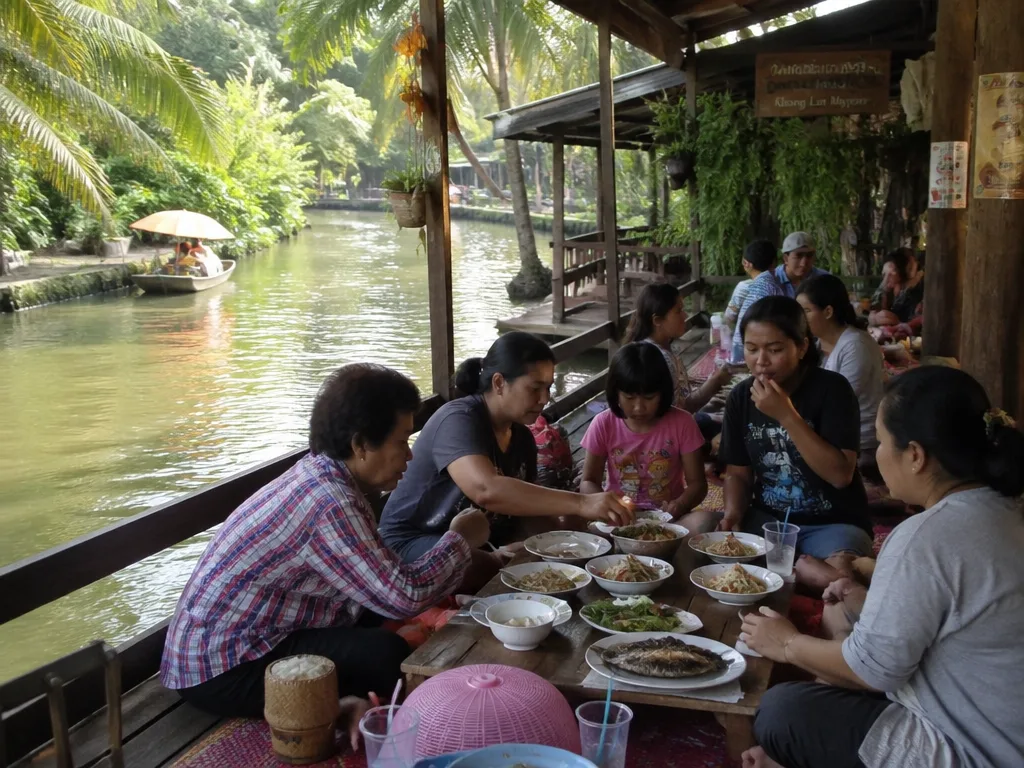
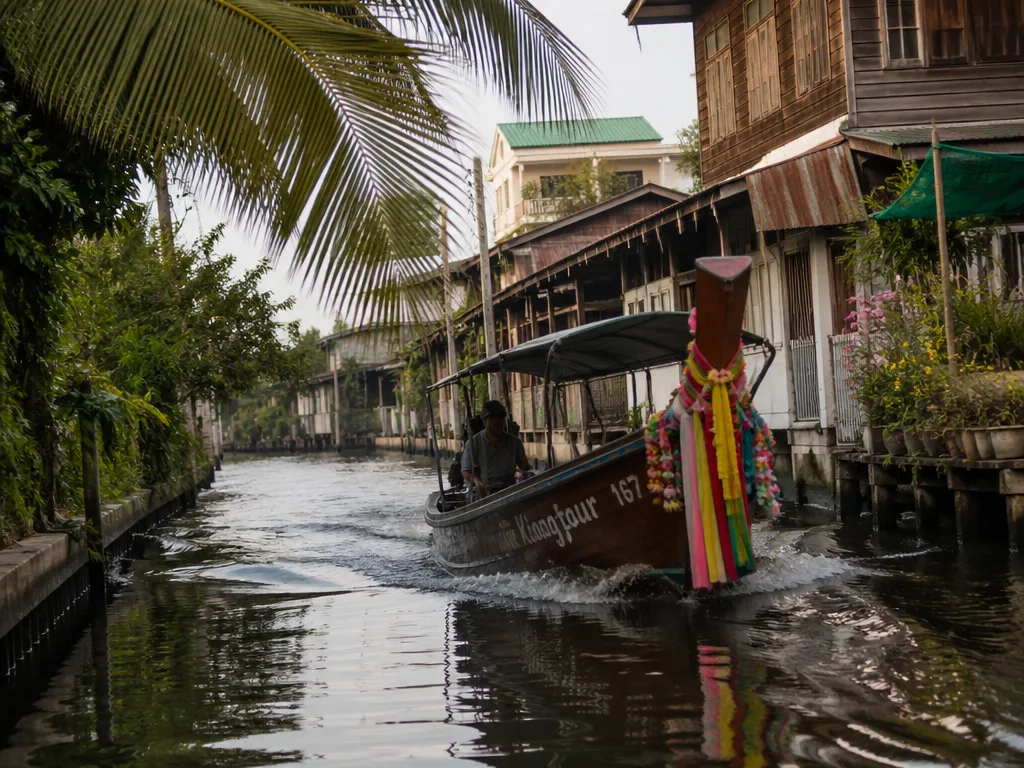
After eating, you can hire a longtail boat (about 100 baht for a 90-minute canal tour) that takes you through the surrounding neighborhood canals, a network of narrow waterways lined with wooden houses, fruit trees, and monitor lizards sunbathing on the banks. This is what Bangkok looked like before the concrete.
How to get there: Grab from Siam/Sukhumvit is 150-250 baht. It is near the Taling Chan area on the Thonburi side of the river. There is no convenient BTS/MRT station.
Best dishes: Boat noodles (kuay tiew ruea), coconut ice cream, charcoal-grilled pork neck (kor moo yang), Thai iced tea from the stalls.
Location: Google Maps
3. Damnoen Saduak, The Famous One (With Caveats)
Damnoen Saduak is the floating market you have seen in every Thailand tourism brochure, every travel show, and probably in your head when someone says the words “floating market.” It is the most photogenic of them all, and it is also the most aggressively commercialized.
The market is real in the sense that vendors do actually sell from boats on the canal. The problem is that by mid-morning it has become a traffic jam of tourist-filled longtail boats, vendor boats, and photo-op boats all competing for the same narrow waterway. The vendors know their audience, prices are inflated, the products are aimed squarely at tourists, and the whole thing feels like a performance rather than a market.
But here is the thing: if you go at the right time, Damnoen Saduak is still worth it.
TIP
Arrive at Damnoen Saduak before 7:00 AM. The market opens around 6:30, and the tour buses start arriving at 8:30. That 90-minute window is a different experience entirely.
Before 7 AM, when local vendors are setting up and the first customers are arriving by boat, you get a glimpse of what this market used to be. The light is golden, the canal is calm, and you can actually have a conversation with vendors. By 8:30, the buses have arrived and it is a different place entirely. The chaos continues until about 3 PM when the market winds down.
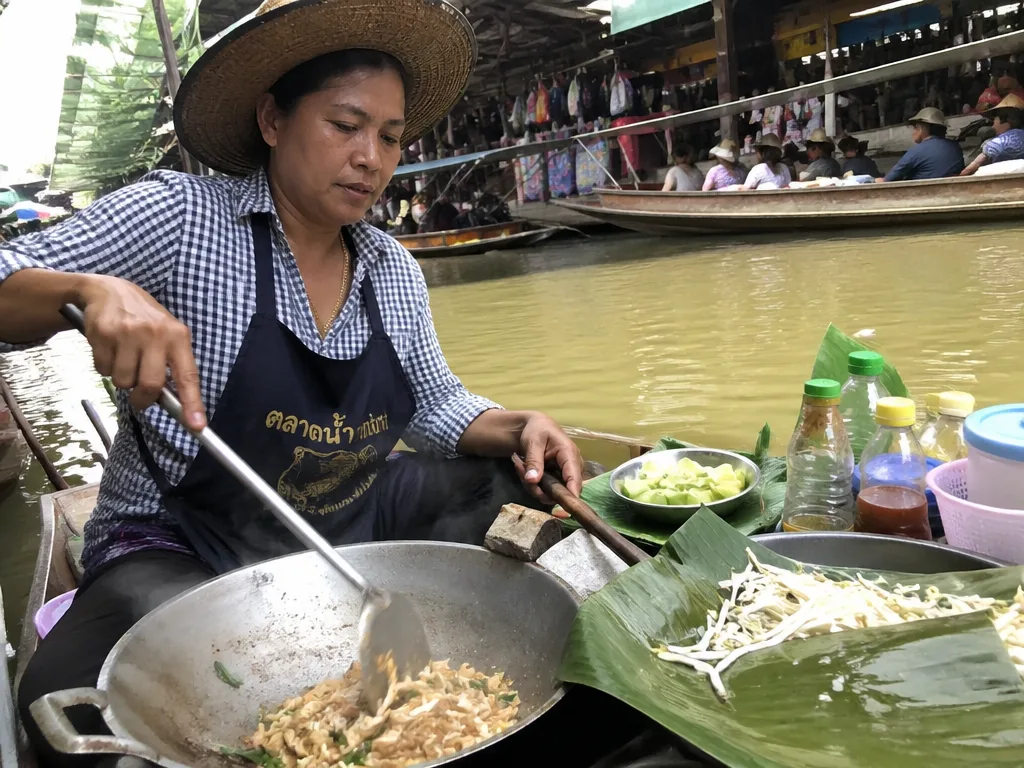
How to get there: Damnoen Saduak is about 100 km southwest of Bangkok. Getting there for a 7 AM arrival means leaving Bangkok by 5:00-5:30 AM. A Grab will cost 1,000-1,500 baht one way. Organized tours that depart at 6 AM from your hotel run 600-1,200 baht and handle the logistics, which honestly makes more sense for this particular market.
Best dishes: Boat noodles from the canal vendors, grilled bananas, fresh coconut water straight from the shell, pad thai made on the boat.
Location: Google Maps
4. Taling Chan Floating Market, The Easy Sunday Morning
Taling Chan is the floating market for people who want the experience without committing an entire day. It is only 20 minutes from central Bangkok on the Thonburi side of the Chao Phraya River, it operates Saturday and Sunday mornings, and it is small enough that you can see everything in about 90 minutes.
The floating section is modest, maybe a dozen boats selling seafood and snacks along a short stretch of canal. The atmosphere is relaxed and unhurried. Thai families sit at plastic tables along the water eating grilled fish and som tam. It is not spectacular, but it is honest, and you can combine it with a morning along the Chao Phraya River or a visit to Wat Arun.
How to get there: Grab from central Bangkok is 100-180 baht. Alternatively, take the Chao Phraya Express Boat to Phra Pin Klao Bridge pier and grab a taxi from there.
Best dishes: Grilled whole fish (pla pao), som tam, sticky rice with grilled chicken.
Location: Google Maps
Markets to Skip
Pattaya Floating Market: A 100% artificial theme park that was built specifically for tourists. Entrance fee: 200 baht. Everything is overpriced. There are no actual floating vendors conducting real commerce. It is a shopping mall arranged over water. Save your time.
Hua Hin Floating Markets: Same concept, slightly better executed, but still fundamentally a tourist attraction masquerading as a traditional market. If you are already in Hua Hin, the night market is a better use of your evening.
How to Get There: Grab vs. Tour vs. Minivan
| Method | Pros | Cons | Best For |
|---|---|---|---|
| Grab/Bolt | Go when you want, leave when you want, door-to-door | Expensive for distant markets (Amphawa, Damnoen Saduak), 800-1,500 THB one way | Khlong Lat Mayom, Taling Chan (close to city) |
| Organized tour | Transport handled, often bundles 2 markets, guide explains context | Fixed schedule, rushed, group pace | Damnoen Saduak + Maeklong combo, Amphawa firefly tours |
| Minivan from Victory Monument | Cheap (60-100 THB), authentic local transport | Leaves on schedule, crowded, no AC sometimes, language barrier | Budget travelers heading to Amphawa or Damnoen Saduak |
For Amphawa and Damnoen Saduak, the organized tour or a shared Grab split among friends makes the most financial sense. For Khlong Lat Mayom and Taling Chan, just open your ride-hailing app and go, they are close enough that a Grab costs less than lunch.
Timing: When to Go and When to Stay Away
| Market | Days | Best Time | Avoid |
|---|---|---|---|
| Amphawa | Fri-Sun | 4:00-7:00 PM (food), 7:30 PM (fireflies) | Daytime, most stalls are closed before 3 PM |
| Khlong Lat Mayom | Sat-Sun | 8:00-11:00 AM | After noon, vendors start packing up |
| Damnoen Saduak | Daily | 6:30-7:30 AM | 8:30 AM-3:00 PM, tour bus hell |
| Taling Chan | Sat-Sun | 8:00-11:00 AM | Weekdays, it barely operates |
Avoid all floating markets during long Thai holidays (Songkran in April, New Year) unless you enjoy being pressed against strangers in 37-degree heat. The rain season (June-October) can actually be pleasant at the covered markets like Khlong Lat Mayom, but boat tours at Amphawa may get canceled during heavy downpours.
Photography Tips
Floating markets are absurdly photogenic when you know how to shoot them. A few practical notes from someone who has taken hundreds of bad photos before getting a handful of good ones.
Get low. The best floating market photos are shot from water level or just above it. If you are on a boat, lean slightly and shoot across the water surface. This makes the boats, produce, and vendors look dramatic rather than like a top-down tourist snapshot.
Shoot the light, not the market. At Damnoen Saduak before 7 AM, the golden morning light hits the canal at a low angle and creates reflections on the water. At Amphawa in the evening, the warm glow from food stalls reflected on the canal surface is the shot. The market itself is the backdrop, the light is the subject.
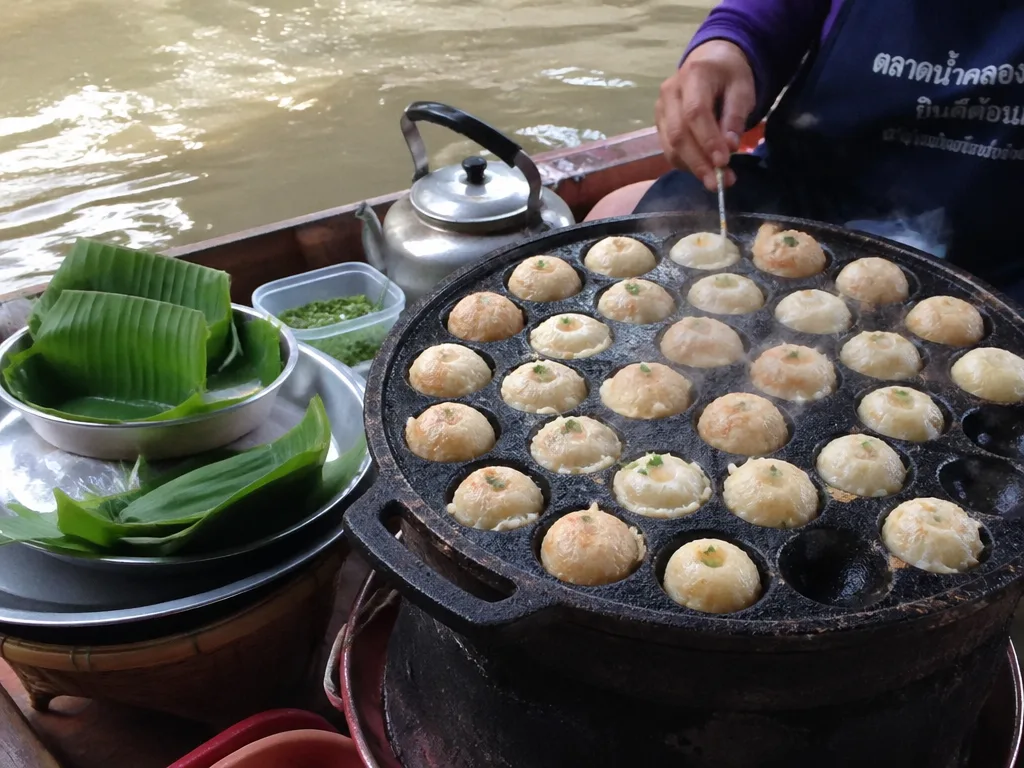
Focus on hands and action. A vendor’s hands chopping fruit, stirring a wok, or passing a bag of noodles across the water to a customer, these tell a story. A wide shot of the market from above does not.
Ask before pointing your camera at people. A smile and a gesture toward your camera is all it takes. Most vendors are happy to pose, especially if you have just bought something from them. Buying a 20-baht coconut earns you all the portrait photos you want.
Common Scams to Watch For
Floating markets attract the same scams you find at any tourist-heavy spot in Thailand, plus a few unique ones.
The “my boat is cheaper” hustle. At Damnoen Saduak, unlicensed boat operators approach you at the parking lot offering “private tours” at seemingly good prices. Then they take you to shops where they earn commission, and the actual canal time is minimal. Book your boat at the official pier or through a reputable tour.
Inflated boat rental prices. The standard longtail boat tour at Damnoen Saduak costs 500-800 baht for one hour. If someone quotes 1,500+, walk away. At Amphawa, canal tours are 50-60 baht per person, there is a fixed price posted at the pier.
Overpriced produce. A coconut should cost 20-40 baht. A plate of pad thai from a boat vendor runs 40-80 baht. If someone charges 200 baht for a plate of noodles, they are testing whether you know the real price. You do now.
Bonus: Pairing With Maeklong Railway Market
If you are making the trip to Amphawa, you should also see Maeklong Railway Market. It is 8 km away, the visit takes about an hour, and the spectacle is unlike anything else in Thailand. The State Railway of Thailand runs eight commuter trains daily directly through the heart of an active fresh market. Vendors retract tarps and pull baskets back inches before the train passes, then immediately reset everything. Peak times to catch the train: 6:20 AM, 9:00 AM, 11:10 AM, 2:30 PM, 5:30 PM. Confirm the day’s schedule with locals on arrival, since it shifts seasonally.
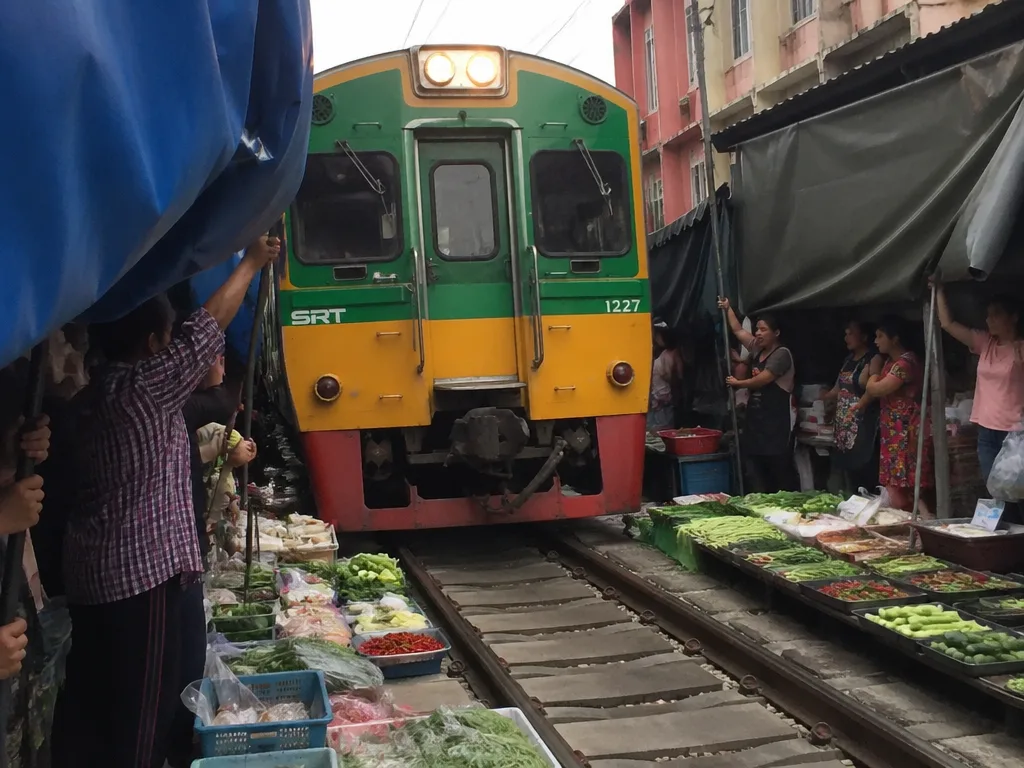
The market is genuine outside the train moments, vegetables and fresh fish for the surrounding villages, not souvenirs. Eat the grilled pork skewers and pick up a kilo of dried river shrimp on your way out.
Making the Most of Your Visit
If you only have time for one floating market, go to Amphawa on a Friday or Saturday evening. The food alone justifies the 90-minute drive, and the firefly tour is one of those rare tourist experiences that actually exceeds the hype. Pair it with Maeklong Railway Market in the afternoon for a full weekend escape that covers two of the most photographed places in Thailand.
If you want the floating market experience without leaving Bangkok, Khlong Lat Mayom on a Saturday morning is the move. Thirty minutes from your hotel, genuinely local, and you are back in the city by lunch with zero regret about how you spent your morning.
And if you insist on the iconic Damnoen Saduak postcard shot, set an alarm for 4:30 AM. The market at dawn, before the circus arrives, is one of the most beautiful things you will see in Thailand. Just make sure your Bangkok street food stomach is ready, because the boat noodles at sunrise are impossible to resist.
FAQ
Is a floating market tour worth the money?
For Amphawa or the Damnoen Saduak plus Maeklong combo, yes, organized tours handle the early morning logistics and the distance. For Khlong Lat Mayom or Taling Chan, skip the tour and just take a Grab. You will save money and have more flexibility to eat at your own pace.
Can I visit a floating market on a weekday?
Damnoen Saduak operates daily. All the others are weekend-only (Amphawa is Friday-Sunday, the rest are Saturday-Sunday). If you are in Bangkok on a weekday and want the floating market experience, Damnoen Saduak is your only option, just get there before the buses.
Are floating markets safe for solo travelers?
Completely. These are family-friendly markets with heavy foot traffic and, at the popular ones, plenty of other tourists. The usual precautions apply, watch your belongings on crowded boats, keep your phone secure near the water, and avoid common tourist scams. But personal safety is not a real concern at any of the markets listed here.
What should I wear to a floating market?
Comfortable shoes that can get wet, the walkways along the canals are often damp, and you may step on and off boats. Lightweight, breathable clothing. A hat and sunscreen for morning markets. At Amphawa in the evening, mosquito repellent is essential for the firefly tour. Skip the flip-flops if you plan to take a boat, they are a liability on wet wooden decks.