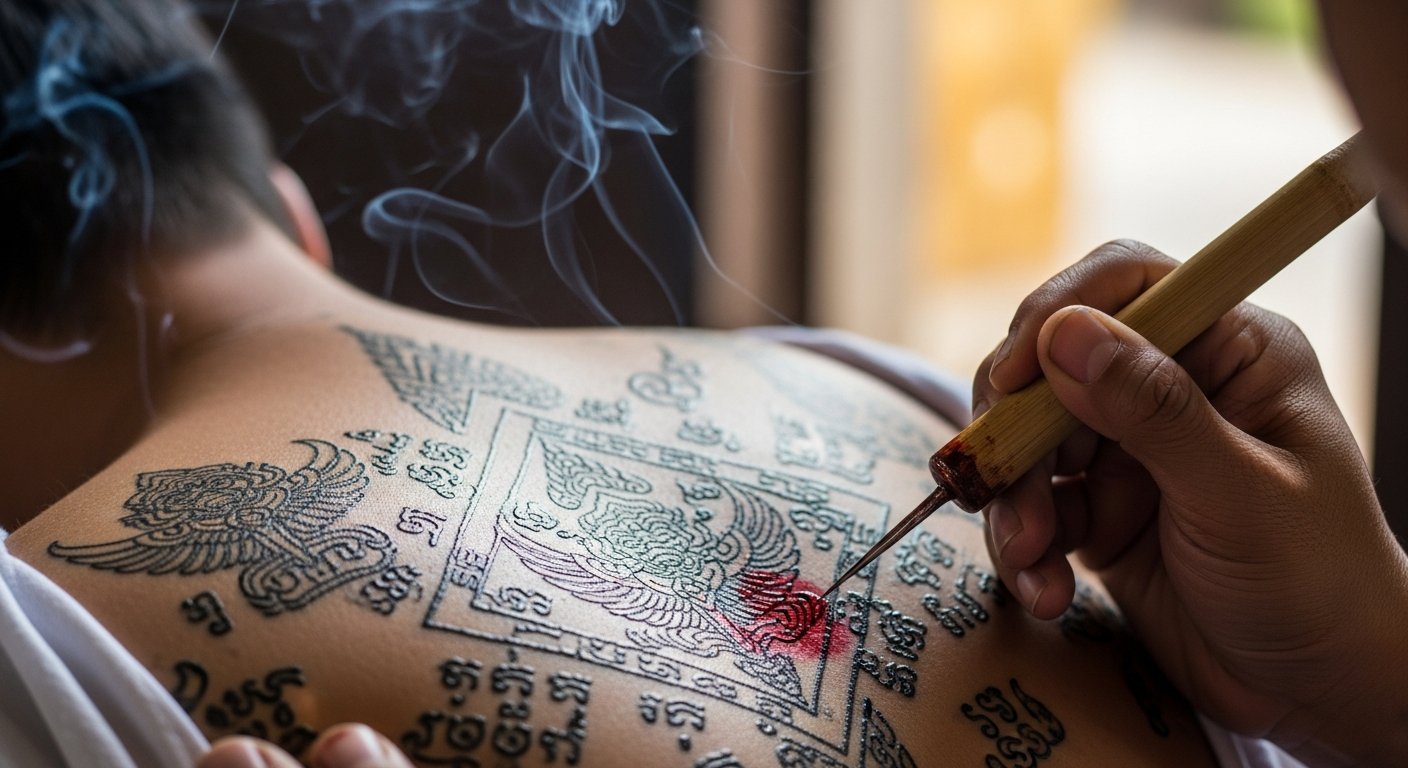
A sak yant is not a souvenir tattoo. It is a sacred spiritual practice that predates modern Thailand, rooted in animist and Buddhist traditions stretching back over a thousand years. The geometric patterns, Khmer script, and animal figures inked into the skin are believed to carry real protective power — against physical harm, bad luck, and dark forces. If you want one, you can absolutely get one as a foreigner. But you need to understand what you are entering into.
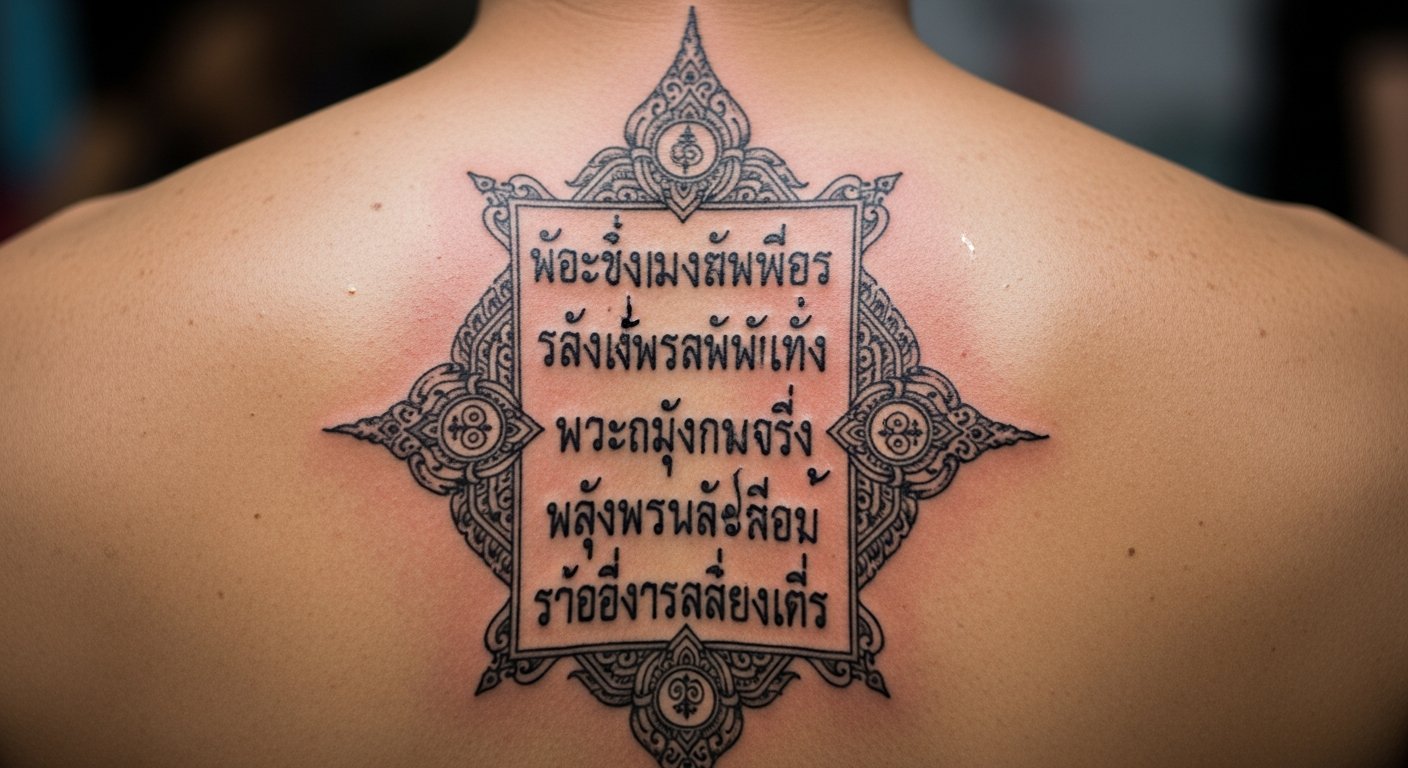
After a decade in Thailand, I have watched sak yant go from something most tourists had never heard of to a full-blown bucket list item, partly thanks to Angelina Jolie and partly thanks to Instagram. That surge of interest is not inherently bad, but it has created a split: there are people who treat this as a meaningful spiritual commitment, and there are people who just want a cool-looking tattoo. Where you fall on that spectrum determines where you should go, how much you will pay, and how the experience will feel.
What Is a Sak Yant, Exactly?
Sak yant (Thai: สักยันต์) literally means “tattoo yantra.” Sak is the Thai word for tattoo, and yant comes from the Sanskrit yantra, meaning a mystical diagram or instrument. Each design is a yantra — a sacred geometric pattern combined with Pali script, Buddhist prayers, and sometimes animal imagery. The tattoo is traditionally hand-poked using a long metal rod called a mai sak or, in the case of temple monks, a khem sak (a single needle rod).
The person who administers a sak yant is not just a tattoo artist. They are called an ajarn (master/teacher) or, when it is a monk, a luang phor (revered father). The act of receiving the tattoo is a ritual. There is chanting, there is prayer, there is the belief that the ajarn channels spiritual energy into the design. This is not metaphorical for the people performing it. They believe this completely, and so do the millions of Thais who carry sak yant on their bodies.
Popular Sak Yant Designs and Their Meanings
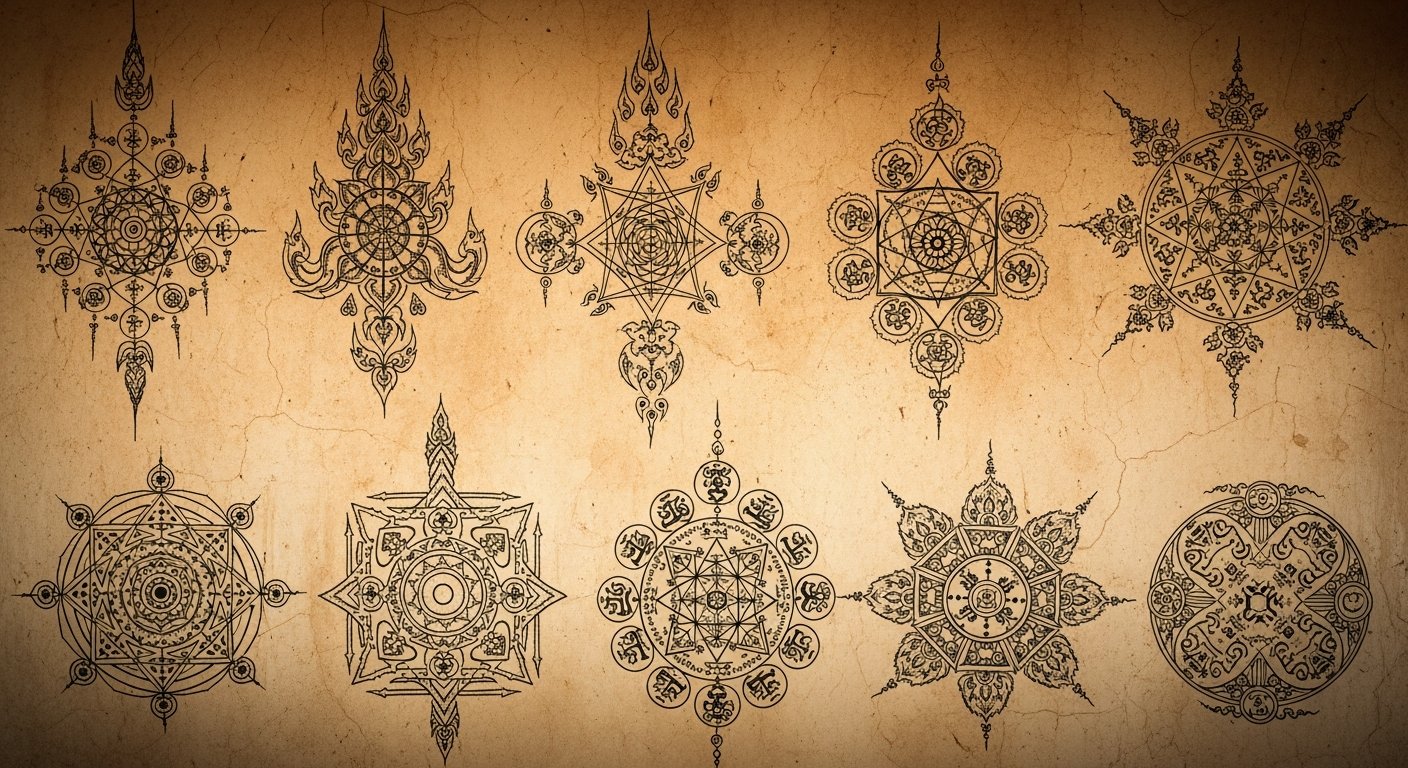
Choosing a design is not like browsing flash art at a tattoo parlor back home. Each sak yant carries specific powers and comes with specific rules. Here are the most common ones you will encounter.
| Design | Thai Name | Meaning | Best For |
|---|---|---|---|
| Hah Taew | ห้าแถว (Five Rows) | Five lines of Pali script, each invoking a different blessing — protection, reversal of bad fortune, protection against black magic, good luck, and charm | First-timers; most versatile and widely recognized |
| Gao Yord | เก้ายอด (Nine Peaks) | Nine spires representing the nine peaks of Mount Meru, the center of the Buddhist universe; universal protection | Anyone seeking broad spiritual protection |
| Paed Tidt | แปดทิศ (Eight Directions) | Eight-pointed yantra offering protection in all cardinal and ordinal directions; ideal for travelers | Frequent travelers and people living abroad |
| Suea | เสือ (Tiger) | Twin tigers symbolizing power, authority, and fearlessness | Business owners, leaders, people who need confidence |
| Hanuman | หนุมาน | The monkey god from the Ramakien; courage, cleverness, and invincibility in battle | Athletes, fighters, those facing tough adversity |
| Yant Putsoorn | ยันต์พุทธซ้อน | Overlapping Buddha figures representing compassion and enlightenment | Those seeking inner peace and spiritual growth |
The Hah Taew (Five Lines) is far and away the most popular design among foreigners, largely because it was the design Angelina Jolie received from Ajarn Noo Kanpai. But popularity does not diminish its significance. Many Thais carry the Hah Taew as well, and it is considered one of the most powerful general-purpose yantras.
Where to Get a Sak Yant: Temple vs. Tattoo Parlor
This is the single biggest decision you will make, and it affects everything — the experience, the cost, the authenticity, and frankly, how respectful the process is.
Wat Bang Phra Temple (Nakhon Pathom)
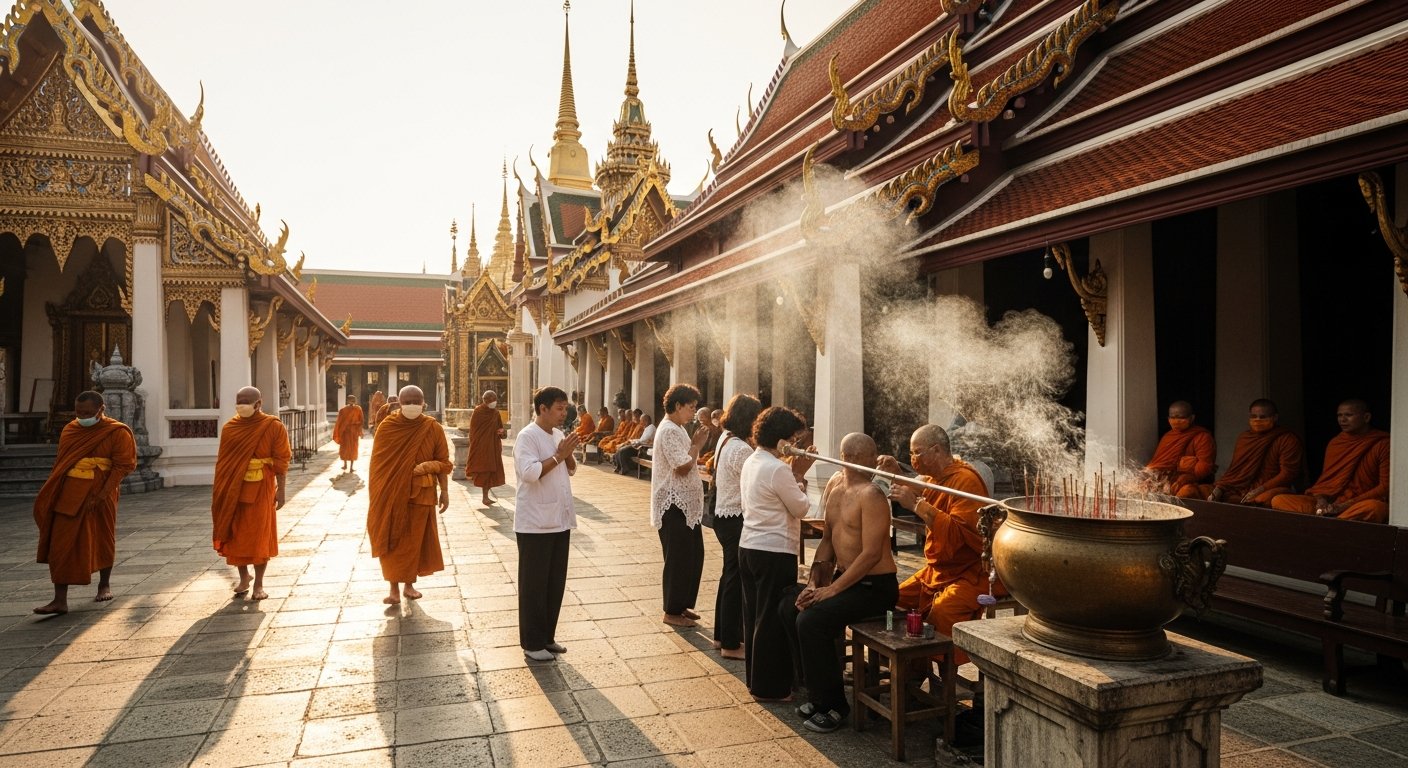
The traditional route. Wat Bang Phra is a Buddhist temple about 50 km west of Bangkok, and it is the most famous sak yant temple in Thailand. Monks and temple ajarns perform the tattoos using traditional hand-poke methods.
What to expect: You arrive early (before 8 AM is ideal), make a small offering (typically a pack of cigarettes, flowers, incense, and a candle — the temple will have offering sets for sale around 100 THB), and wait. You do not choose your design. The monk assesses your energy and selects the appropriate yantra for you. The whole process, including waiting, can take two to five hours.
Cost: There is no set fee. You make a donation, and the typical amount is 100-500 THB. Yes, that is correct. A sacred tattoo from a Buddhist monk for the price of a decent meal.
Location: Nakhon Pathom Province, about a 90-minute drive from central Bangkok. You can take a taxi or hire a Grab for approximately 800-1,200 THB each way, or join a guided tour that handles transportation. Check the Bangkok Transportation Guide for options on getting out of the city.
Who this is for: People who want the genuine spiritual experience, who are comfortable with uncertainty (you do not pick the design), and who respect that they are entering a functioning Buddhist temple.
Ajarn Noo Kanpai (Sak Yant Chiang Mai / Bangkok)
The most famous sak yant master among foreigners, largely due to the Jolie connection. Ajarn Noo is not a monk — he is a lay practitioner, which means he can accept payment, work on women without the restrictions monks face, and maintain a studio environment.
What to expect: A more structured, appointment-based experience. You can discuss designs in advance, and the studio caters to foreigners with English-speaking staff.
Cost: 5,000-30,000 THB depending on size and complexity. This is significantly more expensive than a temple, but you are paying for convenience, choice, and accessibility.
Who this is for: People who want a specific design, prefer a controlled environment, or want English communication throughout.
Bangkok Tattoo Studios (Sak Yant Specialists)
Several studios in Bangkok specialize in sak yant, performed by trained ajarns (not monks) in a professional tattoo studio setting. Studios like Ajarn Rung and Arjarn Neng are well-regarded.
Cost: 3,000-15,000 THB for most designs.
Who this is for: People who want authenticity and ritual (these are genuine ajarns who perform the chanting and blessing) but also want the hygiene standards and booking convenience of a modern studio.
The Machine Alternative
Some tattoo shops in tourist areas offer “sak yant style” tattoos done with a modern tattoo machine. These look similar but carry no spiritual component — no chanting, no blessing, no ajarn. From a cultural standpoint, this is essentially a geometric tattoo that borrows sacred imagery. Some Thais find this disrespectful. Others do not care. You should at least be aware of the distinction before you decide.
Does a Sak Yant Tattoo Hurt?
Yes, but probably not as much as you are imagining. The traditional hand-poke method uses a single needle or cluster of needles on a metal rod, tapped rhythmically into the skin. Most people describe it as a persistent scratching or vibrating sensation rather than the sharp, continuous sting of a modern tattoo machine.
Pain depends heavily on placement. The spine and shoulder blades (the most traditional locations) are moderately painful. The back of the neck is sharper. Fleshy areas like the upper arm or thigh are the mildest.
A medium-sized Hah Taew takes roughly 15-30 minutes. The Gao Yord, which covers more area, can take 30-45 minutes. The brevity helps — even if it is uncomfortable, it is over quickly compared to a multi-hour machine tattoo session.
The honest truth: if you have any existing tattoos, you can handle a sak yant. If this is your first tattoo ever, it will sting, but the spiritual atmosphere and adrenaline of the experience carry most people through.
The Sak Yant Rules You Must Follow
This is where cultural respect becomes non-negotiable. A sak yant comes with a set of rules called the sila, and you are expected to follow them for life. Breaking them is believed to void the tattoo’s power, and in some cases, invite the opposite of what the tattoo was meant to protect against.
The five core precepts (sila) are:
- Do not kill
- Do not steal
- Do not lie
- Do not commit adultery
- Do not consume intoxicants to the point of losing mindfulness
These are, not coincidentally, the five precepts of Buddhism. Some ajarns add additional rules depending on the specific design — for example, never ducking under a clothesline (this places women’s garments above your head, which in Thai belief diminishes the tattoo’s power).
Beyond the sila, there are practical etiquette rules. Do not let anyone touch your sak yant uninvited. Do not mock it or treat it as a party trick. And understand that these rules connect to broader Thai cultural norms around respect for sacred objects — the same principles covered in the Royal Family Etiquette Guide.
Will anything actually happen if you eat a steak or have a beer? From a supernatural standpoint, that depends on your beliefs. From a cultural standpoint, the point is that you are entering a commitment, and treating it lightly reflects poorly on you and on the foreigners who come after you.
How Much Does a Sak Yant Cost?
The cost varies enormously depending on where you go.
| Where | Cost | What You Get |
|---|---|---|
| Wat Bang Phra (temple) | 100-500 THB donation | Monk-administered, traditional, no design choice |
| Ajarn Noo Kanpai | 5,000-30,000 THB | Famous master, appointment-based, design choice |
| Bangkok sak yant studio | 3,000-15,000 THB | Ajarn-performed, modern hygiene, design choice |
| Tourist tattoo shop (machine) | 2,000-8,000 THB | No ritual, machine-applied, sak yant appearance only |
A few notes on money. At temples, you are making an offering, not paying a fee. Bring small bills and place them respectfully. At studios, tipping the ajarn 500-1,000 THB on top of the quoted price is a good practice, similar to what is described in the Tipping Guide. And regardless of where you go, you will need cash. Temples do not accept cards, and many traditional ajarns prefer cash as well.
Wat Bang Phra’s Annual Sak Yant Festival
Every March (typically the first Saturday), Wat Bang Phra hosts the Wai Kru sak yant festival — a massive gathering where devotees come to have their tattoos re-blessed. The ceremony is famous for its most dramatic element: people entering trance states, believed to be possessed by the spirits of their yantras, charging toward the central altar before being restrained by volunteers.
It is an extraordinary thing to witness. If your trip coincides with early March, it is worth the drive. But understand that this is a genuine religious ceremony, not a performance. Photograph respectfully and stay out of the way of devotees in trance.
Aftercare for a Sak Yant Tattoo
Traditional aftercare differs from modern tattoo aftercare, and you should follow the instructions your specific ajarn gives you. That said, the general guidance is:
- Keep the area clean and dry for at least three days
- Avoid swimming, soaking in baths, or heavy sweating for one week
- Do not apply modern tattoo ointments unless your ajarn specifically recommends them — many traditional practitioners prefer coconut oil or nothing at all
- Avoid direct sun exposure on the fresh tattoo for at least two weeks
- Some ajarns will give you a specific prayer to recite daily during the healing period
Healing takes roughly two to three weeks. Hand-poke tattoos generally heal faster and with less irritation than machine tattoos because the skin trauma is less severe.
Can Women Get a Sak Yant?
Yes, but with some limitations at temples. Buddhist monks are prohibited from touching women, which means a monk cannot directly administer a sak yant to a female recipient. At Wat Bang Phra, this is handled by having a lay ajarn (not a monk) perform the tattoo on women, or by having the monk use an extended rod so there is no direct physical contact.
At private studios and with lay ajarns like Ajarn Noo Kanpai, there are no gender restrictions. Women receive sak yant exactly the same way men do.
FAQ
Is it disrespectful for foreigners to get a sak yant?
Not inherently, no. Thai culture is generally welcoming of foreigners who approach sak yant with genuine respect. What is disrespectful is treating it purely as an aesthetic choice — getting a sacred design with no understanding of its meaning, ignoring the sila, or getting it in a location considered inappropriate (below the waist is generally avoided for sacred imagery). If you take the time to learn what you are receiving and follow the rules, most Thais will view your sak yant positively.
Can I choose which sak yant design I get?
At temples like Wat Bang Phra, typically no. The monk selects the design based on his assessment of what you need. At private studios and with lay ajarns, yes — you can discuss options and choose your design. This is one of the major reasons people choose studios over temples.
Where on my body should I get a sak yant?
Traditionally, sak yant are placed on the upper body — the back, shoulders, upper arms, and chest. The back is the most common placement. In Thai belief, the head is the highest and most sacred part of the body, so sak yant should be placed as high as possible to maintain their power. Placement below the waist is considered inappropriate for sacred designs. Your ajarn will advise you on proper placement.
Do I need to be Buddhist to get a sak yant?
No. Sak yant draws from Buddhist, Hindu, and animist traditions, and ajarns regularly perform them on people of all faiths and no faith. What matters is that you approach the process with respect and are willing to observe the sila. You do not need to convert or declare any religious affiliation.
How do I get to Wat Bang Phra from Bangkok?
The temple is in Nakhon Pathom province, about 50 km west of Bangkok. The easiest option is booking a Grab or taxi for approximately 800-1,200 THB each way. Several tour operators also run day trips that include transportation, guidance through the process, and translation. There is no convenient public transit route. Plan to leave Bangkok by 6-7 AM to arrive before the morning rush. For general Bangkok transport options, see the Bangkok Transportation Guide.
Getting a sak yant in Thailand is one of those experiences that stays with you permanently — literally and figuratively. Done right, with the right intentions and the right respect, it connects you to something much older and much larger than yourself. Done carelessly, it is just ink. The choice is yours, but now you have the information to make it well.